 Orcas Island Siding
 Roofing on San Juan Island Is a Different Job Than Roofing Inland
A roof on San Juan Island works harder than a roof thirty miles inland, even though the weather here looks mild on paper. The combination of salt-laden air off the Salish Sea, long stretches of driving rain, and a moss season that can run most of the year puts a specific kind of stress on roofing materials, fasteners, and flashing. We replace roofs across San Juan County and San Juan Island specifically, and the approach we take here is shaped by what actually fails on island homes, not by a generic checklist written for a different climate.
This page covers what a roof replacement on San Juan Island should involve, the material trade-offs worth understanding before you commit to one, and how we run the job from first inspection to final walkthrough.
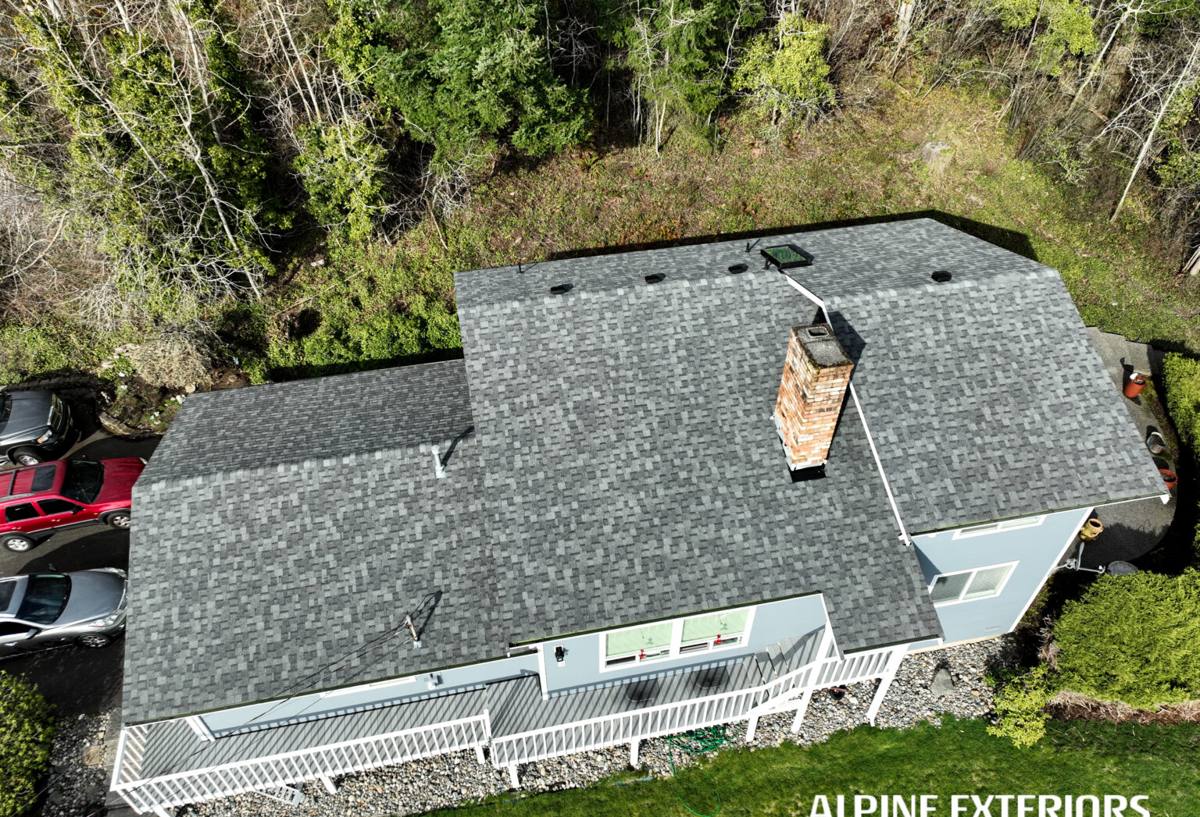
What Salt Air, Rain, and Moss Actually Do to a Roof
Salt Air and Metal Fatigue
Airborne salt accelerates corrosion on exposed metal — nail heads, flashing, gutters, and any exposed fastener. On a roof that's twenty or more years old, it's common to find rusted flashing at valleys and chimneys well before the shingles themselves have failed. Metal roofing components on island homes need to be spec'd with that in mind, not treated the same as a roof going up in a dry inland town.
Driving Rain and Wind-Driven Water
San Juan Island gets weather that comes in sideways more often than straight down. Wind-driven rain finds its way under improperly lapped shingles, undersized underlayment, and weak flashing details at roof-to-wall transitions. A roof that would perform fine in calm rainfall can leak here if the underlayment and flashing weren't installed with wind-driven water specifically in mind.
Moss, Shade, and Moisture Retention
Much of San Juan Island sits under mature conifer cover, and shaded, north-facing roof slopes stay damp for extended periods. That's exactly the condition moss needs to take hold. Moss isn't just cosmetic — it lifts shingle edges, holds moisture against the roof deck, and shortens the life of whatever is underneath it. A roof replacement that doesn't account for moss pressure is a roof you'll be dealing with again sooner than you should.
Signs a Roof Needs Replacement, Not Another Repair
- Granule loss heavy enough that you can see bare asphalt on multiple shingles, not just a few spots
- Shingles that are cupping, curling, or cracking across large sections of the roof, not just one storm-damaged area
- Moss or lichen growth that keeps returning within a season or two of cleaning
- Soft or spongy decking felt underfoot in the attic, or daylight visible through the roof boards
- Repeated leaks at the same valley, chimney, or wall intersection despite prior patch repairs
- A roof approaching or past the manufacturer's expected service life for its material and exposure
If your roof shows one or two of these in isolation, a targeted repair may still make sense. When several show up together, patching becomes a short-term fix on a roof that's already telling you it's done.
Choosing a Roofing Material for Island Conditions
There's no single "best" roofing material for San Juan Island — the right choice depends on your home's exposure, roof pitch, shade cover, and budget. Here's how the common options actually perform under salt air, driving rain, and moss pressure.
| Material | Salt Air Resistance | Moss Resistance | Maintenance Burden |
|---|---|---|---|
| Architectural asphalt shingle (algae-resistant) | Good with corrosion-resistant fasteners and flashing | Improved with copper/zinc strip protection; still needs periodic cleaning on shaded slopes | Moderate — moss and gutter checks 1-2x per year |
| Standing seam metal | Very good when coated finish and fastener hardware are marine-grade | Excellent — smooth surface sheds debris and resists moss anchoring | Low — occasional debris clearing |
| Cedar shake/shingle | Moderate — needs regular treatment to resist salt and moisture cycling | Poor without diligent upkeep — organic material that moss and moisture actively favor | High — regular treatment and moss control required |
| Composite/synthetic shingle | Good — engineered materials resist salt-driven degradation well | Good, especially with algae-resistant formulations | Low to moderate |
Asphalt shingle remains the most common choice on the island because it balances upfront cost with solid performance when the details — fasteners, flashing, algae-resistant granules — are handled correctly. Standing seam metal is a strong option on shaded, moss-prone slopes or for owners who want to minimize long-term maintenance. Cedar has real aesthetic appeal that fits a lot of island homes, but we're upfront with clients that it demands the most ongoing attention in this climate — that's a maintenance trade-off worth going in with eyes open, not a knock on the material itself.
What a Correct Roof Replacement Actually Involves
Full Tear-Off and Deck Inspection
We don't install a new roof over an old one. A full tear-off lets us inspect the decking underneath for rot, soft spots, or moisture damage that's invisible from above — issues that are common on shaded slopes where moss has been holding water against the roof for years. Any compromised decking gets replaced before anything new goes down.
Underlayment Built for Wind-Driven Rain
Given how much of San Juan Island's rain arrives at an angle, we use synthetic underlayment rated for the exposure and add ice-and-water membrane at vulnerable points — valleys, eaves, and roof penetrations — where wind-driven water is most likely to find a way in.
Flashing That Accounts for Salt Corrosion
Flashing at chimneys, skylights, and wall intersections gets specified in corrosion-resistant materials, not whatever is cheapest. This is one of the most common failure points we find on older island roofs, and it's the detail most often shortcut on a rushed job.
Ventilation Sized for Moisture Control
Proper intake and exhaust ventilation keeps the attic dry and temperature-balanced, which reduces the moisture buildup that feeds moss growth and extends the life of the decking and shingles alike. On a shaded, damp roof, ventilation isn't optional — it's part of what keeps moss from coming right back.
Our Roof Replacement Process
1. On-Site Inspection and Written Estimate
We walk the roof and attic in person, document what we find — decking condition, flashing state, ventilation, moss pressure — and provide a written estimate that spells out material, scope, and price before any work begins.
2. Material Selection
We walk through the trade-offs above in the context of your specific roof — slope, sun exposure, and how much moss you're currently dealing with — so you're choosing based on how the roof will actually perform, not just how it looks on a sample board.
3. Scheduling Around Weather and Access
We build in realistic weather windows rather than rushing a tear-off ahead of a rain system, and we account for island logistics — material deliveries and disposal hauls that depend on ferry scheduling — when setting a timeline, so the date we give you is one we can actually hit.
4. Tear-Off, Deck Repair, and Installation
Full removal of the old roofing, deck inspection and repair as needed, then installation of underlayment, flashing, and the new roofing material to manufacturer specification.
5. Cleanup and Final Walkthrough
Job site and yard cleared of debris, including a magnetic sweep for stray fasteners, followed by a walkthrough so you can see the finished work and ask questions before we consider the job done.
Timeline and Island Logistics
Material and dumpster logistics on San Juan Island run on ferry schedules, which is a real factor in how a roofing project gets planned here — not a detail that shows up on an inland job. We order materials with enough lead time to account for ferry-dependent delivery, and we coordinate disposal hauls the same way, so weather delays are the only thing that pushes a schedule, not a logistics problem we should have planned around. A straightforward residential roof replacement typically runs a few days on-site once materials and crew are staged, weather permitting.
Why a Crew That Already Works San Juan Island Matters
A contractor who works the island regularly already knows which roof exposures take the worst of the driving rain, which slopes hold moss the longest, and what corrosion-resistant hardware actually holds up in salt air over years, not just on paper. That local track record shows up in fewer surprises mid-project and a roof that's specified correctly the first time — not a generic install that has to be revisited once island weather starts working on it.
It also matters for logistics: knowing how to schedule material deliveries and disposal around ferry timing, and having relationships with suppliers who understand island jobs, keeps a project moving instead of stalling on avoidable delays.
Cost Factors and Ongoing Maintenance
| Factor | Why It Affects Cost |
|---|---|
| Roof size and pitch | More square footage and steeper pitches increase material and labor time |
| Material choice | Asphalt shingle, metal, cedar, and composite carry different material and installation costs |
| Decking condition | Rot or moisture damage found during tear-off requires repair before new roofing goes down |
| Flashing and ventilation scope | Chimneys, skylights, valleys, and vent upgrades add labor and material |
| Access and logistics | Site access and ferry-dependent delivery/disposal timing can affect scheduling and cost |
We give a specific, written number after an on-site inspection — roof condition varies enough house to house that a broad online estimate wouldn't be honest.
Once your new roof is in, a few habits keep it performing:
- Clear debris and needles from valleys and gutters at least twice a year, more often under heavy tree cover
- Watch shaded, north-facing slopes for early moss regrowth and address it before it spreads
- Check flashing at chimneys and skylights annually for signs of corrosion or lifting
- Keep gutters and downspouts flowing freely so water isn't backing up under the roof edge
- Trim overhanging branches that keep a slope shaded and damp longer than necessary
If your roof is showing its age or you just want an honest read on what condition it's really in, we're glad to come take a look. Use the form below to request a free, no-pressure estimate.