 Orcas Island Siding
 Composite Decking Built for San Juan Island Conditions
A deck on San Juan Island lives a harder life than the sales brochures suggest. It sits under a marine layer that rolls in and out through much of the year, takes on salt-laden air off the surrounding water, and spends long stretches of fall and winter under a film of moisture that never fully dries between storms. Add a shoulder season where moss and algae take hold on any shaded, north-facing, or tree-covered surface, and you've got a decking material problem that's different from what a contractor in a dry inland climate deals with. Composite decking, installed correctly, holds up well to this — but "installed correctly" is doing a lot of work in that sentence, and it's where a lot of decks on this island run into trouble.
This page covers what composite decking actually needs to perform here, what a correct installation looks like from the substructure up, and how we approach the work as a crew that's out on San Juan Island regularly rather than passing through once.
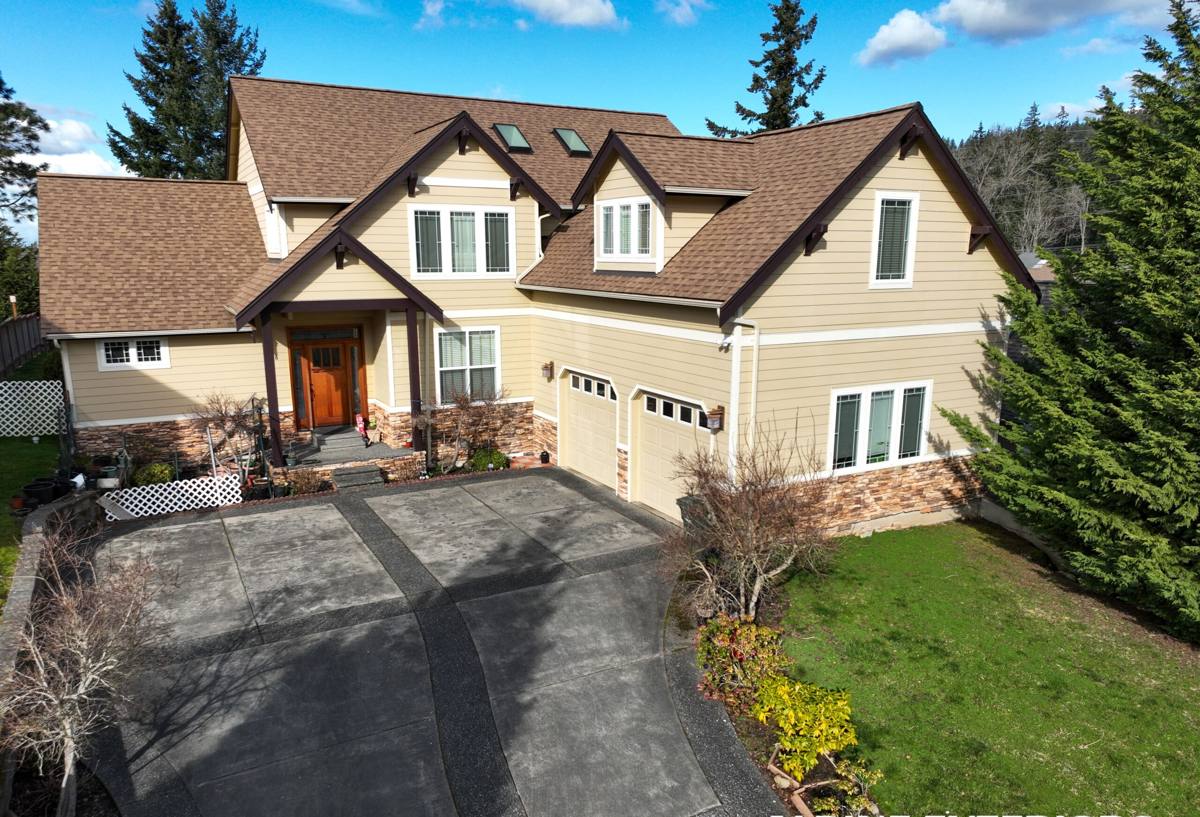
Why the Local Climate Changes the Decking Conversation
Salt Air and Metal Fasteners
San Juan Island's proximity to salt water means airborne salt settles on every exterior surface, including deck framing, fasteners, and hardware. Standard fasteners corrode faster here than they would twenty miles inland. That corrosion doesn't just stain the board around the screw head — over years it weakens the connection between the board and the joist, which is a structural issue, not a cosmetic one. Fastener and hardware selection matters more here than in most parts of the state.
Driving Rain and Drainage
Rain on the islands doesn't always fall straight down. Wind-driven rain gets pushed sideways into ledger connections, under rail posts, and into any gap where flashing was skipped or done as an afterthought. A deck that sheds water fine in a calm rain can still take on water at the house connection during a wind event. Drainage detailing at the ledger board and around post bases is one of the first things we check on both new builds and repair calls.
Moss, Algae, and Shade
Between the tree cover common on island lots and the extended damp season, moss and green algae film show up fast on any deck surface that doesn't get regular sun and airflow. This is mostly a surface and maintenance issue on composite decking rather than a structural one, but the board's surface texture and the substructure's ventilation both affect how bad it gets and how hard it is to keep ahead of.
What Correct Composite Decking Actually Involves
Composite boards themselves are a relatively forgiving, low-maintenance product — that's the whole appeal. But the board is only as good as what's underneath and around it. A correct composite deck installation here includes:
- A structurally sound substructure — joists, beams, and posts sized and spaced to the composite manufacturer's specs, which are often tighter than dimensional-lumber spacing because composite boards flex differently than wood
- Proper ledger flashing where the deck ties into the house, so wind-driven rain can't work its way behind the siding or into the rim joist
- Corrosion-resistant fasteners and hardware rated for coastal/marine exposure, not standard exterior-grade hardware
- Joist tape or another moisture barrier on top of the framing to slow rot at the fastener penetrations, which is cheap insurance against the damp season
- Correct board spacing and expansion gaps, since composite material expands and contracts with temperature and moisture more than people expect
- Ventilation underneath the deck so trapped moisture and shaded, damp air don't accelerate substructure rot or feed moss growth on the underside and edges
- Hidden fastener systems or manufacturer-approved face-screwing, done to spec so board edges stay tight and don't telegraph fastener lines over time
Skip any one of these and the composite boards can look fine on the surface while the framing underneath is quietly failing — which is exactly the kind of problem that shows up as a soft spot or a loose rail three or four years later, well after the original installer is gone.
Composite vs. Wood vs. PVC — An Honest Comparison for This Climate
We install more than one decking material, and each has real trade-offs. Here's how they compare specifically for San Juan Island's conditions:
| Material | Moisture/salt air behavior | Maintenance | Upfront cost |
|---|---|---|---|
| Composite decking | Resists rot and swelling well; surface can still grow moss/algae in shaded, damp spots without cleaning | Periodic washing to stay ahead of moss; no staining or sealing required | Mid to upper range |
| Pressure-treated wood | Prone to warping, splitting, and rot acceleration in prolonged damp; treatment slows but doesn't stop it | Regular sealing/staining needed, more often in this climate than inland | Lowest |
| Cedar | Naturally rot-resistant but still weathers and grays quickly in salt air and rain | Sealing or staining to maintain appearance; more upkeep than composite | Mid range |
| PVC/capped polymer | Fully resists moisture absorption; performs very well in wet, salty conditions | Lowest maintenance; occasional washing | Highest |
For most San Juan Island homeowners, composite hits the practical middle ground: it handles the moisture and salt exposure far better than uncapped wood, doesn't demand a sealing schedule, and costs less than full PVC systems — with the honest caveat that it still needs occasional cleaning to stay ahead of moss and surface grime in shaded spots.
Repair, Resurface, or Full Replacement?
Not every deck on the island needs to be torn out. When we get a call about a tired or damaged deck, we're figuring out which of three categories it falls into:
Repair
Isolated board damage, a few failed fasteners, or a soft spot in one section of framing can often be repaired without replacing the whole deck — as long as the rest of the substructure tests sound.
Resurface
If the framing underneath is still structurally solid but the old decking (often wood, or an early-generation composite) has reached the end of its life, we can often reuse the substructure and install new composite boards on top, which saves demolition cost.
Full Replacement
If the joists or ledger connection show rot, if the deck was undersized or under-flashed from the start, or if the framing spacing doesn't meet current composite manufacturer specs, resurfacing isn't an honest option — we'll tell you that rather than screw new boards onto a bad foundation.
We'll always tell you which category your deck falls into before we quote anything, and why.
Our Process, Start to Finish
- On-site evaluation. We walk the existing deck or the build site, check framing condition and moisture exposure, and talk through what you actually use the space for.
- Material and layout plan. We recommend a composite line and color based on your home, sun/shade exposure, and budget, and lay out board direction and rail style.
- Framing and flashing work. Any needed substructure repair, ledger flashing, and moisture barrier work happens before a single composite board goes down. This is the step that gets skipped by rushed installs and it's the one that determines how the deck ages.
- Composite installation. Boards, fasteners, and rail systems go in to manufacturer spec, with attention to expansion gaps and fastener corrosion resistance.
- Final walkthrough. We review the finished deck with you, including basic care guidance for keeping moss and algae off the surface through the wet months.
Maintenance Checklist for Composite Decks in This Climate
Composite decking is low-maintenance, not no-maintenance, especially given San Juan Island's damp shoulder seasons. A simple annual routine goes a long way:
- Rinse or sweep debris and organic buildup off the deck surface regularly, especially in shaded areas
- Wash the deck with a soft-bristle brush and a composite-safe cleaner once or twice a year to remove moss and algae film before it sets in
- Check that gaps between boards and along the deck perimeter stay clear so water can drain rather than pool
- Inspect fastener heads and railing hardware once a year for early rust or corrosion staining
- Trim back overhanging branches and vegetation that keep sections of the deck shaded and damp longer than the rest
- Confirm under-deck ventilation gaps and vents (if present) stay clear of debris
Why Hire a Crew That Already Works San Juan Island
Ferry scheduling, material logistics, and site access on the islands are different from a mainland job, and it shows in how a project gets planned and staged. A crew that regularly works San Juan County already has these logistics worked out, already knows which composite lines and hardware hold up to local salt exposure, and isn't learning the region's drainage and moss issues on your project. We also stand behind the work with a local presence — if something needs a look after the fact, we're not a ferry-and-a-half away with no history on the job.
If you're weighing a new composite deck, a resurface, or a repair on San Juan Island, we're happy to take a look and give you a straight read on what your deck actually needs. Reach out for a free, no-pressure estimate using the form below.