 Orcas Island Siding
 Why San Juan Island Roofs Wear Differently
A roof on San Juan Island doesn't age the same way a roof does twenty miles inland. The island sits fully exposed to Puget Sound weather — salt-laden air off the water, wind that funnels between the islands, and long stretches of the year where shade, moisture, and cool temperatures combine to grow moss faster than most homeowners expect. None of that means asphalt shingles are the wrong choice here. It means they need to be installed and maintained with those specific stresses in mind, not treated like a generic re-roof.
Salt air accelerates corrosion on exposed metal — nail heads, flashing, vent caps, and fasteners that aren't rated for coastal exposure will show rust well before the shingles themselves are due for replacement. Driving rain, especially wind-driven rain during winter storms, finds every weak seam at valleys, chimneys, and skylights. And moss doesn't just sit on the surface looking bad — its root structure lifts shingle edges and holds moisture against the mat, which shortens the life of the roof from underneath. A correctly built asphalt shingle roof accounts for all three from the start.
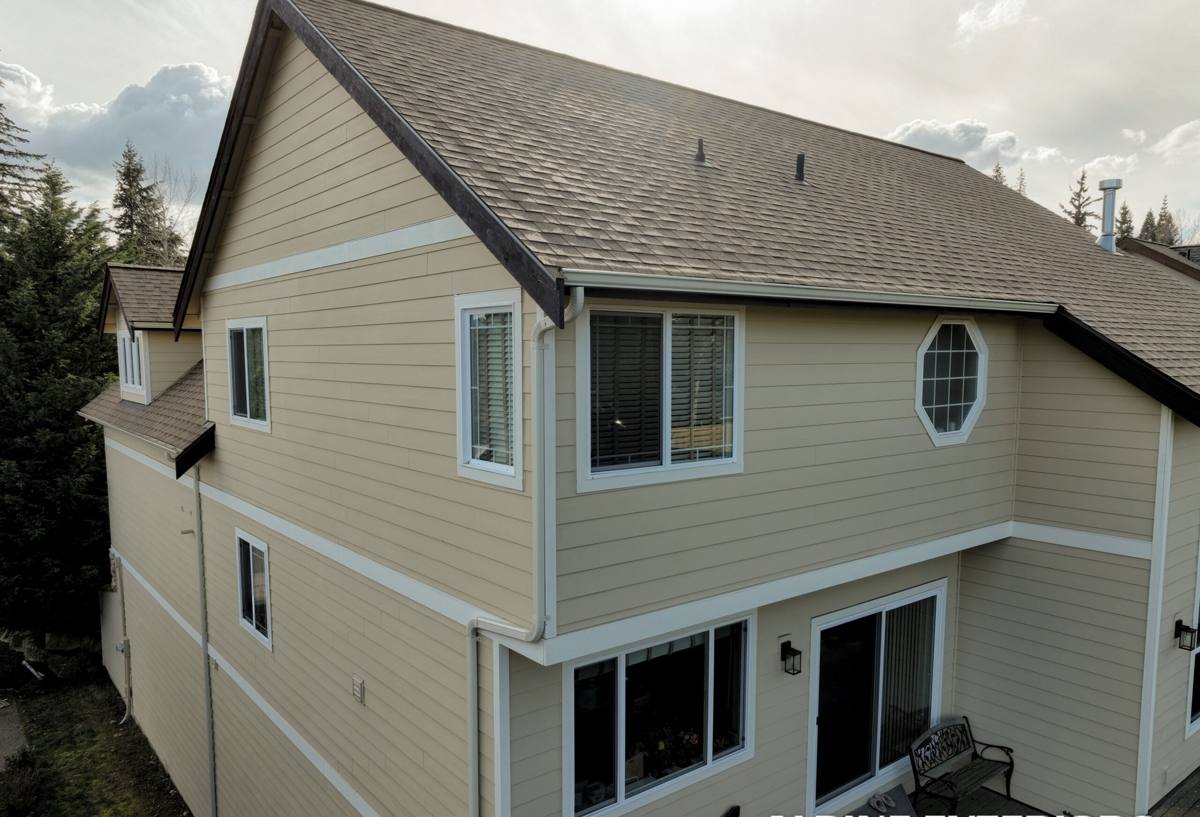
What a Correct Asphalt Shingle Installation Involves
"Correct" isn't a marketing word — it's a specific set of steps that either happen or don't. On San Juan Island, skipping any one of these is where roofs start failing early.
Tear-Off and Deck Inspection
Every legitimate re-roof starts with a full tear-off down to the decking, not a layover. That's the only way to actually see the plywood or plank sheathing underneath. Coastal moisture means soft, delaminated, or stained decking shows up more often here than in drier parts of the state, and any section that doesn't pass inspection gets replaced before anything new goes down. Covering a compromised deck with new shingles just hides the problem for a year or two.
Underlayment and Ice-and-Water Protection
A synthetic underlayment across the full roof is the baseline, but the vulnerable spots — eaves, valleys, and any low-slope transitions — get a self-adhering ice-and-water membrane underneath. That membrane is what keeps wind-driven rain from working its way under the shingle field during a strong winter blow, which is exactly the kind of weather San Juan Island gets more of than the mainland.
Ventilation Balance
Intake at the soffits and exhaust at the ridge have to be balanced, not just present. Under-ventilated attics trap moisture, which condenses on the underside of the deck and rots it from the inside — a slow failure that has nothing to do with the shingles themselves and everything to do with airflow that was never designed correctly.
Flashing at Every Penetration
Chimneys, skylights, plumbing vents, and sidewalls are where the overwhelming majority of leaks start on any roof, shingle roofs included. Step flashing, counter-flashing, and properly lapped valley metal — installed in the correct order relative to the underlayment and shingle courses — are what actually keep water out, not caulk applied after the fact.
Shingle Selection and Fastening
Shingles get nailed according to the manufacturer's high-wind pattern, not the minimum pattern, given how exposed island rooflines can be. We also match the fastener to the environment — corrosion-resistant nails, not standard electro-galvanized, given the salt content in the air here.
Building In Resistance to Moss, Algae, and Salt Air
You can't stop a coastal, tree-shaded island from growing moss altogether, but you can build a roof that resists it longer and sheds it more easily.
Algae-Resistant Shingle Lines
Most major manufacturers now build algae-resistant granules into their architectural shingle lines, using copper-containing granules that inhibit the black algae streaking common in the Pacific Northwest. On San Juan Island, where humidity and tree cover are both working against a bare roof, we treat algae-resistant shingles as the standard, not an upgrade.
Zinc or Copper Strips
Installing a zinc or copper strip near the ridge lets rain wash trace metal ions down the roof slope every time it rains, which suppresses moss and algae growth on the courses below. It's a small, one-time addition during installation that pays off over years of reduced moss buildup, especially on north-facing slopes that stay damp longer.
Tree Cover and Shade
A lot of the moss problem on the islands comes down to shade and overhanging branches keeping sections of roof damp long after the rest has dried. We'll flag branches that are close enough to a roofline to be worth trimming back — it's the cheapest moss prevention there is, and it also cuts down on debris collecting in valleys and gutters.
Comparing Shingle Options for San Juan Island Conditions
Not every asphalt shingle product handles coastal, shaded, moss-prone conditions the same way. Here's how the common tiers compare for this specific environment.
| Shingle Type | Wind Rating | Algae Resistance | Typical Lifespan Here |
|---|---|---|---|
| Standard 3-tab | Lower (60-70 mph rated) | Limited unless specified | Shorter — more exposed to wind and moisture stress |
| Architectural / laminate | Higher (110-130 mph rated) | Usually built in on current product lines | Longer, with added thickness resisting wind lift |
| Impact-resistant (Class 4) | High, plus impact rating | Usually built in | Longest of the three, at a higher upfront cost |
For most homes on San Juan Island, an algae-resistant architectural shingle rated for higher wind speeds is the right balance of durability and cost. Impact-resistant products make sense on more exposed sites or where a homeowner wants the longest possible service interval, but they're not a requirement for every roof.
Ventilation and Trapped Moisture: The Quiet Roof Killer
Shingles almost never fail from the top down here — they fail from the bottom up, when an attic can't breathe. Cool, moist island air condenses inside a poorly vented attic space, and that moisture sits against the roof deck and rafters. Over a few seasons it can rot sheathing, delaminate plywood, and void the shingle manufacturer's warranty, since most warranties require proper ventilation as a condition of coverage. We check net free ventilation area against the attic square footage on every project, not just at install, but as part of any roof inspection — it's one of the most common issues we find on older San Juan Island homes that otherwise look fine from the ground.
Our Process, Start to Finish
- On-site inspection. We walk the roof and attic, not just the ground-level view, and check decking condition, current ventilation, and flashing wear.
- Written estimate. A clear scope covering tear-off, decking repair allowances, underlayment, flashing, shingle product, and ventilation work — no vague line items.
- Material staging. Because everything for an island job has to arrive by ferry, we schedule delivery and staging in advance so the crew isn't waiting on materials mid-project.
- Tear-off and deck repair. Full removal down to sheathing, with any soft or damaged decking replaced before underlayment goes down.
- Underlayment, flashing, and shingle installation. Built in the order above, with ice-and-water membrane at vulnerable areas and manufacturer-spec fastening throughout.
- Ventilation correction. Intake and exhaust brought into balance if the inspection found a shortfall.
- Final walkthrough and cleanup. Magnetic sweep for stray fasteners, gutter and yard cleanup, and a final review of the finished roof with the homeowner.
What Actually Drives Cost on San Juan Island
Pricing on any re-roof depends on the specifics of the house, but a few factors matter more here than they would on a mainland job.
| Cost Factor | Why It Matters on San Juan Island |
|---|---|
| Roof pitch and access | Steeper or harder-to-reach roofs take longer and require more safety setup |
| Number of tear-off layers | Older homes with multiple layers of roofing add disposal and labor time |
| Decking repair or replacement | Coastal moisture increases the odds of soft or delaminated sheathing |
| Material and crew logistics | Ferry scheduling affects delivery timing and needs to be planned into the project, not discovered mid-job |
| Flashing complexity | Chimneys, skylights, and multiple roof planes each add detail work |
| Shingle tier selected | 3-tab, architectural, and impact-resistant products carry different material costs |
We walk through these factors with every homeowner before finalizing a scope, so the estimate reflects the actual roof rather than a generic square-footage number.
Maintenance Checklist for San Juan Island Homeowners
Between full re-roofs, a few habits go a long way toward protecting the investment, especially given the moss and moisture conditions here.
- Clear gutters and valleys of needles and debris at least twice a year, more often under heavy tree cover
- Trim back branches that shade or overhang the roofline to reduce moss growth and debris buildup
- Have moss physically removed rather than pressure-washed, which can strip granules and shorten shingle life
- Check attic ventilation isn't blocked by insulation or debris at the soffits
- Look at flashing around chimneys and skylights after major winter storms for lifted or displaced metal
- Schedule a roof inspection every few years, or after any unusually high wind event
Why a Crew That Already Works San Juan Island Matters
Roofing on an island isn't the same logistics problem as roofing on the mainland. Every delivery, every dumpster, every crew trip has to work around ferry schedules, and a contractor who hasn't planned for that will either show up short on materials or burn through a homeowner's timeline waiting on the next sailing. Working out of Orcas Island, our crew already builds ferry logistics into every San Juan Island project — materials staged ahead of time, crew days planned around the boat schedule, and no surprises mid-job because of something that should have been anticipated.
There's also a practical knowledge gap that only comes from doing the work here repeatedly: knowing which shingle products actually hold up to San Juan County's combination of salt air, wind, and shade, which flashing details fail first on island homes, and how much moss pressure a given roofline is realistically going to see based on its orientation and tree cover. That's not something a mainland crew unfamiliar with the islands picks up on a single job.
If your roof is showing granule loss, moss buildup, curling edges, or you're just due for a straightforward inspection, we're glad to take a look. Reach out for a free, no-pressure estimate using the form below — we'll walk the roof, tell you honestly what condition it's in, and lay out your options without any pressure to decide on the spot.