 Orcas Island Siding
 Siding Installation in Rosario: Built for the East Side of Orcas Island
Rosario sits on the waterfront side of Orcas Island, in San Juan County, where homes face a specific combination of weather that most siding products simply weren't designed to handle over the long term: salt-laden air off the water, driving wind-blown rain that hits walls sideways instead of straight down, and a shaded, damp season that keeps moss and algae growing on north- and east-facing walls for months at a time. Siding installation here isn't a cosmetic job. It's a weatherproofing job first, and a good-looking exterior second. We install one product system for exactly that reason, and we want to walk through what that means before you get quotes.
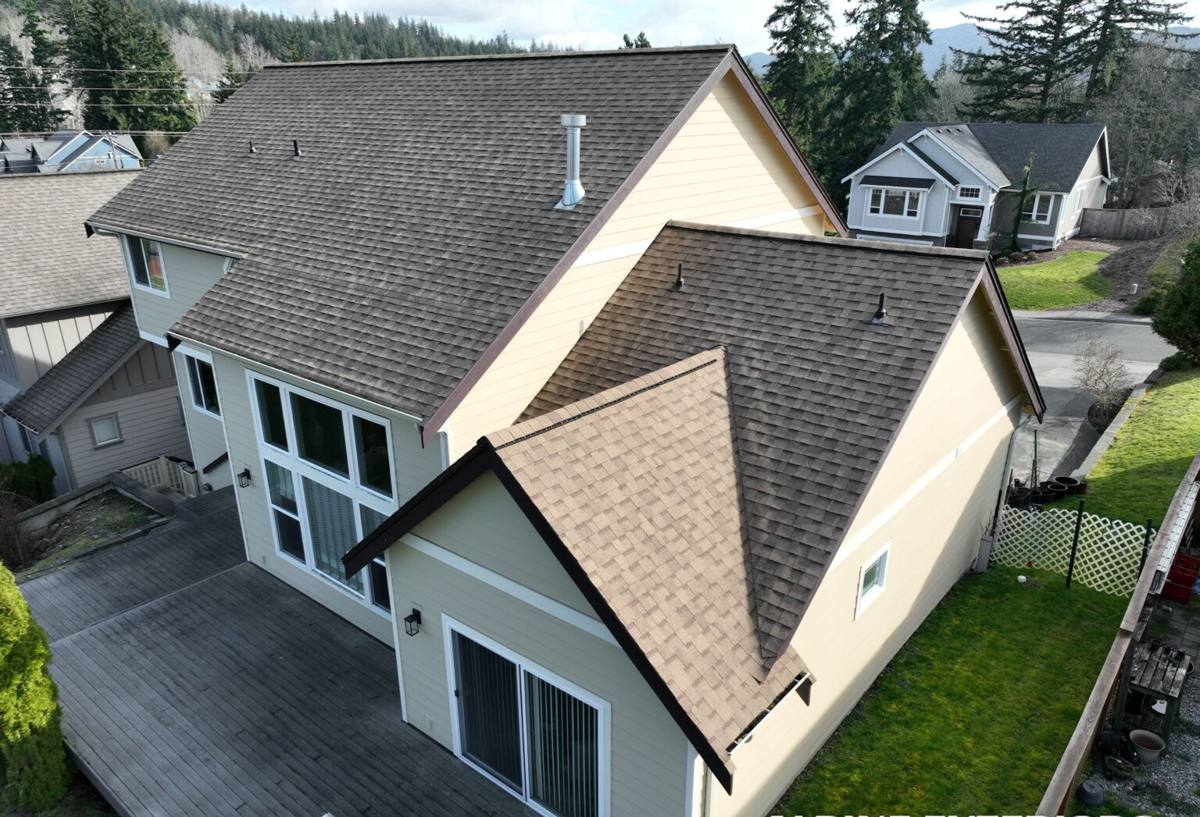
What Rosario's Climate Actually Does to Siding
Salt Air and Corrosion
Homes near the water on Orcas Island are exposed to a steady drift of salt in the air, even on properties set back from the shoreline. Salt accelerates corrosion on fasteners, flashing, and any metal trim that isn't rated for a marine-adjacent environment. It also settles into porous or poorly sealed siding surfaces and contributes to premature finish breakdown, especially on products that rely on field-applied paint rather than a factory finish.
Driving Rain and Wind-Driven Moisture
San Juan County gets a lot of its precipitation as low-intensity rain pushed sideways by wind off the water, which means siding has to shed water that's hitting it at an angle, not just falling straight down. That puts real pressure on laps, seams, and the weather-resistive barrier behind the siding. Products or installs that rely on caulk alone to keep water out tend to fail here faster than in a drier, calmer inland climate.
The Long Moss Season
Shaded walls, tree cover, and consistent moisture combine to give Rosario a moss and algae season that can run most of the year on north-facing and heavily shaded elevations. Moss holds moisture against the wall surface, which is exactly the condition that causes rot in wood-based products and paint failure on painted surfaces. Siding here needs to tolerate sustained dampness without breaking down.
What a Correct Siding Installation Involves
A siding installation is only as good as what's underneath it. On Rosario homes, we treat the following as non-negotiable, regardless of which product a homeowner is replacing:
- A continuous, properly lapped weather-resistive barrier with no gaps, tears, or reversed laps
- Correct flashing at every window, door, deck ledger, and roof-to-wall transition — the majority of siding failures we find start at flashing details, not the siding field itself
- Rainscreen or drainage gap where the wall assembly and product call for it, so incidental moisture behind the siding has somewhere to go
- Manufacturer-specified fastener type, spacing, and penetration depth — not "close enough"
- Correct clearance from grade, roofing, decks, and hardscape so the bottom edge of the siding isn't sitting in standing water or splash-back
- Sealed and back-primed cut ends at every joint, corner, and penetration
Skip any one of these and it doesn't matter how good the siding product is — water will find the gap eventually, and on this side of the island, it usually finds it faster.
Why We Install Only James Hardie Fiber Cement
We don't install vinyl, LP SmartSide, Cemplank, Allura, primed spruce, or cedar. That's not a marketing position — it's a standard we settled on after weighing how each of those products actually performs against the climate conditions described above, versus how James Hardie fiber cement performs.
Non-Combustible and Dimensionally Stable
Hardie siding is fiber cement — it doesn't burn, and it doesn't expand and contract with moisture and temperature the way wood-based or vinyl products do. That stability matters directly for how well seams, caulk joints, and paint lines hold up over years of the wet-dry cycling that's normal here.
ColorPlus Factory Finish
Most of the siding we install carries Hardie's ColorPlus factory-applied finish rather than field-applied paint. A factory finish is baked on under controlled conditions and backed by its own finish warranty, which matters a great deal in a salt-air environment where field-applied paint tends to fail at the finish level well before the substrate underneath is actually done.
HZ5 Climate Engineering
James Hardie engineers its products differently depending on regional climate zone, and the Pacific Northwest — including Orcas Island — falls into their HZ5 zone, engineered for high-moisture, freeze-thaw-capable climates. That's a meaningfully different product than what gets installed in a dry, hot climate, and it's one more reason we don't treat "fiber cement" as a single generic category.
Warranty Structure
Hardie backs its siding with a strong, transferable limited warranty, and ColorPlus finishes carry a separate finish warranty. Warranty terms are only meaningful when installation follows the manufacturer's specifications, which is why we're strict about the details in the section above rather than treating them as optional.
Our Rosario Installation Process
- Site visit and assessment — we look at existing siding condition, wall assembly, flashing details, drainage, and any moisture or rot already present, not just square footage
- Written scope and estimate — what's being removed, what's being repaired underneath, what product and profile is being installed, and a realistic timeline
- Material staging — ordering and staging enough material and fasteners for the full job before removal begins, since re-ordering to the island adds real delay
- Tear-off and substrate inspection — removing existing siding and inspecting sheathing for rot or damage before anything new goes on
- Weather barrier and flashing — installing or repairing the water-resistive barrier and flashing at every penetration and transition
- Hardie installation — installed to manufacturer fastening, clearance, and joint-treatment specifications
- Caulking, trim, and paint touch-up — sealing cut ends and joints and finishing trim details
- Final walkthrough — reviewing the finished work with the homeowner before we consider the job done
Common Problem Areas We See on Orcas Island Homes
When we're called out to look at failing siding on the island, a few patterns show up repeatedly: rot at the bottom courses where siding was installed too close to grade or a deck surface, staining and soft spots on shaded north walls where moss has been holding moisture for years, corroded fasteners on older installs that used the wrong fastener type for a marine-adjacent environment, and gaps at window and door flashing that were caulked over instead of properly flashed. None of these are unique to Rosario, but the climate here makes them show up faster and get worse quicker than they would somewhere drier and less exposed.
Cost Factors for Siding Installation
Every home is different, but the factors below are what actually move the price on a Rosario siding installation, more than square footage alone:
| Factor | Why It Matters |
|---|---|
| Substrate condition | Rotten or damaged sheathing found during tear-off adds repair scope before new siding can go on |
| Number of stories and roof lines | Multi-story walls and complex roof-to-wall intersections mean more flashing detail and staging time |
| Existing siding type | Some materials come off faster and cleaner than others; asbestos-era or multi-layer siding adds removal complexity |
| Trim and detail level | Corner boards, window casing, and architectural trim add labor beyond the flat wall area |
| Site access | Tight lots, waterfront grade changes, and limited staging space on some island properties affect crew efficiency |
| Material logistics | Getting the right quantity staged in one trip matters more here than on the mainland, where a supply run is an hour, not a ferry ride |
Why Hire a Crew That Already Works Rosario and Orcas Island
Working on an island changes the practical realities of a siding job in ways that don't show up on a mainland estimate. Ferry schedules constrain how crews and material move, so a contractor who already has a rhythm for staging material and coordinating labor around the ferry schedule will keep your project on a realistic timeline rather than losing days to logistics nobody planned for. A crew that already works San Juan County also has a working sense of how exposed a given elevation is to wind-driven rain and salt air based on its orientation and shoreline distance, which shapes decisions about flashing detail and drainage that a first-time-on-the-island crew is more likely to guess at.
Maintaining Your Siding After Installation
Correctly installed Hardie siding is low-maintenance, not zero-maintenance. A little attention keeps it performing the way it's supposed to in this climate:
- Rinse salt residue and grime off exterior walls periodically, especially on elevations facing the water
- Keep gutters clear so water isn't overflowing and running down the wall face
- Trim back vegetation and tree cover where practical to reduce moss growth on shaded walls
- Inspect caulk joints at trim and penetrations every couple of years and re-caulk where it's cracked or pulling away
- Address any moss or algae growth promptly rather than letting it sit against the surface long-term
- Have any impact damage or visible gaps looked at before the next wet season rather than waiting
If you're planning a siding project in Rosario or elsewhere on Orcas Island, we're happy to take a look and put together a straightforward, no-pressure estimate — just fill out the form below.