 Orcas Island Siding
 Why Rosario's Siding Takes More Punishment Than Most
Rosario sits right up against the water on Orcas Island, and that waterfront position is exactly what makes siding decisions here different from a house a few miles inland. Homes in this pocket of San Juan County deal with a specific combination: salt-laden air drifting off the water, wind-driven rain that gets pushed sideways into wall assemblies during winter storms, and a shaded, moisture-heavy shoulder season that lets moss and algae take hold on anything that stays damp too long. Any one of those factors is manageable. Together, over years, they expose the weak points in siding that wasn't built or installed for this kind of exposure.
We install fiber cement siding on homes throughout Orcas Island, and Rosario is one of the areas where we see the clearest difference between a system that holds up and one that starts failing early. This page is about what that means specifically for a fiber cement job in this neighborhood — not a general overview of siding.
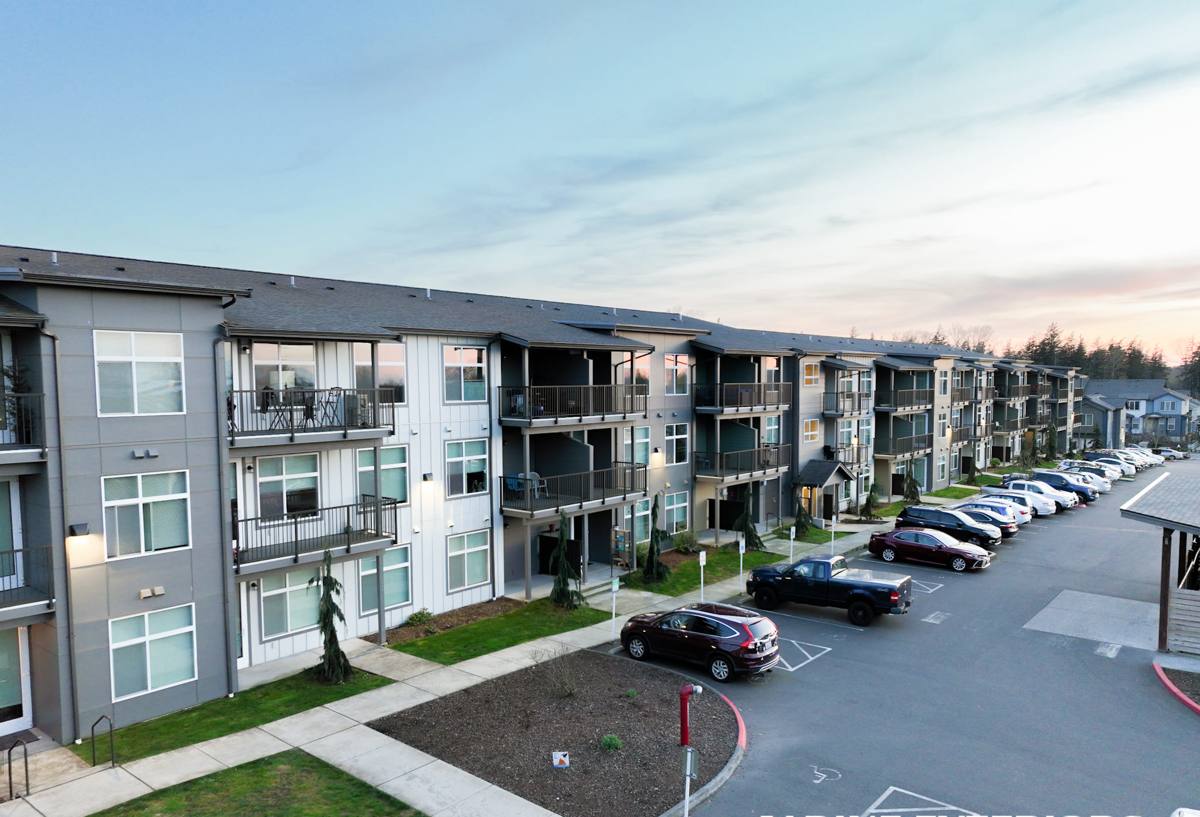
What Salt Air and Driving Rain Actually Do to a Wall System
Salt air is corrosive to exposed metal fasteners and trim, and it accelerates the breakdown of coatings that aren't formulated to resist it. On a home near Rosario's shoreline, that means every fastener, flashing detail, and painted surface is working harder than it would a few miles inland.
Driving rain is a separate problem. It's not just water hitting a wall — it's water being forced horizontally and even upward under wind pressure, finding any gap in a water-resistive barrier, any short flashing lap, or any siding butt joint that wasn't sealed correctly. Once that water gets behind the siding, what happens next depends entirely on what the siding is made of and how it was installed.
Where Moss Season Comes In
Orcas Island's wet months create long stretches where shaded wall sections — north faces, areas under tree cover, spots that don't get afternoon sun — simply don't dry out for days at a time. That's the environment moss and algae need. Siding that holds moisture at the surface, or that has a paint film prone to chalking and losing adhesion, gives moss something to grip onto. Once it's established, it holds even more moisture against the wall, which compounds the problem.
Why We Only Install James Hardie Fiber Cement
We made a decision, as a company, to install James Hardie fiber cement siding exclusively — not LP SmartSide, not vinyl, not Cemplank, not Allura, not primed spruce or cedar. That's not a marketing position, it's a standard we hold ourselves to because of what we've seen matter on homes in exposures like Rosario's.
Fiber cement as a category resists the two things that cause the most trouble in this climate: it doesn't rot or delaminate the way wood-based products can when moisture gets past the surface, and it's dimensionally stable enough that it doesn't swell, cup, or telegraph fastener patterns the way engineered wood siding can in a consistently damp environment. James Hardie specifically backs its ColorPlus factory finish with a coating process built to hold color and resist the fading and chalking that gives algae and moss something to cling to — which matters directly for the moss-season problem described above.
Hardie also engineers its HZ5 product line specifically for climates with higher moisture exposure, which is the right specification for coastal San Juan County. Combined with a strong transferable warranty and a track record of holding up when installed to manufacturer spec, it's the system we're willing to put our name behind on a home that's going to face what Rosario's wall assemblies face every winter.
What a Correct Fiber Cement Job Involves Here
The material is only half the equation. In a high-exposure location like Rosario, installation detailing is what actually determines whether the siding performs for its full service life or starts showing problems in year five.
- A properly lapped water-resistive barrier behind the siding, with all seams and penetrations sealed before the first board goes up
- Correct flashing at every window, door, and horizontal trim transition — the details driving rain exploits first
- Fastener placement and spacing per James Hardie's published installation instructions, using fasteners rated for coastal, corrosion-prone environments
- Proper clearance between the bottom edge of the siding and grade, decks, or roof lines, so water has somewhere to go instead of wicking into the board
- Correctly sealed and back-primed cut edges wherever a board is trimmed on site
- Rain-screen or drainage gap detailing where the wall assembly calls for it, so incidental moisture behind the siding can actually drain and dry
Any one of these steps done wrong won't necessarily show up right away. It shows up two, five, or ten years later — as a soft spot behind a poorly flashed window, a failed caulk joint that let water track behind a butt seam, or a north wall that stays damp long enough each winter for moss to take hold. Getting the details right the first time is cheaper than fixing them later, every time.
Our Process for a Rosario Siding Job
1. On-Site Assessment
We walk the home and look specifically at exposure: which walls face prevailing wind and driving rain, which sections stay shaded and slow to dry, and where existing siding or trim is already showing moss, staining, or moisture damage. That assessment shapes the installation plan, not just the material choice.
2. Scope and Material Plan
We spec the appropriate James Hardie product line and profile for the home, confirm trim and flashing details, and walk through the plan with the homeowner before anything is ordered.
3. Tear-Off and Substrate Check
Old siding comes off and we check the sheathing and water-resistive barrier underneath for hidden moisture damage before closing anything back up. This step matters more on waterfront homes than almost anywhere else on the island.
4. Installation to Manufacturer Spec
Fastening, flashing, and clearances are installed per James Hardie's requirements — the details outlined above — not shortcuts that save time but shift risk onto the homeowner.
5. Final Walkthrough
We review the finished work with the homeowner, including care and maintenance basics specific to a shoreline exposure.
Comparing Siding Options for a Rosario Exposure
| Factor | James Hardie Fiber Cement | Engineered Wood (e.g. LP SmartSide) | Vinyl |
|---|---|---|---|
| Moisture/rot resistance | Non-combustible, doesn't rot; engineered for high-moisture HZ5 climates | Wood-based core, vulnerable if moisture reaches the substrate | Doesn't rot, but seams and J-channels can trap moisture |
| Salt air / coastal performance | Factory finish formulated to resist fading and coating breakdown | Coating and edge sealing are critical failure points near salt air | Can become brittle and discolor with long-term UV and salt exposure |
| Moss/algae resistance | ColorPlus finish resists the chalking that gives moss a foothold | Painted surfaces can chalk over time, especially in shaded areas | Smooth surface resists growth but seams collect debris |
| Installation sensitivity | High — but backed by a manufacturer spec and strong warranty when followed | High — edge sealing and moisture management are critical | Moderate — but expansion/contraction affects fit over time |
| Fire resistance | Non-combustible | Combustible (wood-based) | Combustible, can melt/deform near heat sources |
Maintenance in a Damp, Shaded Climate
No siding is maintenance-free in San Juan County's climate, but fiber cement asks less of a homeowner than the alternatives. A periodic rinse to keep organic buildup from establishing on shaded walls, a visual check of caulking at trim and penetrations every year or two, and prompt attention to any landscaping that's keeping a wall section shaded and damp longer than it needs to be. That's a manageable routine — much lighter than what's needed to keep a wood-based or poorly detailed vinyl system performing in the same conditions.
Why Hiring a Crew That Already Works Rosario Matters
Installation detailing is judgment-based work. A crew that already understands which walls in Rosario take the worst of the driving rain, where moss tends to establish first, and how salt air affects fastener and trim choices is going to make better calls on flashing laps, clearances, and drainage detailing than a crew installing here for the first time. That local pattern recognition is part of what you're paying for when you hire a contractor who already knows this stretch of Orcas Island, not just the general island climate.
If you're planning a siding replacement or new build in Rosario, we're happy to walk the property, look at your specific exposure, and put together a straightforward plan and estimate — no pressure, no obligation. The form below is the easiest way to get that started.