 Orcas Island Siding
 Building Decks for Rosario's Marine Climate
Rosario sits on the east side of Orcas Island, close enough to the water that salt air, wind-driven rain, and heavy shade from the surrounding evergreens are part of daily life for any outdoor structure. A deck built here works harder than a deck built inland. Fasteners corrode faster. Framing stays damp longer between dry spells. North-facing and tree-shaded sections grow moss and algae almost year-round. None of that means a deck can't last decades in Rosario — it means the framing, hardware, and decking material all need to be chosen and installed with that environment in mind from the start, not patched later.
We build and repair decks throughout the Rosario area and the rest of Orcas Island, and most of what separates a deck that's still solid in fifteen years from one that's rotting at the ledger board in five comes down to a handful of decisions made before the first board goes down.
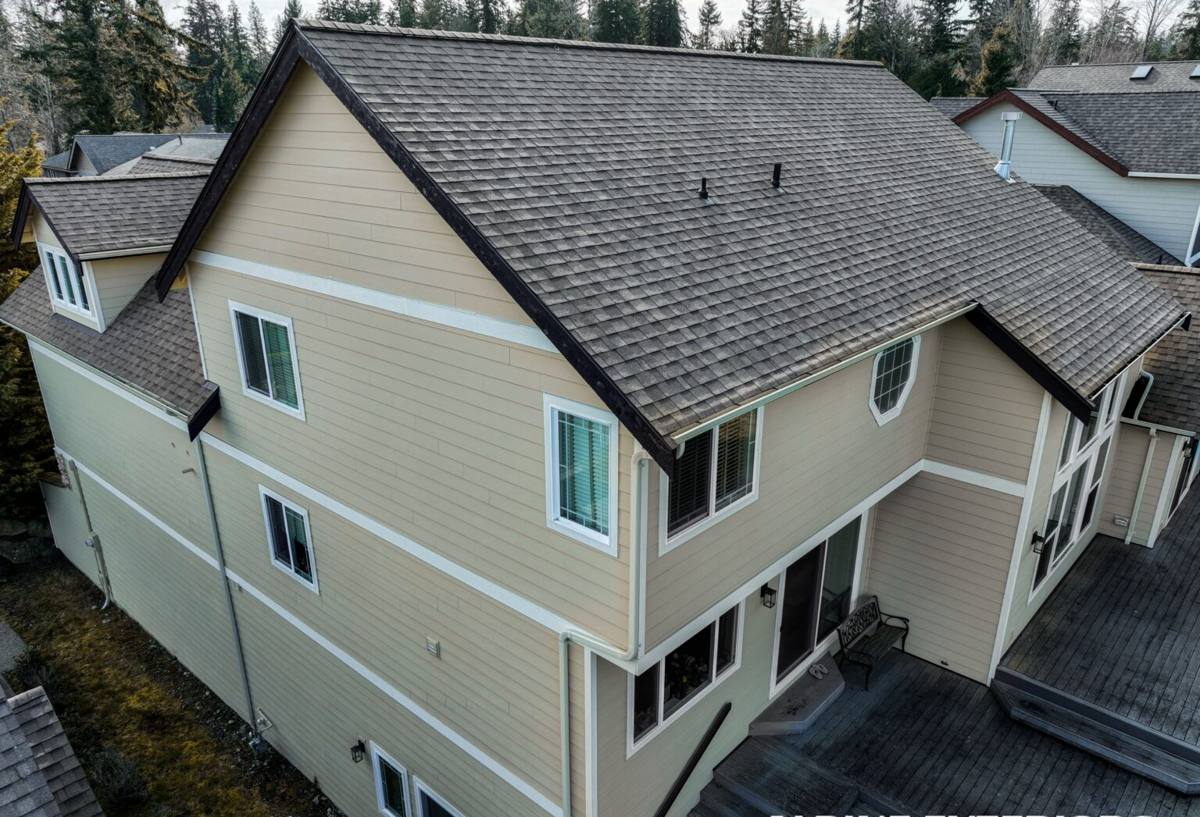
What Salt Air, Rain, and Moss Actually Do to a Deck
Salt Air and Corrosion
Airborne salt accelerates corrosion on anything metal — fasteners, joist hangers, post bases, and railing hardware. Standard electro-galvanized screws and nails can start rusting within a season or two in a coastal setting like Rosario. Once a fastener starts to fail, it's usually hidden under the decking, so the first sign is often a board that's gone spongy or a railing that's developed play at the post.
Driving Rain and Moisture Trapping
San Juan County gets plenty of wind-driven rain, and Rosario's proximity to the water means moisture doesn't just fall on a deck — it gets pushed sideways into gaps, ledger connections, and end grain. Decks that trap water against the house or against framing members are the ones that develop rot at the ledger board, the most structurally important — and most commonly failed — connection on any attached deck.
Moss and Algae
Shaded, damp surfaces in this region grow moss and algae readily, and a deck surface is exactly that kind of surface for much of the year. Beyond looking bad, a mossy deck surface is a slip hazard and, on wood decking, a sign that moisture is sitting on the boards longer than it should. Surface texture, board spacing, and material choice all affect how much moss becomes a maintenance problem versus an occasional wash-off.
Framing and Footings: Getting the Structure Right
Everything visible on a deck sits on top of a structure that needs to handle wet ground, occasional freeze-thaw cycles, and decades of load. We frame to a few non-negotiables regardless of what decking material goes on top:
- Footings sized and set to local frost depth and soil conditions, not just poured to whatever depth is fastest
- Post bases that hold the post above the concrete and off standing water, rather than embedding wood directly in or against concrete
- Ledger boards properly flashed and separated from the house wall so water sheds away from the structure instead of into it
- Joist hangers and structural connectors rated for exterior, corrosion-resistant use
- Proper joist spacing and beam sizing for the actual decking material and expected loads — composite and some hardwoods need tighter spacing than standard framing tables assume
On sloped or wooded Rosario lots, footing placement often has to work around exposed roots, ledge, or limited equipment access, which is part of why deck framing here benefits from a crew that has already solved those problems on similar lots rather than working it out for the first time on your job.
Choosing Decking Material for a Coastal, Shaded Lot
There's no single "best" decking material — the right choice depends on how much sun and shade your specific deck gets, how much upkeep you want to do, and your budget. Here's how the common options actually perform in a Rosario-type setting:
| Material | Salt Air / Moisture | Moss & Algae | Maintenance | Typical Lifespan |
|---|---|---|---|---|
| Cedar | Naturally rot-resistant; still needs sealing | Grows moss if not cleaned/sealed regularly | Annual cleaning, periodic sealing or staining | 15–25 years with upkeep |
| Pressure-Treated Fir/Pine | Treated for ground contact but end cuts and fasteners are vulnerable | Moderate to high in shaded areas | Regular cleaning, sealing every 2–3 years | 15–20 years with upkeep |
| Composite | Won't rot; caps resist moisture absorption | Lower absorption, but surface algae can still form in deep shade | Periodic washing, no sealing/staining | 25–30+ years |
| PVC/Cellular Decking | Fully moisture-resistant core | Similar to composite; smooth-surface products shed moss more easily | Occasional washing | 25–30+ years |
In heavily shaded, tree-covered sections of Rosario, we lean toward composite or PVC decking with a textured-but-not-porous surface, since it holds up better under chronic dampness with less annual work. On open, sunnier lots with more airflow, a well-maintained cedar deck can still be a great fit and gives a warmer, more traditional look.
Wood Species Note
We don't typically recommend untreated softwood decking for this climate — the combination of shade, salt air, and rain shortens its usable life enough that the lower upfront cost gets eaten up by earlier replacement or heavier maintenance. That's a maintenance-and-longevity call, not a knock on the wood itself; it simply isn't the right match for every Rosario microclimate.
Fasteners, Flashing, and the Details That Prevent Failures
Most deck problems we get called out to repair in coastal areas trace back to a handful of overlooked details, not dramatic structural mistakes:
- Standard fasteners used instead of stainless steel or marine-grade coated hardware
- Missing or improperly lapped ledger flashing, letting water track behind the ledger and into the house rim joist
- Decking installed tight against the house or railing posts with no gap for water and debris to clear
- Post bases set flush in standing water or wet mulch instead of elevated and drained
- Hidden fastener systems installed without accounting for material expansion in temperature swings
We use stainless steel or high-grade coated fasteners on exterior connections as standard practice on Rosario decks, not as an upgrade — it's cheap insurance against the corrosion this environment causes, and replacing failed hardware later means tearing into finished decking.
Permits and San Juan County Requirements
Most new decks and many substantial deck rebuilds in San Juan County require a building permit, and decks near shoreline or environmentally sensitive areas can also involve additional review depending on setbacks and site conditions. Requirements vary by lot, height, and proximity to water, so we check what applies to your specific property before finalizing a design rather than assuming. Part of our process is confirming what documentation the county wants and handling that paperwork as part of the job, so it isn't left for the homeowner to sort out mid-project.
Our Deck Building Process
- Site visit and assessment — we look at sun exposure, drainage, existing structure (for rebuilds), and access, since island logistics affect scheduling and material delivery
- Design and material selection — sized to your space and use, with decking and hardware chosen for the specific exposure of that lot
- Permitting — confirming what San Juan County requires for your project and handling the application
- Demolition or site prep — for rebuilds, removing old decking and inspecting framing underneath before deciding what's reused versus replaced
- Framing — footings, ledger flashing, joists, and structural hardware installed to hold up under coastal conditions, not just pass initial inspection
- Decking, railing, and finish work — installed with proper spacing and fastening for the material chosen
- Final walkthrough — reviewing the finished deck and going over maintenance specific to the material and site
Maintenance That Actually Matters in This Climate
A well-built deck still needs some upkeep in a salt-air, high-moisture environment. This is the short list that makes the biggest difference:
- Clear leaves, needles, and debris from between boards and against the house before they trap moisture
- Wash the deck surface at least once or twice a year to keep moss and algae from establishing
- Check and re-seal or re-stain wood decking on the manufacturer's recommended schedule, not just when it looks faded
- Inspect the ledger board connection and any visible hardware annually for rust staining or movement
- Keep gutters and downspouts near the deck clear so roof runoff isn't dumping directly onto or under it
- Trim back overhanging branches where practical to reduce shade-driven moss growth
Why a Crew That Already Works Rosario Matters
Building on Orcas Island comes with logistics that don't exist for a mainland job — material deliveries have to work around ferry schedules, lot access on some Rosario properties is tighter or steeper than a typical suburban site, and the right hardware and decking specs for this climate aren't always what a general contractor would default to if they're used to drier, inland conditions. A crew that already builds decks in this area has worked out the supply chain, knows which details actually matter for salt air and shade, and isn't learning San Juan County's permitting process on your project.
If you're planning a new deck or need to replace one that's showing its age, we're glad to come take a look and give you a straightforward, no-pressure estimate — just fill out the form below.