 Orcas Island Siding
 Why Shaw Island Roofs Take a Different Kind of Beating
Shaw Island sits in the same weather system as the rest of San Juan County, but small islands take that weather personally. There's less tree cover breaking up wind gusts in some exposures, more direct exposure to salt-laden air coming off the water, and the kind of driving, sideways rain that finds every gap a mainland roof might never notice. Add in a wet season that stretches on for months, and roofs here age differently than roofs forty miles inland. A repair that would hold up fine in a drier climate can fail in a year or two out here if it isn't done with the local conditions in mind.
We're not describing anything dramatic — no storm damage headlines, no unusual events. It's the slow, steady wear of salt air, moisture, and moss that adds up. That's exactly the kind of damage that gets missed until it's a leak, because it doesn't announce itself.
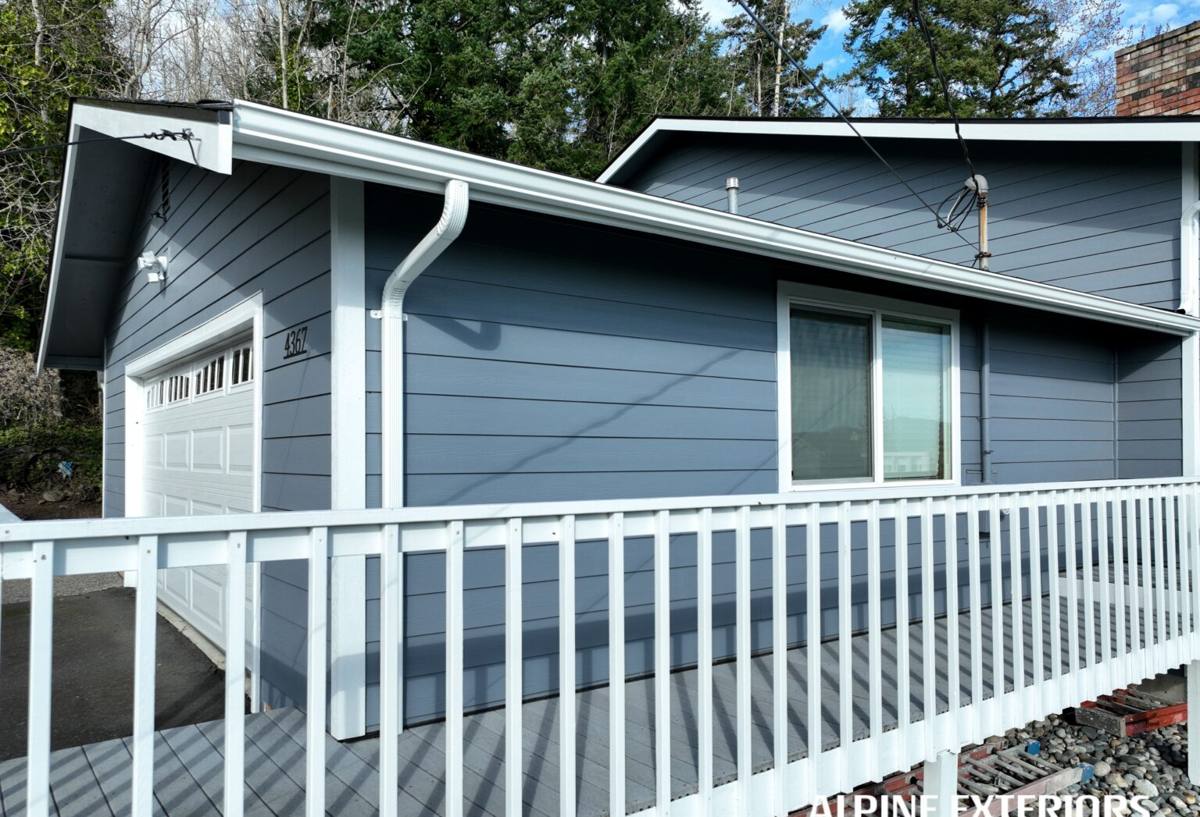
Common Roof Repair Needs We See on Shaw Island
Every island home is different, but the repair calls we get from this part of San Juan County tend to fall into a few recurring categories:
- Moss intrusion at shingle edges and valleys — moss holds moisture against the roof surface and lifts shingle tabs over time.
- Flashing failures around chimneys, skylights, and dormers — the metal or membrane that seals these transitions is often the first thing to go, especially on older homes.
- Nail pops and shingle lift from wind-driven rain working under tabs that have already started to curl.
- Deteriorated ridge caps — the highest, most exposed part of the roof takes the brunt of wind and UV.
- Soft or spongy decking found under damaged shingles, usually from a slow leak that went unnoticed for a season or two.
- Gutter and edge metal separation, which redirects water into fascia and soffits instead of away from the house.
None of these are unusual roofing problems on their own. What makes them worth taking seriously here is how quickly salt air and sustained moisture turn a small issue into a bigger one.
Moss, Moisture, and the Long Wet Season
Moss is the most visible sign of the region's long moss season, but it's really a symptom of moisture that sits on the roof longer than it should — from shade, low slopes, north-facing exposures, or simply a wet season that doesn't let up. Moss itself isn't just cosmetic. Its root structure works into the granule surface of asphalt shingles and lifts the edges of wood shakes, opening paths for water to get underneath rather than run off.
A correct repair addresses the moss and the moisture pattern causing it, not just the patch of roof where the leak showed up. That can mean improving airflow where it's practical, adjusting how water is shed off a low-slope section, or simply being upfront that a spot will need moss treatment on a regular schedule going forward. We'd rather tell a homeowner that than hand back a roof that looks fixed but will show the same problem again in a year.
Repair or Replace? Weighing the Damage
Not every roof problem on Shaw Island calls for a full repair job, and not every repair is worth doing instead of planning for a future replacement. Here's how we generally think about it:
| Situation | Repair Usually Makes Sense | Replacement Worth Discussing |
|---|---|---|
| Localized flashing leak | Yes — isolated, straightforward fix | Only if flashing throughout is failing |
| Moss on a roof under 10-15 years old | Yes — clean, treat, repair affected shingles | Rarely necessary on newer roofing |
| Widespread shingle curling or granule loss | Sometimes, if isolated to one slope | Yes, if it's roof-wide and the material is near end of life |
| Soft decking found in one spot | Yes — replace the section, repair the roofing over it | Only if soft decking shows up in multiple areas |
| Roof is 20+ years old with recurring leaks | Possible short-term, but costs add up | Yes — repeated repairs on old roofing rarely pencil out |
We'll always give you our honest read on which side of that table your roof falls on. A repair should solve the actual problem for a reasonable stretch of years — we're not interested in a quick patch that just delays the real conversation.
What a Correct Roof Repair Actually Involves
A roof repair done right isn't just swapping a few shingles. Our process on Shaw Island jobs typically includes:
- Full roof inspection, not just the area around the reported leak — leaks often show up in the living space far from where the water actually enters.
- Tracing the water path, since water can travel along decking or framing before it shows up as a stain or drip inside.
- Removing damaged material down to sound decking, not just covering over it.
- Checking decking condition and replacing any soft or delaminated sections before new roofing goes back on.
- Correcting flashing at any penetration involved — chimneys, vents, skylights — since flashing failure is behind a large share of repeat leaks.
- Matching materials as closely as possible to the existing roof, in color, profile, and weight.
- Sealing and re-checking the completed area under simulated water flow where practical, so we're not guessing at whether it holds.
- Cleanup — old material, nails, and debris removed from the property, not left for the homeowner to deal with.
Skipping any of those steps is how a "repair" turns into a callback six months later.
Matching Materials on Older Island Homes
A lot of Shaw Island homes have roofing that's been up long enough that exact matches aren't sitting on a shelf anywhere. Asphalt shingle lines get discontinued, cedar shake weathers to a color no new bundle will match right away, and metal roofing profiles vary by manufacturer and era. Our approach is to get as close as reasonably possible — right family of color and profile — and be upfront when a perfect match isn't realistic. On a repair to a rear slope or a section that isn't highly visible, this is rarely a real issue. On a prominent front-facing repair, it's worth discussing before we start, so there are no surprises.
For cedar shake roofs specifically, we'll talk through the honest maintenance trade-offs of a spot repair versus addressing a broader section — shake roofs weather unevenly, and it doesn't always make sense to patch one small area and leave the surrounding shakes at a very different stage of life.
Working Around Ferry Schedules and Island Access
Anyone who's tried to get a contractor out to Shaw Island on short notice knows the logistics aren't the same as scheduling work in a mainland neighborhood. Materials, crew, and equipment all have to move on ferry time, and a repair that would take an afternoon on the mainland needs real planning here — right materials loaded before the crossing, a crew that isn't waiting on a return trip mid-job, and a schedule built around ferry sailings rather than fighting them. A crew that already works this corner of San Juan County has that logistics problem solved before your job ever gets scheduled. That's not a small thing when a leak is active and every missed sailing is another day of water finding its way in.
Signs You Need a Roof Repair
Most roof problems out here give some warning before they turn into an interior leak. Worth checking for, especially after a stretch of wind and rain:
- Visible moss buildup, especially in valleys, along the ridge, or on north-facing slopes
- Shingle tabs that are curling, cracked, or missing granules
- Dark streaking or staining on the roof surface
- Rust staining or gaps at flashing around chimneys and vents
- Sagging or soft-feeling spots when safely visible from a ladder
- Water stains on interior ceilings, especially near chimneys or skylights
- Gutters pulling away from the fascia or holding standing water
- Granules collecting in gutters or at downspout outlets
Catching any of these early is almost always cheaper and simpler than waiting for an active leak.
Why a Crew That Already Works Shaw Island Matters
Roofing knowledge that applies fine forty miles inland doesn't always transfer directly to a small island exposed to open water on multiple sides. Knowing which slopes on this island tend to hold moss longer, which flashing details fail first under this kind of wind-driven rain, and how to plan a job around ferry access isn't something you get from a general roofing background — it's something you get from doing the work here, repeatedly, and paying attention to what actually happens to these roofs over time. That's the difference between a repair that's done and a repair that's done right for this specific climate and this specific island.
If you've got a roof issue on Shaw Island — whether it's an active leak, visible moss, or just a roof that's due for an honest look — we're happy to come out and take a look and give you a straightforward assessment. Reach out for a free, no-pressure estimate using the form below.