 Orcas Island Siding
 Why Lopez Island Roofs Wear Differently
A roof on Lopez Island doesn't age the same way a roof forty miles inland does. Being surrounded by the Salish Sea means a near-constant low level of salt in the air, which finds its way into metal flashing, fasteners, and drip edges long before most homeowners notice anything wrong from the ground. Add in driving rain that comes sideways off the water during winter storms, and you get wind-driven moisture pushed up under shingle and shake edges in ways a straight-down rain never would. Then there's the moss. San Juan County's damp, shaded, mild climate gives moss and lichen a long growing season with very little dry-out time in between, and once organic growth gets a foothold on a roof, it holds moisture against the surface almost year-round.
None of this means island roofs are doomed to constant problems. It means repairs here need to account for conditions a generic roofing crew from off-island may not think about — corrosion at fastener heads, moisture trapped under moss mats, and flashing that's been quietly failing at a seam long before a stain ever showed up on a ceiling.
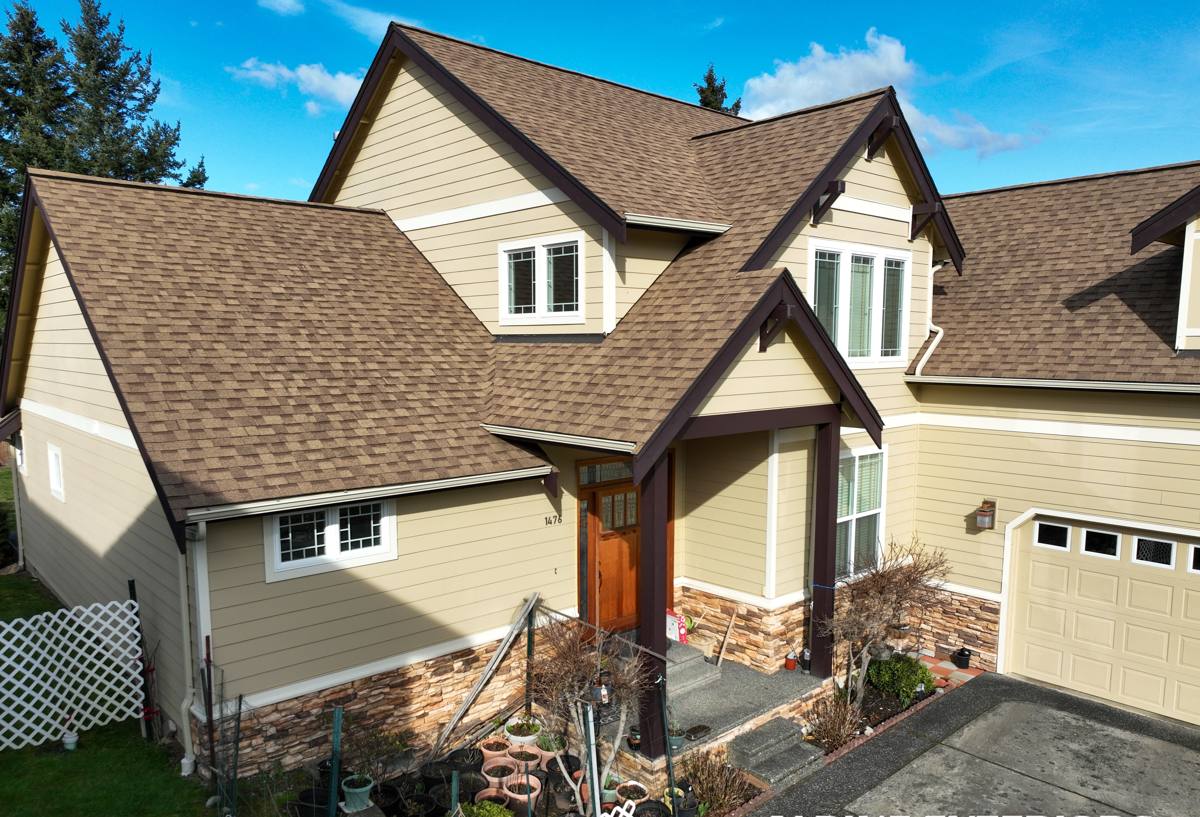
Signs Your Roof Needs Repair, Not Just a Cleaning
Moss and Organic Growth
A little moss on a north-facing slope isn't an emergency. But moss that's thickened into a mat, especially along valleys, ridges, or lower courses, is a different story — it's holding water against the roofing material continuously, which accelerates granule loss on composition shingles and speeds up rot on cedar. If moss removal has been "cleaning" the same problem spots every year or two without anything changing, that's usually a sign the roofing underneath needs attention, not just the surface.
Water Intrusion Signs
Leaks on older or storm-exposed roofs rarely show up directly above the damage. Water can travel along rafters or sheathing before it drips somewhere visible. Watch for:
- Discoloration or soft spots on interior ceilings, especially after a windy rainstorm
- Daylight visible through the attic roof deck
- Curling, cracked, or missing shingles, or shakes that have visibly cupped or split
- Rust streaks below metal flashing or fasteners
- Granules collecting in gutters or at downspout outlets
- Soft, spongy decking felt underfoot in the attic
- Flashing that's pulled away from a chimney, skylight, or wall intersection
Any one of these is worth a look before the next big storm rolls through, not after.
What a Proper Roof Repair Actually Involves
A repair that just patches the visible symptom tends to come back. A repair done right starts with tracing the water back to its actual entry point, which is often at a flashing seam, a nail penetration, or a valley rather than the shingle field itself. From there, the work generally includes removing and replacing damaged roofing material back to sound decking, repairing or replacing the underlayment in that section so it can do its job as a secondary water barrier, and rebuilding flashing at any transitions — chimneys, vents, skylights, sidewalls — with material sized and lapped correctly for wind-driven rain rather than just straight-down weather.
On a moss-affected roof, we also address the organic growth itself as part of the repair, not as an afterthought. That means safe removal without gouging the roofing surface, and where appropriate, zinc or copper strips that discourage regrowth using rainwater runoff rather than harsh chemical treatments that can damage plants and gutters below.
Roofing Materials Common on the Islands: How They Hold Up
Different roofing materials respond differently to salt air, moss, and driving rain. There's no single "best" choice for every home — the right call depends on the home's age, exposure, and your priorities for maintenance and longevity.
| Material | Salt Air Behavior | Moss Resistance | Typical Repair Pattern |
|---|---|---|---|
| Asphalt Composition | Fasteners and metal flashing need corrosion-resistant coatings; the shingle mat itself is largely unaffected | Moderate — granule surface gives moss something to grip; needs periodic cleaning | Flashing and seal failures, wind-lifted tabs, granule loss on older fields |
| Cedar Shake/Shingle | Handles salt air well when properly ventilated, but stays damp longer in marine humidity | Low resistance — organic material readily hosts moss without regular treatment | Split or cupped shakes, moss-related rot at butt edges, flashing replacement |
| Metal (standing seam/panel) | Coated, quality metal resists corrosion well; fasteners and cut edges are the vulnerable points | High — smooth surface sheds moss more easily | Fastener backouts, sealant failure at panel seams, oil-canning from movement |
Cedar shake has a long history on the islands and can still be a good-looking, long-lasting choice — but it asks for more consistent moss management than the other two options, since untreated organic buildup is what shortens its life. That's a maintenance trade-off we're upfront about rather than a reason to avoid it outright.
Our Roof Repair Process
Inspection and Diagnosis
We start by getting on the roof, not just looking at it from the ground or from photos. We check flashing points, valleys, penetrations, and the general condition of the field, and where there's an active leak, we trace it from the interior side as well so the repair addresses the real entry point.
A Clear Repair Plan
Once we know what's actually happening, we walk you through what needs to happen and why — what's urgent, what can reasonably wait, and what your material and cost options look like. We don't pad a repair scope with work that isn't needed, and we don't downplay something that's genuinely close to failing.
The Repair Itself
We match materials as closely as possible to your existing roof, rebuild flashing to shed wind-driven rain rather than just vertical rain, and make sure decking and underlayment are sound before anything new goes back on top.
Cleanup and Follow-Up
We clear debris, check gutters and downspouts near the repair area for anything that fell during the work, and let you know what to watch for afterward so you know the repair is holding.
Repair or Replace? How We Help You Decide
Not every roof problem calls for a full replacement, and not every roof is worth continuing to patch. The honest answer usually comes down to a few factors we walk through with you directly:
- How old the roofing material is relative to its expected service life
- Whether the damage is isolated (a flashing seam, one section) or spread across the whole roof
- How many repairs the roof has already had, and whether they're becoming more frequent
- The condition of the decking underneath — sound decking makes repair much more viable than compromised decking
- Your own timeline and budget priorities
We'll tell you plainly if a repair is a reasonable near-term fix versus a stopgap on a roof that's genuinely near the end of its service life. That call belongs to you, but it should be an informed one.
Why Hiring a Crew That Already Works Lopez Island Matters
Island work has logistics that mainland jobs don't. Materials, crew, and equipment all move by ferry, so scheduling has to account for sailing times rather than just drive time, and a contractor unfamiliar with that reality can turn a one-day repair into a multi-trip headache. A crew that regularly works San Juan County also has a working sense of which flashing details actually hold up against this specific combination of salt exposure and wind-driven rain, rather than defaulting to techniques suited for a drier, less corrosive inland climate. That local pattern recognition — knowing which failure points show up again and again on island roofs — is part of what keeps a repair from being a repeat visit.
Maintenance That Extends Your Roof's Life Between Repairs
A repair holds up longer when it's not fighting the same conditions that caused the original damage. A few habits make a real difference on Lopez Island specifically:
- Clear gutters and valleys at least twice a year, since clogged drainage backs up water right where roofing meets flashing
- Keep overhanging branches trimmed back — shade and falling debris both feed moss growth
- Have moss addressed while it's still light, rather than waiting for a thick mat to develop
- Walk the attic after major windstorms and check for new daylight, staining, or damp insulation
- Have flashing at chimneys, skylights, and sidewalls checked every couple of years, since these are the first points to fail in wind-driven rain
None of this replaces a professional inspection, but it does mean fewer surprises and smaller, cheaper repairs when something does need attention.
If you're noticing moss buildup, a stain on a ceiling, or just want an honest read on where your roof stands, we're happy to take a look. Reach out for a free, no-pressure estimate using the form below.