 Orcas Island Siding
 Why Siding in Olga Wears Differently Than Siding Inland
Olga sits on the water side of Orcas Island, which means the siding on homes here deals with a combination that inland Washington siding rarely sees all at once: salt-laden air coming off the water, driving rain that gets pushed sideways by wind rather than falling straight down, and a shaded, damp growing season that keeps moss and algae active for much of the year. Any one of those on its own is manageable. Together, they shorten the working life of the wrong siding material and accelerate problems in siding that was installed without enough attention to water management.
Salt air is corrosive to exposed metal fasteners and trim, and it also holds moisture against exterior surfaces longer than dry inland air does. Driving rain finds every gap in flashing, every unsealed joint, and every spot where siding was face-nailed too tight or too loose. And moss doesn't just look bad — a mat of moss holds water against a wall for days after the rain has stopped, which is exactly the kind of sustained moisture that rots wood-based siding and breaks down the paint film on anything that wasn't built to handle it. Understanding this is the starting point for any honest conversation about replacing siding in Olga.
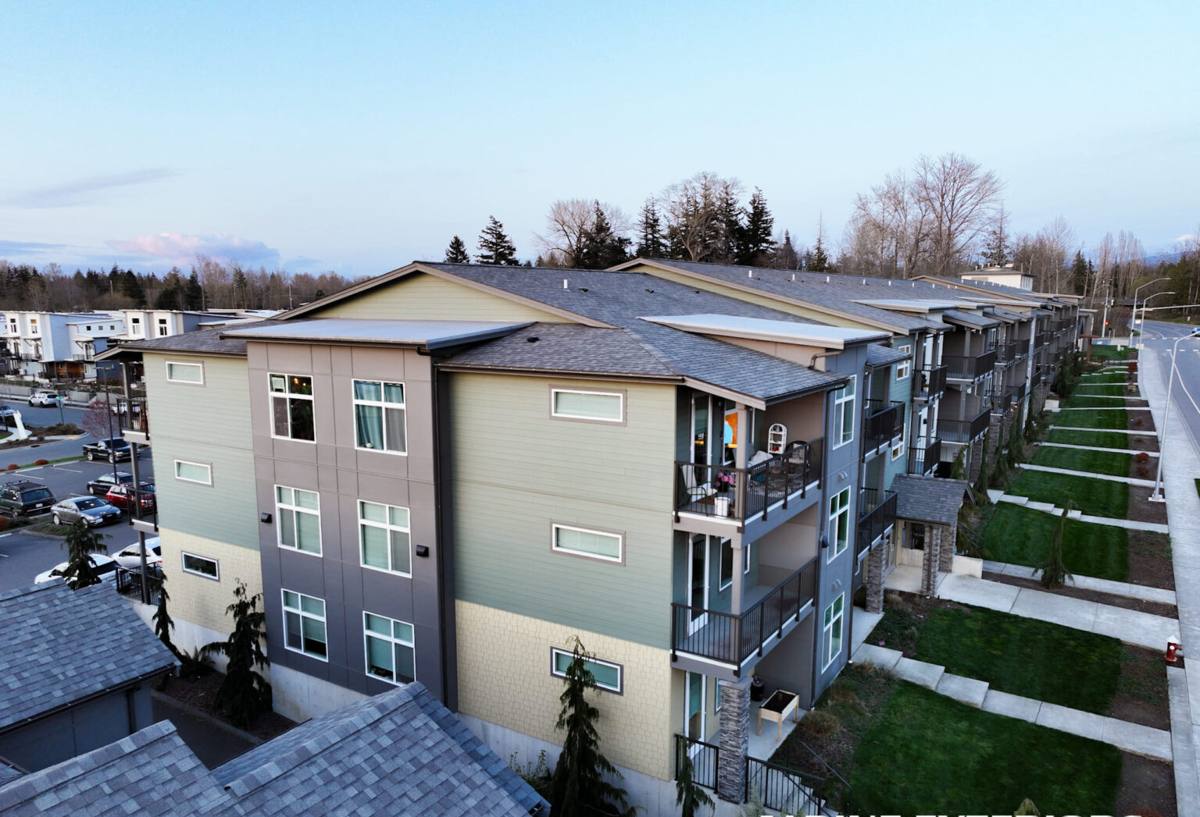
Signs an Olga Home Is Due for Siding Replacement
Because of the climate here, siding problems in Olga tend to show up in specific, recognizable ways before they become structural. Homeowners who catch these early save money — the fix at that stage is a siding replacement, not a siding-plus-framing repair.
- Soft or spongy spots when you press on the siding, especially near the bottom courses and around window and door trim
- Paint that's peeling, bubbling, or chalking heavily on the north or water-facing side of the house
- Persistent moss or dark algae streaking that comes back within a season of being cleaned
- Visible gaps, cupping, or warping in wood-based or engineered wood panels
- Rust staining running down from nail heads or metal trim pieces
- A musty smell or visible staining on interior walls that back up to exterior siding
- Siding that's more than 20-25 years old and made of a material never rated for this kind of coastal exposure
What a Correct Siding Replacement Actually Involves
Tear-off and what's underneath
Replacing siding properly starts with taking the old material off completely, not covering over it. That's the only way to actually inspect the sheathing and framing underneath, which is where the real damage from long-term moisture exposure usually lives. In a climate like Olga's, we expect to find some degree of moisture staining or soft sheathing around window openings, at the base of walls, and anywhere the old siding had gaps — those areas get cut back to solid wood and repaired before anything new goes up.
Water management, not just weather resistance
The single biggest difference between a siding job that lasts and one that fails early is what happens behind the panels. A correct installation includes a continuous weather-resistive barrier, properly lapped and taped, with flashing integrated at every window, door, deck ledger, and roof-to-wall transition so water is directed out and down rather than trapped. Given how much wind-driven rain a water-facing property in Olga can take, this step matters more here than it would on a sheltered inland lot.
Installation to manufacturer spec
Fiber cement siding has specific nailing patterns, gapping, and clearance requirements — clearance from the roofline, from decks, and from grade — that exist specifically to keep moisture from wicking into the bottom of the panel. Skipping or fudging these details is one of the most common causes of early failure we see when we're called out to look at a previous installation gone wrong. Getting it right the first time is far cheaper than fixing it in ten years.
Why We Install Only James Hardie Fiber Cement
We standardized on James Hardie fiber cement siding for every job we do, including here in Olga, and we don't install vinyl, LP SmartSide, Cemplank, Allura, or primed wood siding. That's not a marketing position — it's a decision based on what actually holds up in this climate.
Vinyl siding is affordable and low-maintenance in mild conditions, but it's a thin plastic product that can warp in heat, become brittle in cold, and it isn't rigid enough to give real impact resistance. It also doesn't take paint, so your color options are locked in for the life of the product. Engineered wood products like LP SmartSide use wood strand technology that's genuinely improved over older wood siding, but it's still a wood-based product at its core — if water gets past the coating at a cut edge or fastener point, it can swell and deteriorate the way any wood product can. Primed wood and cedar are honest, traditional materials, but they demand ongoing paint and caulk maintenance to keep water out, and that maintenance burden is steep on a property exposed to constant salt air and rain.
James Hardie fiber cement is cement, sand, and cellulose fiber — it doesn't rot, it isn't attractive to insects, and it's non-combustible. Hardie also makes an HZ5 product line engineered specifically for the wetter, harsher climate zones of the Pacific Northwest, with a formulation and moisture management designed around exactly the conditions Olga sees. Combined with the factory-applied ColorPlus finish, which is baked on rather than field-painted and comes with its own long-term finish warranty, it's the product we're willing to stand behind on a coastal San Juan County home.
What Siding Replacement Costs Depend On
Every Olga home is a little different, and we don't quote a job without seeing it, but the same handful of factors drive the price on almost every project we bid.
| Factor | Why It Matters |
|---|---|
| Extent of hidden damage | Rotted sheathing or framing found during tear-off adds repair work before new siding can go on |
| Home size and wall complexity | More corners, gables, and trim details mean more cutting, flashing, and labor time |
| Siding profile chosen | Lap siding, shingle-style panels, and board-and-batten each have different material and labor costs |
| Site access on Orcas Island | Material delivery, staging, and crew logistics on an island property can affect scheduling and cost |
| Trim and accessory work | Fascia, corner boards, and window trim replacement are often bundled with siding for a uniform result |
| Existing paint or coating removal | Some old siding materials require extra disposal handling |
As a general guide, a full siding replacement on a typical single-family home runs into the tens of thousands of dollars once tear-off, repair, and quality materials are factored in — we'll give you a firm number specific to your house after a walkthrough, not a phone-quote guess.
Our Process for an Olga Siding Replacement
- On-site assessment — we walk the exterior, check problem areas you've noticed, and look for the moisture damage patterns typical of this climate
- Written estimate — a clear scope of work and price, including what we expect to find once tear-off starts
- Tear-off and inspection — old siding comes off, sheathing and framing get inspected, and any rot is repaired
- Weather barrier and flashing — a continuous, properly lapped and taped water-resistive barrier with integrated flashing at every penetration
- James Hardie installation — panels installed to manufacturer spec, with correct nailing, gapping, and clearances
- Trim, caulking, and final details — the finish work that determines how clean the job looks up close
- Walkthrough and cleanup — we review the finished work with you and clear the site of debris and old material
Why It Matters That Your Crew Already Works Olga
Orcas Island is ferry-served, and San Juan County properties come with logistics that a mainland-only contractor has to learn on your dime: getting material and crew onto the island on a workable schedule, planning around ferry timing rather than just driving to the next job, and understanding how weather windows here can be narrower than what a contractor is used to on the mainland. A crew that already does this work in Olga has that logistics problem solved before your project starts, which shows up as fewer delays and fewer surprises.
There's also a simpler benefit: we've seen how James Hardie siding performs on other homes in this specific environment over time, which means we're not guessing about what holds up against Orcas Island's combination of salt air and rain — we've watched it happen.
Living With New Siding Through Moss Season
Fiber cement siding installed correctly needs very little upkeep, but a little seasonal attention goes a long way in this climate. A soft wash to knock back moss and algae buildup before it gets established, keeping gutters clear so overflow doesn't run down the wall face, and trimming back vegetation that keeps a wall shaded and damp will all extend the life of the finish. None of this is the constant repainting and caulking cycle that wood siding demands — it's occasional maintenance, not a standing chore.
If you're weighing a siding replacement on your Olga property, we're happy to take a look and give you a straightforward, no-pressure estimate — no hard sell, just an honest read on what your house needs and what it would take to do the job right.