 Orcas Island Siding
 New Roof Installation in Olga: Built for This Stretch of Coastline
Olga sits on the quieter, southeastern side of Orcas Island, facing out toward open water — a setting that's part of why people live there, and also exactly why roofs in this area take more punishment than a standard asphalt shingle system was ever designed to handle. A new roof installed on an Olga home needs to hold up against three things working on it at once: salt-laden marine air moving in off the water, rain that arrives sideways instead of straight down during winter storms, and a moss season that can run most of the year on shaded, north-facing roof planes. None of that is unusual for San Juan County. It does mean a roof spec'd for a drier, more sheltered mainland climate tends to age faster here than the same product would somewhere inland, and it's why we treat a new roof in Olga as a different job than the same square footage would be twenty miles inland.
This page covers what a correct new roof installation actually involves for a home in this specific area — the climate factors driving the decisions, how we approach material selection, what our process looks like from estimate to final walkthrough, and why hiring a crew that already works Olga regularly, rather than one quoting the job once and moving on, changes the outcome.
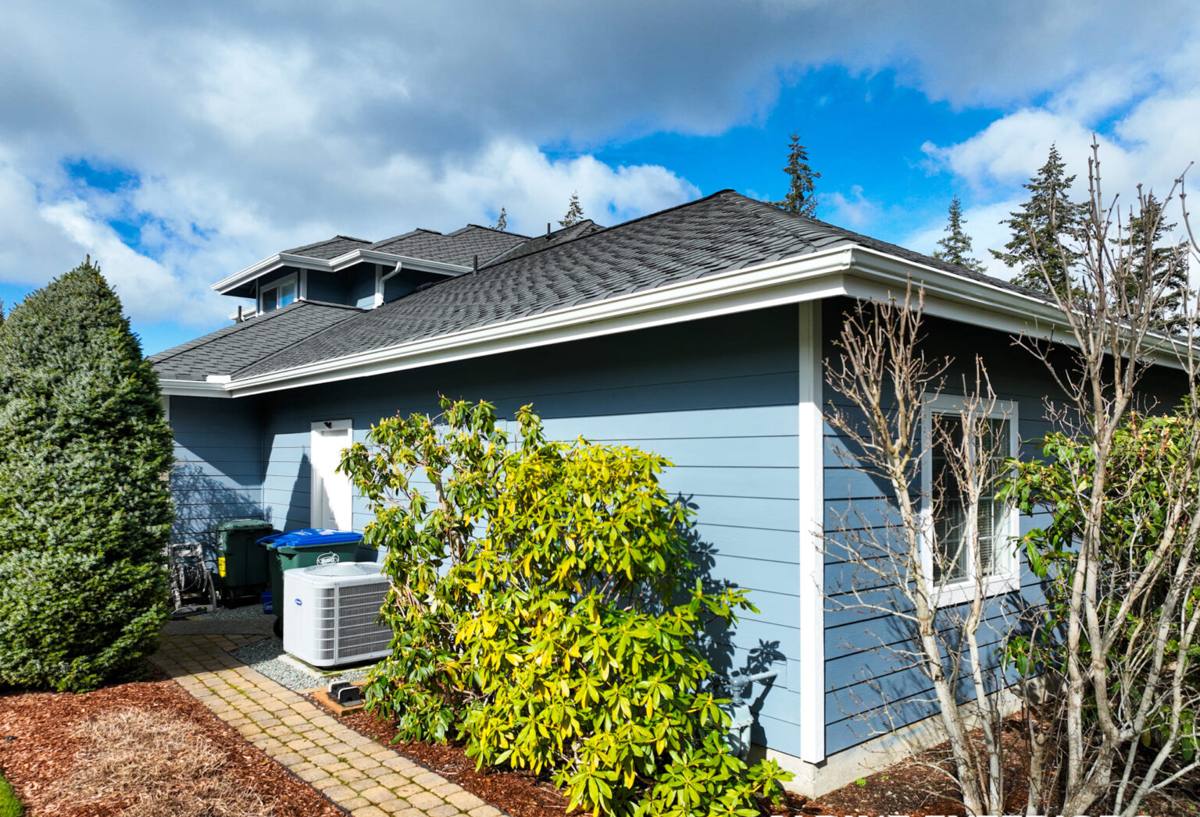
What Olga's Climate Puts a Roof Through
Salt Air and Metal Components
Being close to the water means salt-laden air moves across Olga property lines even on days when the water itself looks calm. Over years, that steady salt exposure accelerates corrosion on exposed fasteners, flashing, and any lower-grade metal roofing components. It's a slow process, which is exactly why it gets missed — the first sign is usually a rust streak bleeding down a fascia board or a fastener head starting to fail, well after the roof was installed and the crew is long gone.
Driving Rain and Wind-Driven Water
Winter storms coming off the water in San Juan County rarely drop rain straight down. Wind pushes it sideways and up under shingle courses, ridge caps, and any roof-to-wall transition, which is a very different load than most roofing underlayment and flashing details are tested against on paper. That sideways, wind-driven component is usually what separates a roof that stays dry for decades from one that starts leaking within a few wet seasons, regardless of how good the shingles themselves are rated to be.
A Long Moss Season
Olga's mix of open water-facing lots and heavily treed, shaded parcels means moss pressure varies house to house, but it's rarely absent for long. Mild temperatures and near-constant moisture during the wetter months add up to a moss growing season that can run close to year-round on shaded or north-facing roof slopes. Moss holds moisture directly against roofing material, works its way under shingle tabs and granule surfaces, and can lift edges enough to give wind-driven rain a path underneath — which is why a roof that looks fine from the ground can still be failing underneath a mat of moss nobody's gotten up to clear.
Choosing a Roofing System That Fits an Olga Home
There's no single "best" roofing material for every home in Olga — the right choice depends on the home's roof pitch, how much shade it sits under, and what the homeowner wants to be doing, or not doing, in terms of maintenance ten years down the road. What we can say honestly is how the common options actually perform against this specific combination of salt air, driving rain, and moss.
| Roofing System | Moss Resistance | Salt Air Durability | Typical Lifespan Here |
|---|---|---|---|
| Architectural asphalt shingle | Moderate — granule surface gives moss something to hold onto without regular cleaning | Good, with corrosion-resistant fasteners and flashing | 25-30 years, shorter on heavily shaded slopes |
| Standing seam metal | Strong — smooth, steep-shedding surface gives moss little to grip | Very good with proper coating and fastener selection | 40-50+ years |
| Cedar shake | Weak without aggressive, ongoing maintenance | Moderate — organic material sensitive to sustained moisture | 20-25 years with diligent upkeep, often less here |
| 3-tab asphalt shingle | Weaker than architectural — thinner profile, less wind resistance | Fair | 15-20 years |
For most Olga homes we end up recommending architectural asphalt shingle or standing seam metal, specifically because both shed water and moss better than a flatter, more porous profile, and both take corrosion-resistant fastening well. Cedar shake can look right on an island home, but it's an organic material carrying the same moss and moisture vulnerabilities that make it a heavier maintenance commitment on siding too — worth knowing going in rather than discovering it a few wet seasons later.
What a Correct Installation Actually Involves
Tear-Off and Deck Inspection
A new roof starts with a full tear-off to bare decking, not a layover on top of failing material. That's the only way to actually see what's underneath — soft spots, rot around old flashing, or delamination in the sheathing itself. Covering a damaged deck with new shingles just hides a problem that keeps getting worse underneath a roof that looks brand new from the driveway.
Underlayment and Water-Shedding Details
Given how much wind-driven rain this coastline sees, underlayment choice and installation matters as much as the shingle or metal on top of it. Self-adhered underlayment at eaves, valleys, and other vulnerable areas gives the roof a second line of defense if wind ever drives water past the primary roofing surface — a detail that costs little at install time and matters enormously the first time a real winter storm tests it.
Flashing: Where Most Roofs Actually Fail
Most roof leaks don't come from a failed shingle in the open field of a roof — they come from a flashing detail somewhere a roof meets something else: a chimney, a wall, a skylight curb, a valley. We treat every one of those transitions as a place worth extra time, because on a roof exposed to Olga's wind-driven rain, a shortcut in flashing detail is usually the first thing to fail.
Ventilation
A roof system that doesn't breathe traps moisture in the attic space, which shortens the life of the decking and the roofing material from underneath, not just the surface anyone can see. Proper intake and exhaust ventilation, sized correctly for the home, is part of a correct roof installation, not an upgrade line item.
Our Process, Start to Finish
- Inspection and estimate — we look at the existing roof, deck condition where visible, ventilation, and the home's specific exposure to sun, shade, and wind before quoting anything.
- Material selection — we walk through the honest trade-offs between shingle and metal options for that specific roof, not a one-size answer.
- Permitting — we handle the San Juan County permitting process as part of the job.
- Scheduling around weather and logistics — material delivery and crew scheduling on Orcas Island run around ferry availability and weather windows, which we build into the timeline upfront.
- Tear-off and deck repair — full removal to bare decking, with any damaged sheathing replaced before anything new goes down.
- Dry-in and flashing — underlayment and flashing installed at every vulnerable transition before the roofing surface goes on.
- Installation to manufacturer spec — shingles or metal panels installed to the manufacturer's published fastening and coverage requirements, which is what keeps a warranty valid.
- Cleanup and final walkthrough — magnetic sweep for stray fasteners, full site cleanup, and a walkthrough covering what was done and what maintenance to expect.
Living With a Moss-Prone Roof Between Installations
A new roof buys years of performance, but moss pressure in Olga doesn't take a break just because the roof is new. A few habits go a long way toward protecting that investment:
- Keep overhanging branches trimmed back to let more sun and air reach the roof surface
- Clear gutters and valleys of needles and debris each fall, before winter rains arrive
- Have moss growth removed gently — soft washing or manual removal, not aggressive pressure washing that can strip granules or lift shingle edges
- Consider zinc or copper strips along the ridge as a low-maintenance way to slow moss regrowth on shaded slopes
- Schedule a roof check after any major windstorm, since that's when flashing and ridge details are most likely to take damage
- Don't wait for an active leak to call — staining on an interior ceiling usually means water has already been getting in for a while
What Affects the Cost of a New Roof in Olga
| Factor | How It Affects Cost |
|---|---|
| Roof size and pitch | More square footage and steeper pitches both add material and labor time |
| Material choice | Standing seam metal typically costs more upfront than architectural shingle, with a longer service life to offset it |
| Number of layers to remove | Tearing off multiple existing layers adds disposal and labor cost over a single-layer tear-off |
| Deck condition | Rotted or damaged sheathing found during tear-off needs replacement before new roofing goes down |
| Ventilation upgrades | Adding or correcting intake and exhaust ventilation adds modest cost but protects the whole system |
| Access and logistics | Material delivery and disposal on Orcas Island factor in ferry scheduling, which we account for in the estimate rather than as a surprise |
We don't quote a roof off square footage alone. Every estimate comes from an actual inspection of the specific house, because deck condition and roof complexity vary enough between Olga homes that a flat per-square-foot number rarely holds up once tear-off starts.
Why a Crew That Already Works Olga Matters
Working roofs across Orcas Island through every season, not flying in for a single job, shapes real decisions on-site — which roof orientations in Olga hold moss longest, where extra flashing attention consistently pays off, and which install-day details are worth the time so a homeowner isn't dealing with a callback two winters later. It also means that when a warranty question comes up years down the road, it's a call to a crew still working in the same area and still standing behind the same work, not a company that quoted the job once and moved on to the next region. On an island where getting a contractor back out isn't a same-day errand, that continuity matters more than it would on the mainland.
Signs Your Roof Needs Replacement, Not Another Repair
Not every roofing problem in Olga calls for a full replacement, but a few signs usually mean patching is just delaying the inevitable:
- Shingles that are curling, cupping, or losing granules across large sections of the roof, not just one localized spot
- Repeated leaks in different locations after previous repairs
- Visible sagging anywhere along the roofline
- Daylight visible through the roof deck from inside the attic
- A roof original to the home, more than 20-25 years old, with no documented replacement
- Moss growth that returns quickly and thickly even after cleaning
If your roof is showing one or two of these, it's worth a professional look before the next wet season turns a repair into a full replacement anyway.
If you're weighing a new roof for a home in Olga, we're glad to come take a look and walk you through what we see, with a free, no-pressure estimate. Reach out using the form below to get started.