 Orcas Island Siding
 Siding Built for Obstruction Pass's Shoreline Climate
Homes around Obstruction Pass sit on Orcas Island's exposed east side, facing open water toward Rosario Strait and Lopez Island. That location is beautiful, but it's also demanding on a building envelope. Salt-laden wind off the water, driving rain that comes in sideways during winter storms, and heavy tree cover that keeps north- and shade-facing walls damp for weeks at a time all combine to shorten the life of siding that isn't built and installed for the conditions. This isn't a generic Pacific Northwest weather problem — it's a specific combination of salt exposure, moisture, and shade that shows up differently on a shoreline property than it does a few miles inland.
Salt air is corrosive to unprotected metal fasteners and trim, and it accelerates the breakdown of paint films and wood fiber over time. Constant moisture from rain and fog keeps wall surfaces wet longer than in drier parts of San Juan County, which is exactly the condition moss and algae need to take hold. Left unaddressed, that combination doesn't just look bad — it works its way into seams, fastener holes, and butt joints and starts rotting whatever is underneath. Siding for a property like this has to handle salt, shed water aggressively, and resist the moss and mildew that thrive in shade, or it will need attention far sooner than the homeowner expects.
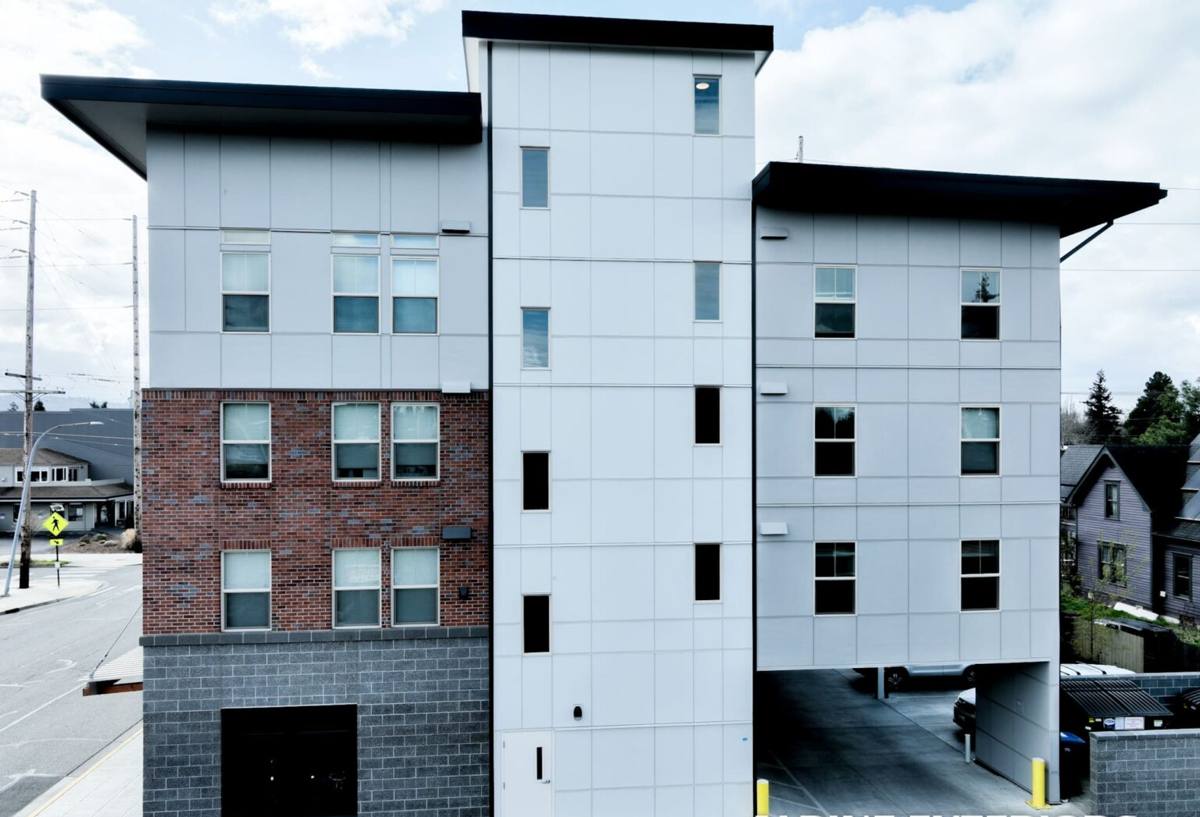
Why We Install Only James Hardie on Orcas Island Homes
We standardized on James Hardie fiber cement for every siding job we take on across Orcas Island, including waterfront and near-shore properties like Obstruction Pass, and we don't install vinyl, LP SmartSide, cedar, primed spruce, or other fiber cement brands. That's not a marketing position — it's a decision based on how those products actually perform against salt air, sustained moisture, and heavy shade over decades, not just in the first few years.
James Hardie's siding is fiber cement: sand, cement, and cellulose fiber engineered into a rigid, non-combustible board. It doesn't absorb water the way wood-based products do, it won't swell, delaminate, or rot at cut edges the way engineered wood siding can if a seal fails, and it holds its shape and finish in conditions that are hard on organic materials. Hardie also engineers its products by climate zone — the HZ5 formulation used in wetter, more humid regions like western Washington is built specifically to resist moisture-related damage, which matters more on an exposed shoreline lot than it does on a dry inland site.
The factory-applied ColorPlus finish is baked on under controlled conditions rather than brushed or sprayed on site, which gives it better adhesion and UV resistance than field-applied paint. On a property getting steady salt air and sun off the water, that finish holds its color and resists chalking and peeling far longer than a job-site paint job would. James Hardie backs its siding with a strong transferable limited warranty, and ColorPlus finishes carry their own separate finish warranty — both of which only mean something if the product is engineered for the climate it's going into and installed correctly, which is where the rest of this page comes in.
What a Correct Installation Actually Involves
James Hardie siding performs the way it's supposed to only when it's installed to the manufacturer's specifications. On a shoreline property, the margin for error is smaller than it is on a sheltered inland home, because wind-driven rain finds gaps that would never be a problem in calmer conditions.
Water Management Behind the Siding
Correct installation starts with what you can't see once the job is done: a weather-resistant barrier installed and lapped correctly, flashing at every window, door, and roofline intersection, and a rainscreen or drainage gap where conditions call for it so any moisture that does get behind the siding has somewhere to go. On a home taking direct wind and rain off the water, skipping or shortcutting this step is the single biggest cause of hidden rot down the line — the siding itself can look fine while the sheathing behind it is failing.
Fastening, Gaps, and Clearances
Hardie specifies fastener type, spacing, and placement for a reason — under-driven or over-driven nails, wrong fastener material, or fasteners placed too close to panel edges all create weak points where water can get in and salt air can start corrosion. Butt joints need proper gaps and, in most cases, factory-primed or caulked edges. Siding also needs correct clearance from grade, roof lines, and decks so water doesn't wick up into the bottom edge of the boards.
Caulking and Trim Details
Every trim joint, corner, and penetration is a potential entry point for wind-driven rain. Using the right sealant, applying it at the right joints (and not over-caulking joints that are designed to move), and finishing trim so water sheds away from the wall rather than pooling against it all matter more on an exposed site than a sheltered one.
James Hardie Product Lines for a Waterfront Home
Not every part of a home needs the same Hardie product. Matching the right line to the right part of the house, and to how much weather exposure that wall actually sees, is part of doing the job correctly rather than defaulting to one product everywhere.
| Product | Best Use on This Type of Home | Why It Fits |
|---|---|---|
| HardiePlank lap siding | Primary wall siding, most elevations | Traditional lap profile, strong water-shedding overlap, wide color range |
| HardiePanel vertical siding | Accent walls, gables, modern or board-and-batten looks | Fewer horizontal seams for water to find on high-exposure walls |
| HardieShingle siding | Gables, dormers, accent areas | Shingle-style look without the maintenance burden of real wood shingles in a damp, shaded setting |
| HardieTrim boards | Corners, window and door casing, fascia | Dense, moisture-resistant trim that holds paint and profile better than wood in salt air |
On a shoreline lot with mixed sun and heavy shade, it's common to see one product carry the water-facing elevations and a different one used on protected sides or accent areas — the goal is matching the product to the exposure, not applying a single default across the whole house.
How Our Process Works on an Obstruction Pass Project
A siding job on Orcas Island isn't run the same way as one on the mainland, and Obstruction Pass adds its own layer of site-specific planning on top of that.
- Site walk and moisture check. We look at the existing siding, trim, and any visible staining or soft spots, and check for moisture intrusion at windows, decks, and roof-to-wall intersections before we ever talk product or price.
- Scope and material plan. We identify which Hardie products fit which elevations, plan trim and flashing details for the wettest and most exposed sides of the house, and account for site access and material staging.
- Ferry and delivery logistics. Material for an Orcas Island job has to be ordered, staged, and ferried over on a schedule, and weather windows matter for both the crossing and the install itself — we plan around both rather than showing up and hoping.
- Tear-off and sheathing inspection. Once old siding comes off, we inspect the sheathing and framing underneath for any hidden moisture damage before anything new goes up, rather than covering a problem back up.
- Weather barrier, flashing, and install. Barrier and flashing go in first, followed by Hardie siding and trim installed to manufacturer spec, with attention to fastening, gaps, and caulking at every joint.
- Final walkthrough. We go over the finished work with the homeowner and flag anything to watch for going forward, particularly around trees, gutters, and grade that affect how water moves around the house.
Cost Factors on a Shoreline Orcas Island Property
Every siding job prices out differently, but a few factors specific to a site like Obstruction Pass tend to move the number more than they would on a typical inland home:
| Factor | Why It Affects Cost |
|---|---|
| Site and delivery access | Ferry scheduling, narrow or wooded driveways, and staging space on the lot all affect labor and delivery time |
| Exposure level | Walls facing direct wind and rain off the water need more flashing and trim detail than sheltered walls |
| Existing damage | Hidden rot found during tear-off (more likely on long-neglected shoreline exposures) adds sheathing or framing repair before new siding can go on |
| Tree cover and shade | Heavy tree cover can call for additional attention to ventilation and drainage detailing to manage the moss and moisture it holds against the wall |
| Product mix | Combining lap, panel, shingle, and trim lines for different elevations costs more than one product used everywhere, but often performs and looks better |
We walk every property in person and give a written estimate based on what we actually find — not a phone quote based on square footage alone.
Keeping Moss and Salt Air From Undoing the Work
Even correctly installed siding needs some upkeep in this environment, and moss is the most common issue we see on Orcas Island homes with heavy tree cover. Moss itself doesn't damage fiber cement the way it can damage wood, but it holds moisture against the surface and can trap debris in seams and behind trim if it's left to build up for years. A little seasonal attention goes a long way:
- Keep gutters and downspouts clear so water isn't overflowing directly onto siding below
- Trim back branches and brush that keep a wall in constant shade and reduce airflow
- Rinse siding periodically to keep moss, algae, and salt residue from building up, especially on north- and shade-facing walls
- Check caulking at trim joints and penetrations every year or two and re-caulk anything that's cracked or pulled away
- Watch for staining or soft spots at the bottom edge of siding near grade or decks, which can signal a drainage or clearance issue worth addressing early
None of this is heavy maintenance — it's the kind of basic seasonal care any exterior on a wooded, waterfront lot benefits from, and it protects the investment in a finish that's otherwise built to last for decades.
Why a Crew That Already Works Obstruction Pass Matters
Working on Orcas Island isn't the same as working on the mainland, and a contractor who hasn't done it regularly will underestimate what it takes. Every material delivery depends on the ferry schedule, and weather windows for both the crossing and the install itself have to be planned around rather than discovered the hard way. Many lots in and around Obstruction Pass are wooded, have limited turnaround space, or sit on septic and well systems that need to be respected during staging and cleanup — knowing that going in avoids costly mistakes and delays.
San Juan County permitting and any applicable shoreline or setback considerations for near-water properties also move differently than they do off-island, and a crew that's worked these properties before knows what to check and when. Beyond logistics, a local crew has already seen how salt air, driving rain, and heavy shade actually affect siding on this specific stretch of coastline over time — not in theory, but on real homes — and that experience shapes decisions about flashing, product selection, and trim detailing that a one-time visiting contractor is more likely to get wrong.
If your home is showing early moss buildup, cracked or peeling paint, soft trim, or siding that's simply past its service life, it's worth having it looked at before small problems become expensive ones. We'd be glad to walk your property, look at what your home's specific exposure is dealing with, and put together a straightforward, no-pressure estimate for James Hardie siding done right. Use the form below to get started.