 Orcas Island Siding
 Decks Built for Obstruction Pass, Not a Catalog
Homes along Obstruction Pass sit right at the edge of two different worlds — the open water of the pass itself, with its wind and salt spray, and the thick tree cover that shades a lot of the lots set back from the shoreline. A deck built here has to handle both. That means a different set of decisions than a deck built inland on the mainland side of San Juan County, and it's why we treat every Obstruction Pass project as its own job rather than a standard plan we drop onto the lot.
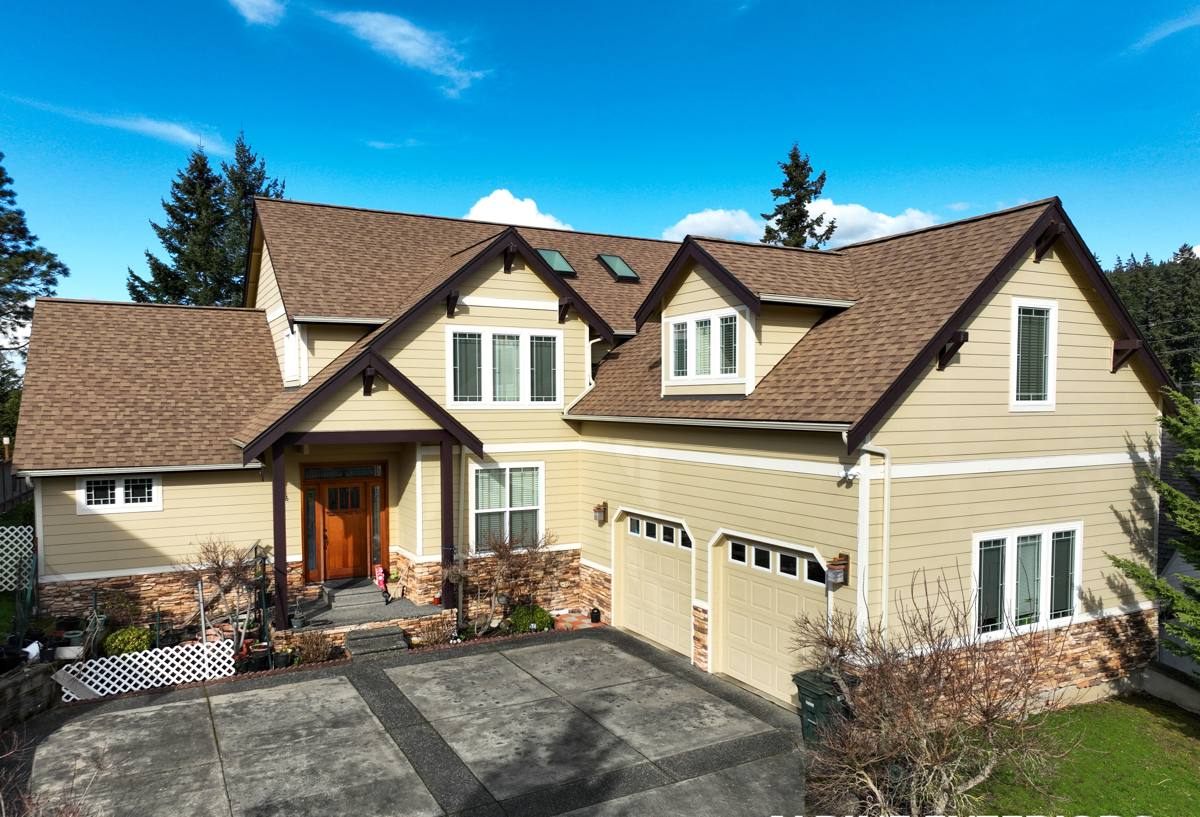
What This Stretch of Orcas Island Does to a Deck
Salt Air and Driving Rain
Wind off the pass carries salt spray onto anything exposed, and it doesn't take much elevation or distance from the water to get hit with it regularly. Salt accelerates corrosion in fasteners and hardware, and it works into wood grain and finish coatings faster than most homeowners expect. Combine that with the driving, sideways rain that comes through in fall and winter storms — rain that gets up under railings and into end grain that a straight-down rain never would — and you have a climate that's genuinely harder on a deck than most parts of the country.
A Long Moss Season
Between the tree cover common on many Orcas Island lots and the extended damp season, moss and algae get a long runway to establish themselves on any horizontal wood surface that doesn't dry out quickly. On a deck, that's not just cosmetic — a moss layer holds moisture against the board surface, which is exactly the condition that leads to rot, and a mossy deck surface gets slick and dangerous when wet. Site orientation, tree canopy, and drainage all factor into how bad this problem gets, and we account for it in the design rather than leaving it as a maintenance surprise.
Choosing a Decking Material That Actually Fits This Site
There's no single "best" decking material — there's the material that fits your budget, your maintenance appetite, and how exposed your particular lot is to wind, salt, and shade. Here's how the common options stack up for a marine, moss-prone climate like this one:
| Material | Upfront Cost | Maintenance | How It Handles This Climate |
|---|---|---|---|
| Pressure-treated pine | Lowest | Needs re-sealing every 1-2 years | Prone to checking and moss buildup if not maintained; shortest realistic lifespan here |
| Western red cedar | Moderate | Periodic cleaning and refinishing | Naturally rot-resistant and handles the look homeowners want, but still needs upkeep to fight moss and graying |
| Composite decking | Higher | Occasional washing, no sealing or staining | Doesn't absorb moisture or rot, but needs a surface that resists mold and mildew growth in shaded, damp spots |
| Tropical hardwood (e.g. ipe) | Highest | Oiling to maintain color, otherwise low | Extremely dense and rot-resistant; among the best performers in salt-air exposure but priced accordingly |
We'll walk through this trade-off with you honestly rather than push whatever we happen to have the best margin on. If your lot gets heavy shade and moss is your main worry, that steers the decision differently than a wide-open, wind-exposed site closer to the water.
The Structural Details That Actually Matter
Footings and Framing
Post footings need to go below frost depth and bear on solid ground, not fill — this matters more on sites with the mix of rock, clay, and thin soil common around the island. Framing lumber should be rated for ground contact where it's close to grade, and every cut end needs to be sealed, not left raw to wick up moisture.
Ledger Flashing
Where a deck attaches to the house, the ledger board and its flashing are the single most common point of hidden rot failure — and it's the detail that's easiest to cut corners on because it's covered up once the decking goes down. Done right, flashing directs water away from the house wall and the ledger board entirely, even under the kind of driving rain this area gets. Done wrong, it traps water against the framing where nobody sees it until there's a real problem.
Fasteners and Hardware
In a salt-air environment, the difference between standard galvanized hardware and true stainless steel fasteners and connectors shows up within a few years, not decades. We use fastener and hardware ratings appropriate to coastal exposure, not just whatever meets minimum code — a cheaper fastener that streaks and corrodes in five years costs more in the long run than doing it right the first time.
Board Spacing and Airflow
Gaps between boards, and clear airflow underneath the deck, matter more here than in a dry climate. Tight board spacing traps moisture between boards and speeds up moss growth on the edges; too much airflow blocked underneath the deck creates a damp, shaded pocket where mold and rot take hold in the framing where you can't see it. We set spacing and skirting choices with this climate in mind rather than defaulting to whatever looks tightest off a plan sheet.
Railings and Fastening for Wind and Water
Railings on an exposed deck near the pass take a real wind load, and they're also the part of the deck most people actually touch and lean on. Post connections at the railing need to be engineered for lateral load, not just fastened by feel, and any metal components should match the corrosion resistance of the rest of the hardware.
On a raised or view deck, taller support posts and longer spans mean more lateral movement in a real windstorm, so bracing gets sized for the actual height and exposure of your site, not a bare minimum spec. Cable and glass rail systems look great on a view deck, but they show salt spotting faster than a solid rail and need more frequent cleaning to stay clear — worth knowing before you commit to that look.
Our Process for a Custom Deck Build
- Site visit and design conversation. We walk the lot, look at sun and shade exposure, wind exposure, drainage, and how the deck will connect to the house, and talk through how you actually plan to use the space.
- Material and layout decisions. We lay out honest options for decking material, railing style, and structure based on your budget and how exposed the site is — no upsell, just trade-offs explained plainly.
- Permitting. We handle the San Juan County permit application and any required documentation for the footprint and location of the deck.
- Footings and framing. Posts, footings, and framing go in to code, with attention to the ledger flashing detail and fastener choice described above.
- Decking, railing, and finish. Decking is installed with proper spacing and fastening for the material chosen, railings are set and load-tested, and any finish work is completed.
- Final walkthrough. We go over the finished deck with you, including what maintenance it will actually need and on what schedule.
Permits and Code in San Juan County
Most new decks and significant deck rebuilds require a permit through San Juan County, and projects closer to the shoreline can carry additional review depending on setback and critical areas regulations. We're not going to pretend to give you a definitive answer on your specific lot in a web page — every parcel is different, and shoreline-adjacent property in particular can have its own layer of review. What we will do is handle the actual permit process for you and flag early, during the design conversation, if your lot looks like it needs extra review so there are no surprises partway through the job.
Keeping a Deck Looking Good in This Climate
Whatever material you choose, a deck out here needs a maintenance rhythm that accounts for moss and salt exposure. Here's what we tell every homeowner to stay ahead of, regardless of who built the deck:
- Sweep or blow off debris regularly, especially in fall — trapped leaves and needles hold moisture and feed moss growth
- Wash the deck surface at least once a year to break up algae and moss before it establishes, more often on heavily shaded sections
- Check railing post connections and fasteners annually for corrosion or looseness, particularly on wind-exposed sections
- Re-seal or refinish wood decking on the schedule the product actually calls for — skipping a cycle in this climate shows up fast
- Keep an eye on the ledger flashing area where the deck meets the house; a small gap or crack there is worth fixing immediately, not next season
- Trim back vegetation that's shading the deck surface if moss keeps coming back in the same spots
Why It Matters to Hire a Crew That Already Works Obstruction Pass
Building on Orcas Island isn't the same as building on the mainland, and it starts before anyone picks up a tool. Materials, hardware, and equipment generally have to be scheduled around the ferry, and a crew that doesn't already factor that into its timeline will hand you delays that have nothing to do with the actual construction. A crew that already works this area knows the county's permitting process, has a working relationship with the inspectors and suppliers involved, and has already seen how a given lot's sun exposure, tree cover, and wind exposure plays out over a few seasons — not just on the day the deck goes in. That local familiarity is the difference between a deck that's designed for a generic climate and one that's actually built for Obstruction Pass.
If you're planning a new deck or replacing one that's showing its age, we're happy to come take a look and talk through what makes sense for your specific lot. Reach out for a free, no-pressure estimate using the form below.