 Orcas Island Siding
 Roofs on North Beach Take a Different Kind of Beating
If you own a home along North Beach, you already know your roof works harder than one a few miles inland. You're catching the full run of weather off Rosario Strait and the Strait of Georgia — wind-driven rain that gets pushed sideways under flashing, salt-laden air that eats at fasteners and metal edges faster than it would in a drier climate, and long stretches of shade from surrounding fir and cedar that keep the roof deck damp for days after a storm passes. That combination is exactly what wears a roof out from the inside, not just the outside.
San Juan County's marine climate doesn't give roofs much of an off-season. Winter brings the strongest wind and rain events, but the real long-term damage often comes from what happens in between: moss and moisture working into seams, valleys, and fastener heads all year long. A roof that looks fine from the ground can already have soft decking, lifted shingles, or a slow leak building behind a chimney or skylight.
Storm damage repair here isn't just about patching what broke in the last windstorm. It's about understanding how salt air, rain, and moss interact on this specific stretch of coastline, and repairing the roof in a way that holds up to the next round — not just the last one.
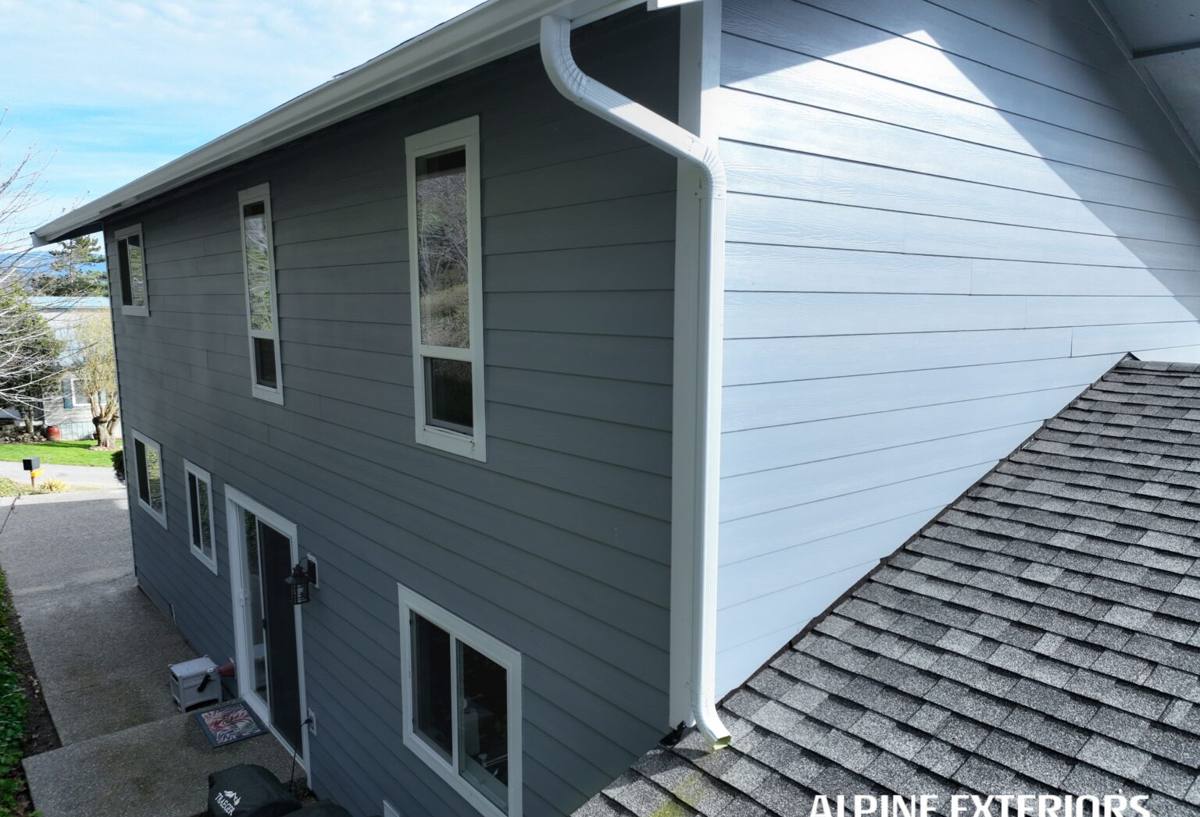
What Storm Damage Actually Looks Like on North Beach Roofs
Storm damage isn't always a dramatic hole or a pile of shingles in the yard. On island homes, it's often quieter and easier to miss:
- Lifted or creased shingle tabs where wind got underneath the edge but didn't tear them off
- Flashing pulled loose or bent around chimneys, skylights, and roof-to-wall transitions
- Granule loss in valleys and low-slope sections where wind-driven rain concentrates
- Soft or spongy decking under moss mats that have held moisture against the roof for months
- Gutters and downspouts pulled away from fascia by wind load or debris
- Nail heads backing out or rusting where salt air has accelerated corrosion
- Interior staining on ceilings or in attic spaces that shows up weeks after the actual storm
That last point matters. A lot of the storm-damage calls we get on Orcas Island come in well after the weather event itself — a homeowner notices a stain, a musty smell, or a soft spot underfoot, and by then water has usually been finding its way in for a while. Catching the smaller signs early is almost always cheaper than waiting for the obvious ones.
Why Moss Season Complicates the Picture
North Beach's tree cover and consistent moisture make it good moss habitat, and moss doesn't just sit on top of a roof — it holds water against the shingle surface, works into the granule layer, and can lift shingle edges over time, which is exactly where wind gets a foothold during a storm. A roof that's carrying a heavy moss load going into storm season is more vulnerable to wind damage than a clean one, which is part of why we look at moss condition as part of any storm damage inspection, not as a separate issue.
What a Correct Repair Actually Involves
A storm damage repair that's done right addresses three things, not just one: the visible damage, the underlying cause, and the surrounding material that's been weakened even if it's not obviously broken yet.
1. Find the Real Extent of the Damage
Wind and rain damage almost always extends past the spot that's visibly missing shingles or leaking. We check the decking underneath damaged areas, the condition of underlayment, and nearby flashing and fasteners — not just the section that failed.
2. Match the Repair to the Existing Roof
Patching in mismatched shingles or the wrong flashing profile creates a weak seam that's likely to fail again in the next storm. Where possible, we match existing materials so the repair blends structurally and visually, not just functionally.
3. Address the Contributing Conditions
If moss buildup, poor ventilation, or clogged gutters contributed to the damage, fixing the shingle without addressing that leaves the same vulnerability in place for the next storm season.
Our Process for North Beach Storm Repairs
- Inspection and documentation. We walk the roof (or use a ladder/drone inspection where roof access is unsafe) and document damage, including areas that look minor but indicate a bigger problem underneath.
- Honest scope and estimate. You get a clear breakdown of what's damaged, what's at risk, and what we recommend — with repair and, where relevant, replacement options laid out separately so you can decide.
- Temporary protection if needed. If there's active leaking or exposed decking, we can install temporary covering to stop water intrusion while permanent repair materials are sourced.
- Repair. Damaged decking, underlayment, shingles, and flashing are replaced with matched materials, properly fastened and sealed for wind-driven rain, not just vertical rainfall.
- Final check. We verify flashing laps, fastener pattern, and drainage paths before calling the job done — not just that the hole is covered.
Repair or Replace? What Actually Drives That Decision
Not every storm-damaged roof needs full replacement, but not every roof is a good candidate for another round of patching either. These are the factors that actually matter:
| Factor | Favors Repair | Favors Replacement |
|---|---|---|
| Age of roof | Under roughly 10-12 years, materials still sound | Nearing or past expected material lifespan |
| Extent of damage | Isolated to one section or a few penetrations | Widespread across multiple slopes |
| Decking condition | Solid, dry decking under damaged shingles | Soft or delaminating decking in multiple spots |
| Moss/moisture history | Recently cleaned, well-ventilated attic | Long-term moss buildup with signs of trapped moisture |
| Prior repairs | First significant repair on this roof | Several past patches already in place |
We'll always tell you honestly which side of that table your roof falls on. A repair that's likely to fail again within a couple of storm seasons isn't a good use of your money, and we'll say so.
Materials That Actually Hold Up Here
Given the salt air and shade-driven moss pressure around North Beach, we lean toward materials and details that are proven to handle both:
- Corrosion-resistant fasteners and flashing metals suited to coastal exposure, rather than standard-grade hardware that pits and rusts faster in salt air
- Properly lapped and sealed underlayment at valleys and eaves, where wind-driven rain concentrates during storms
- Shingle products with algae/moss resistance where a full replacement is on the table, since it reduces (though doesn't eliminate) how fast moss re-establishes
- Ventilation details that let the roof deck dry out between storms instead of staying damp for weeks
We're not going to push a premium product where a standard, well-installed repair does the job. The goal is a repair that matches the risk level of your specific roof and location — not the most expensive option on the shelf.
Why It Matters to Hire a Crew That Already Works North Beach
San Juan County's island geography changes how storm response actually works in practice. Ferry schedules affect how fast materials and crews can get on and off Orcas Island, so a contractor who's already local and already stocks common repair materials can respond faster than one coordinating everything from off-island. That matters most right after a storm, when a tarped roof or exposed decking needs attention in days, not weeks.
Working this specific stretch of coastline repeatedly also means we already know how North Beach homes tend to fail — which roof orientations catch the worst of the wind, where moss builds up fastest under tree cover, and which flashing details tend to be the weak point on homes built to older code. That local pattern recognition speeds up diagnosis and helps us catch problems a generic inspection might miss.
Keeping Your Roof Ready for the Next Storm
Once a repair is done, a little seasonal attention goes a long way toward keeping it that way:
- Clear moss and debris from valleys and roof edges before the wet season builds up
- Keep gutters and downspouts clear so wind-driven rain has somewhere to go
- Trim back tree limbs that keep sections of the roof shaded and damp
- Walk the attic after major storms and check for new staining, even if nothing looks wrong from outside
- Have flashing and fastener condition checked every couple of years, since salt-air corrosion is gradual and easy to miss
A roof that's kept clear of moss and checked regularly holds up to storms noticeably better than one that only gets attention after something fails.
Get a Straight Answer About Your Roof
If a recent storm has you wondering whether your roof needs a repair or something more, we're happy to take a look and give you a clear, honest assessment — no pressure, no upsell. Use the form below to request a free estimate, and we'll walk you through exactly what we find and what we'd recommend for your home.