 Orcas Island Siding
 Why North Beach Roofs Age Differently Than Roofs Inland
Homes along North Beach face a combination most inland San Juan County properties never deal with: constant salt-laden air off the water, wind-driven rain that gets pushed sideways under normal flashing details, and heavy tree cover that keeps roof surfaces shaded and damp for much of the year. Any one of these would shorten a roof's service life. Together, they mean a roof that would last two decades in a dry, sun-exposed location can develop real problems in half that time if it wasn't built or repaired with this specific exposure in mind.
We work on roofs up and down this stretch of Orcas Island regularly, and the failure patterns we see are consistent. Understanding them is the first step to fixing a roof correctly instead of just patching the symptom.
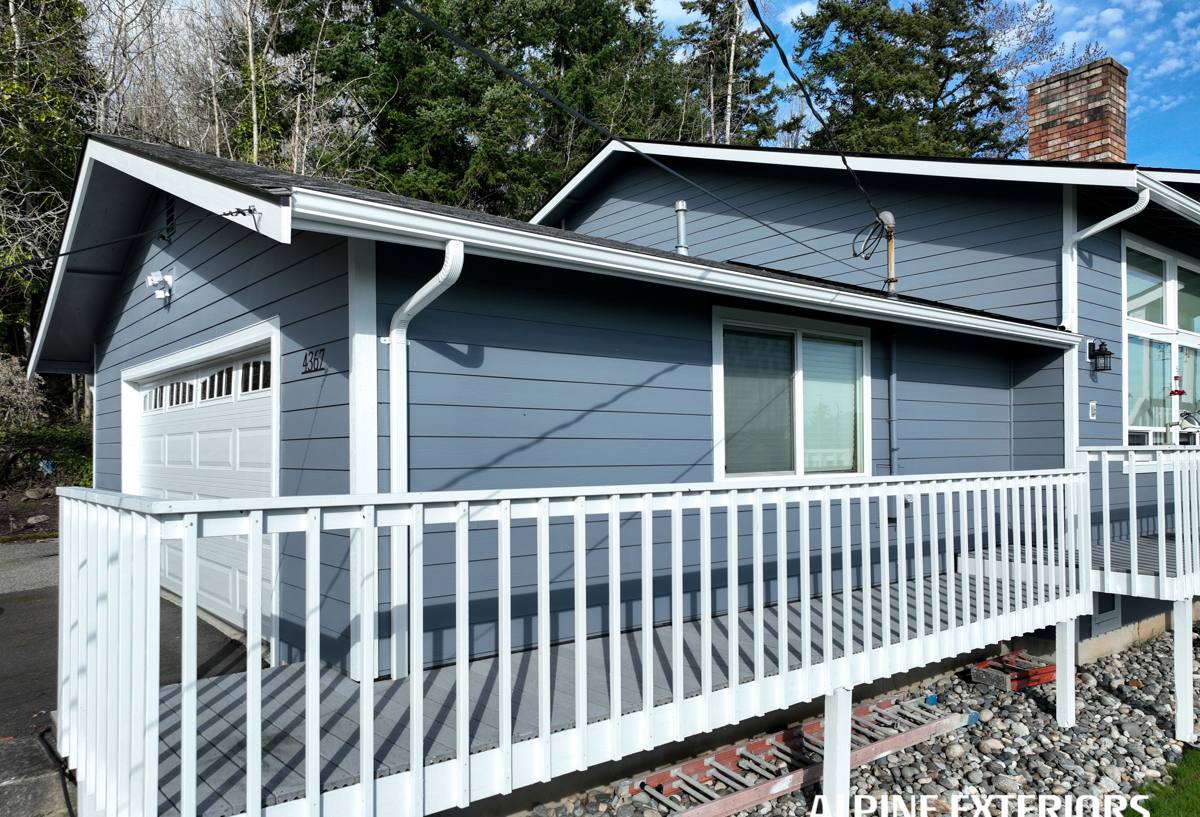
The Three Things That Actually Damage North Beach Roofs
Salt Air and Metal Corrosion
Airborne salt accelerates corrosion on anything metal — nails, flashing, gutter fasteners, drip edge, valley metal, even the metal components inside some shingle products. A roof repaired with standard-grade fasteners near the water will often show rust streaks and loosening well before the surrounding shingles or panels are actually worn out. This is one of the most common repair calls we get: not a failed roof, but failed hardware holding a otherwise sound roof together.
Driving Rain and Wind-Driven Water
Orcas Island gets weather that comes in sideways, not straight down, especially in exposed North Beach locations. Standard flashing details that work fine on a sheltered inland roof can let water in in a duiven-rain event, particularly around chimneys, skylights, dormers, and roof-to-wall transitions. Most of the "mystery leaks" we investigate here trace back to flashing that was adequate for calm rain but never built for wind-driven water.
Extended Moss Season
Between the shade from mature trees and the extended damp season typical of the San Juan Islands, moss and algae have a long runway to establish themselves on north-facing and shaded roof planes. Moss isn't just cosmetic — its root structure lifts shingle edges, holds moisture against the roof deck, and creates channels for water to travel where it shouldn't. A roof that looks "mossy but fine" from the ground is often already compromised at the shingle level.
Common Repair Issues We Find on North Beach Homes
- Corroded or loosened fasteners on flashing, drip edge, and gutter hangers
- Lifted or curling shingle edges along moss-affected roof planes
- Compromised flashing around chimneys, skylights, and roof penetrations
- Granule loss and accelerated wear on the north- and west-facing slopes exposed to prevailing weather
- Clogged or sagging gutters from debris buildup under tree cover, backing water up under the roof edge
- Soft or spongy decking discovered under moss mats that have held moisture against the roof for extended periods
- Rust staining on lighter-colored roofing where lower-grade metal components have started to corrode
What a Correct Repair Actually Involves
A repair that holds up on North Beach isn't just about matching shingles or panels. It's about not repeating whatever detail failed in the first place. When we assess a repair, we're looking at the whole assembly, not just the visible damage:
Inspection Before Anything Gets Touched
We start by identifying the actual source of a leak or failure, not just the point where water is showing up inside. Water often travels along the deck or underlayment before it drips through, so the visible stain and the actual entry point can be several feet apart. We check the roof surface, flashing details, underlayment condition where accessible, and the roof deck itself for soft spots before recommending any repair.
Matching Materials, Not Just Colors
Where shingles or panels need replacing, we match not just the visible product but its weight and wear characteristics as closely as possible, so the repair ages at a similar rate to the surrounding roof instead of standing out or failing early.
Corrosion-Resistant Fasteners and Flashing, Every Time
On any roof this close to salt water, we don't use standard-grade fasteners or flashing as a default — it's a false economy that just guarantees a repeat call in a few years. Stainless or higher-grade coated fasteners and flashing cost more up front and are worth it here.
Flashing Details Built for Wind-Driven Rain
Where a flashing detail is the culprit, we rebuild it to handle water coming in sideways, not just water running straight down — proper step flashing, counter-flashing, and sealant work rated for the exposure, not the minimum code detail.
Repair or Replace? What Actually Drives That Decision
Not every roof problem on a North Beach home needs a full replacement, but not every leak should be patched forever either. Here's how we think about it:
| Factor | Leans Toward Repair | Leans Toward Replacement |
|---|---|---|
| Roof deck condition | Solid, dry decking under the affected area | Soft, spongy, or rotted decking found on inspection |
| Extent of damage | Isolated to one flashing detail, valley, or roof section | Widespread granule loss, curling, or moss damage across multiple planes |
| Roof age vs. expected life | Well within expected service life for the material | Already near or past typical lifespan for the roofing type |
| Underlayment condition | Underlayment still intact and functional | Underlayment failing or original material well past its rated life |
| Fastener and flashing condition | Hardware sound elsewhere on the roof | Corrosion or failure showing up in multiple locations |
We'll always tell you honestly which side of that line your roof falls on, including when a repair is the right call and a full replacement isn't necessary yet.
Moss and Algae: Treating It So It Doesn't Come Back
Removing moss the wrong way — scraping or pressure washing aggressively — can strip granules and shorten a roof's remaining life faster than the moss itself would have. As part of a proper repair, we remove moss carefully, treat the affected areas to slow regrowth, and where it makes sense, install zinc or copper strips along the ridge, which release trace amounts of metal ions that inhibit moss growth on the planes below over time. It's not an instant fix, but it's a proven, low-maintenance way to reduce how fast moss returns on shaded North Beach roofs.
Our Process for North Beach Roof Repair Calls
1. On-Site Assessment
We inspect the roof in person, from the surface and, where safely accessible, from underneath at the deck level, and give you a straight answer on what's actually wrong.
2. Clear, Written Scope
You get a specific description of what will be repaired, the materials being used, and why — no vague line items.
3. Material Planning Ahead of the Job
Because Orcas Island depends on ferry scheduling for material delivery, we order and stage materials before the crew shows up, so your repair isn't stretched out over multiple partial visits waiting on a shipment.
4. The Repair Itself
We fix the actual cause — deck, flashing, fasteners, or shingles/panels as needed — not just the visible symptom, using hardware rated for this environment.
5. Follow-Up
We check our work performs as expected, particularly through the next stretch of driving rain, and we're reachable if anything needs a second look.
Between Repairs: What Homeowners Can Do
- Keep gutters clear of needles and debris, especially going into fall, so water doesn't back up under the roof edge
- Trim back overhanging branches where possible to reduce shade and debris buildup on the roof surface
- Have the roof looked at after any major windstorm, even if nothing looks obviously wrong from the ground
- Watch for moss establishing on north-facing or shaded slopes and address it early rather than letting it spread
- Note any interior staining on ceilings promptly — it's far cheaper to fix a small flashing issue than a rotted deck it eventually causes
- Have flashing around chimneys and skylights checked every few years, since these are the most common failure points here
Why It Matters to Hire a Crew That Already Works North Beach
A roofer who mostly works inland, drier parts of San Juan County may not default to corrosion-resistant hardware or wind-driven-rain flashing details, because they don't need to most of the time. On North Beach, that's not optional — it's the baseline. We already know which areas along this shoreline take the worst of the salt air and prevailing wind, which roof types hold up best under heavy tree cover, and how to plan a job around ferry-dependent material delivery so you're not left with a tarped roof waiting on supplies. That local familiarity shows up in fewer repeat calls and a repair that's actually built for where your home sits.
If you're dealing with a leak, visible moss damage, or you just want an honest opinion on a roof's condition, we're happy to take a look. Reach out for a free, no-pressure estimate using the form below.