 Orcas Island Siding
 Why North Beach Decks Wear Differently
North Beach sits close enough to the water that salt-laden air, wind-driven rain, and deep shade from surrounding fir and cedar all reach the deck at once. That combination is harder on wood and hardware than most inland San Juan County properties ever see. Salt air accelerates corrosion in fasteners and connectors. Driving rain finds its way under railings and around post bases. And the long, damp shoulder seasons common to Orcas Island keep decking boards wet for days at a time, which is exactly the condition moss and algae need to take hold.
None of this means a deck is doomed — it means a deck built or repaired for this exposure needs different details than one built somewhere drier. We've repaired enough decks in this stretch of Orcas Island to know which failures show up first, and which shortcuts from an original build tend to cause problems five or ten years down the road.
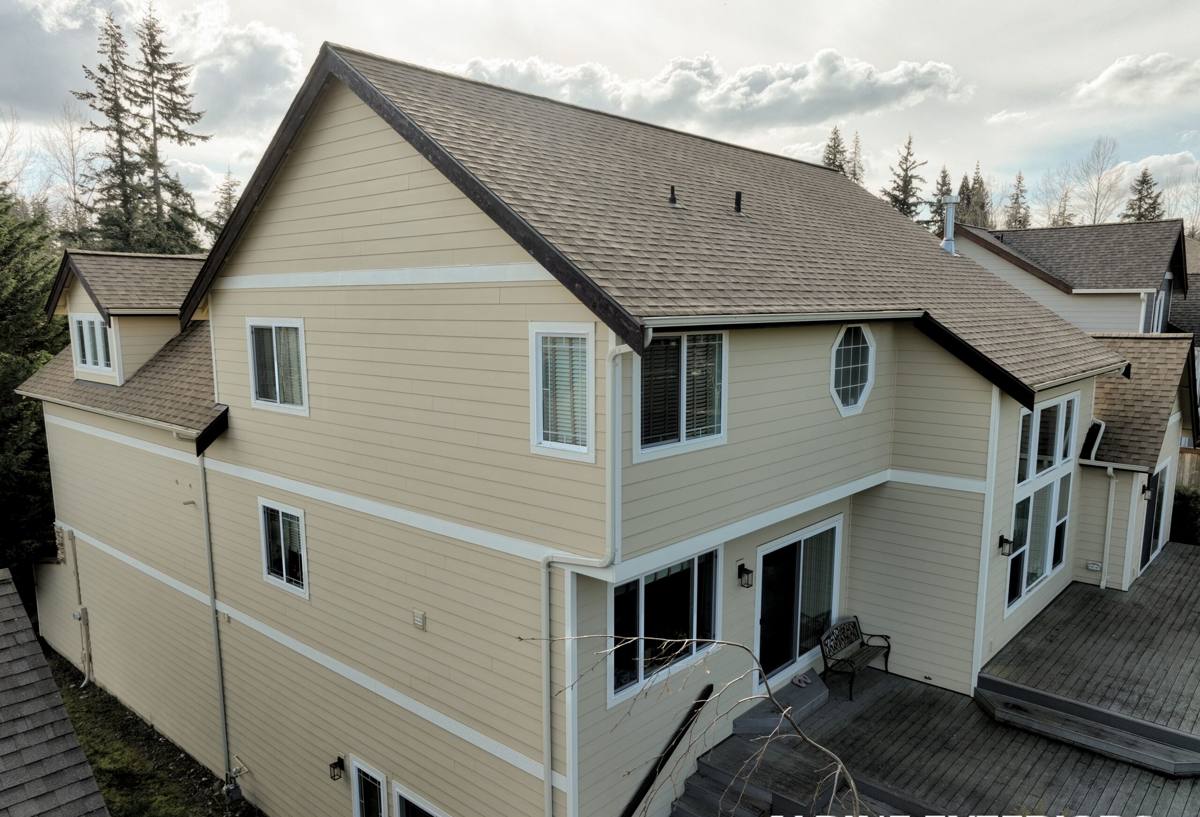
Signs a North Beach Deck Needs Repair, Not Just Cleaning
A pressure wash can make a tired deck look better without fixing what's actually wrong underneath. Before recommending a cleaning, we check for these:
Structural and Framing Issues
Bounce or give when you walk across the deck, soft spots near the house ledger, and gaps opening up between the deck and the siding are all signs the framing has moved or started to rot. On Orcas Island, ledger board attachment is one of the most common failure points we find, especially on older decks that weren't properly flashed when the house's siding was last worked on.
Surface Board Problems
Cupping, splintering, and soft or spongy spots in decking boards usually mean moisture has been sitting in the wood grain longer than it should. Dark staining that won't pressure-wash off, especially in the gaps between boards, is often the early stage of rot rather than surface dirt.
Railings and Fasteners
Loose railing posts are a safety issue, not a cosmetic one — a post that wiggles at the base has likely lost its structural connection to the framing below. Rusted or bleeding fastener heads are a giveaway that the original hardware wasn't rated for coastal exposure.
What a Correct Deck Repair Actually Involves
A repair that only replaces what's visibly damaged often misses the cause. Our process starts below the decking, not on top of it.
| Step | What We Check | Why It Matters Here |
|---|---|---|
| Framing inspection | Joists, beams, posts, ledger connection | Hidden rot spreads fastest where moisture collects against the house |
| Fastener condition | Screws, joist hangers, structural bolts | Salt air corrodes standard hardware faster than most homeowners expect |
| Drainage and flashing | Ledger flashing, board spacing, water path away from the house | Poor drainage is the root cause behind most repeat repairs |
| Surface material | Boards, railings, stair treads | Replacement should match the exposure, not just the original spec |
| Finish and sealing | Stain, sealer, or factory-finished material | Unprotected wood in this climate can lose its finish within a single wet season |
Once we know what's actually failing, we scope the repair around it — replacing rotted joists or ledger sections where needed, swapping corroded fasteners for stainless or coated hardware rated for coastal use, and only then addressing the decking surface itself.
Repair vs. Replace: How We Decide
Homeowners often assume any deck with rot needs full replacement. That's frequently not true — but it depends on where the damage is and how much of the structure it's reached.
| Condition | Usually Repairable | Usually Needs Replacement |
|---|---|---|
| Isolated board damage | Yes — swap individual boards | No |
| Localized ledger or joist rot | Yes — sister or replace affected members | Only if rot has spread widely |
| Loose or corroded railings | Yes — re-secure or replace hardware | Rarely |
| Widespread soft framing throughout | Not cost-effective | Yes |
| Undersized original framing | Sometimes, with reinforcement | Often, for safety and code |
We'll always tell you honestly when a repair is the right call and when it isn't. A patched-together deck that still has a weak core isn't a good use of your money, but tearing out a structurally sound deck because a few boards are cupped isn't either.
Choosing Materials for This Exposure
There's no single "best" decking material for every North Beach property — it depends on how much sun and airflow the deck gets, and how much upkeep you want to do.
Wood Decking
Cedar and other naturally rot-resistant woods look right on Orcas Island and can perform well, but they need regular sealing in a climate this wet. Skipping a season of maintenance is where most wood deck problems start. We're upfront that wood decking is a higher-maintenance choice here, not a lower-quality one — it simply asks more of the homeowner over time.
Composite and Capped Boards
Composite decking resists moisture absorption and doesn't need staining, which appeals to a lot of homeowners dealing with the long damp season here. The trade-off is higher upfront material cost and, on lower-quality composites, a tendency to hold surface moss if they're not cleaned periodically. We only install composite products with solid warranty backing and a track record in wet coastal climates, and we'll walk you through the specific options rather than pushing one brand.
Fasteners and Hardware
Whatever the decking material, hardware matters as much as boards. We use stainless steel or coated fasteners rated for coastal exposure on every repair, because standard galvanized hardware corrodes noticeably faster this close to salt air.
Our Repair Process
- On-site inspection of the full deck structure, not just the visible surface
- Written scope explaining what's damaged, why, and what repair options exist
- Framing and structural repairs completed first, including any needed flashing or drainage fixes
- Hardware replacement using fasteners rated for coastal exposure
- Surface repair or replacement matched to your existing deck or full replacement plan
- Final walkthrough so you understand what was done and what to watch going forward
We don't sell a full replacement when a repair will hold up, and we don't patch over a problem that's going to come back in two years. That's the standard we hold every job to, whether it's a small railing fix or a larger structural repair.
Moss, Algae, and Ongoing Maintenance
Even a well-built, well-repaired deck in this part of San Juan County will grow moss and algae if it's shaded and stays damp. That's a maintenance issue, not necessarily a repair issue — but left unaddressed, moss holds moisture against the board surface and speeds up the exact deterioration that leads to future repairs.
- Rinse or soft-wash decking periodically during the wet months to keep moss from establishing
- Keep gutters and downspouts clear so runoff isn't draining directly onto the deck
- Trim back overhanging branches where practical to improve airflow and sun exposure
- Re-seal wood decking on the schedule your finish product recommends — don't wait for visible fading
- Check railing posts and stair connections once a year for movement or corrosion
- Address small board or fastener issues promptly rather than waiting for them to spread
Why a Crew That Already Works North Beach Matters
A repair crew that mostly works drier, inland jobs will often spec the same materials and fasteners they'd use anywhere else — and those choices don't hold up the same way this close to the water. Knowing which fastener grades actually last here, which decking products handle a long moss season, and how ledger flashing needs to be detailed against Orcas Island's rain patterns isn't something you learn from a manual. It comes from repairing decks in this specific area and seeing what fails and what doesn't.
We also know that access and timing on the islands isn't the same as on the mainland — material lead times, ferry schedules, and weather windows all factor into scheduling a repair properly, and a crew unfamiliar with the area can underestimate all three.
A Quick Self-Check Before You Call
If you're not sure whether your deck needs a professional look, walk through this list:
- Any bounce, sag, or soft spots when you walk across the deck
- Gaps or separation where the deck meets the house
- Railings that move or feel loose at the base
- Persistent dark staining between boards that doesn't wash away
- Visible rust or corrosion on screws, bolts, or brackets
- Moss or algae that returns quickly after cleaning
Any one of these on its own might be minor. Two or three together usually mean it's worth a proper inspection before the next wet season.
If your deck is showing any of these signs, we're glad to take a look and give you a straightforward, no-pressure estimate — use the form below to get started.