 Orcas Island Siding
 Building New in Olga Means Building for the Weather Here, Not Somewhere Else
If you're framing a new home in Olga, your window package is one of the few decisions on the job that's genuinely hard to fix later. Once siding, trim, and interior finish close in around a window, correcting a bad flashing detail means tearing back out through finished work. That's a different level of risk than a straight replacement job, and it's why new-construction window install deserves its own plan rather than a generic "we do windows too" approach.
Olga sits on the east side of Orcas Island, exposed to weather rolling in off Rosario Strait and the water around Buck Bay — salt-laden air, long stretches of driving rain, and a wet season that runs longer here than most people expect before they've lived through one. Add the shade and moisture retention of the wooded lots common in this part of San Juan County, and you get a moss and algae season that can start early and linger. None of that is exotic information to a local crew, but it changes real decisions: fastener choice, flashing sequence, sill pan design, and even which frame materials hold up without babysitting.
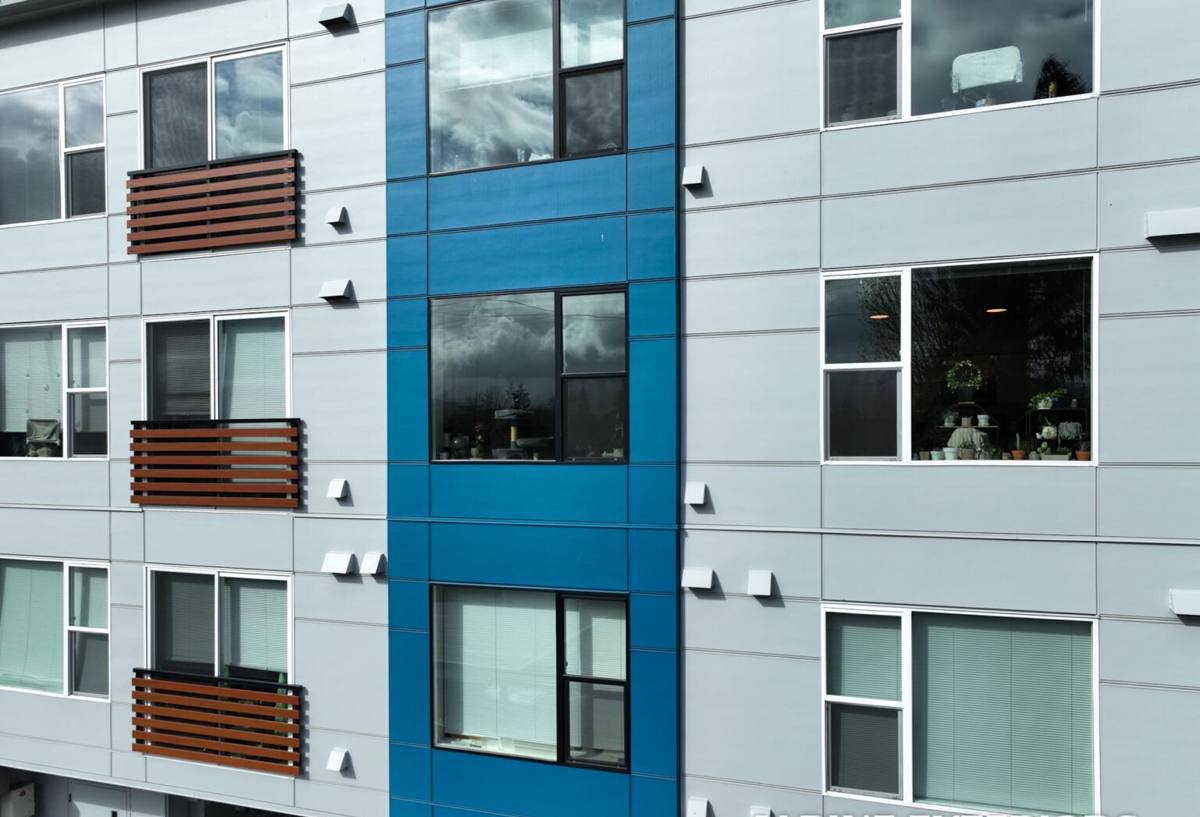
New-Construction Windows vs. Replacement — Why the Job Is Different
Replacement window work fits into an existing rough opening and existing siding. New-construction window install happens before the exterior is closed in, which is both an advantage and a responsibility. The advantage: we can build the water management system into the wall from scratch, layered correctly, instead of working around 20-year-old trim. The responsibility: there's no siding yet to catch our mistakes, so the flashing and weather-resistive barrier (WRB) integration have to be right the first time.
New-construction windows typically use a nail-fin (flange) frame that gets fastened directly to the sheathing and integrated with the house wrap, versus a block-frame window that gets set into a finished opening later. On a new build in a wet, salt-exposed location like Olga, that nail-fin integration is where most long-term leaks either get prevented or get built in — it's not a detail to rush.
What a Correct New-Construction Install Actually Involves
- Rough opening checked square, level, and sized correctly before a window ever goes near it
- Sill pan flashing installed to shed any water that gets past the window back out, not into the wall
- Self-adhered flashing tape at the sill, jambs, and head, lapped in the correct shingle-style order
- Window set, shimmed, and fastened per the manufacturer's schedule — not just "screwed until it feels tight"
- Head flashing that integrates with the WRB above the window, not just caulked and hoped for
- Interior and exterior sealant at the right points — not everywhere, since over-sealing traps water in some assemblies
- Final check for square, smooth operation, and even reveals before the crew moves to the next opening
Where Salt Air and Driving Rain Actually Cause Problems
Two separate issues show up in coastal San Juan County homes, and they call for different fixes.
Driving Rain and Wind-Driven Water
Wind off the water doesn't just fall on a window — it pushes water sideways and up under trim and flanges. That's why sill pan flashing and correctly lapped flashing tape matter more here than they would on a sheltered inland lot. A window that would be fine dry-fit in a garage can still leak once it's facing weather coming in at an angle off Rosario Strait.
Salt Air and Metal Fatigue
Salt air accelerates corrosion on anything ferrous — uncoated fasteners, cheap hardware, and some aluminum components without the right finish. Over a few seasons that shows up as streaking, stuck hardware, or fastener failure at exactly the points holding the window's water management together. We spec corrosion-resistant fasteners and hardware for waterfront and near-waterfront work as a matter of course, not an upsell.
Moss and Prolonged Dampness
Shaded, wooded lots — common around Olga — stay damp longer after a rain than open lots do. That doesn't harm the window itself much, but it does mean trim, sills, and adjacent siding need materials and detailing that tolerate extended moisture contact without holding water against the frame.
Frame Material — What Actually Holds Up Here
| Frame Material | Salt Air / Moisture Behavior | Maintenance | Where It Fits Best |
|---|---|---|---|
| Vinyl | Good moisture resistance, no corrosion risk; can look dated on higher-end homes | Low | Budget-conscious builds, secondary structures, rentals |
| Fiberglass | Excellent — dimensionally stable, doesn't corrode or rot, handles temperature swings well | Low | Most new construction in this climate; strong long-term value |
| Wood-clad (exterior clad, wood interior) | Good if flashed correctly; exterior cladding protects the wood, but any breach lets moisture into the core | Moderate | Homes wanting a wood interior look with less exterior upkeep |
| Aluminum | Conducts cold, can corrode without marine-grade coatings near salt air | Moderate to high near water | Modern architectural styles, typically not our first recommendation this close to the water |
We're not against any of these products outright — each has a legitimate place. Our default recommendation for new builds in Olga leans toward fiberglass or a properly clad wood window because they tolerate this specific combination of salt exposure and sustained dampness with the least long-term maintenance. If you have a design reason to go a different direction, we'll tell you honestly what upkeep that choice will ask of you down the road.
How We Sequence New-Construction Window Install
- Plan review and takeoff — we confirm window sizes, egress requirements, and rough opening dimensions against the actual framing before ordering.
- WRB and flashing plan — we walk the wall assembly with the builder so the housewrap, flashing tape, and window install sequence are agreed on before anyone's up on a ladder.
- Rough opening prep — squaring, sill pan flashing, and back-dam installation happen before the window arrives on site.
- Window set — shimmed, fastened, and flashed per manufacturer spec, with attention to which openings face prevailing wind and rain.
- Integration with siding — trim and cladding details are coordinated so water sheds past the window, not into the seam behind it.
- Final walk-through — every opening checked for operation, square, and sealed penetrations before we sign off.
Coordinating With Your Builder and Siding Crew
New-construction windows aren't installed in isolation — they're one layer in a sequence that includes the WRB, flashing, trim, and final siding. The most common source of future leaks isn't a bad window; it's a handoff between trades where nobody was clearly responsible for how the flashing laps at the window-to-siding transition. When we're brought in for the window package, we coordinate directly with your general contractor or framing crew on timing and flashing details rather than just showing up, setting windows, and leaving the integration to whoever does the siding. If we're also doing your siding, that coordination problem goes away entirely because it's the same crew carrying the water management plan from sheathing through finished cladding.
What Drives Cost on a New-Construction Window Package
| Factor | Why It Matters |
|---|---|
| Frame material | Fiberglass and wood-clad run higher than vinyl but ask less maintenance in this climate |
| Window count and size | Larger openings and more of them mean more flashing detail work, not just more glass |
| Glazing package | Double vs. triple pane, low-E coatings, and gas fills affect both cost and comfort/energy performance |
| Site exposure | Waterfront or bluff-facing openings often justify upgraded hardware and fastener specs |
| Access and logistics | Ferry-dependent material delivery and site access can affect lead time more than labor cost |
| Coordination complexity | Simpler when window and siding install are one continuous scope instead of two separate handoffs |
We give straightforward, itemized estimates rather than a single lump number, so you can see where your money is going and where there's room to adjust without compromising the water management details that actually protect the house.
Why a Crew That Already Works Olga and Orcas Island Matters
Building on an island changes logistics in ways that don't show up on a mainland job. Material orders have to account for ferry schedules, and a missed order can mean a multi-day delay rather than a same-day run to a supplier. A crew that already works Orcas Island jobs regularly has that lead time built into planning from the start, rather than discovering it mid-project.
There's also a code and permitting side to this. San Juan County has its own permitting process and inspection expectations, and getting a new-construction window package inspected and signed off without back-and-forth is easier when the crew installing it has been through that process locally before. Beyond paperwork, a crew with real time on Orcas Island jobs has simply seen how salt air, driving rain, and moss season actually play out on homes here over multiple seasons — not in theory, but on real builds a few miles from yours.
Before Your Windows Go In — What to Verify
- Rough openings have been checked against actual window sizes, not just plan dimensions
- A written flashing and WRB integration sequence exists that both the window installer and siding crew agree on
- Fasteners and hardware are specified for coastal/salt-air exposure, not generic interior-grade hardware
- Sill pan flashing with a back dam is part of the plan for every opening, not just the most exposed ones
- Material lead times account for ferry delivery schedules so the schedule doesn't stall mid-framing
- Someone has confirmed San Juan County permit and inspection requirements for the window package
If you're planning a new build in Olga and want the window package handled by a crew that already knows this stretch of Orcas Island, we're happy to walk your plans, talk through frame options, and give you a straightforward estimate — no pressure, no obligation. Just fill out the form below to get started.