 Orcas Island Siding
 Windows on North Beach Face a Different Job Than Windows Inland
North Beach sits exposed to open water, and that changes what a window has to survive day to day. Salt-laden air corrodes hardware and finishes faster than it does even a few miles inland. Driving rain off the water finds every weak seal and undersized flashing detail. And San Juan County's long, damp moss season keeps trim, sills, and cladding wet for weeks at a stretch, which is exactly the condition that rots wood and swells frames that weren't detailed for it. A window that performs fine in a sheltered yard in Eastsound can fail years early on a lot that catches wind straight off the strait.
This page is about one job, done right, in one place: replacing windows on North Beach homes. Not a general product pitch — the specific decisions that matter when your house sits where salt, wind-driven rain, and moss are part of daily life.
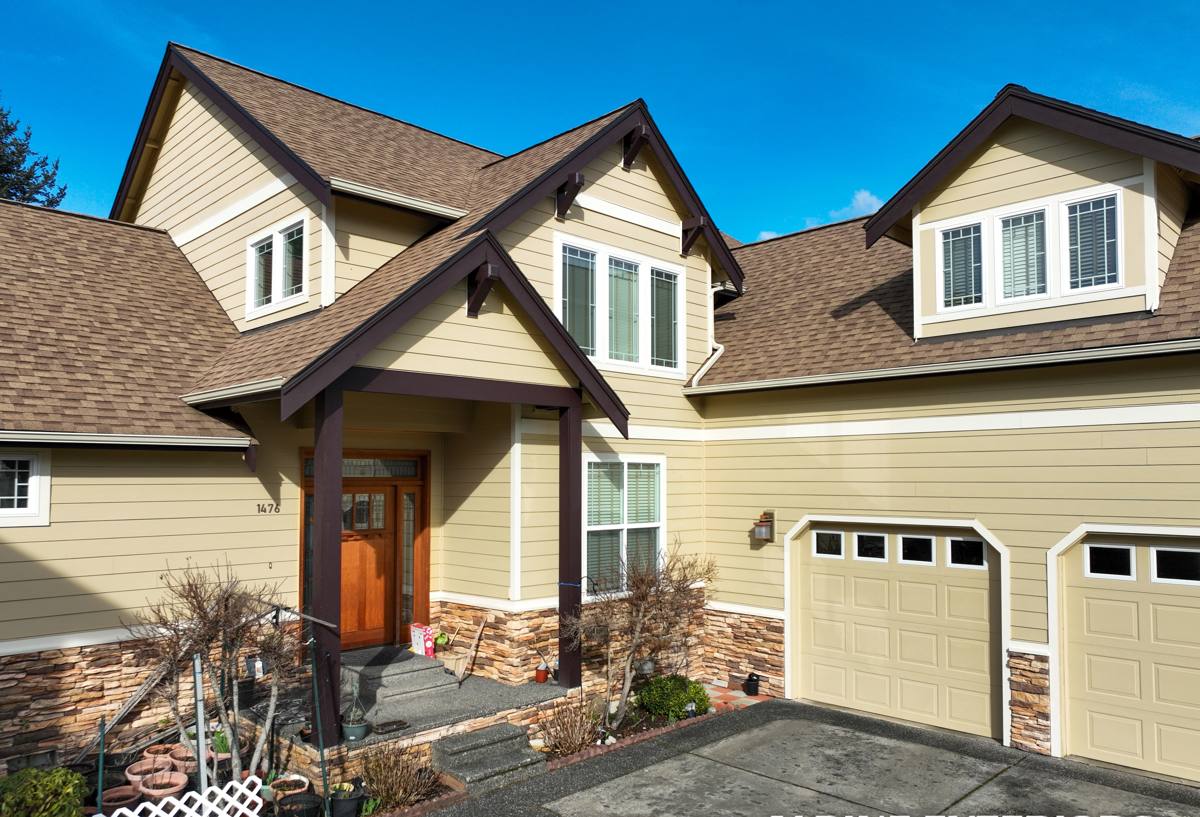
What Salt Air and Driving Rain Actually Do to a Window
Hardware and Finishes
Salt in the air settles on everything, including window hardware, screen frames, and exposed fasteners. Left alone, it accelerates corrosion on lower-grade metals and can pit or discolor finishes within a few seasons. This isn't a defect in the window so much as a mismatch between the product and the site — a window rated fine for a typical suburban lot can look and function years older than its actual age on a waterfront-facing wall.
Water Intrusion Under Wind Pressure
Rain that falls straight down is one problem. Rain that's being driven sideways by wind off the water is another. Wind-driven rain pressurizes against the wall and looks for any gap — a compressed sill flashing, a nail fin that wasn't lapped correctly with the water-resistive barrier, a bead of sealant that's dried out and cracked. Once water gets behind the window unit instead of running off it, you get slow, hidden damage: soft sheathing, stained interior trim, and eventually mold, long before anyone sees a drip.
Moisture Cycling and Moss
The long moss season here means extended stretches where wood surfaces, trim, and the area right around a window stay damp. Moisture that lingers instead of drying out is what feeds rot in wood-framed windows and wood trim, and it's what lets moss and algae get a foothold on sills and casing. Frequent wet-dry cycling also stresses seals and caulk joints faster than a drier climate would.
What a Correct North Beach Window Replacement Involves
A good window replacement here is as much about the installation detailing as it is about the window itself. The window is only as good as the flashing, sealant, and integration with the wall assembly around it.
- Full removal of the old unit and inspection of the rough opening for hidden rot or soft sheathing before anything new goes in
- Correct flashing sequence — sill pan flashing that sheds water outward, side flashing lapped over it, and head flashing lapped over the sides, all integrated with the existing water-resistive barrier
- Marine-grade or corrosion-resistant fasteners and hardware appropriate for a salt-air exposure
- Sealant and backer rod sized and applied correctly at the exterior joint, not just a bead of caulk smeared over a gap
- Frame materials and finishes chosen for the specific exposure of that wall — a south or west wall facing open water gets treated differently than a sheltered north wall
- Interior air sealing and insulation at the rough opening, so the improvement isn't just cosmetic on the outside
Skip any one of these steps and you can end up with a window that looks new but leaks or corrodes within a few years — which costs more in the long run than doing it right the first time.
Choosing Materials for a Waterfront-Facing Exposure
There's no single "best" window material for every situation, but on North Beach some trade-offs matter more than they would inland. We talk through these honestly with homeowners rather than pushing one product line.
| Material | Salt Air / Moisture Behavior | Maintenance | Notes for This Exposure |
|---|---|---|---|
| Vinyl | Doesn't corrode; UV and salt exposure can affect finish over decades | Low | Common, cost-effective choice for exposed walls; hardware quality still matters |
| Fiberglass | Very stable, resists moisture-driven expansion/contraction | Low | Good option where frames see repeated wet-dry cycling |
| Aluminum-clad wood | Exterior face resists weather; wood core needs the cladding to stay intact | Moderate | Any breach in cladding exposes wood to moisture faster in this climate |
| All-wood | Attractive but most vulnerable to sustained damp exposure | Highest | We recommend it only with a clear maintenance commitment on exposed walls |
We're not going to tell you all-wood windows are "bad" — they're a legitimate, attractive product. Our professional standard on directly exposed North Beach walls is simply to be upfront that they demand more upkeep here than a sheltered inland site, and to make sure homeowners choose with that trade-off in mind rather than finding out the hard way.
Sizing the Job to Your Home
Full-Frame vs. Insert Replacement
Insert (pocket) replacement reuses the existing frame and is faster and less invasive, but it only makes sense if that existing frame is dry, square, and sound. Full-frame replacement removes everything down to the rough opening, which costs more but is often the right call on North Beach homes specifically because it's the only way to actually inspect and fix hidden moisture damage and redo the flashing correctly.
How Many Windows at Once
Replacing an entire wall or elevation at once — rather than one window here and there over several years — usually gets better pricing per unit and, more importantly, lets us treat the whole wall's flashing and sealant as one continuous system instead of a patchwork of different installation ages.
Our Process for a North Beach Window Job
- On-site assessment. We look at each window's exposure, current condition, and any signs of past water intrusion — not just the glass and frame, but the sheathing and trim around it.
- Honest scope and options. We'll tell you where an insert replacement is appropriate and where full-frame is the right call, along with realistic material options for that specific wall's exposure.
- Written estimate. Clear line items, no surprise add-ons buried in vague language.
- Scheduling around weather. Window replacement means an open wall for a period of time, so we plan install windows around forecasts rather than gambling on a dry afternoon in a wet season.
- Correct installation. Flashing, fasteners, sealant, and insulation done to the standard described above — not the fastest version, the correct version.
- Final walkthrough. We check operation, seals, and finish work with you before calling the job done.
Signs You Shouldn't Ignore
Homeowners on North Beach often call us after noticing one of these — and in most cases, catching it early keeps the job smaller and cheaper.
- Soft or discolored wood trim or sill around a window
- Fogging or condensation between panes of a double- or triple-glazed unit, which usually means a failed seal
- Windows that are harder to open and close than they used to be, or don't latch tightly
- Visible corrosion or pitting on hardware, hinges, or screen frames
- Moss or persistent green staining building up on sills or casing
- Drafts or noticeable temperature difference near the window on windy days
- Peeling paint or bubbling finish on interior or exterior trim near the frame
Why It Matters Who You Hire on Orcas Island
Window replacement is a common trade, but exposed waterfront work in San Juan County rewards experience with this specific island's conditions. A crew that mostly works drier, more sheltered sites can install a technically fine window and still get the flashing detail wrong for driving rain off open water, or spec hardware that wasn't meant for constant salt exposure. A crew that already works North Beach and similar exposures on Orcas Island has already seen what fails here and builds the job around avoiding it — not as an afterthought, but as the starting assumption.
There's also the practical matter of logistics. Getting materials and crews to and around Orcas Island takes planning that a mainland-based contractor may not budget for, which can turn into schedule slips or corners cut to make up time. Working with a contractor based on the island keeps that friction out of your project.
What This Typically Costs
Costs vary with window size, material, whether it's an insert or full-frame replacement, and how much hidden repair the opening needs once it's exposed. In broad terms, expect insert replacements to run less per window than full-frame work, and expect any wall with existing moisture damage to cost more to do correctly than one that's dry and sound. We won't quote a number without seeing the actual windows and openings — anything else would just be a guess dressed up as an estimate.
If your North Beach home has windows showing wear, drafts, or signs of moisture, we're happy to take a look and give you a straightforward, no-pressure estimate. Fill out the form below and we'll schedule a time to walk the exterior with you.