 Orcas Island Siding
 Building New at North Beach Means Building for the Weather You'll Actually Get
North Beach sits close enough to the water that salt air is a daily fact of life, not an occasional nuisance. Add San Juan County's long, wet winters, driving rain off the Strait, and a moss season that seems to stretch a little further into the calendar every year, and you have a set of conditions that will find every weak point in a window installation. When you're building new, you get exactly one chance to get the window openings right before siding, trim, and interior finishes close everything up. That's a very different job than swapping out an old window in an existing wall, and it deserves a different level of attention.
We install new-construction windows on Orcas Island homes with that reality in mind. The goal isn't just a window that looks good on delivery day — it's a window opening that's still performing the way it should ten and twenty years from now, after a decade of salt-laden wind and winter storms have had their say.
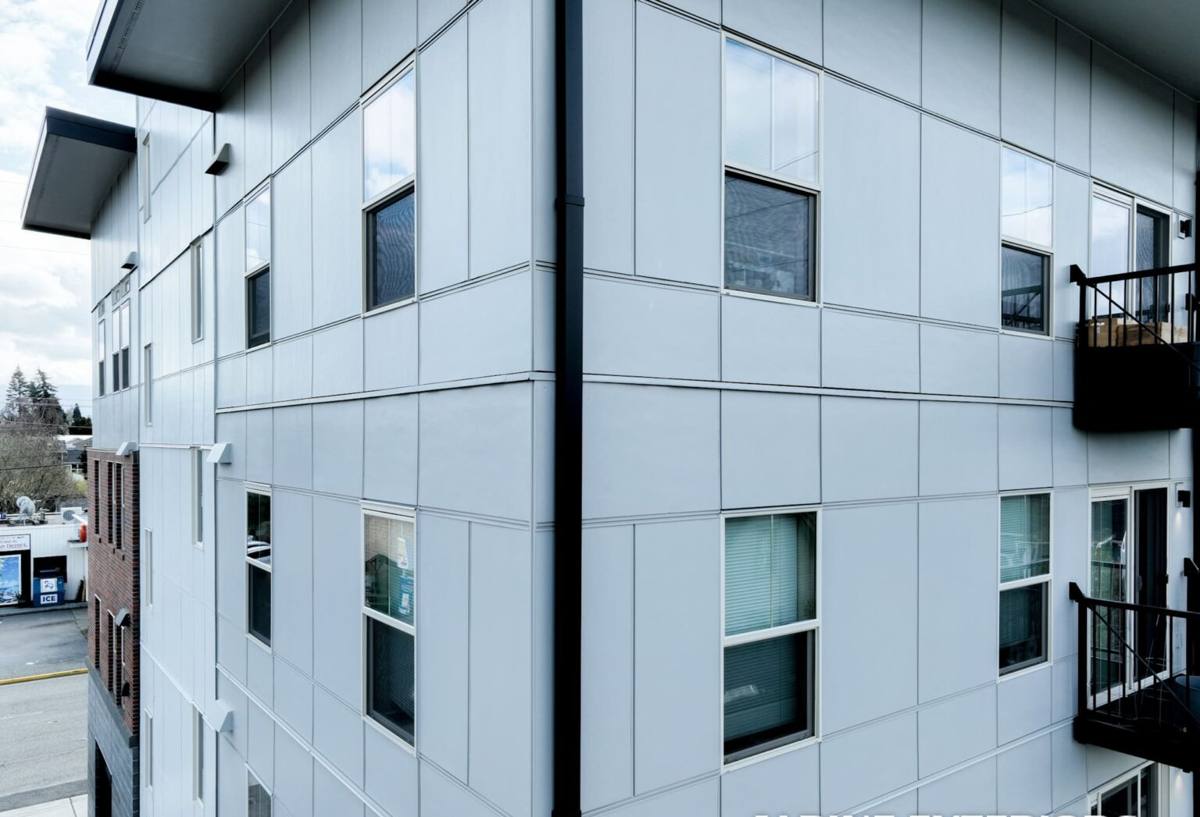
New Construction vs. Replacement: Why the Distinction Matters Here
"New-construction window" refers to a specific type of window unit, built with a nailing flange around the perimeter of the frame, designed to be installed into a rough opening before the exterior wall covering goes on. This is different from a pocket or insert replacement window, which is designed to fit inside an existing frame during a remodel. On a new build or an addition at North Beach, the nailing-flange window is almost always the right call — it lets us integrate the window directly with the water-resistive barrier (WRB) and flashing system in a way that's simply not possible once siding is already in place.
That integration is where the real weatherproofing happens. The window itself is only one part of a water management system that includes the sill pan, flashing tape, the WRB, and the siding above and around it. Get that sequencing wrong, even with an excellent window, and water will eventually find its way into the wall assembly — usually quietly, behind the siding, where you won't see it until there's already damage.
What "Correct" Actually Looks Like on the Wall
A proper new-construction window installation, done in the order that actually keeps water out, generally follows this sequence:
- Rough opening checked for square, level, and correct sizing before the window ever shows up on site
- Sloped sill pan flashing installed so any water that reaches the sill drains back outward, not into the wall
- Back-dam or end-dam detail at the sill to stop water from migrating sideways into the framing
- Window set, shimmed, and fastened per the manufacturer's structural requirements — not just "nailed until it feels solid"
- Flashing tape applied at the jambs and head in the correct shingle-lap order (bottom-to-top) so each layer sheds water onto the one below it
- Head flashing or drip cap integrated with the WRB above the window
- Interior air-sealing with low-expansion foam or backer rod and sealant, separate from the exterior weatherproofing layer
- Final check of reveal, operation, and hardware before siding closes in the opening
Skip or rush any one of those steps and the window can look perfect from the curb while still being set up to leak. This is the part of the job that separates a crew that installs windows occasionally from one that treats window openings as a system.
What North Beach's Climate Specifically Asks of a Window Opening
Three conditions do most of the work of aging a window installation on this part of Orcas Island:
Salt Air
Airborne salt accelerates corrosion on fasteners, hardware, and some metal flashing and trim products. It also degrades certain sealants and finishes faster than they'd wear in an inland setting. We favor corrosion-resistant fasteners and flashing materials for near-water builds, and we're upfront that anything installed within sight of the water will need more attention over its life than the same product would need twenty miles inland.
Driving, Wind-Driven Rain
Storms coming off the water don't just rain down — they push water sideways and upward under normal drip edges and standard flashing laps. That's exactly why the shingle-lap sequencing and sill pan details above matter so much more here than they would in a sheltered inland lot. A flashing detail that would be adequate in a calm microclimate can fail under sustained wind-driven rain.
Moss and Sustained Moisture
Long wet seasons keep humidity and surface moisture elevated for months at a time, which is what lets moss and algae establish on north-facing and shaded surfaces. Around windows, that means trim, sills, and adjacent siding need details that let them dry out between wet spells rather than staying saturated — proper drainage gaps, back-ventilated trim where appropriate, and sealants rated for sustained moisture exposure.
Choosing a Frame Material for a North Beach Build
There's no single "best" window frame material — the right choice depends on budget, maintenance appetite, and how exposed the opening is. Here's how the common options generally compare for a near-water San Juan County build:
| Frame Material | Salt-Air Durability | Maintenance | Typical Cost |
|---|---|---|---|
| Vinyl | Good — won't corrode | Low | Lower |
| Fiberglass | Very good — stable, low expansion | Low | Mid to higher |
| Aluminum-clad wood | Good exterior face, interior wood needs protection | Moderate | Higher |
| Solid wood | Requires diligent upkeep in salt air | Highest | Higher |
For most new builds directly exposed to salt air and driving rain, we steer homeowners toward vinyl or fiberglass units with quality low-E glass packages, simply because they hold up with the least ongoing attention. Wood and clad-wood windows can still be the right call for a particular design vision — we just make sure homeowners understand the maintenance commitment going in, rather than finding out after a few winters.
Our Process, Start to Finish
Whether we're working from your builder's plans on a new home or handling window openings on an addition, the process looks roughly like this:
- Review window schedule, rough opening sizes, and manufacturer specs against the actual framing on site
- Confirm flashing and WRB details with the builder so trades aren't working against each other
- Install sill pans, back-dams, and flashing tape in correct sequence before the window is set
- Set, shim, and fasten each window to manufacturer structural requirements
- Integrate head flashing and WRB laps above each opening
- Air-seal the interior perimeter separately from exterior weatherproofing
- Walk each opening for square, level, smooth operation, and hardware function
- Coordinate timing with siding and trim crews so windows aren't left exposed to weather longer than necessary
That last point matters more here than in drier climates — a rough opening or newly set window left uncovered through a stretch of North Beach weather can take on moisture before siding ever goes up. We plan the schedule to minimize that exposure window.
Mistakes We See When Window Openings Aren't Treated as a System
Most window problems we get called to diagnose on new-ish builds trace back to a handful of avoidable errors:
- Flashing tape applied out of shingle-lap order, so water gets directed behind the layer meant to stop it
- No sill pan or back-dam, relying on caulk alone to keep water out of the sill
- Fasteners driven through the flange without regard to the manufacturer's structural nailing pattern
- Sealant used as a substitute for proper flashing sequencing instead of as a supplement to it
- Windows left exposed to weather for extended periods between install and siding closure
- Mismatched flashing metal and fasteners that accelerate corrosion in a salt-air setting
None of these show up on move-in day. They show up two, five, or ten winters later, as stains, soft trim, or a musty smell near a window — by which point the fix is far more invasive than getting it right the first time would have been.
What Drives Cost on a New-Construction Window Job
Every North Beach build is different, but the same handful of factors tend to move the price up or down:
| Factor | Effect on Cost |
|---|---|
| Number and size of openings | More and larger openings scale cost directly |
| Frame material and glass package | Fiberglass and upgraded low-E/argon glass cost more than base vinyl |
| Height and access (multi-story, tricky sites) | Staging and lift time add labor |
| Degree of water exposure on the site | More exposed elevations warrant more robust flashing detail |
| Coordination complexity with other trades | Tight schedules on a busy build can add scheduling cost |
| Delivery lead time and logistics | Island delivery scheduling can affect project timeline more than cost, but rush orders add both |
We give straightforward, written estimates broken down by opening so you can see where the money is going, rather than a single lump number.
Living With New Windows in a Salt-Air, Moss-Season Climate
A correctly installed window still benefits from a little seasonal attention here. Rinsing accumulated salt off frames and glass periodically helps finishes and hardware last longer. Keeping weep holes and drainage gaps clear of debris, pollen, and moss growth lets the window's built-in drainage do its job. And a quick annual look at exterior sealant joints — especially on the most weather-exposed elevations — catches small issues before a winter storm turns them into bigger ones. None of this is difficult, but skipping it is one of the more common ways a good installation underperforms its potential lifespan.
Why Local Experience at North Beach Actually Matters
Window installation instructions are the same everywhere, on paper. What differs is judgment: knowing which elevations at North Beach take the worst of the wind-driven rain, which details need reinforcing versus which are fine as designed, and how to sequence work around the wetter stretches of an Orcas Island winter without leaving openings exposed. A crew that's already worked this specific stretch of San Juan County has made those judgment calls before, on homes facing the same water and weather your build will face. That's not something a general contractor pulling in an out-of-area window crew for a one-off job can easily replicate.
If you're planning new construction or an addition at North Beach and want windows installed the way this climate actually requires, we're glad to walk your plans and openings with you and put together a free, no-pressure estimate — the form below is the easiest way to get that started.