 Orcas Island Siding
 Metal Roofing Built for the Mountain Lake Area
Homes around Mountain Lake sit up in the timber on Orcas Island, which means a different set of roofing pressures than a house down at sea level in Eastsound or Deer Harbor. You still get the salt-laden air moving in off the water, but you also get heavier tree cover, more shade, and slower drying times after a storm. That combination is exactly where a correctly installed metal roof earns its keep — steep-slope drainage that sheds water fast, a surface that doesn't hold moisture the way asphalt shingles do, and a service life that can outlast two or three shingle roofs if the details are done right.
This page is specifically about standing seam and exposed-fastener metal roofing for the Mountain Lake area of Orcas Island, San Juan County — not a general metal roofing overview. If you're comparing options for a home in this part of the island, the specifics below are what actually matter for your roof's performance and lifespan.
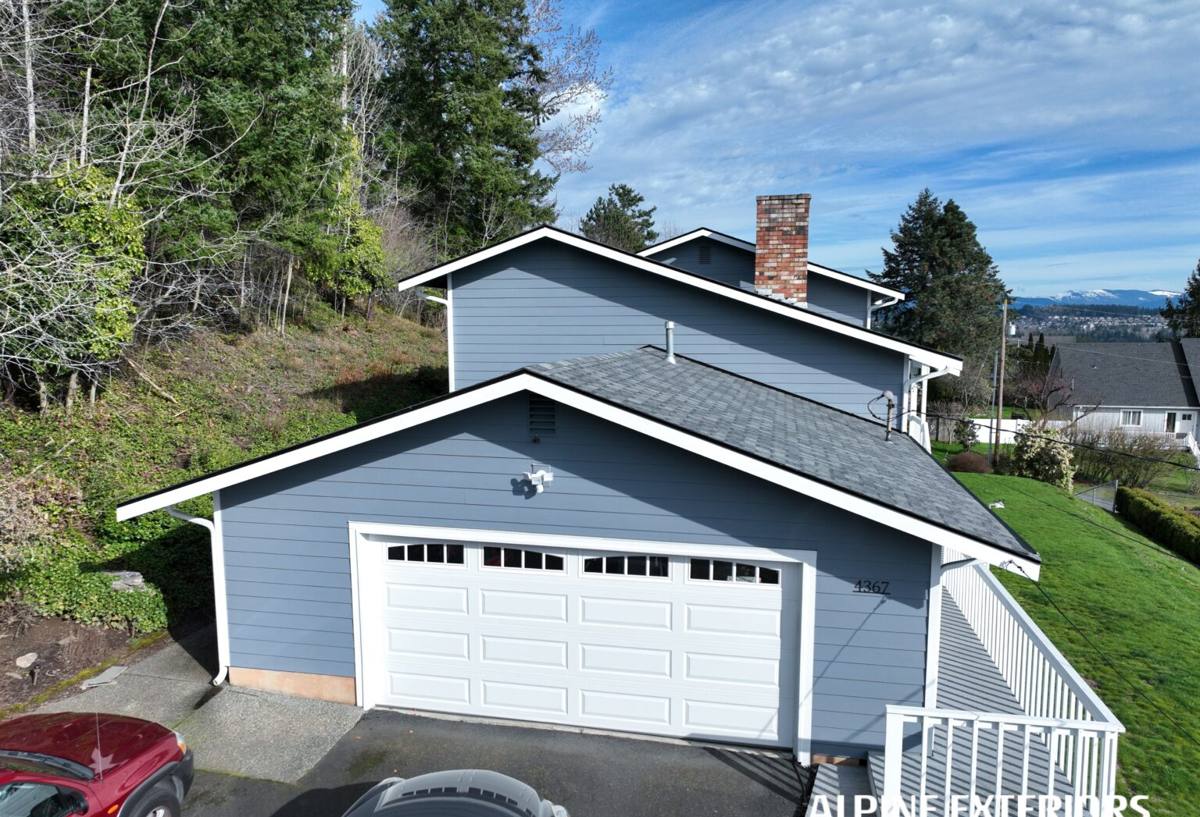
What San Juan County's Climate Does to a Roof Near Mountain Lake
Three things drive most of the roofing problems we see in this area, and they compound each other:
Salt Air
Even set back from the shoreline, homes on Orcas Island sit inside a marine air envelope. Salt-bearing moisture travels on wind and settles on every exterior surface, including the roof. Over years, that accelerates corrosion on unprotected metal fasteners, exposed cut edges, and lower-grade coatings. It's a slow process, but it's constant, and it's the reason fastener and coating choice matters more here than it would 200 miles inland.
Driving Rain
Storms coming off the Strait of Juan de Fuca and the Salish Sea don't just fall straight down — wind-driven rain gets pushed sideways under ridge caps, around penetrations, and up under poorly lapped flashing. A roof that's fine in a light, vertical rain can still leak in a sideways gale if the flashing details weren't built for wind-driven water in the first place.
Moss and Shade
The tree cover around Mountain Lake keeps roofs shaded and damp longer after every rain than a roof out in the open. That's ideal moss-growing conditions. On asphalt shingles, moss roots into the granule surface and lifts tabs. On metal, moss can't root into the panel, but it can still colonize dirt and debris that collects in valleys, at panel laps, and behind snow guards — which traps moisture against the finish and, over enough years, becomes a coating and fastener problem rather than a structural one.
None of these three issues is dramatic on its own. Together, over a decade or two, they're what separates a roof that needs full replacement at year 15 from one that's still solid at year 40 — and the difference almost always comes down to material choice and installation quality, not luck.
Metal Roofing Systems: Matching the Panel to the Property
Not every metal roof is the same product, and the right choice depends on the roof's slope, how visible it is, and your budget. We walk through this with every homeowner before recommending anything.
| System | Best Fit | Trade-offs |
|---|---|---|
| Standing seam (concealed fastener) | Main roofs, steep pitches, homes near the lake or shoreline | Higher upfront cost; no exposed fasteners to corrode or back out over time |
| Exposed-fastener panel (e.g. corrugated or ribbed steel) | Outbuildings, shops, lower-visibility roofs, tighter budgets | Lower cost; fastener gaskets and washers age faster in salt air and need periodic checking |
| Stone-coated steel | Homes wanting a shingle or shake profile with metal's durability | Mid-range cost; more surface texture where debris and moss film can collect |
For most Mountain Lake area homes, we lean toward standing seam on the main roof. The concealed fastener system means there's nothing exposed for salt air to work on, and the raised seams shed wind-driven rain better than any exposed-fastener product. Where budget or roof visibility make an exposed-fastener panel the right call, we spec fasteners and gaskets rated for coastal exposure and set a maintenance schedule to check them.
What a Correct Installation Actually Involves
Metal roofing punishes shortcuts more than shingle roofing does, because there's no forgiving overlap of granules to hide a mistake — every seam, fastener, and flashing detail is doing real work. A correct job includes:
- Solid, dry decking — any soft or water-stained sheathing gets replaced before a single panel goes down
- A high-quality synthetic or self-adhered underlayment rated for the panel type, lapped correctly for our prevailing wind and rain direction
- Proper ventilation at ridge and soffit so trapped attic moisture doesn't condense on the underside of the metal
- Panels and fasteners matched in metal type to avoid galvanic corrosion between dissimilar metals
- Custom-fabricated flashing at every valley, wall intersection, chimney, and vent penetration — not stock trim pieces bent to fit
- Closures and sealant details built for wind-driven rain, not just vertical drainage
- A fastening pattern and clip spacing that accounts for wind exposure specific to the site, including any clearing or hilltop exposure near the lake
Skipping any one of these doesn't usually show up as a leak in year one. It shows up in year eight or ten, after enough freeze-thaw cycles and wind events have worked on a weak point — which is exactly why installation quality matters more than which brand of steel is on the panel.
How We Work on Mountain Lake Projects
Working on Orcas Island means planning differently than a mainland contractor would. Materials come over by ferry, so panel orders, custom flashing, and trim are measured and confirmed before anything ships — we don't want a crew standing on a roof waiting on a part that's still on the dock in Anacortes. Our process on a Mountain Lake area job typically runs:
- On-site assessment of the existing roof, decking condition, and site-specific wind/shade exposure
- Written scope and estimate covering panel system, underlayment, flashing details, and ventilation work
- Material ordering and ferry logistics scheduled around a firm install window
- Tear-off (if replacing an existing roof) and deck repair as needed
- Underlayment, flashing, and panel installation
- Final walkthrough covering what maintenance the specific system needs going forward
Because we already work this part of the island regularly, we're not building a new supply chain or guessing at wind exposure for every job — we know what holds up here and what doesn't.
Maintenance: What Actually Extends a Metal Roof's Life Here
Metal roofing is lower-maintenance than shingles, but "low-maintenance" isn't "no-maintenance" in this climate. A short annual routine catches problems while they're still cheap to fix:
- Clear debris and needle buildup from valleys and low-slope transitions before fall rains set in
- Check and clean gutters so water isn't backing up under drip edge
- Look for moss or algae film building up in shaded valleys or behind snow guards
- Inspect exposed fasteners (if applicable) for backing out, gasket wear, or surface rust
- Check flashing at chimneys, skylights, and wall intersections for sealant that's cracked or pulled away
- Confirm attic ventilation isn't blocked by insulation or debris
Most of this is a once-a-year, half-hour visual check. Catching a lifted piece of flashing or a clogged valley early is a small fix; ignoring it for a few winters can mean sheathing repair.
Cost Factors for a Mountain Lake Area Metal Roof
Every roof is different, so we don't quote sight unseen, but these are the variables that move the price most:
| Factor | Why It Matters |
|---|---|
| Panel system (standing seam vs. exposed-fastener) | Standing seam costs more in material and labor but needs less long-term fastener maintenance |
| Roof complexity | Valleys, dormers, and multiple roof planes mean more custom flashing labor |
| Deck condition | Rot or soft sheathing found at tear-off adds repair cost before panels go on |
| Access and staging | Steep sites, limited driveway access, or ferry-dependent material delivery affect scheduling and labor time |
| Ventilation upgrades | Adding or correcting ridge/soffit venting during the job is cheaper than retrofitting later |
Broadly, expect metal roofing to cost more upfront than asphalt shingles — often by a meaningful margin — but with a service life that's typically two to three times longer when installed correctly, which changes the real cost-per-year comparison.
Why It Matters That We Already Work This Area
A crew that's worked Mountain Lake and the surrounding Orcas Island neighborhoods already knows how far the salt air reaches inland, how shaded roofs here hold moisture longer, and how wind moves through the tree breaks around the lake. That's not something you get from a spec sheet — it's from doing the work here repeatedly and seeing what fails and what doesn't. It also means straightforward logistics: we're not coordinating a first-time ferry trip or guessing at material lead times, which keeps your project on the schedule we give you.
If you're weighing a metal roof for a home in the Mountain Lake area, we're happy to take a look and walk you through what makes sense for your specific roof — no pressure, no upsell. Use the form below to request a free estimate.