 Orcas Island Siding
 Windows Built for the Mountain Lake Microclimate
Homes around Mountain Lake sit in a different world than the open, wind-scoured shoreline properties elsewhere on Orcas Island. Tree canopy shades the roofline for much of the day, humidity lingers longer under the trees, and temperature swings between sun and shade can be sharper than homeowners expect. That combination is hard on windows in ways that a generic "energy-efficient replacement" pitch doesn't account for. We install windows on this island every year and have learned that the right product and the right installation depend on where on Orcas Island a home actually sits — not just a spec sheet.
This page is about one thing: energy-efficient window replacement for homes in the Mountain Lake area, and what actually matters here given San Juan County's climate.
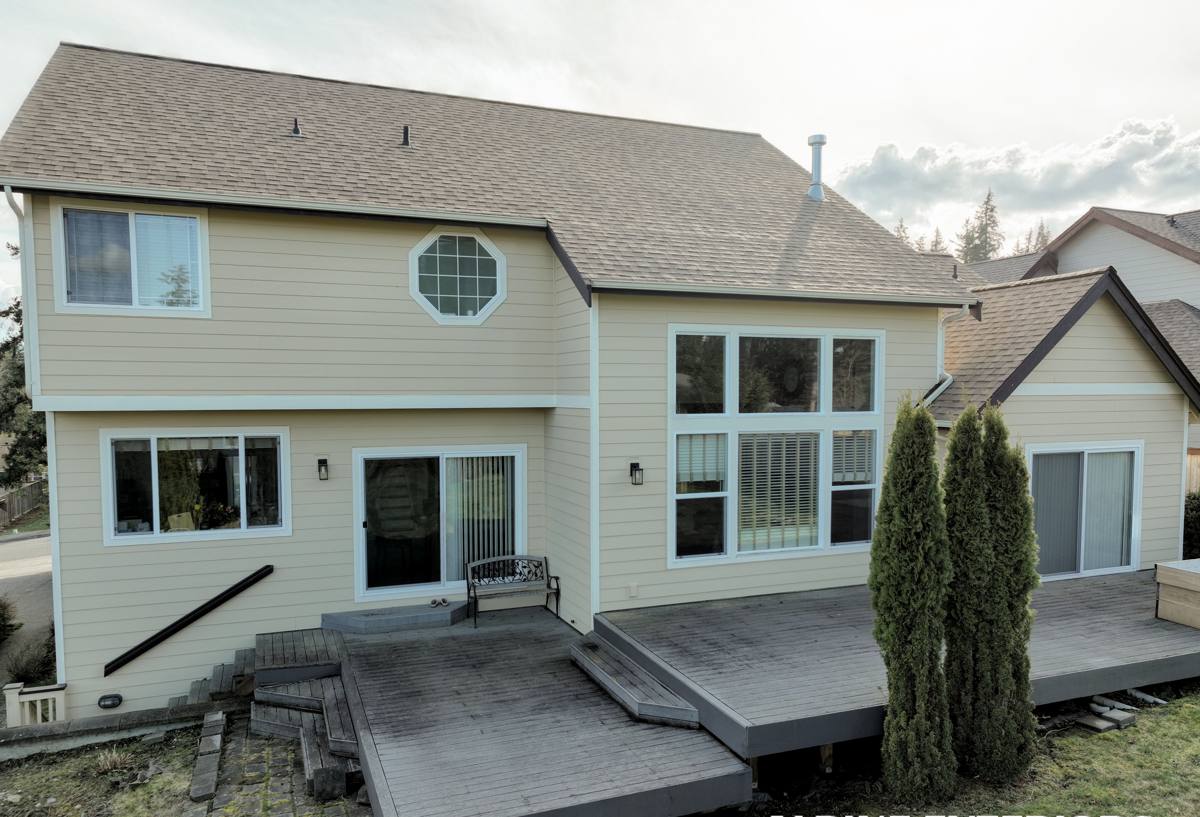
The Climate Factors That Actually Drive Window Decisions Here
Salt Air, Even Inland
Orcas Island sits in salt water on every side, and marine air moves across the whole island, not just the shoreline. Homes set back from the water near Mountain Lake still see slow corrosion on window hardware, screen frames, and unprotected metal components over the years. It's less aggressive than a waterfront property, but it's not nothing, and it should factor into hardware and frame choices.
Driving Rain and Wind-Driven Moisture
Pacific Northwest storms don't just fall straight down — wind pushes rain sideways into window assemblies, especially on exposed gable ends and upper stories. A window can have excellent glass and still leak or fog prematurely if the flashing and sealing around it weren't done correctly for this kind of weather.
Shade and a Long Moss Season
The tree cover that makes the Mountain Lake area beautiful also means less direct sun on siding, trim, and window sills for much of the year. That translates into a long moss and algae season — moisture sits longer, organic growth gets a foothold on horizontal surfaces, and clogged weep holes or drainage paths on window frames can trap water against the building instead of letting it escape.
Temperature Swings and Solar Gain
Shaded homes near the lake don't get the same steady solar warming that open, south-facing coastal properties do. That changes what "energy efficient" should mean for a given window — a high solar heat gain coefficient (SHGC) that's a benefit on a sun-exposed elevation can be close to irrelevant on a shaded one, while insulating value (U-factor) matters everywhere.
What Energy-Efficient Actually Means (Beyond the Marketing Term)
"Energy-efficient" gets used loosely. For a real comparison, four numbers and one construction detail matter:
| Factor | What It Measures | Why It Matters for Mountain Lake Homes |
|---|---|---|
| U-factor | How well the window resists heat loss (lower is better) | Directly affects heating costs through our cool, damp winters |
| SHGC (Solar Heat Gain Coefficient) | How much solar heat passes through the glass | Less critical on shaded lots, more valuable on sun-exposed elevations |
| Low-E coating | Microscopically thin coating that reflects radiant heat | Helps year-round comfort regardless of shade or exposure |
| Gas fill (argon/krypton) | Inert gas between panes that slows heat transfer | Adds insulating value, especially in double- and triple-pane units |
| Frame and seal construction | How the frame is built and how it's sealed at installation | Determines whether the window actually performs as rated for 15-20+ years in a wet climate |
The rating on a spec sheet is only accurate if the window is installed correctly. We've replaced plenty of "good" windows that failed early — not because the glass was bad, but because flashing, shimming, or sealant work wasn't done right the first time.
Choosing the Right Frame Material for This Setting
Frame material affects long-term performance more than most homeowners expect, especially in a shaded, damp microclimate like Mountain Lake's.
| Frame Type | Strengths Here | Trade-offs to Know |
|---|---|---|
| Vinyl | Won't rot, low maintenance, solid insulating value, generally the best value | Can't be repainted; quality varies significantly between manufacturers |
| Fiberglass | Very stable through temperature swings, strong, paintable, excellent for our climate | Higher upfront cost than vinyl |
| Wood-clad | Warm interior appearance, good insulator | Exterior cladding must be detailed correctly or moisture can reach the wood core over time — a real concern in a long wet, shaded season |
| Bare aluminum | Slim sightlines | Poor insulator and prone to condensation and salt-air corrosion; we don't recommend it for this climate as a primary frame material |
We're not tied to one brand or material — we'll walk through what fits the specific exposure, budget, and look of the home. But our standard is that whatever goes in has to be able to handle sustained moisture and shade without special babying, because that's the reality of this location.
Installation Is Where Efficiency Is Actually Won or Lost
A correctly installed mid-tier window will outperform a premium window installed poorly, especially in a climate with driving rain. The details that matter most:
- Proper flashing sequence so water is directed out and away from the wall assembly, not behind the siding
- Correct shimming so the window operates smoothly and the frame isn't stressed, which can break seals prematurely
- Continuous, compatible sealant at the right joints — over-sealing in the wrong places can trap moisture instead of releasing it
- Weep holes and drainage paths left clear and functional, not painted or caulked shut
- Interior air sealing and insulation around the frame, not just exterior weatherproofing
- Matching the window's design pressure rating to the home's actual wind and rain exposure
This is also where a long moss season becomes relevant after the fact: sills and trim that stay damp because of poor drainage or shade become moss and algae magnets within a couple of seasons, and that growth holds moisture against the window and siding.
Signs Your Current Windows Are Costing You Money
Not every window that looks fine is performing fine. Common signs it's time to look at replacement:
- Fogging or a hazy film between panes — the seal has failed and the gas fill is gone
- Noticeable draft or cold spot near the window frame even when it's fully closed
- Visible moss, algae, or persistent black staining on the sill or exterior trim
- Windows that are difficult to open, close, or lock — often a sign of frame swelling or warping
- Soft or discolored trim/wood around the window opening
- Rising heating bills without a clear other explanation
- Condensation forming on the inside of the glass regularly during cold weather
How We Approach a Mountain Lake Window Project
Every home in this area is shaded and sited a little differently, so we don't start with a product — we start with the house.
1. On-Site Assessment
We look at sun exposure, tree cover, current window condition, and any existing moisture or drainage issues around the openings before recommending anything.
2. Product Recommendation
We'll walk through frame material, glass package, and performance numbers based on that specific home's exposure — not a one-size answer.
3. Correct Removal and Prep
Old flashing and sealant get properly removed and the opening is inspected for hidden moisture damage before anything new goes in. Skipping this step is how problems get sealed inside a wall.
4. Installation to Marine-Climate Standards
Flashing, sealing, and drainage detailing are done for a driving-rain, high-humidity climate, not a generic install.
5. Walkthrough
We show you how the new windows operate, what maintenance they need, and what to watch for given the shade and moisture around your specific home.
Maintenance Through a Long Moss Season
Even the best window benefits from a little seasonal attention in a climate like this:
- Clear debris and moss from sills and tracks a couple of times a year, especially on shaded elevations
- Keep weep holes free of dirt, moss, and paint buildup so water can drain
- Rinse salt residue off hardware and frames periodically, particularly on exposed sides of the home
- Check and refresh exterior caulking where it's worn or cracked before the wet season sets in
- Operate locks and hardware periodically so they don't seize from disuse or corrosion
Why Local Experience on Orcas Island Matters
Window replacement is a small industry with a lot of variation in how carefully the work gets done, and that gap shows up over years, not on move-out day. A crew that regularly works San Juan County knows how differently a shaded, inland lot near Mountain Lake behaves compared to an open, waterfront property a few miles away — and that changes real decisions about frame material, sealant choice, and installation sequencing. It also means straightforward logistics: materials ordered with island delivery and ferry schedules in mind, and a crew that's already familiar with the access and conditions typical of this part of the island, instead of learning them on your project.
If your windows near Mountain Lake are drafty, fogged, hard to operate, or just due for an honest look, we're happy to come take a look and give you a straightforward assessment — no pressure, no inflated urgency. Fill out the form below for a free estimate.