 Orcas Island Siding
 Deck Replacement for Mountain Lake Homes
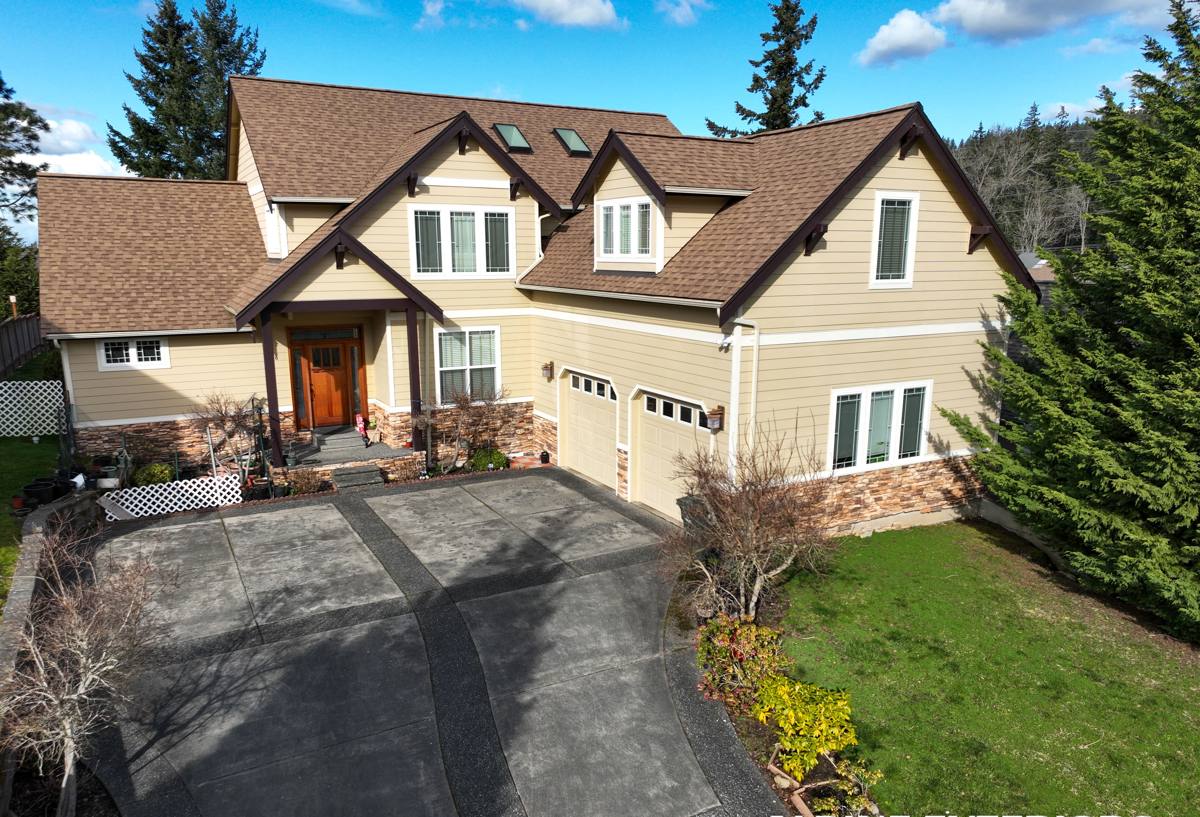
Homes around Mountain Lake sit in one of the shadier, more forested pockets of Orcas Island. That setting is part of what makes the area desirable — tall conifers, filtered light, quiet — but it's also exactly the combination that wears a deck out early. Heavy tree cover means less direct sun to dry wood between rains. Needle and leaf litter collects in the gaps between boards and holds moisture against the surface. Add in the broader San Juan County climate — long wet winters, driving rain off the water, and salt-laden air that moves across the whole island — and a deck built with the wrong materials or the wrong details starts failing well before its time.
We replace decks for homeowners in this area regularly enough to know which failure patterns show up here specifically, and we build around them rather than discovering them after the fact.
Why Decks Fail Faster in This Setting
Most deck failures we find around Mountain Lake trace back to a handful of causes:
- Trapped moisture under tree cover. Shade slows evaporation, so boards and framing stay damp longer after every rain than they would in an open, sunny yard.
- Moss and organic buildup. A long moss season means algae and moss get a foothold on decking, especially on the north side of a house or under overhangs, and hold water against the wood surface.
- Corrosion from salt air. Fasteners, joist hangers, and other hardware corrode faster near the water. Once a hanger or nail head starts rusting, it weakens exactly where the structure needs strength.
- Ledger board rot. The board that attaches the deck to the house is the single most common point of hidden rot, because it traps moisture against the house wall where nobody looks until there's a problem.
- Under-deck drainage. Decks built without a plan for where water goes end up with saturated ground and soft framing underneath, even when the surface boards look fine.
Signs You Need Replacement, Not Repair
Not every tired deck needs a full replacement — but there are signs that repair is just delaying the inevitable:
- Soft or spongy spots in the decking, especially near the house or at board ends
- A screwdriver sinks easily into the ledger board, posts, or joists
- Visible gaps opening between the ledger and the house siding or trim
- Persistent moss or dark staining that comes back within weeks of cleaning
- Rust streaks below joist hangers, fasteners, or railing hardware
- Railings that feel loose or flex under normal weight
- A deck that was never permitted or built to current attachment standards
If you're only seeing one or two of these on a deck that's otherwise solid, repair may make sense. If the structure itself is compromised — the framing, the ledger connection, or the posts — replacement is the honest recommendation, because patching cosmetic boards over failing structure just moves the problem down the road.
What "Correct" Actually Means in This Climate
A deck rebuild done right for a shaded, damp, near-salt-air site isn't just new boards on old framing. It means:
- Proper flashing at the ledger-to-house connection so water is directed away from the wall, not trapped against it
- Corrosion-resistant, coated or stainless fasteners and structural hardware rated for the moisture and salt exposure this area sees
- Joist spacing and beam sizing that meet current code, not just what was there before
- Gapping between boards that allows real airflow and drainage, especially important where tree cover slows drying
- A grading or drainage plan underneath the deck so water doesn't pool against posts and footings
Decking Material Options
There's no single "best" decking material — the right choice depends on how much maintenance you want to take on, your budget, and how much direct sun versus shade the deck gets. Here's how the common options compare for a site like this:
| Material | Moisture & Moss Behavior | Maintenance | Typical Lifespan |
|---|---|---|---|
| Pressure-treated wood | Absorbs moisture readily; needs sealing to resist moss and staining | Annual cleaning and periodic sealing/staining | 10–15 years with upkeep |
| Cedar | Naturally moisture- and insect-resistant, but still needs treatment against moss in shade | Periodic cleaning and finish renewal | 15–20 years with upkeep |
| Composite decking | Doesn't absorb water like wood, but can still grow surface moss/algae in deep shade | Periodic washing; no sealing or staining | 25+ years, manufacturer-dependent |
| PVC/capped polymer | Fully sealed surface, best resistance to moisture and staining | Occasional washing | 25+ years, manufacturer-dependent |
We don't push one product line on every job. In a heavily shaded, damp spot like much of the Mountain Lake area, we usually steer homeowners toward composite or capped polymer boards because they hold up better against the moss and dampness without the yearly maintenance wood needs — but if you want the look and feel of real wood and are willing to keep up with sealing and cleaning, cedar is a legitimate choice when it's detailed correctly underneath.
Our Replacement Process
- On-site assessment. We check the ledger connection, framing, posts, footings, and drainage — not just the surface boards — so you know exactly what's failing and why.
- Honest scope and estimate. You get a clear breakdown of what's being replaced, what materials are recommended and why, and a straightforward price range before any work starts.
- Permitting. Deck work on Orcas Island falls under San Juan County building requirements, and we handle the permit process as part of the job rather than leaving it to you.
- Tear-off and structural rebuild. Old decking, and any compromised framing, ledger, or hardware, comes out and is rebuilt to current standards — properly flashed, properly fastened, properly drained.
- Decking and railing installation. New boards and railings go in with the fastening and gapping details appropriate to the material and the site.
- Final walkthrough and cleanup. We walk the finished deck with you, and the site is cleaned up before we consider the job done.
Why Local Experience on Mountain Lake Matters
Orcas Island isn't like working on the mainland. Materials and equipment come over on the ferry on a schedule, not on demand, so a crew that plans deliveries poorly can turn a two-week job into a month. Properties around Mountain Lake often have limited access — narrower drives, trees close to the work area, septic systems to work around — and a crew that hasn't worked the area before will lose time figuring that out on your dime.
There's also a seasonal reality here: the wettest months make certain phases of deck work — pouring footings, framing, finish work — harder to do well, and a crew unfamiliar with San Juan County's weather patterns may push through conditions that compromise the result. We schedule around that instead of fighting it.
Finally, permitting and inspection expectations in San Juan County are specific to the county, and a crew that already knows the local process avoids the delays that come from learning it mid-project.
What to Expect Cost-Wise
Deck replacement costs vary a lot based on size, framing condition, and material choice. In broad terms:
| Cost Factor | Why It Moves the Price |
|---|---|
| Deck size and layout | Larger footprints and multi-level or curved designs require more material and labor |
| Framing and ledger condition | Rotted joists, beams, or posts add demolition and structural rebuild costs beyond surface replacement |
| Decking material | Composite and PVC boards cost more upfront than wood but need less maintenance over time |
| Railing type | Cable, glass, and custom railing systems cost more than standard wood or composite balusters |
| Access difficulty | Tree-covered, sloped, or limited-access lots on Orcas Island can add labor and material handling time |
| Permitting | County permit and inspection requirements add time but aren't optional for structural deck work |
Maintaining a New Deck in a Shaded, Damp Setting
Even the right materials and a correct build benefit from some upkeep, especially in a spot with heavy tree cover:
- Clear leaves, needles, and debris from between boards regularly, not just once a season
- Rinse or sweep moss growth off promptly rather than letting it establish
- Keep gutters and downspouts near the deck clear so roof runoff isn't dumping onto the deck surface
- Trim back overhanging branches where practical to let more light and airflow reach the deck
- Check railing hardware and fasteners annually for early signs of corrosion
- If you chose wood, stay on top of the sealing or staining schedule your material requires
Get a Straightforward Estimate
If your deck near Mountain Lake is showing soft spots, moss that won't quit, or hardware that's starting to rust, it's worth having someone look at the structure underneath, not just the surface. We'll give you a clear, no-pressure estimate on what a proper replacement involves for your specific site — use the form below to get started.