 Orcas Island Siding
 Windows Built for the Mountain Lake Microclimate
The homes tucked into the forest around Mountain Lake, inside Moran State Park's shadow on Orcas Island, live under a different set of conditions than a house sitting out on open shoreline. You've still got San Juan County's marine climate pushing salt-laden air across the island, but here it's layered on top of dense evergreen canopy, standing lake humidity, and long stretches of shade that never fully dry out between rains. That combination is hard on windows in ways that generic "coastal Pacific Northwest" advice doesn't quite cover.
We've worked enough properties in this pocket of the island to know what actually happens to window units up here over five, ten, twenty years — not what a manufacturer's brochure says should happen. This page is about custom window installation and replacement specifically for homes in the Mountain Lake area, what the site conditions demand, and how we approach the work so it holds up.
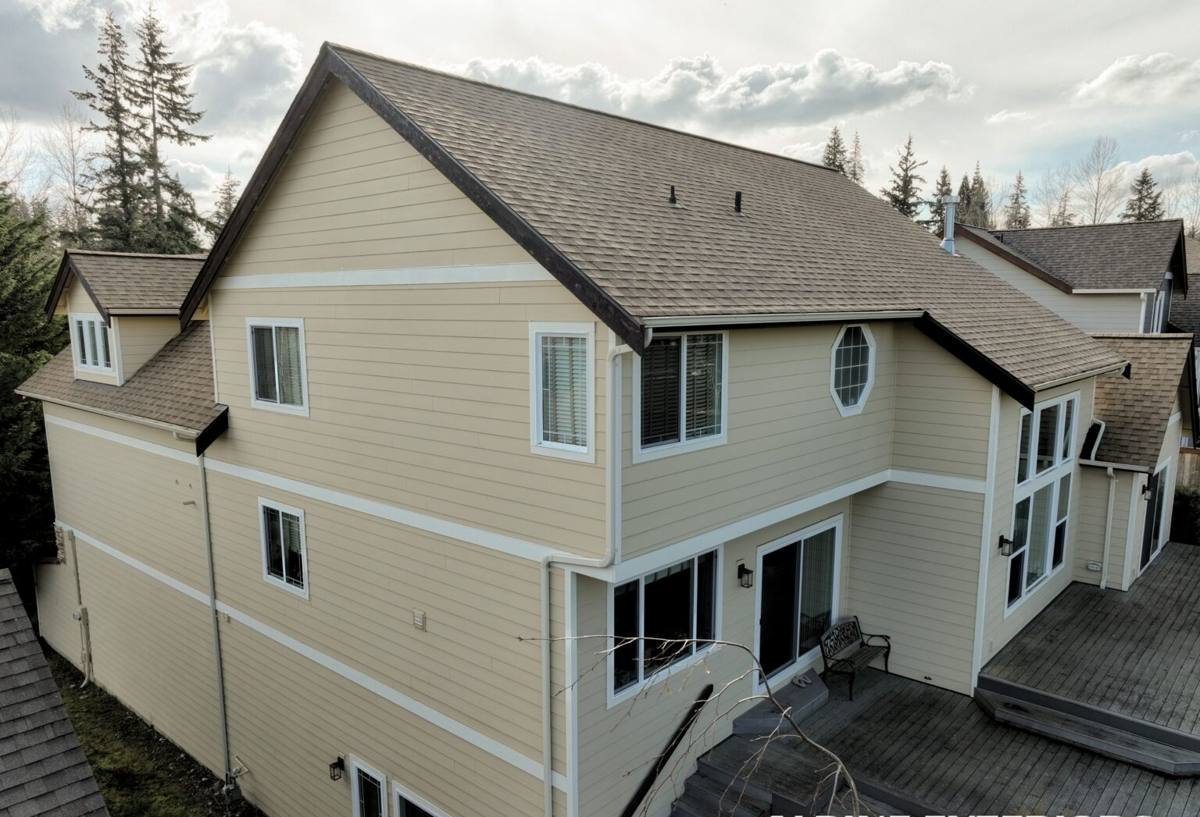
What Driving Rain, Salt Air, and Moss Season Do to Windows Here
Three things define window wear near Mountain Lake, and they compound each other:
- Driving rain off the Sound and Strait — wind-driven rain doesn't just hit glass, it gets forced sideways into any gap in flashing, trim, or sealant. On an exposed gable or a window under a shallow eave, that means water intrusion at the frame long before anyone sees a stain inside.
- Salt-carrying air — even set back from the water and under tree cover, Orcas Island air carries enough salt to accelerate corrosion on hardware, fasteners, and lower-grade aluminum components. Locks, hinges, and cranks are usually the first casualties.
- Extended moss and moisture season — the tree canopy around Mountain Lake keeps humidity high and sun exposure low for much of the year. Wood sills, trim, and cladding near windows stay damp longer than they would on an open lot, which is exactly the condition moss, algae, and rot organisms need to take hold.
None of this is unusual for the area — it's just the baseline you're designing and building against. A window that would perform fine in a drier inland climate can fail early here if it wasn't detailed for these conditions from the start.
Signs a Mountain Lake Home Needs New or Replacement Windows
Homeowners in this area usually notice one of these first:
- Soft or discolored wood at the sill or lower frame corners — often the earliest sign of moisture getting behind the trim
- Persistent condensation between panes, which means a failed seal on an insulated glass unit
- Visible moss or dark streaking on trim and cladding directly around the window opening
- Drafts or a cold feeling near the glass even when the sash is fully latched
- Hardware that's stiff, corroded, or won't lock cleanly anymore
- Noticeably higher heating bills in a home that's otherwise well insulated
Any one of these on its own might just need a repair. Several together, especially on the weather-exposed side of the house, usually points to full window replacement being the more honest fix — patching a failing frame just delays the same repair a few years down the road.
Choosing the Right Frame Material for This Site
There's no single "best" window material — there's a best match for a given house, orientation, and budget. For homes around Mountain Lake, here's how the common options actually hold up:
| Frame Material | How It Handles This Climate | Trade-offs |
|---|---|---|
| Fiberglass | Excellent — dimensionally stable in wet/dry cycling, doesn't rot or corrode, holds paint well | Higher upfront cost than vinyl |
| Vinyl | Good moisture resistance, low maintenance, budget-friendly | Can expand/contract with temperature swings; limited color and finish options |
| Aluminum-clad wood | Strong look and performance when detailed correctly; wood interior gives warmth, clad exterior sheds weather | Cladding seams and corners are sensitive to installation quality — cheap installs are where these fail |
| Solid wood | Best appearance for historic or high-end custom homes | Needs real maintenance discipline in a shaded, damp setting — we're honest that this is more upkeep, not less |
| Bare aluminum | Not something we recommend for this area | Poor thermal performance and faster hardware corrosion in salt air; we won't install it here as a primary window |
For most Mountain Lake homes, we steer people toward fiberglass or a well-detailed aluminum-clad wood window, depending on the look they're after and how much of the house sits under heavy shade.
Glass and Weatherstripping Choices That Matter Here
Glass Packages
Double-pane, low-E glass is the baseline we'd recommend for almost any window in this area — it cuts heat loss and helps manage condensation, which matters more here than in a drier climate because ambient humidity is already working against you. Triple-pane is worth discussing for north-facing or heavily shaded rooms that stay cold most of the year, but it's not automatically the right call for every opening — we'll talk through where it actually pays off versus where it's just added cost.
Weatherstripping and Seals
This is where a lot of window failures near Mountain Lake actually start. Wind-driven rain finds weak weatherstripping fast, and once water gets past the seal it's working on wood or MDF components that don't dry out quickly under tree cover. We spec compression seals rated for wind-driven rain exposure, not just a manufacturer's standard package, on any window facing prevailing weather.
Custom Window Options We Install
"Custom" on a property like this usually means matching openings to an older or irregular structure, or fitting a style that suits the setting rather than a stock size. Common requests we handle around Mountain Lake:
- Casement windows — crank-operated, seal tightly against wind-driven rain, good fit for exposed elevations
- Awning windows — hinged at the top, can stay cracked open during light rain, useful for lake-facing rooms
- Double-hung windows — traditional look, good for matching an existing home's character
- Picture and fixed windows — for capturing forest or lake views without the added seams of an operable sash
- Custom-sized and shaped units — for older cabins, additions, or non-standard rough openings common on older island properties
We'll talk through what each style actually does for your specific elevation and exposure rather than just what looks good in a catalog photo.
Our Installation Process
The window unit itself is only part of what determines how long it lasts here — the installation detailing is what actually keeps water out. Our process on Mountain Lake jobs:
- On-site assessment — we look at the existing opening, sheathing condition, and any signs of past water intrusion before quoting anything.
- Removal and opening prep — old units come out carefully, and we inspect the framing and sheathing underneath. This is often where hidden rot from years of trapped moisture shows up, and we'll flag it honestly rather than covering it over.
- Flashing and weather barrier integration — proper flashing tape and pan flashing at the sill, correctly lapped with the house wrap, is non-negotiable on this site. This step is what stops wind-driven rain from getting behind the window long-term.
- Window setting and shimming — units are set plumb, level, and square, with shims placed so the frame isn't stressed and the sash operates smoothly for years.
- Sealing and insulation — low-expansion foam and appropriate exterior sealant, matched to the cladding type, close the gap without trapping moisture.
- Trim and finish — exterior trim is installed and sealed to shed water away from the frame, not toward it.
- Final function check — every sash, lock, and screen is tested before we call the job done.
What Affects the Cost of a Mountain Lake Window Project
| Factor | Why It Matters Here |
|---|---|
| Number and size of openings | Straightforward driver of material and labor cost |
| Frame material chosen | Fiberglass and clad-wood cost more upfront but hold up better under moss-season moisture |
| Condition of existing framing | Rot repair discovered during removal adds cost but is far cheaper to fix now than after a new window is set |
| Access and site logistics | Wooded, sloped lots around the lake sometimes mean more setup time than an open street-front lot |
| Custom sizing or shapes | Non-standard openings on older structures typically cost more than stock sizes |
| Exposure of the elevation | Weather-facing sides may warrant upgraded flashing or sealing details, adding modest labor cost |
We give straightforward, itemized estimates so you can see exactly what's driving the number — no vague lump sums.
Keeping Custom Windows Performing Long-Term
A well-installed window in this climate still needs some basic upkeep to hit its full lifespan:
- Clear moss and debris from sills and trim at least once a year, ideally before the wet season sets in
- Check exterior caulk and sealant lines annually for cracking or separation
- Lubricate hardware (locks, cranks, hinges) periodically to fight salt-air corrosion
- Look for soft spots in wood trim or sills early — small rot repairs are cheap, replacing a rotted frame isn't
- Keep gutters and downspouts clear so roof runoff isn't dumping extra water directly onto window heads
Why a Crew That Already Works Mountain Lake Matters
A lot of window problems we get called out to fix started as a perfectly good window, installed by a crew that didn't account for this site's specific combination of shade, moisture, and salt exposure. Flashing details that work fine on a dry, sun-exposed lot in another part of San Juan County aren't automatically enough for a shaded, lake-adjacent property on Orcas Island. We've seen where the failures show up first here — sills, corner joints, and hardware — and we detail our installs to address those weak points specifically, not generically.
Working this area regularly also means we're not guessing at access, permitting norms, or what local building conditions typically require — we've already done the legwork on properties like yours.
If you're dealing with drafty, foggy, or moss-lined windows near Mountain Lake, or planning new custom windows for a build or remodel, we're happy to take a look and give you a straightforward, no-pressure estimate. Use the form below to get started.