 Orcas Island Siding
 Why Metal Roofing Makes Sense on San Juan Island
San Juan Island sits out in the Salish Sea, which means homes here take on weather that inland San Juan County properties never see. Salt-laden air moves off the water year-round, driving rain comes in sideways during winter fronts, and the shaded, moisture-heavy tree cover across the island keeps roofs damp long after a storm has passed. A roof here isn't just shedding water — it's fighting corrosion, standing up to wind-driven moisture intrusion at every seam, and resisting moss and algae growth for most of the year.
Metal roofing, installed correctly, handles that combination better than most alternatives. It sheds water fast, gives moss and lichen far less to grab onto than a textured shingle surface, and — when the right alloy and coating are specified for a marine environment — resists the corrosion that eats away at lesser materials near the water. The catch is that "installed correctly" is doing a lot of work in that sentence. Metal roofing is unforgiving of shortcuts in a way that asphalt shingles are not, and on an island where every mistake gets amplified by salt air and standing moisture, the installation details matter more than the marketing brochure.
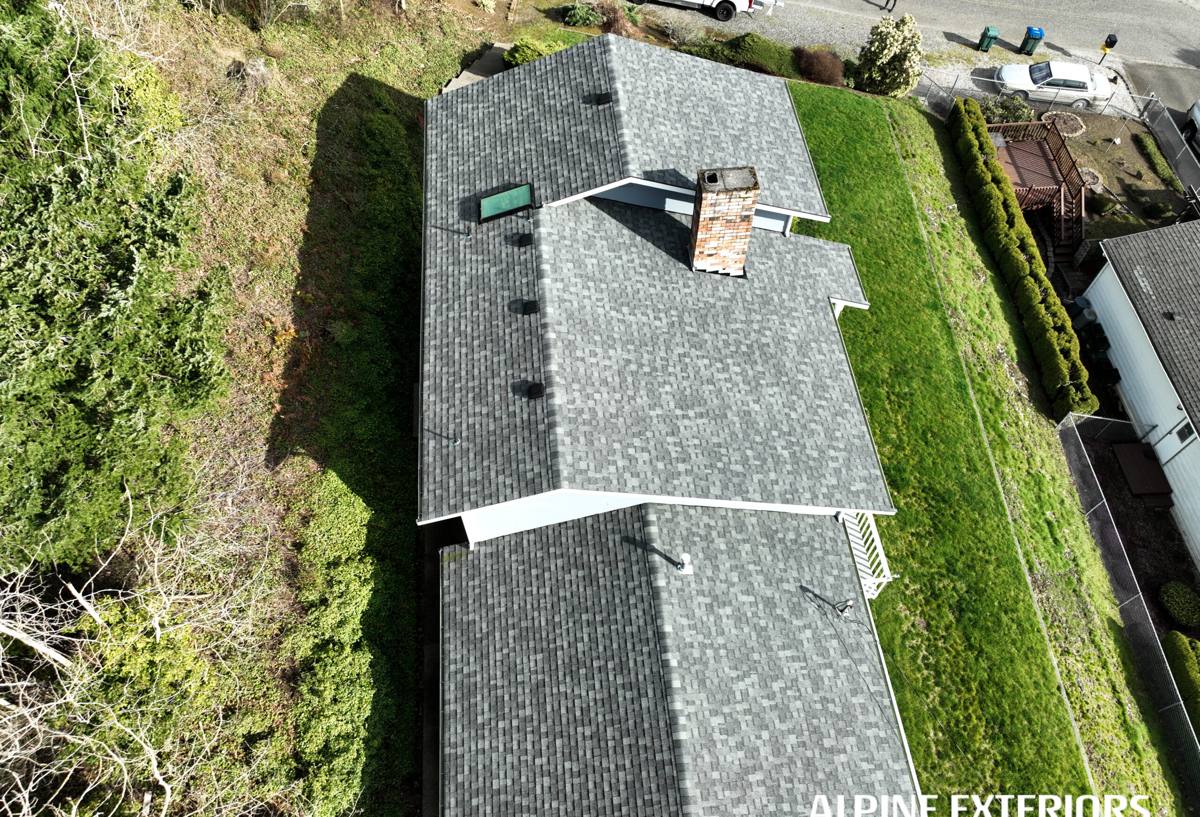
What San Juan Island's Climate Actually Does to a Roof
Salt Air and Corrosion
Airborne salt doesn't need direct ocean spray to cause problems — it travels on the wind and settles on every exposed surface, including fasteners, flashing, and cut edges of roofing panels. Over years, untreated or poorly matched metal components can develop galvanic corrosion, especially where dissimilar metals touch (steel screws in aluminum panels, for example, or copper flashing against galvanized steel). This is a bigger factor on San Juan Island than it is even a few miles inland, and it's one of the first things we account for when specifying materials.
Driving Rain and Wind-Driven Water
Storms coming across open water tend to push rain sideways rather than straight down. That means water finds its way under ridge caps, around vent penetrations, and into any seam that isn't properly lapped or sealed — long before it would exploit those same weaknesses on a more sheltered property. A metal roof's advantage here is real, but only if the underlayment, flashing details, and fastening pattern are built for wind-driven moisture, not just a standard rainfall spec.
Moss, Algae, and Shade
Between the tree cover common across the island and the persistent damp, moss and algae growth is close to a year-round condition rather than a seasonal nuisance. Metal sheds moss far better than shingles because there's no rough surface for spores to colonize, but valleys, low-slope sections, and areas that stay shaded most of the day still need attention — moss can build up in debris that collects at panel laps or around penetrations even on a metal roof.
What a Correct Metal Roof Installation Involves Here
A metal roof is only as good as the details underneath it. On San Juan Island specifically, we treat the following as non-negotiable, not upsells:
- Corrosion-resistant fasteners and flashing matched to the panel material — no mixing metals that will react against each other over time
- A high-quality synthetic or self-adhering underlayment rated for wind-driven rain, not a basic felt product
- Properly lapped and sealed seams at every panel joint, ridge, hip, and valley
- Extra attention to penetrations — vents, chimneys, skylights — since these are the most common failure points in any roof, metal or otherwise
- Ventilation planned into the roof system so moisture doesn't get trapped in the attic, which contributes to mold and premature deck rot
- Edge and drip detailing that accounts for wind uplift, which is more of a factor on exposed island lots than in sheltered mainland neighborhoods
Skipping any one of these doesn't necessarily show up as a leak in year one. It shows up in year five or eight, usually after the workmanship warranty has expired and usually in the form of a repair that costs more than doing it right the first time would have.
Panel Types and What They Mean for an Island Roof
Not every metal roofing product performs the same way in a marine climate. The table below reflects how the common options hold up specifically under San Juan Island conditions — salt exposure, driving rain, and heavy moss pressure.
| Panel Type | Corrosion Resistance | Moss/Algae Resistance | Typical Fit |
|---|---|---|---|
| Standing seam steel (Galvalume or aluminum-zinc coated) | Strong, especially with a quality baked-on finish | Excellent — smooth surface, few horizontal laps to trap debris | Most island homes, especially anywhere with direct water exposure |
| Aluminum standing seam | Excellent — naturally corrosion-resistant, ideal near salt air | Excellent | Waterfront or high-exposure lots where corrosion is the top concern |
| Exposed-fastener metal panels | Moderate — fasteners are the weak point over time | Good | Outbuildings, shops, budget-driven projects |
| Stone-coated steel shingles | Good with proper coating | Moderate — textured surface gives moss slightly more to hold onto | Homes wanting a traditional shingle look with metal's durability |
We don't push one product on every roof. The right call depends on how exposed the lot is to open water, how much shade and tree debris the roof deals with, and what the homeowner wants it to look like from the street.
Where Metal Roofing Doesn't Solve Everything
It's worth being straightforward about this: metal roofing reduces maintenance, it doesn't eliminate it. Gutters still need to be kept clear of needles and debris — clogged gutters back water up under drip edges regardless of what the roof surface is made of. Skylight and vent flashing still needs periodic inspection, since these are sealant-and-metalwork details rather than pure metal-panel performance. And on shaded sections of roof, moss can still build up in accumulated debris even though it won't root into the panel itself the way it can into a shingle mat. We tell homeowners this upfront because a roof sold as "maintenance-free" sets expectations that don't match reality anywhere on the island.
Our Process for Metal Roof Projects on San Juan Island
Every project starts with a walk of the actual roof, not a drive-by estimate. We look at slope, exposure to prevailing wind and rain direction, existing decking condition, ventilation, and any trouble spots like valleys or skylight penetrations. From there:
- We assess the existing roof deck and structure — metal roofing is heavier and stiffer than shingles in terms of how it manages water, and a sound deck matters more, not less
- We recommend a panel type and finish based on the lot's actual exposure, not a one-size-fits-all default
- We detail out flashing, ventilation, and penetration plans before a single panel goes up
- We install with fastening and sealing methods matched to the wind and moisture conditions specific to island roofs
- We walk the finished roof with the homeowner and explain what maintenance, if any, it will actually need going forward
Getting materials and crews to San Juan Island takes real planning — ferry schedules, weather windows, and staging all factor into project timing. We build that into our scheduling rather than treating it as an afterthought, which keeps projects from stalling out mid-install when a weather window closes.
Why Local Experience on the Island Matters
A contractor who mostly works the mainland can still install a technically correct roof, but they're guessing at things an island-based crew already knows: which lots take the worst of the wind, how bad the moss pressure gets in a shaded ravine lot versus an open bluff-top property, and how ferry and weather logistics affect a project timeline. That experience shows up in smaller decisions — panel overlap direction relative to prevailing wind, fastener spacing on an exposed gable end, where to add extra flashing attention on a valley that collects needle debris — that don't show up on a spec sheet but matter a great deal over the life of the roof.
San Juan County's building requirements and the practical realities of working on an island — logistics, weather windows, material lead times — are also just different from a typical mainland job. A crew that already understands those realities plans around them instead of running into them mid-project.
What to Ask Before Hiring for a Metal Roof Here
- What panel material and finish do you recommend for this specific lot, and why?
- How will you handle flashing and fastening differently because this is an island, salt-air property?
- What underlayment are you using, and is it rated for wind-driven rain?
- How do you plan for ventilation so moisture doesn't get trapped under the new roof?
- What does the workmanship warranty actually cover, and for how long?
If a contractor can't answer these specifically for your property, that's worth noticing before any contract is signed.
If you're weighing a metal roof for a home on San Juan Island, we're happy to take a look and walk you through the honest trade-offs for your specific property — no pressure, no hard sell. Use the form below to request a free estimate.