 Orcas Island Siding
 Metal Roofing for a Salt-Air, Rain-Heavy Island Climate
Lopez Village sits on Lopez Island, one of the ferry-served San Juan Islands in the same archipelago as Orcas Island, and the roofing challenges here are shaped almost entirely by water and salt. Homes get a steady dose of marine air blowing in off the surrounding channels, long stretches of driving rain through the fall and winter, and a moss and lichen season that can run most of the year on shaded, north-facing slopes. A roof that works well inland doesn't automatically work well out here. Metal roofing, done correctly, handles all three of those pressures better than most alternatives, but "done correctly" is doing a lot of work in that sentence — the fastener choice, the coating, the underlayment, and the flashing details all matter more on an island roof than they do somewhere drier and further from salt water.
This page is specifically about metal roofing for homes in and around Lopez Village. We're not going to give you a generic rundown of every roofing material — we want to walk through what a metal roof needs to do here, what a correct installation actually involves, and how we approach the job as a crew that already works this part of San Juan County.
Why Metal Holds Up Well Against This Climate
Three things define roofing conditions in Lopez Village: persistent moisture, salt-laden air, and shade-driven moss growth. Metal roofing addresses each of these directly, but not automatically — it depends on the product and the install.
- Moisture shedding: Standing seam and properly lapped exposed-fastener panels shed water fast and don't rely on granules or absorbent mat that can hold moisture the way some other roofing surfaces can.
- Salt exposure: Bare or poorly coated steel corrodes faster near salt water. The coating system and fastener material matter more here than they would 50 miles inland.
- Moss and lichen: Metal's smooth, hard surface gives moss and lichen far less to grip onto compared to textured roofing materials, which cuts down on the organic buildup that traps moisture against the roof deck.
None of that is automatic just because a roof is metal. A cheap panel with the wrong coating, installed with the wrong fasteners, can corrode or leak just as fast as anything else — sometimes faster, because a failure in a metal roofing system can be less forgiving than a failure in a shingle roof.
Panel Type and Coating — What Actually Matters
| Factor | Why It Matters in Lopez Village |
|---|---|
| Standing seam vs. exposed fastener | Standing seam has no exposed screw heads, so there's nothing for salt air to corrode over time and no gasket to fail; exposed-fastener panels cost less but need fastener inspection and occasional gasket replacement |
| Coating system | A quality baked-on coating resists chalking and fade from UV and salt spray; a weak or thin coating will show wear years before it should |
| Fastener material | Fasteners should match or be compatible with the panel material — mismatched metals near salt air can set off galvanic corrosion at every screw point |
| Panel gauge (thickness) | A heavier gauge resists oil-canning and denting from wind-driven debris, which matters on exposed island lots |
| Underlayment | A high-temp synthetic or self-adhered underlayment gives a second line of defense under a roof that will see sustained wet weather for months at a time |
What a Correct Metal Roof Installation Involves
A metal roof is only as good as the details underneath it. On a Lopez Village home, we pay particular attention to the parts of the job that don't show up in a quick visual inspection but determine how the roof performs in year eight or year fifteen, not just year one.
Deck and Underlayment
Before any panel goes down, the deck gets inspected for rot or soft spots — common on older island homes where a prior roof covering trapped moisture against the sheathing for years without anyone noticing. We address any deck repairs first, then install an underlayment rated for the sustained wet conditions this area sees, not just a bare-minimum felt layer.
Fastening and Flashing
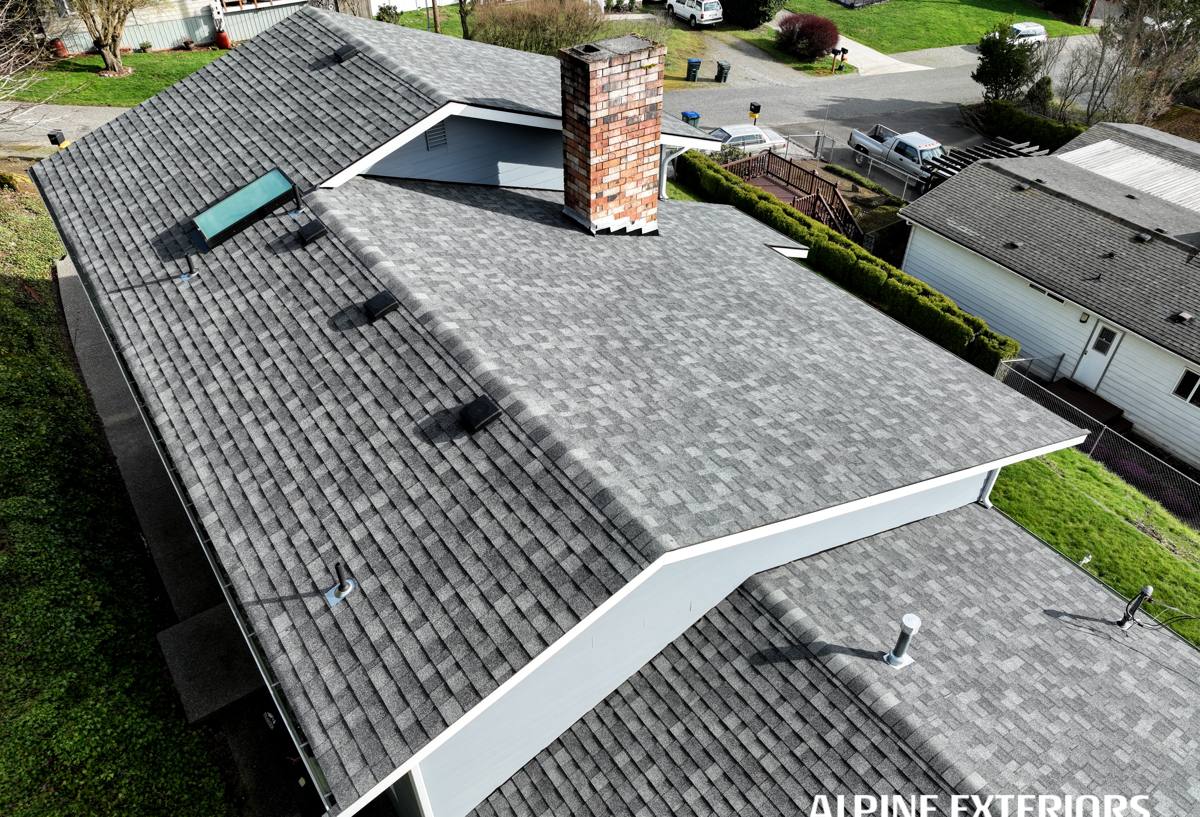
Flashing at valleys, chimneys, skylights, and wall transitions is where most metal roof leaks actually start — not in the open field of the panels. We use flashing details sized and lapped for heavy, wind-driven rain rather than the minimum a manufacturer's spec sheet allows, and we match fasteners to the panel material to avoid galvanic corrosion at the coast.
Ventilation
Metal roofs need proper intake and exhaust ventilation to avoid condensation forming on the underside of the panels, especially in a marine climate with big daily temperature and humidity swings. We check existing ventilation and correct it as part of the job rather than roofing over an under-vented attic and letting condensation become next winter's problem.
Moss, Lichen, and Organic Growth Management
Even on a metal roof, moss and lichen can take hold in shaded valleys, north-facing slopes, and areas where overhanging trees keep the surface damp — a common setup in the wooded lots around Lopez Village. Metal resists growth far better than porous roofing materials, but it isn't immune, especially at seams, fastener heads, or spots where debris collects and holds moisture against the surface.
- Keep overhanging branches trimmed back to reduce shade and debris drop onto the roof
- Clear gutters and valleys of needles and leaf litter at least twice a year
- Have growth removed gently — pressure washing metal roofing can strip coatings and damage seams, so we use methods that clean without damaging the finish
- Address any moss at the first sign of it rather than letting it establish, since organic buildup holds moisture against the panel long after the rain stops
Our Process for a Lopez Village Metal Roof
- On-site assessment — we look at the existing roof, deck condition, ventilation, and any trouble spots like valleys or skylights before quoting anything
- Honest scope and estimate — you get a clear breakdown of what's needed and why, not a one-line number
- Material and logistics planning — panels and flashing are ordered and staged to account for ferry scheduling, so the job isn't held up mid-install waiting on a delivery
- Deck prep and underlayment — any rot gets fixed before a single panel goes on
- Panel installation and flashing — installed to the tolerances the coastal climate demands, not just manufacturer minimums
- Final walkthrough — we go over the finished roof with you, including what maintenance to expect and when
Cost Factors on a Metal Roof Project
We won't quote a number here that doesn't apply to your specific roof, but these are the main factors that move the price up or down on a Lopez Village project.
| Factor | Effect on Cost |
|---|---|
| Roof pitch and complexity | Steep or multi-plane roofs take longer to flash correctly and cost more in labor |
| Existing deck condition | Rot repair adds cost but is far cheaper to fix now than after a new roof is installed over it |
| Panel type | Standing seam typically costs more upfront than exposed-fastener panel but needs less long-term fastener maintenance |
| Tear-off vs. overlay | Removing an old roofing layer costs more short-term but avoids trapping moisture against the deck |
| Access and staging | Waterfront or tree-shaded lots with tighter access can add time for material staging and equipment setup |
Maintenance Checklist for Metal Roofs in This Climate
- Inspect fasteners on exposed-fastener panels every year or two for backing out or gasket wear
- Clear gutters, valleys, and any debris-prone areas before the fall rains set in
- Check flashing at chimneys, skylights, and wall transitions annually for sealant wear
- Trim back tree limbs that shade the roof or drop needles and leaves onto it
- Address moss or lichen as soon as it appears rather than waiting for a full-scale cleaning
- Have a professional inspection after any major windstorm to check for loosened panels or flashing
Why a Crew That Already Works Lopez Village Matters
Roofing on the islands isn't the same job as roofing on the mainland, and it's not just about the ferry. A crew that regularly works San Juan County knows how to plan material deliveries around ferry schedules so a project doesn't stall out waiting on a panel order, understands which parts of a roof take the worst of the salt air and driving rain based on orientation and exposure, and has already seen how moss and lichen behave on roofs in this specific setting through multiple wet seasons. That familiarity shows up in the small decisions — where to add extra flashing, which fastener spec to use, how much ventilation an older island home actually needs — that determine whether a metal roof performs well for twenty years or starts giving you trouble in five.
If you're weighing a metal roof for your Lopez Village home, we're glad to take a look and give you a straightforward, no-pressure estimate — just fill out the form below and we'll go from there.