 Orcas Island Siding
 Cascade Lake's Roofing Problem Isn't Like the Rest of Orcas Island
Cascade Lake sits inside Moran State Park's tree cover — tall fir and cedar hold shade over rooflines most of the day, and that shade holds moisture. A roof here dries out slower than one on an open, wind-exposed shoreline lot even a few miles away. Add San Juan County's marine climate on top of that — driving rain off the Sound, salt-laden air that moves across the whole island, and a moss season that can run eight months or more in a wet year — and you get a combination that wears out the wrong roofing material fast.
We're not here to sell metal roofing as a miracle fix. It's a strong match for this specific setting because of how it sheds water, resists moss colonization, and handles decades of freeze-thaw and wind-driven rain without the maintenance cycle asphalt shingles need under a forest canopy. This page is about what that looks like done right, on a Cascade Lake roof specifically.
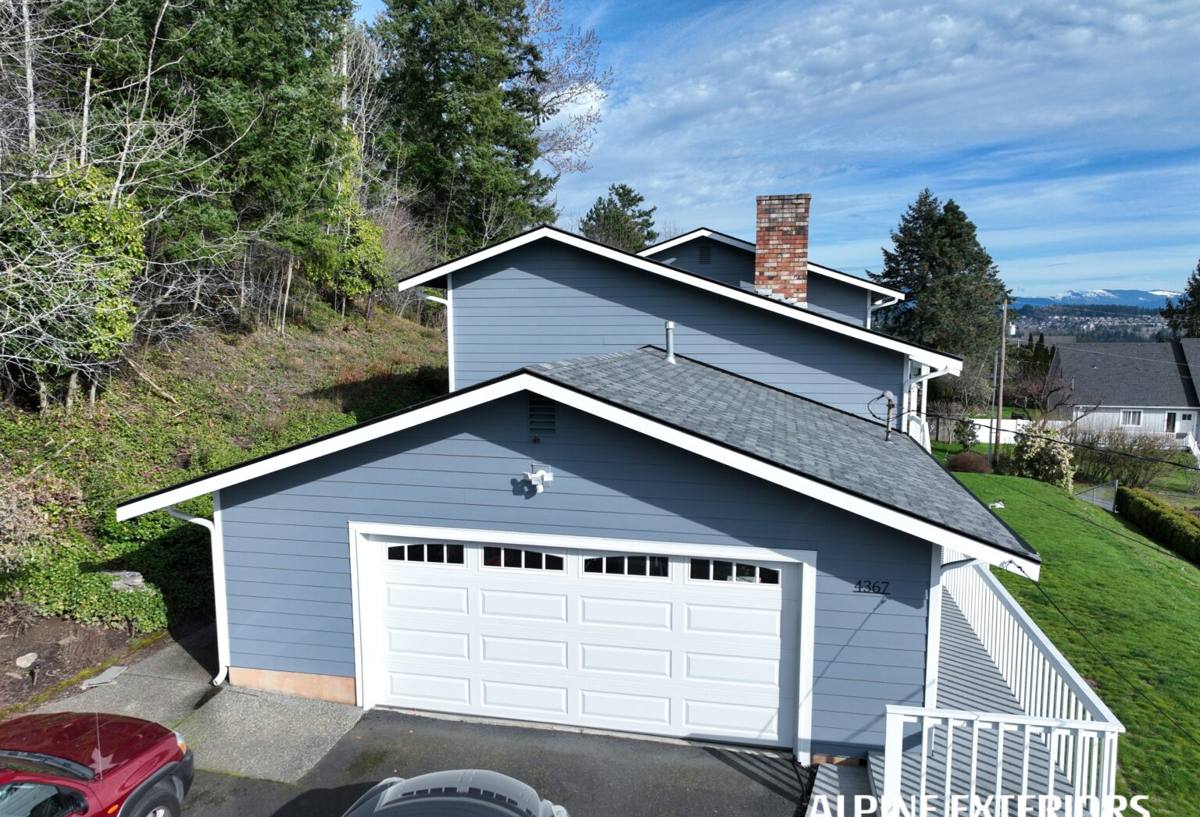
What Driving Rain, Salt Air, and Moss Season Actually Do to a Roof Here
Driving Rain
Storms off the Strait and the Sound don't just fall straight down — wind pushes rain sideways, up under laps, and into any gap in flashing or fastener seals. On a shaded lot, that water has less sun exposure to dry it back out, so any weak point in the roof envelope stays wet longer between storms.
Salt Air
Even set back from the water, Orcas Island homes sit in a marine air environment. Salt-laden moisture accelerates corrosion on unprotected metal fasteners, flashing, and low-grade coatings. It's a slow process, but over 15-20 years it's the difference between fasteners that back out and rust-streak a roof and ones that don't.
Moss Season
Shade plus moisture is exactly what moss needs to establish. On shingle roofs, moss roots into the granule surface, lifts tabs, and holds water against the deck long after the rain stops — which is how you get soft decking and interior leaks that show up years after the moss first appeared. Cascade Lake's canopy makes this a bigger issue here than on more open parts of the island.
Why Metal Roofing Fits This Setting
Metal isn't immune to any of the above, but it responds to it differently, and better, than asphalt shingle in a shaded, moist environment:
- Smooth panel surfaces give moss and moisture far less to grip than the textured surface of a shingle — it doesn't stop organic growth entirely, but it slows it down and makes what does grow easier to remove without damaging the roof underneath.
- Standing seam profiles have no exposed fasteners on the field of the roof, which removes the most common point where salt-air corrosion and wind-driven rain find a way in.
- Steep interlocking seams shed driving rain instead of relying on gravity and granule friction the way a shingle roof does.
- A correctly installed metal roof commonly runs 40-60 years in this climate, well past the 20-25 year realistic lifespan of asphalt shingle under tree cover with routine moss pressure.
The trade-off is upfront cost and installation sensitivity — metal roofing rewards a crew that gets the layout, fastening pattern, and flashing details right, and punishes a rushed job more visibly than shingle does. That's the part worth being honest about before you commit to it.
Panel Types We Install and What We Recommend for Cascade Lake
| Panel Type | Fastening | Best Fit for Cascade Lake | Trade-Offs |
|---|---|---|---|
| Standing Seam (concealed fastener) | Hidden clips, no exposed screws on field | Best option under tree cover — no exposed fasteners for moisture or salt air to work on over time | Highest material and labor cost |
| Exposed Fastener (5V, corrugated) | Screws through the panel face | Workable on secondary structures — sheds, shops, detached garages | Fastener washers age and need periodic inspection; more entry points for wind-driven rain |
| Metal Shingle / Shake Profile | Concealed or semi-concealed, interlocking | Good where a homeowner wants a traditional look with metal's durability | More seams than standing seam; slightly more labor to detail around valleys and penetrations |
For most Cascade Lake primary residences under tree cover, we point homeowners toward standing seam. It's the profile with the fewest long-term weak points in a shaded, high-moisture setting, and it's the easiest to keep moss off with a soft wash rather than scraping.
What a Correct Install Involves — Not Just the Panels
The panels get the attention, but on a shaded, wet lot like Cascade Lake, the details underneath and around them are what actually determine whether the roof performs for decades or gives you problems in year eight.
- Ice and water shield at eaves, valleys, and penetrations — the highest-risk zones for wind-driven rain to find a way under the panel edge.
- Synthetic underlayment rated for the full roof, not just the vulnerable areas, given how long moisture sits under tree cover before it fully dries.
- Proper clip spacing and expansion allowance for standing seam — metal panels move with temperature swings, and clips that don't account for that lead to oil-canning and stress at the seams.
- Correct flashing at every penetration — plumbing vents, chimneys, skylights — since these are the spots where a rushed install shows up first as a leak.
- Roof and attic ventilation review — shaded roofs trap more ambient moisture, and metal's tight seal makes proper intake and exhaust ventilation more important, not less, to keep the deck and attic dry.
- Corrosion-resistant fasteners and flashing metal matched to the panel material, so you don't get galvanic corrosion between dissimilar metals over time in a salt-air environment.
Skip any one of these and the panels themselves can be flawless while the roof still fails at a seam, a valley, or a vent boot.
Our Process for a Cascade Lake Metal Roof
Working on Orcas Island means every material order accounts for ferry schedules — standing seam panels are typically fabricated to the exact roof measurements before they ever leave the mainland, so we measure and confirm the layout up front rather than adjusting on the fly. That reduces waste and keeps a crew from standing around waiting on a re-order.
On site, tree cover around Cascade Lake properties often means limited staging space and overhead branches to work around during tear-off and delivery — we plan access and material staging as part of the estimate, not as a surprise on install day. Tear-off of the old roofing, deck inspection and repair where moss or past leaks have softened sheathing, underlayment, panel installation, and flashing detail work follow in sequence, with a final walk-through before we consider the job done.
Living With a Metal Roof Through Moss Season
Metal roofing cuts down on maintenance under tree cover — it doesn't eliminate it. A simple annual check keeps a Cascade Lake roof performing the way it should:
- Clear needle and leaf debris from valleys and around penetrations before it holds moisture against a seam.
- Rinse visible moss or algae growth with a soft wash — never pressure wash, which can drive water under panel laps and damage finishes.
- Check gutters and downspouts each fall, since a shaded lot generates more debris than an open one.
- Have flashing and sealant points inspected every few years, especially around chimneys and skylights, since these are the spots that age fastest regardless of panel type.
What a Metal Roof Costs — and What Moves the Number
| Factor | Why It Matters at Cascade Lake |
|---|---|
| Panel type | Standing seam runs higher than exposed fastener, but removes the fastener maintenance point that matters most under tree cover |
| Roof complexity | Valleys, dormers, and multiple penetrations add labor and flashing detail — common on the varied rooflines around the lake |
| Deck condition | Moss and past leaks sometimes mean sheathing repair or replacement before panels go on, which isn't visible until tear-off |
| Access and staging | Tree cover and lot layout affect how efficiently a crew can move material and equipment on site |
| Ventilation upgrades | Older homes under shade sometimes need intake or exhaust vent additions as part of the reroof, not just panels |
We won't quote a number without seeing the roof — anyone who does is guessing. What we can say honestly: metal costs more upfront than asphalt shingle, and on a shaded Cascade Lake roof, the reduced moss maintenance and longer service life are what make that upfront cost worth weighing seriously.
Why Hire a Crew That Already Works This Area
A roofing crew that hasn't worked under Orcas Island tree cover will often underestimate how much moss and moisture pressure a shaded lot like Cascade Lake actually gets, and detail the roof like it's on an open, sun-exposed site. That shows up later as moss regrowth in the same spots, or ventilation that doesn't keep up with the ambient moisture. A crew that already works this island knows to check deck condition under existing moss growth before quoting, plans around ferry-based material delivery instead of treating it as an afterthought, and flashes for driving rain and salt air as standard practice rather than an upsell.
If you're weighing a metal roof for a home near Cascade Lake, we're glad to take a look and walk through what your specific roof needs — no pressure, no generic pitch. Fill out the form below for a free estimate.