 Orcas Island Siding
 Siding in the San Juan Islands: Why Lopez Village Is a Different Job
Homes around Lopez Village don't fail the same way houses do twenty miles inland. The exterior envelope here is working against a specific combination of conditions all year long: salt-laden air moving off the water, long stretches of driving rain that come in sideways off the water more often than straight down, and a moss and algae season that can run from fall through spring in shaded, north-facing exposures. Siding that's rated fine for a subdivision in a drier part of Washington can start showing problems on a San Juan County home well before it should, simply because it was never engineered or installed for this exposure.
Our crew is based on Orcas Island and works this stretch of San Juan County regularly, which means Lopez Village isn't an unfamiliar stop for us — it's part of the normal rotation. That matters more than it sounds like it should, because island work has its own logistics, its own weather timing, and its own failure patterns that a mainland crew passing through once won't have context for.
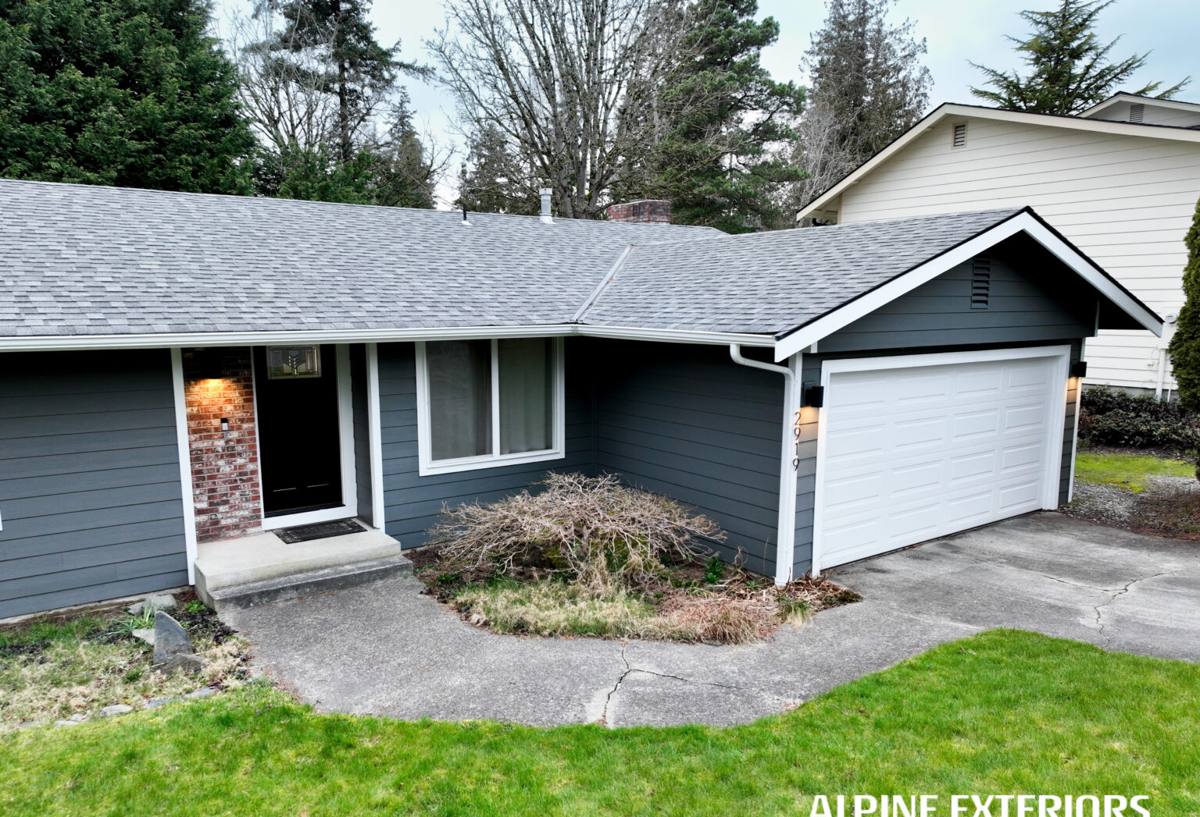
The Climate Problems Actually Driving Siding Failure Here
Salt Air and Corrosion
Coastal salt air accelerates corrosion of fasteners, flashing, and trim hardware. Cheap or improperly coated fasteners can start bleeding rust stains through paint within a few years, and corroded fasteners lose holding power long before the siding itself looks worn. Any siding installation in this area has to account for fastener material and coating from the start, not as an afterthought.
Driving Rain and Wind-Driven Moisture
Wind off the water pushes rain sideways into wall assemblies, especially on west- and south-facing elevations. That means water management — proper flashing, correct lap and overlap dimensions, sealed penetrations — carries more weight here than it does in a sheltered inland location. A siding system that depends on caulk alone to keep water out will get tested constantly.
Moss, Algae, and Trapped Moisture
Shaded lots under fir and cedar canopy, which describes a lot of property around Lopez Village, hold moisture longer and grow moss and algae on siding, trim, and roofing. Moss holds water against the surface long after rain has stopped, which is exactly the condition that rots wood-based siding and delaminates poorly bonded products. Ventilation gaps, drainage planes, and the paint or factory finish on the siding all matter more in these microclimates than they would on an open, sunny lot.
What a Correct Siding Installation Actually Involves
Siding installation is not just fastening boards to a wall. Done correctly, it's a water-management system, and every layer has to work with the ones around it.
- Inspection and repair of the sheathing underneath before anything new goes up — new siding over rotten sheathing just hides the problem
- A correctly lapped weather-resistive barrier, with all seams and penetrations properly integrated, not just stapled and left
- Flashing at every window, door, deck ledger, and roof-to-wall transition, installed so water sheds outward and down, never trapped behind the cladding
- Correct fastener type, length, and spacing for the specific siding product, sized for the climate exposure
- Proper clearance between the bottom of the siding and grade, decks, patios, and roof lines, so moisture and debris don't wick up into the material
- Consistent gapping and caulking at butt joints and trim per manufacturer specification, not "close enough"
Skip any one of these steps and the siding may look fine for a season or two before problems start showing at the seams, the corners, or the bottom courses — exactly where water always finds a way in first.
Why We Install Only James Hardie Fiber Cement
We made a decision a while back to install one product system — James Hardie fiber cement — and nothing else. Not vinyl, not LP SmartSide, not Cemplank or Allura, not primed spruce or cedar. That's not a marketing position; it's a standard we hold because of what we've seen these products do, and not do, in exactly this kind of coastal, high-moisture climate.
Wood-based siding, including engineered wood products, depends on an intact factory coating to keep moisture out of the substrate. Once that coating is compromised — at a cut edge, a fastener hole, a scratch from a ladder or a branch — the wood fiber underneath can start absorbing water, and in a climate with this much rain and shade, that clock runs faster than it would somewhere drier. Vinyl siding is low-maintenance in the sense that it doesn't rot, but it's a thin, flexible material that can warp, crack in impact or cold, and fade unevenly, and it isn't fire-resistant. Cedar is a beautiful, traditional look for this region, but it's a high-maintenance material that needs regular refinishing to hold up against sun, salt, and moisture, and cost of upkeep adds up over the years.
James Hardie fiber cement is cement, sand, and cellulose fiber — it doesn't rot, it isn't a food source for pests, and it's non-combustible. Its ColorPlus factory finish is baked on under controlled conditions, which holds color and resists fading and chipping far better than field-applied paint. Hardie's HZ product lines are engineered for specific climate zones, which is directly relevant to a marine, high-moisture area like this one. And Hardie backs the product with a strong, transferable warranty when it's installed to their specification — which is exactly why correct installation, not just product choice, is the other half of this.
Choosing the Right Hardie Line and Finish for This Climate
James Hardie makes climate-specific product lines, and for San Juan County that distinction is worth understanding rather than skipping past. HZ10 products are engineered for wetter, harsher climate zones and are the more appropriate choice for most exposed, water-facing, or heavily shaded lots in this area. Lap siding profiles, board-and-batten, and shingle-style panels are all available in the HZ10 line, so the climate-appropriate engineering doesn't mean giving up the architectural look a homeowner wants.
ColorPlus finishes matter as much as the substrate here. A dark, saturated color on a shaded, moss-prone wall will show algae growth differently than a lighter tone, and gloss level affects how visible streaking and biological growth become between cleanings. We talk through color and sheen with each homeowner against their lot's actual sun and shade exposure, not just what looks good on a sample chip indoors.
Our Process for Lopez Village Projects
Working on island properties in San Juan County means building the schedule around ferry timing and weather windows, not just labor availability. We plan material deliveries and crew days together so a job isn't stalled halfway through with a wall open to the weather. Fiber cement also needs to be installed and finished within the manufacturer's moisture and temperature guidelines, so we watch the forecast closely rather than pushing through a marginal window just to stay on schedule.
A typical project runs through the same stages regardless of scale: an on-site walkthrough and measurement, a written scope covering tear-off or overlay, sheathing repair allowance, flashing details, product and color selection, then the installation itself with daily cleanup so the site stays livable throughout. We walk the finished job with the homeowner before calling it complete, checking clearances, caulking, and trim details against spec.
Cost Factors for Lopez Village Siding Projects
Every project is different, but the same variables move the price up or down on nearly every job in this area. Rough, honest ranges depend heavily on these factors rather than any flat per-square-foot number.
| Factor | Why It Matters Here |
|---|---|
| Existing wall condition | Rotten sheathing or hidden water damage from moss-trapped moisture adds repair scope before new siding goes up |
| Tear-off vs. overlay | Removing old siding fully exposes the wall for proper flashing and sheathing repair, but adds labor and disposal cost |
| Product line (HZ5 vs. HZ10) | Climate-engineered HZ10 product is the right call for exposed or shaded island walls, and is priced accordingly |
| Trim and detail complexity | Dormers, multiple roof-to-wall transitions, and deck ledgers all add flashing labor |
| Site access and logistics | Ferry-dependent material delivery and limited staging space on some island lots affect scheduling and crew time |
| Color and finish | Standard ColorPlus colors versus custom or premium finishes carry different material costs |
Maintenance After Installation
Correctly installed Hardie siding is genuinely low-maintenance compared to wood or vinyl, but "low-maintenance" doesn't mean "no maintenance" in a climate that grows moss on a north wall within a couple of wet seasons. A simple annual routine keeps it looking right and catches small issues before they become expensive ones.
- Rinse siding annually with a garden hose and soft-bristle brush to clear moss spores, pollen, and salt residue — avoid high-pressure washing, which can force water behind laps
- Trim back vegetation and tree canopy that keeps a wall shaded and damp longer than the rest of the house
- Check caulking at trim, windows, and butt joints yearly and re-caulk any cracked or separated beads
- Look for rust staining around fasteners, which signals corrosion and should be addressed before it spreads
- Confirm gutters and downspouts are directing water away from the base of the siding, especially after storm season
Why Local Experience on This Island Matters
A crew that already works Orcas Island and Lopez Village on a regular basis isn't guessing at what this climate does to a house over ten or fifteen years — we're the ones who get called back to look at it when something goes wrong, and that feedback loop shapes how we install every new job. It also means realistic scheduling around ferries and weather, materials ordered and staged correctly the first time, and a crew that understands why a shaded, north-facing wall on a wooded Lopez Village lot needs to be treated differently than a sun-exposed south wall on the same house.
If your home's siding is showing moss buildup, rust streaking, soft spots, or peeling in this kind of exposure, or you're planning ahead for a replacement before those problems start, we'd be glad to walk the property with you. There's a free, no-pressure estimate form below — reach out and we'll take a straightforward look at what your home actually needs.