 Orcas Island Siding
 Why Lopez Island Roofs Take a Different Kind of Beating
Lopez Island sits out in the San Juan Islands with nothing but water between it and the weather rolling in off the Strait. That means three things every roof on the island has to deal with at once: salt-laden air that corrodes anything not built for it, driving rain that finds every weak seam and nail hole, and a moss season that runs long and heavy thanks to the shade, humidity, and mild temperatures typical of San Juan County. Asphalt shingles on Lopez Island tend to show granule loss and moss colonization faster than the same product would inland, and fasteners or flashing that aren't rated for a marine environment start rusting years before they should.
None of this is exotic knowledge to anyone who's lived out here a while, but it matters a lot when you're choosing a roofing material and a contractor. A roof that's a fine choice in a dry inland climate can be the wrong choice fifty yards from saltwater.
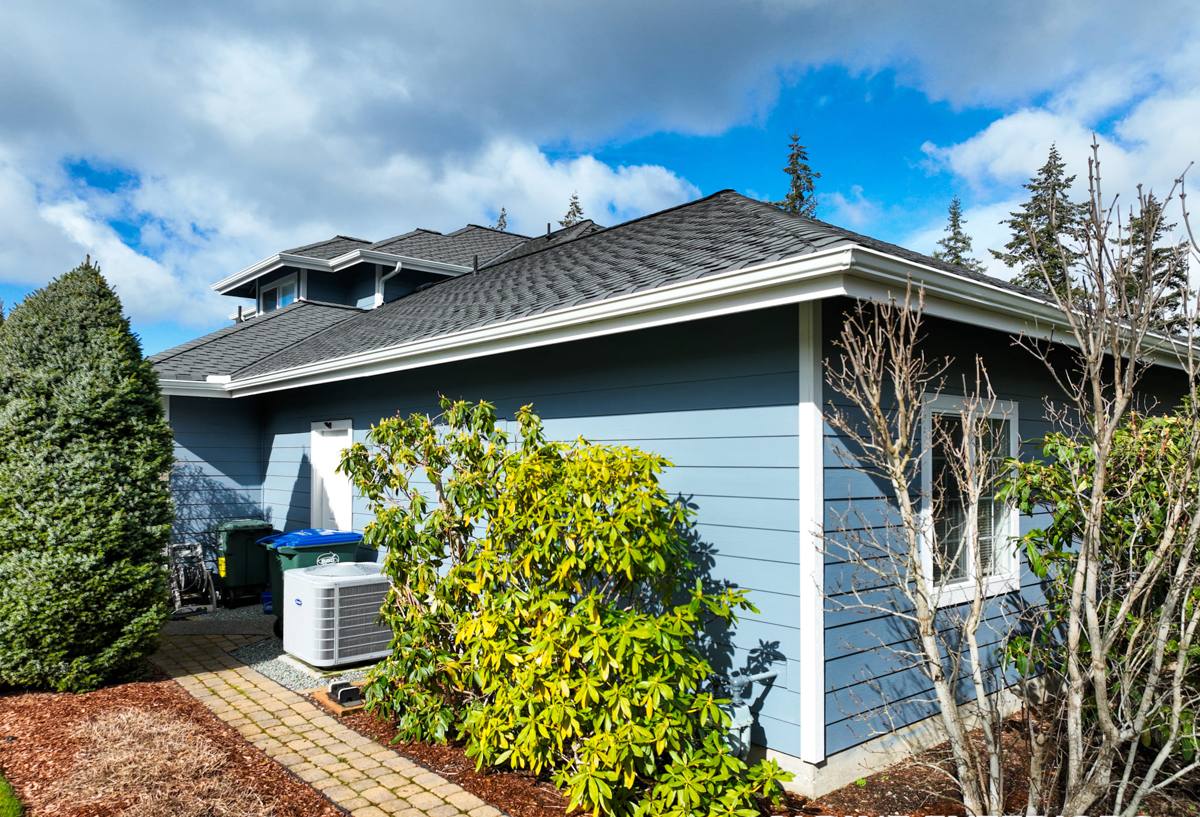
Why Metal Roofing Is a Strong Fit for Lopez Island Homes
Metal roofing holds up well against exactly the conditions Lopez Island throws at a roof. A correctly installed metal roof sheds driving rain fast, doesn't give moss the rough, granular surface it needs to get a foothold, and — when the right alloy and coating are specified for a coastal environment — resists salt-air corrosion far longer than bare steel or lower-grade finishes. It's also lighter than many roofing materials, which is easier on older island framing, and it holds paint and factory finishes well over the long haul, so it doesn't need repainting the way some other claddings do.
That said, metal roofing is not a "set it and forget it" upgrade. It performs the way it's supposed to only when the underlayment, fastening pattern, flashing details, and ventilation are all done correctly for a wet, salty, moss-prone site. That's where a lot of the difference between a roof that lasts decades and one that causes problems in five years actually comes from.
What a Correct Metal Roofing Job Actually Involves
- Underlayment — a synthetic or self-adhered ice-and-water membrane rated for high-moisture climates, not a basic felt that breaks down under prolonged damp.
- Fasteners and clips — corrosion-resistant hardware matched to the panel metal, so you don't get galvanic reaction between dissimilar metals sitting in salt air.
- Panel type and seam design — standing seam or a properly sealed exposed-fastener system, chosen based on the roof's pitch, exposure, and how much the homeowner wants to minimize future maintenance.
- Flashing at every penetration — valleys, chimneys, vent stacks, and wall intersections are where most roof leaks start, metal roof or not, and they need careful, custom-fit flashing rather than generic trim.
- Ventilation — proper intake and exhaust airflow under the metal so condensation doesn't build up on the underside of the panels, which is a common and preventable cause of hidden deck rot.
- Edge and drip details — correct drip edge and rake trim so wind-driven rain off the water doesn't get pushed back up under the panels.
Skip or shortcut any one of these and the roof itself can still look fine from the ground for a few years while quietly failing underneath. That's the trap with a lot of roofing work — the metal is only as good as what's underneath it and around it.
Standing Seam vs. Exposed-Fastener Metal Roofing
Both systems can work well on Lopez Island homes, but they trade off differently against the local climate. We'll walk through which one fits a given roof and budget during the estimate, but here's the general comparison:
| Factor | Standing Seam | Exposed-Fastener |
|---|---|---|
| Fastener exposure | Hidden clips, no exposed screws to work loose or corrode over time | Screws penetrate the panel face and need periodic inspection/re-torquing |
| Upfront cost | Higher | Lower |
| Moisture performance in driving rain | Excellent — interlocking seams shed wind-driven rain very well | Good, if fasteners and washers are installed and maintained correctly |
| Long-term maintenance | Minimal | Periodic fastener checks recommended, especially after big storms |
| Typical best use | Primary roofs, homes closer to the water, low-maintenance goals | Outbuildings, secondary structures, tighter budgets |
Materials and Finishes Worth Knowing About
Not every metal roofing product is built for a marine environment, and this is one area where we hold a firm standard rather than installing whatever's cheapest. Bare or lightly coated steel can rust prematurely this close to saltwater. We favor coastal-rated aluminum or properly coated steel systems with a factory finish designed to resist salt-air corrosion, paired with fasteners and flashing metals chosen so they don't react against each other. The trade-off is usually a modestly higher material cost up front in exchange for a roof that isn't fighting its own hardware within the first decade.
Color and finish matter too, though less for performance than for how the roof holds up cosmetically. A quality factory finish resists fading and chalking far longer than a basic paint system, which matters on an island where a roof is visible for a very long time before anyone's inclined to redo it.
How We Handle a Lopez Island Metal Roofing Project
- On-site assessment. We look at the existing roof deck, ventilation, framing condition, and exposure — north-facing, shaded, or moss-prone sections often need different detailing than the rest of the roof.
- Straightforward estimate. We walk through panel and finish options, where standing seam makes sense versus exposed-fastener, and what the flashing and ventilation work will involve — no pressure, no upsell games.
- Scheduling around island logistics. Materials and crew both have to get to Lopez Island, usually by ferry, so we plan delivery and crew days to avoid a job sitting half-finished waiting on a missed sailing.
- Tear-off and deck check. Once the old roofing is off, we inspect the deck for rot or soft spots before anything new goes down — this is where hidden moisture damage from a previous roof usually shows up.
- Underlayment, panels, and flashing. Installed to the coastal-rated standard described above, with particular attention to valleys, penetrations, and edges.
- Final walkthrough and cleanup. We check seams, fasteners, and flashing details together with the homeowner, and clear the site of debris and old material.
Living With a Metal Roof in a Moss-Heavy, Salt-Air Climate
A correctly installed metal roof needs far less upkeep than shingles, but "far less" isn't "none." A short annual routine keeps it performing the way it's designed to:
- Clear overhanging branches and debris that trap moisture against the roof surface and feed moss growth.
- Check gutters and downspouts each fall — clogged gutters back water up under the drip edge, which is where a lot of avoidable leaks start.
- Look over exposed fasteners (if that's your panel type) after major windstorms, since driving rain and gusts off the water are what work screws loose over time.
- Rinse off accumulated salt spray and organic buildup periodically, especially on roof sections closer to open water.
- Watch for any moss or algae starting to establish in shaded valleys or north-facing slopes, and address it before it holds moisture against the seams.
What Metal Roofing Costs on Lopez Island
Every roof is different, but the main cost drivers on an island project tend to be the same handful of factors:
| Factor | How It Affects Cost |
|---|---|
| Panel system | Standing seam costs more than exposed-fastener; both scale with roof size |
| Roof complexity | Valleys, dormers, and multiple roof planes mean more flashing labor |
| Tear-off vs. overlay | Removing old roofing and checking the deck adds cost but avoids covering hidden problems |
| Ventilation upgrades | Adding or correcting intake/exhaust venting where the existing setup is inadequate |
| Material and delivery logistics | Getting materials to Lopez Island by ferry can add scheduling and freight cost versus mainland delivery |
We'll give you a clear, itemized number during the estimate rather than a vague range — but in general, expect metal roofing to cost more upfront than asphalt shingles, offset by a much longer service life and lower maintenance in this climate.
Why It Matters That We Already Work Lopez Island
A lot of roofing problems on the San Juan Islands aren't really material problems — they're logistics problems. A mainland crew that hasn't planned around ferry schedules can lose a full day to a missed sailing, leave a roof partially open overnight in weather it shouldn't be, or underbid the job because they didn't account for freight and travel time. We already run projects across the islands, so scheduling, material delivery, and weather timing are built into how we plan the work, not an afterthought discovered halfway through.
There's also a simpler reason local experience matters: we've seen how roofs in this specific climate actually fail over time — where moss tends to establish first, which flashing details take the worst of the driving rain, which materials hold up to salt air and which don't. That's the kind of judgment that only comes from working this exact environment, not a general roofing background.
If you're weighing metal roofing for a home on Lopez Island, we're glad to come take a look and give you a straightforward, no-pressure estimate — just use the form below to get started.