 Orcas Island Siding
 Why Lopez Island's Climate Is Hard on an Asphalt Shingle Roof
Lopez Island sits low and open compared to its neighbors in San Juan County, which means more direct exposure to wind off the water and less tree cover to break up driving rain. Add in the salt-laden air that settles on every exterior surface out here, and an asphalt shingle roof is working harder than the same roof would inland. Salt residue holds moisture against the shingle surface, wind-driven rain finds its way under poorly sealed tabs, and the region's long damp season gives moss and algae months at a time to gain a foothold on north-facing slopes.
None of this means asphalt shingles are a poor choice for Lopez Island. It's one of the most practical, cost-effective roofing systems available, and it holds up well here when it's specified and installed with this climate in mind. The problems show up when a roof was built to a generic spec instead of a Pacific Northwest marine-climate spec: thin underlayment, minimal ventilation, and standard-grade shingles that weren't built to resist algae or shrug off constant moisture.
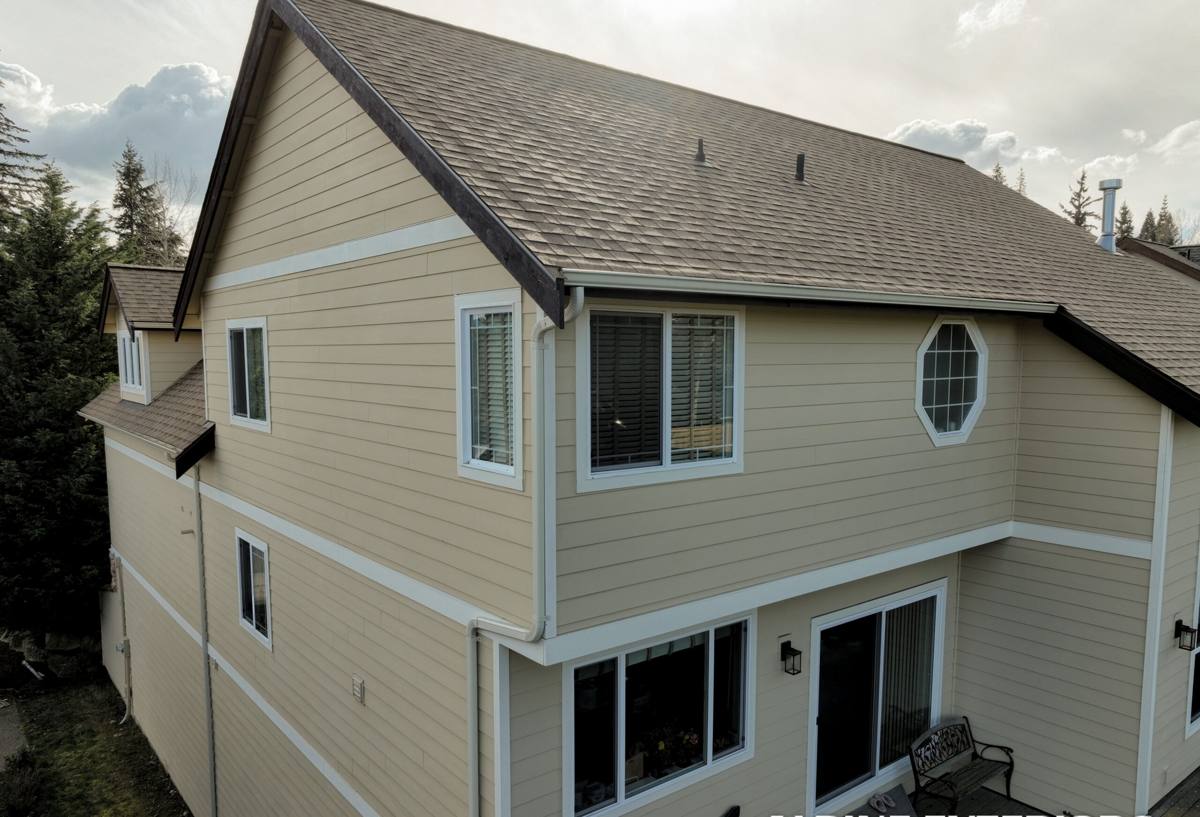
What a Correct Asphalt Shingle Roof Needs Out Here
A roof that's going to perform well on Lopez Island needs a few things a lower-cost install often skips:
- A synthetic or high-quality felt underlayment rated for extended exposure, since shingles here spend more days wet than dry through fall and winter.
- Ice-and-water shield at eaves, valleys, and around penetrations, the places where wind-driven rain is most likely to work its way backward under the shingle course.
- Balanced attic ventilation (intake at the eaves, exhaust at the ridge) so moisture from inside the house doesn't condense against the underside of the roof deck, which accelerates rot and voids most shingle warranties.
- Corrosion-resistant fasteners and flashing, since standard galvanized fasteners degrade faster in salt air than stainless or high-quality coated alternatives.
- Proper nailing pattern and pressure for wind exposure, since under-nailed or over-driven shingles are the single most common cause of early wind and rain damage we find on this island.
Skipping any one of these doesn't usually show up as a problem in year one. It shows up in year six or seven, as a slow leak that's hard to trace, or moss that keeps coming back no matter how often it's cleaned off.
Choosing the Right Shingle Class for San Juan County Conditions
Not all asphalt shingles are built the same, and the differences matter more here than in a drier, more sheltered climate. The table below is a general guide to how the common shingle classes hold up against Lopez Island's conditions; actual performance still depends on installation quality and roof design.
| Shingle Type | Typical Lifespan | Wind Rating | Best Fit for Lopez Island |
|---|---|---|---|
| 3-Tab (standard) | 15-20 years | Lower | Budget projects with good roof pitch and sun exposure; less ideal on shaded, storm-facing slopes |
| Architectural / Dimensional | 25-30 years | Higher | Good all-around choice for most Lopez Island homes; thicker profile sheds water better |
| Algae-Resistant (ceramic-coated granules) | 25-30+ years | Higher | Strong choice for north-facing or tree-shaded roofs where moss and algae are persistent |
| Premium / Designer | 30-50 years | Highest | Best long-term option for full wind and moisture exposure, at a higher upfront cost |
For most Lopez Island homes, we lean toward architectural shingles with algae-resistant granules as the practical middle ground. They cost more than 3-tab up front but cost less over the life of the roof once you factor in fewer moss treatments and a longer service life before replacement.
A Note on Marketing Claims
Manufacturers market a range of specialty shingle lines with claims about algae resistance, impact resistance, or extended warranties. These are worth asking about, but the warranty is only as good as the installation underneath it. Most manufacturer warranties have ventilation and underlayment requirements that get skipped on corner-cut jobs, which quietly voids the coverage a homeowner thinks they have.
Moss, Algae, and Salt Air: The Ongoing Maintenance Reality
Even a well-installed roof on Lopez Island needs some seasonal attention. Moss doesn't just look bad; it holds moisture against the shingle surface and can work its way under tabs over time, lifting them and creating entry points for water. Salt air adds a slower but steady wear factor on any exposed metal, including flashing, drip edge, and fasteners.
What actually helps:
- Keeping overhanging branches trimmed back so roof surfaces get more sun and airflow.
- Gentle, low-pressure moss removal, never a pressure washer directly on shingles, which strips granules and shortens the roof's life.
- Clearing gutters and valleys before the fall rains, since a clogged valley is one of the fastest ways to force water under a shingle course.
- A periodic visual check of flashing around chimneys, skylights, and vent pipes, where small gaps are the most common source of hidden leaks.
We're happy to talk through a maintenance rhythm that fits your specific roof rather than a generic schedule. A steep, sun-exposed roof needs a lot less attention than a shaded, low-slope section facing the water.
Our Asphalt Shingle Installation Process on Lopez Island
Inspection and Roof Deck Assessment
Before any tear-off begins, we look at the existing roof deck, ventilation setup, and any signs of prior water intrusion. On an island where materials and crews have to come over by ferry, catching deck rot or ventilation problems before the new roof goes on saves everyone a second trip and avoids covering up a problem that will just resurface.
Tear-Off and Deck Repair
We remove the old roofing down to the deck rather than layering over it. This lets us actually see the condition of the sheathing and fix any soft or water-damaged sections instead of guessing at what's underneath.
Underlayment, Flashing, and Ice-and-Water Shield
This is where a marine-climate roof earns its durability. We install underlayment rated for extended wet exposure, ice-and-water shield at vulnerable points, and new flashing at every penetration and valley rather than reusing old flashing that's already lost its seal.
Shingle Installation
Shingles go down with attention to correct nail placement, exposure, and alignment: the details that determine whether a roof handles a real windstorm off the water or loses shingles in the first hard blow.
Ventilation Check and Cleanup
We confirm intake and exhaust ventilation are balanced before calling the job finished, then do a full site cleanup, including a magnetic sweep for stray nails.
Common Problems We Find on Lopez Island Roofs
A few issues show up often enough on this island's homes that they're worth watching for, whether you're deciding on a repair or a full replacement:
- Moss buildup on north-facing or tree-shaded slopes that's been pressure-washed in the past, leaving bare or damaged spots.
- Flashing around chimneys and skylights that was never properly integrated with the shingle courses, leading to slow leaks that only show up during hard rain.
- Attics with little or no ventilation, causing premature aging from the underside even when the shingles themselves still look fine.
- Shingles installed with the wrong nailing pattern for the site's wind exposure, leading to lifted or missing tabs after storms.
- Gutters and valleys that back up during heavy rain because they weren't sized or maintained for the volume of water the roof actually sheds.
Cost Factors for Asphalt Shingle Roofing
Every roof is different, but the following factors are what actually move the price on a Lopez Island project, more so than the base cost of the shingles themselves.
| Factor | Why It Matters Here |
|---|---|
| Roof pitch and access | Steeper roofs and homes with limited access add labor time and safety requirements |
| Existing deck condition | Rot or soft sheathing found during tear-off adds repair cost before new roofing goes on |
| Shingle class chosen | Architectural and algae-resistant lines cost more upfront than 3-tab but last longer in this climate |
| Ventilation upgrades | Adding proper intake and exhaust venting where none existed is a worthwhile add-on, not just a repair |
| Material and crew logistics | Ferry scheduling for materials and crews is a real planning factor for island projects and is best worked into the timeline up front |
| Number of penetrations | Chimneys, skylights, and vents each require careful flashing work that adds time relative to a simple roof plane |
We provide a detailed, written estimate that breaks these factors out so you can see exactly what you're paying for and where, not a single lump number with no explanation behind it.
Why Hiring a Crew That Already Works Lopez Island Matters
Roofing on an island isn't the same logistical exercise as roofing on the mainland. Materials, dumpsters, and crews all move by ferry, and a contractor who doesn't already have that rhythm worked out can turn a straightforward reroof into a scheduling headache. A crew that regularly works Lopez Island and the rest of San Juan County knows how to plan material deliveries around the ferry schedule, how to sequence a job so weather doesn't leave a roof partially exposed overnight, and what this specific coastal environment actually does to a roof over time, not just what a manufacturer's spec sheet says in general.
That local familiarity also means we're not guessing at what's already failed on similar homes nearby. We've seen how moss behaves on shaded island roofs, how salt air treats exposed flashing, and which shortcuts on past installs tend to cause problems five or ten years down the line. That's the kind of knowledge that only comes from working this specific stretch of the San Juans, not from a general roofing checklist.
If you're weighing a repair, a full reroof, or just want an honest read on how much life is left in your current roof, we're glad to come take a look. Reach out for a free, no-pressure estimate through the form below.