 Orcas Island Siding
 Doe Bay's Siding Problem Isn't Like the Mainland's
Doe Bay sits on the exposed eastern side of Orcas Island, where weather rolls in off the water with little to slow it down. Homes here deal with a combination that most siding products were never engineered for: salt-laden air, wind-driven rain that hits walls sideways instead of falling straight down, and a wet season long enough that moss and algae get a real foothold on north-facing walls, under eaves, and anywhere sun doesn't reach for months at a time. Add San Juan County's marine humidity and the slow-drying conditions common in forested or shaded lots around Doe Bay, and you have an environment that punishes anything with a weak moisture strategy.
This is why we only install James Hardie fiber cement siding. Not because it's the trendiest option, but because it's the one product line we've found holds up to this specific combination of salt, rain, and shade without turning into a maintenance project every other year.
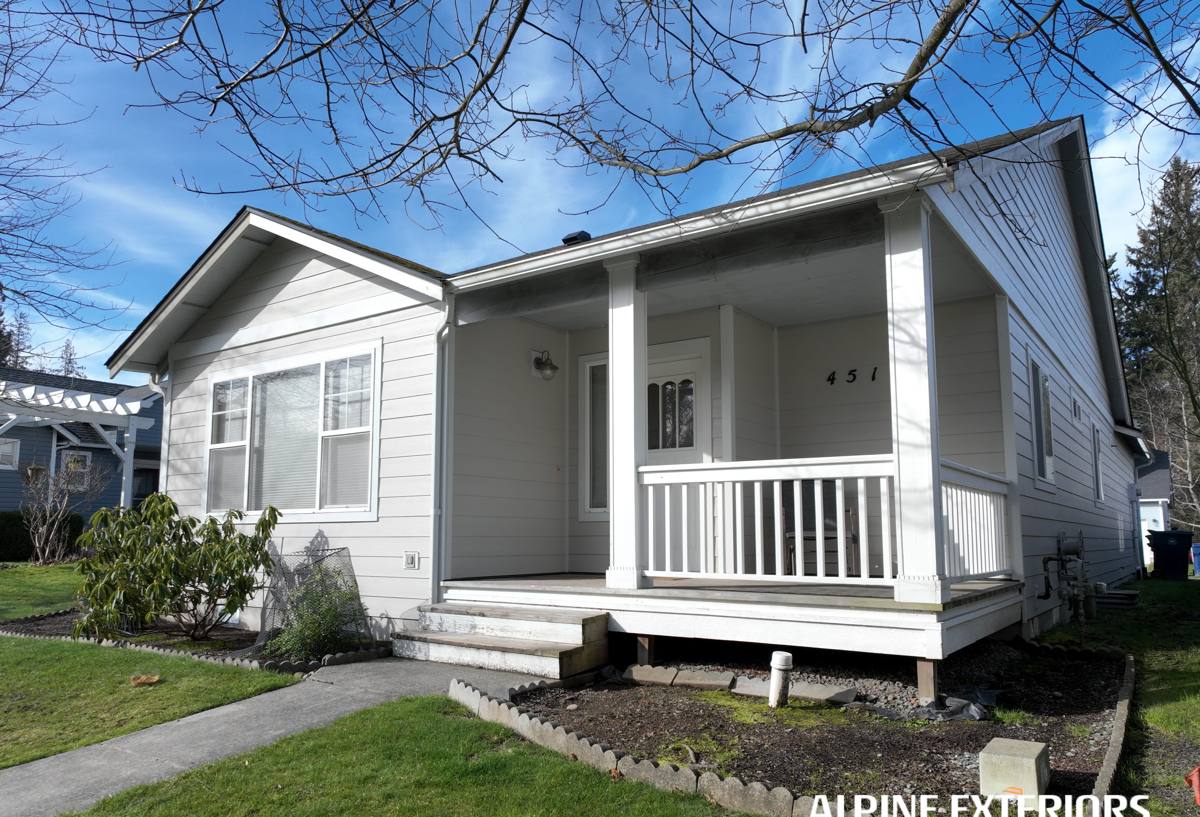
What Doe Bay's Climate Actually Does to Siding
Salt Air
Airborne salt from the surrounding water settles on exterior surfaces and accelerates corrosion of metal fasteners and trim, and it can degrade certain coatings and finishes faster than inland environments. Siding materials and fastener hardware need to be selected with this in mind, not treated as an afterthought.
Driving Rain
Wind-driven rain doesn't just wet a wall — it forces water into every gap, seam, and fastener hole that isn't properly sealed or flashed. On an exposed shoreline community like Doe Bay, this is a daily reality for large parts of the year, not an occasional storm event. Any siding installation that treats water management as optional will eventually let moisture behind the cladding.
Moss and Algae
Shaded, moisture-retentive surfaces on Orcas Island grow moss and algae readily, especially on north and east elevations that don't get enough sun to dry out between rain events. Once organic growth establishes itself on a porous or absorbent surface, it holds moisture against the material and shortens its service life.
Why We Standardized on James Hardie for This Environment
James Hardie fiber cement is manufactured from cement, sand, and cellulose fibers, cured into a dense, non-combustible board. It doesn't rot, it doesn't feed insects, and it isn't organic material that moss and algae can slowly break down the way they can with wood-based products. For a community dealing with constant moisture exposure and long dry-outs, that matters more than most marketing language admits.
Hardie's HZ5 product line is specifically engineered for climates with high moisture exposure and freeze-thaw cycling, which fits the Pacific Northwest marine environment well. The factory-applied ColorPlus finish is also relevant here: it's baked on under controlled conditions, resists fading and chipping better than field-applied paint, and doesn't require the same repaint cycle that wood or engineered wood siding does. Fewer repaint cycles means fewer trips up a ladder on a coastal-exposed home, and less chance of a rushed repaint job leaving gaps for water intrusion.
We've explained elsewhere why we don't install vinyl, LP SmartSide, or engineered wood products — in short, they each carry a moisture, maintenance, or longevity trade-off that doesn't hold up well to years of salt air and driving rain. On Doe Bay specifically, we don't think it makes sense to gamble a client's exterior on a product that needs a forgiving climate to perform. This one doesn't get a forgiving climate.
What Correct Installation Looks Like Here
Fiber cement siding is only as good as the installation behind it. In a high-exposure environment like Doe Bay, the details that get skipped on an easy job are exactly the details that matter most:
- Proper weather-resistive barrier installed with correct lapping, sealed at penetrations, and integrated with window and door flashing so water is directed out, not trapped in
- Rainscreen or drainage gap furring where conditions call for it, giving water a path to drain and the wall assembly a chance to dry between rain events
- Correct fastener type and spacing — stainless or coated fasteners rated for coastal exposure, driven per Hardie's specifications, not just "close enough"
- Factory-cut and factory-primed edges kept intact wherever possible, with field cuts sealed per manufacturer instructions
- Butt joints, corners, and trim sealed with the right sealant, not caulk applied as an afterthought
- Clearance maintained between the bottom of the siding and grade, decks, or roof lines so standing water and splash-back don't sit against the board
Skip any one of these and you can put the best siding material in the world on a house and still end up with moisture problems in five years. This is the actual difference between a siding job that lasts and one that doesn't — and it has almost nothing to do with the brand name on the box.
Our Process for a Doe Bay Job
1. On-Site Assessment
We walk the whole exterior, not just the elevation the homeowner is worried about. Exposure varies a lot from one side of a house to another out here — a south wall drying fast and a north wall staying damp for weeks are common on the same house. We look at existing moisture damage, current cladding condition, trim, flashing, and drainage paths before quoting anything.
2. Removal and Sheathing Check
Old siding comes off and we inspect the sheathing underneath. On homes that have dealt with years of driving rain, this is often where hidden problems turn up — soft sheathing, failed old flashing, or trapped moisture that wasn't visible from outside. We address what we find before anything new goes up.
3. Water Management First
Weather-resistive barrier, flashing, and drainage details get installed and inspected before a single piece of siding goes on. This is the step that decides whether the wall assembly survives the next twenty years of Orcas Island weather, and we don't rush it.
4. Hardie Installation to Spec
Siding, trim, and fasteners go in per James Hardie's published installation guidelines for our climate zone. We don't improvise on fastener spacing, gaps, or sealant just to save time.
5. Final Walkthrough
We review the finished exterior with the homeowner, covering what maintenance actually looks like going forward (which, with Hardie, is minimal) and what to watch for over the first year.
Cost Factors on a Doe Bay Project
Every job is different, but a few things consistently move the price on this stretch of the island:
| Factor | Why It Affects Cost |
|---|---|
| Sheathing condition underneath old siding | Rot or moisture damage found during removal has to be repaired before new siding goes on |
| Site access | Some Doe Bay properties have limited road or driveway access, affecting material delivery and staging |
| Wall exposure and complexity | Multiple elevations, dormers, and roof-wall intersections need more flashing and detail work |
| Existing trim and window flashing | Older homes often need trim and flashing upgrades alongside the siding itself |
| ColorPlus vs. field-applied finish | Factory-finished boards cost more upfront but remove a repaint cycle from the maintenance schedule |
We give straight, itemized quotes so homeowners can see where the money is going, rather than a single lump number that hides what's actually being paid for.
Maintenance Once It's Installed
Correctly installed Hardie siding with a ColorPlus finish needs very little upkeep compared to wood or engineered wood siding. That said, Doe Bay's environment still calls for basic seasonal attention:
- Periodic rinse of salt residue from exterior walls, especially after storms with heavy wind-driven spray
- Keeping gutters and downspouts clear so water isn't sheeting down walls it shouldn't be
- Checking caulking at trim and joints every year or two and touching up as needed
- Trimming back vegetation that shades walls and keeps them from drying out, which helps limit moss growth
- Addressing any moss or algae growth early with a gentle wash rather than letting it establish
None of this is heavy labor — it's the kind of upkeep that keeps a good installation good, rather than the repainting and caulking cycle that wood-based siding demands on an exposed coastal property.
Why Local Installation Experience Matters
A crew that has worked other homes around Doe Bay and the rest of Orcas Island already knows which elevations take the worst weather, how site access typically works on the island's back roads, and what moisture problems tend to show up under old siding here versus on a more sheltered inland property. That local pattern recognition shortens the assessment phase and reduces surprises once removal starts. It's also why we standardized on one product installed correctly, rather than offering every siding option on the market and hoping each one works out — San Juan County's marine climate doesn't leave much room for a product or an installation shortcut that doesn't hold up.
If you're weighing a siding replacement or repair on a Doe Bay property, we're happy to walk the exterior with you and give a straightforward, no-pressure estimate — just fill out the form below to get started.