 Orcas Island Siding
 Friday Harbor sits at the heart of San Juan County — the county seat, the main ferry terminal for the islands, and home to a mix of historic waterfront houses, in-town cottages, and newer builds spread up the hillside above the harbor. Every one of those homes deals with the same baseline conditions: salt-laden marine air moving off the water almost constantly, storms that drive rain sideways into walls instead of straight down, and a damp season that runs long enough for moss to get a foothold almost anywhere it isn't actively discouraged. We install James Hardie fiber cement siding exclusively, and this page is about what that combination — this specific climate and this specific product — actually means for a Friday Harbor home, not a generic rundown of what Hardie is.
What Salt Air, Driving Rain, and Moss Season Do to Siding
None of these three factors is dramatic on its own. Together, over years, they're what separates siding that looks the same at year fifteen from siding that's showing real problems by year eight.
Salt Air and Coastal Exposure
Airborne salt off the water accelerates the breakdown of paint and stain films, and it corrodes exposed metal — fasteners, flashing, trim — faster than the same materials would wear at an inland site. A finish that's rated to last a certain number of years inland often falls short of that on a harbor-facing wall, because the salt exposure is working against it every day, not just during storms.
Wind-Driven Rain and Water Intrusion
Storms coming off the water in this part of the county don't just fall on a roof and run off — they push rain sideways into south- and west-facing walls under real wind pressure. That kind of driving rain finds any weak point in a wall assembly: a butt joint that isn't properly flashed, a window trim detail that relies on caulk alone, a cut end of siding that wasn't sealed before it went up. Water that gets behind the siding, rather than running off the face of it, is what causes the sheathing and framing damage that's expensive to fix later.
A Long, Damp Moss Season
Friday Harbor's tree cover and the number of homes tucked into shaded, north-facing sites mean a lot of walls stay damp well after a storm has passed. That's exactly the condition moss and mildew need to establish. On an organic siding material, that growth holds moisture against the surface and accelerates decay underneath it. On an inorganic material, it's a cosmetic issue you can rinse off — a meaningful difference over a fifteen- to twenty-year ownership window.
Why James Hardie Fits This Environment
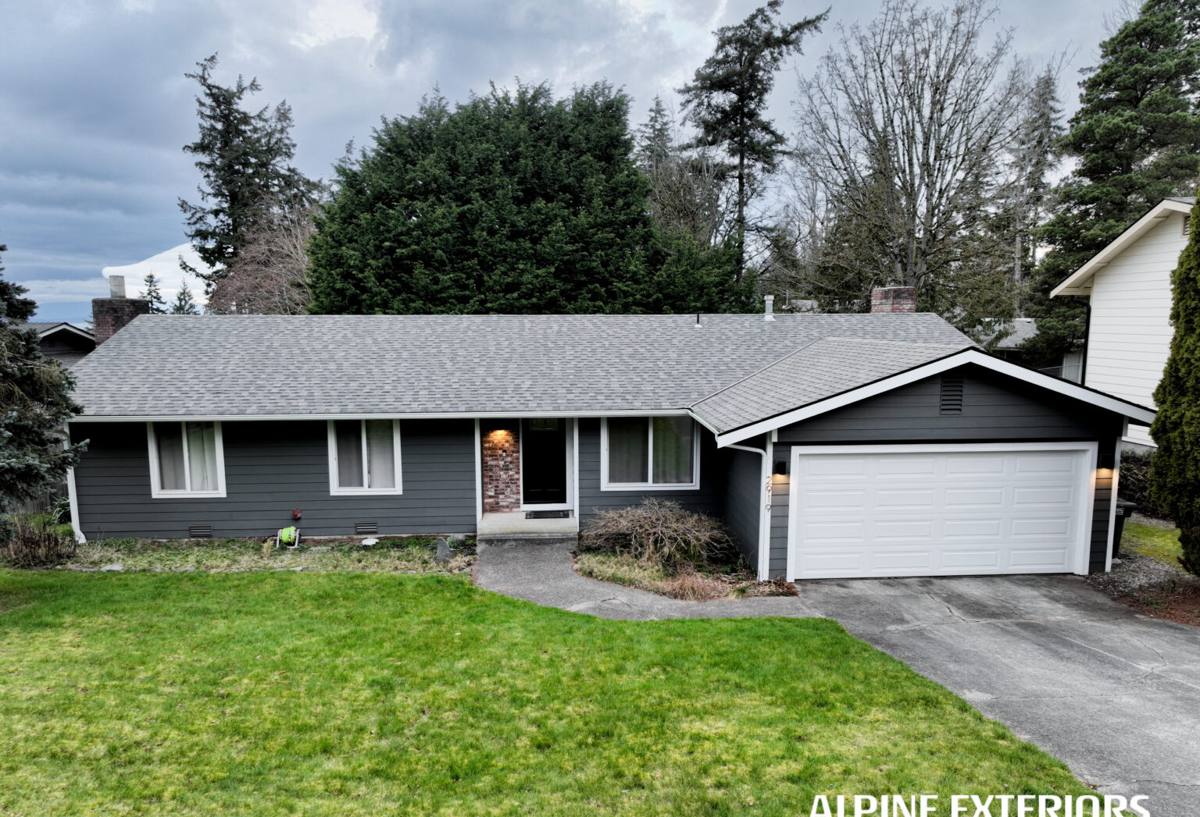
James Hardie fiber cement is made from cement, sand, and cellulose fiber — there's no organic core for salt air, driving rain, or moss to work into over time the way there is with wood-based siding. It's non-combustible, which matters on a wooded island where wildfire risk is a real seasonal concern alongside the marine weather. Hardie also engineers its HZ product lines specifically for regional exposure conditions rather than selling one generic formulation everywhere, and the factory-applied ColorPlus finish is baked on under controlled conditions and backed by its own finish warranty — a real advantage over a field-applied paint or stain that has to fight salt air and UV from day one with no factory cure behind it.
It also carries a strong, transferable warranty, which matters to Friday Harbor homeowners thinking about resale as much as current comfort. Buyers and inspectors in this market increasingly ask what's on the exterior, and a well-documented Hardie installation is a straightforward answer.
What a Correct Installation Involves Here
Hardie siding is only as good as the installation behind it. In a climate that's actively testing every joint and fastener, the details that get skipped on an easy inland job are the ones that show up as problems here within a few wet seasons.
| Detail | Correct practice | Common shortcut |
|---|---|---|
| Weather barrier | Continuous house wrap or equivalent, properly lapped and taped | Gaps or reliance on siding alone as the water barrier |
| Flashing | Integrated flashing at every window, door, and roof-to-wall intersection | Caulk used in place of proper flashing |
| Fasteners | Corrosion-resistant fasteners rated for marine exposure, spaced to spec | Standard fasteners that corrode and streak the finish over time |
| Clearance | Proper gap between siding and grade, decks, and roof lines | Siding installed tight to grade or a deck surface, trapping moisture |
| Joints | Factory-primed or sealed cut ends, correctly lapped joints | Unsealed field cuts left exposed to weather |
None of this is exotic. It's standard Hardie installation practice, applied without skipping steps — which is the whole difference between siding that performs for decades and siding that needs early repair.
Choosing the Right Hardie Product Line
Hardie makes more than one profile, and the right choice depends more on the home's style than on the climate — all of Hardie's lines are built to handle the same coastal exposure.
- HardiePlank lap siding — the traditional horizontal look, the most common choice for both historic-style and newer Friday Harbor homes
- HardiePanel vertical siding — a clean vertical look, often paired with battens, common on more modern or cabin-style builds
- HardieShingle — a shingle profile for homes that want a traditional shingled look without the maintenance a real wood shingle requires
- HardieTrim — matching trim boards so the whole exterior, not just the field siding, gets the same non-combustible, low-maintenance material
We'll walk through which profile fits your home's architecture during the estimate rather than assuming one answer fits every house in town.
Our Process for a Friday Harbor Project
Working on the islands changes project logistics more than it changes the installation itself. We plan material orders and delivery around ferry schedules well ahead of the install date, so a crew isn't standing around waiting on a materials run mid-project. On site, the sequence is the same discipline every job needs: remove and assess the existing siding and sheathing, correct any water damage found underneath before anything new goes up, install the weather barrier and flashing details first, then the siding itself, then trim and touch-up painting where needed. We walk the finished job with the homeowner before we call it done, and register the manufacturer warranty so it's on file, not just promised verbally.
Cost Factors for Hardie Siding in Friday Harbor
Every home is different, but the same handful of factors drive most of the cost variation we see on island projects.
| Factor | Why it matters |
|---|---|
| Home size and wall complexity | More corners, dormers, and trim details mean more labor and cut waste |
| Existing siding removal and disposal | Tear-off and haul-away adds cost that a new-construction install doesn't have |
| Water damage found during tear-off | Rotted sheathing or framing needs repair before new siding goes on — this is the most common source of a mid-project cost change |
| Product line and profile | Lap, panel, and shingle profiles carry different material and labor costs |
| Site and material access | Ferry-dependent delivery scheduling and site access on some island lots affect labor time |
We give a written estimate after seeing the actual house and current siding condition, not a phone-quote guess — the water-damage variable especially is one we won't pretend to know before we've opened up a wall.
Why a Crew That Already Works the San Juan Islands Matters
Getting a contractor and materials onto any of the San Juan Islands is a logistics problem before it's ever an installation problem. A crew that already schedules around ferry availability, already knows which material suppliers reliably get product to the islands on time, and already understands how this specific coastal exposure behaves isn't learning that on your project. That translates into fewer delays, fewer surprise trips back for a forgotten material, and a crew that isn't guessing at flashing and fastener choices that matter more here than they would on a mainland, inland job.
What Upkeep Looks Like After Installation
Hardie siding is genuinely low-maintenance compared to wood, but "low" isn't "none." A little attention keeps it performing the way it's designed to for the long run.
- Rinse the exterior periodically to keep salt residue and organic buildup from accumulating, especially on shaded or harbor-facing walls
- Do a soft wash rather than an aggressive pressure wash, which can damage the factory finish
- Check caulking at trim and penetrations every year or two and renew it if it's cracked or pulling away
- Walk the exterior after major storms and note anything that looks off near grade, decks, or roof lines
- Address any touch-up paint on cut edges or minor damage promptly, before moisture has a chance to work in
That's a fraction of what a wood exterior asks for in this climate, and it's manageable on a normal island schedule rather than requiring a recurring recoating project.
If you're planning a siding project for a home in Friday Harbor or elsewhere in San Juan County, we're glad to come take a look, walk the current condition of your siding, and give you a straight, written estimate — no pressure, no phone-quote guessing. Reach out below to get started.