 Orcas Island Siding
 Windows Built for a Working Waterfront Town
Friday Harbor sits in a marine climate that is gentler on paper than it feels on a window frame. The San Juan Islands get less rainfall than the mainland, but what does fall usually arrives sideways off the water, driven by wind that finds every gap around a poorly sealed sash. Add in salt-laden air, a long damp season that keeps moss and algae established on shaded siding and roofs for months at a time, and a housing stock that includes a fair number of older wood-frame homes and cabins, and you have a climate that is genuinely hard on windows — just not in the way people expect.
An energy-efficient window in this setting has to do two jobs at once: hold a stable indoor temperature through cool, damp winters and mild but bright summers, and physically survive years of salt exposure, condensation, and wind pressure without the frame swelling, the hardware corroding, or the seals failing early. A window that's efficient on a lab spec sheet but not built for coastal exposure will underperform here within a few seasons.
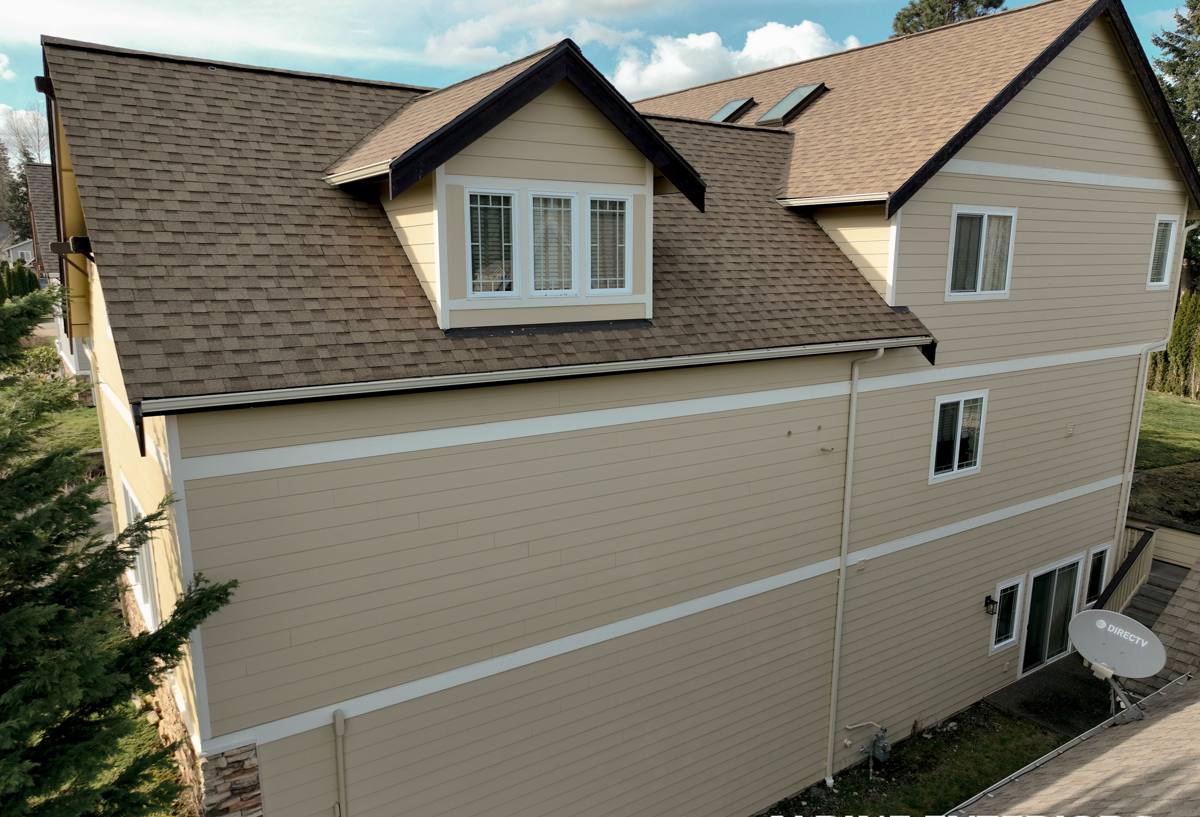
What the Marine Environment Actually Does to a Window
Salt air is the big one. Airborne salt accelerates corrosion on any exposed metal hardware — hinges, cranks, locks, and screws — especially on homes closer to the water or in more exposed, wind-facing locations. Once hardware starts to pit or seize, a window stops sealing tightly even if the glass and frame look fine.
Moisture is the second factor, and it's a year-round issue, not just a winter one. The long stretch of damp, low-sun months that keeps moss growing on north-facing surfaces also keeps humidity elevated around window openings. That moisture works into end-grain on wood sills, behind poorly flashed trim, and into any gap in old caulking. Over years, it shows up as soft wood at the sill corners, fogged glass between panes (a sign the seal has failed), or a persistent musty smell near older window units.
Wind-driven rain is the third. It's not the volume of rain that causes trouble, it's the direction. A window that seals fine in a calm rain can still leak under horizontal, wind-pushed rain if the flashing detail or the window's own weatherstripping wasn't installed with that in mind.
Choosing Materials That Hold Up Here
We don't push one brand or one material as the universal answer, because the right choice depends on the home's exposure, age, and style. What we do insist on is being honest about trade-offs for this specific climate.
| Frame Material | How It Handles Salt Air & Moisture | Maintenance |
|---|---|---|
| Vinyl (quality, welded corners) | Does not corrode or rot; performs well in coastal exposure | Low — occasional cleaning |
| Fiberglass | Very stable in temperature swings and moisture; strong salt-air track record | Low |
| Aluminum-clad wood | Good if cladding and flashing are correctly installed; interior wood still needs protection from condensation | Moderate |
| Bare wood | Classic look but most vulnerable to the sill and joint rot this climate causes if maintenance lapses | High — regular repainting/sealing |
Whatever material a homeowner chooses, we push for stainless steel or otherwise corrosion-resistant hardware on every install in Friday Harbor. It costs a little more up front and it is the single biggest factor in whether a window still operates smoothly in ten years.
What "Energy-Efficient" Should Actually Mean for This Climate
Efficiency ratings only matter if they match the local climate, not a generic national average. For Friday Harbor's cool, damp, moderate-sun profile, we weigh a few numbers more heavily than others:
- U-factor — the main driver of heat loss through the window; lower is better for our cool winters, and it matters more here than in a hot, dry climate
- Solar Heat Gain Coefficient (SHGC) — moderate SHGC glass lets in welcome daylight and some passive warmth without excessive glare off the water on bright days
- Air leakage rating — directly tied to how well a window resists wind-driven rain and drafts, which matters more here than in a sheltered inland location
- Condensation resistance — a real-world measure of how well the window handles our persistently higher humidity without fogging or sweating on the interior glass
A window with an excellent U-factor but poor air-leakage performance will still let cold, damp air infiltrate around the frame during a wind event — the efficiency spec on the label won't reflect what the homeowner actually feels.
Our Installation Process
Correct installation matters as much as the window itself, arguably more so in this climate, because most of the failures we see trace back to flashing and sealing details rather than the window unit itself.
- On-site assessment of each opening — checking for existing rot, prior water intrusion, and how exposed that wall face is to prevailing wind and rain
- Careful removal of the old window and inspection of the framing and sill underneath before anything new goes in
- Repair of any soft or water-damaged framing found — we do not install a new window over a compromised sill
- Proper flashing integration with the existing wall assembly, detailed for wind-driven rain, not just gravity drainage
- Installation of the new window plumb, level, and square, with insulation and air-sealing around the full perimeter
- Exterior sealant and trim work matched to withstand UV and salt exposure
- Final operation check — every sash, lock, and lock strike tested under actual working conditions
Common Problems We Find in Older Friday Harbor Homes
Because a number of homes on the island are older wood-frame construction, some with additions or upgrades over the decades, we run into a consistent pattern of issues:
- Single-pane or early double-pane windows with failed seals, visible as fogging or haze between the panes
- Sill and jamb rot hidden behind trim, often not visible until the old window is removed
- Corroded cranks and locks on older aluminum or steel-hardware units that no longer close tight
- Moss and algae staining on north- and shade-facing trim, a sign of the sustained moisture load that also affects window seals nearby
- Drafts around openings that were never properly flashed during a past remodel
None of these are unusual for the island's climate and building age — they're predictable, and predictable problems are the easiest ones to solve correctly the first time.
What Affects the Cost of a Window Project Here
| Factor | Why It Matters Locally |
|---|---|
| Number and size of openings | Bigger projects create more efficiency per dollar, but total cost scales with opening count |
| Frame material selected | Vinyl and fiberglass typically cost less over the window's life than wood in this climate due to lower maintenance |
| Extent of existing rot or damage | Sill and framing repair found during removal adds labor but is far cheaper than replacing a window into damaged framing |
| Site access and material delivery | Island logistics and ferry scheduling can affect lead times more than they affect the base price |
| Wind/rain exposure of the wall | More exposed elevations may need upgraded flashing detail, adding modest labor cost for long-term performance |
We give straightforward, itemized estimates rather than a single lump number, so homeowners can see exactly where the cost is going and where they have choices.
Why a Crew That Already Works Friday Harbor Matters
Window replacement on an island isn't quite like the mainland. Material orders have to account for ferry schedules, and a crew unfamiliar with that rhythm can turn a two-week job into a much longer one through avoidable delays. Beyond logistics, a contractor who has already worked on homes across San Juan County has seen how salt exposure, wind direction, and moss season actually play out on real houses here — not in a manufacturer's climate zone chart. That experience shows up in the small decisions: which flashing detail to use on a west-facing wall, which hardware grade is worth the upgrade, and which older homes need sill repair budgeted in from the start rather than discovered as a surprise mid-project.
Quick Checklist: Is It Time to Replace Your Windows?
- Visible fog or haze between the panes of a double-pane window
- Cranks, locks, or hinges that stick, feel gritty, or show corrosion
- Noticeable drafts near the frame during wind events
- Soft wood or paint failure at the sill or lower corners
- Persistent condensation on the inside of the glass in cooler months
- Rooms near the windows that feel harder to heat than the rest of the house
If a couple of these sound familiar, it's worth having the windows looked at before small issues turn into framing repairs. We're happy to come take a look, walk through what we find, and put together a free, no-pressure estimate for your Friday Harbor home — use the form below to get started.