 Orcas Island Siding
 Friday Harbor Decks Face a Tougher Environment Than Most
A deck in Friday Harbor works harder than a deck almost anywhere inland. The marine air coming off the water carries salt that settles into wood grain, metal fasteners, and railing hardware. Add San Juan County's long wet season, frequent drizzle, and the shade cover common on wooded lots, and you get a recipe for slow, steady deck deterioration that homeowners often don't notice until it's well underway. Moss and algae find a foothold on any deck surface that stays damp for more than a day or two, and once established they hold moisture against the wood around the clock.
None of this means a deck can't last for decades out here. It means the repair work has to account for the actual conditions the deck lives in, not generic assumptions that might apply somewhere drier and less exposed. That's the difference between a repair that holds and one you're redoing again in a few years.
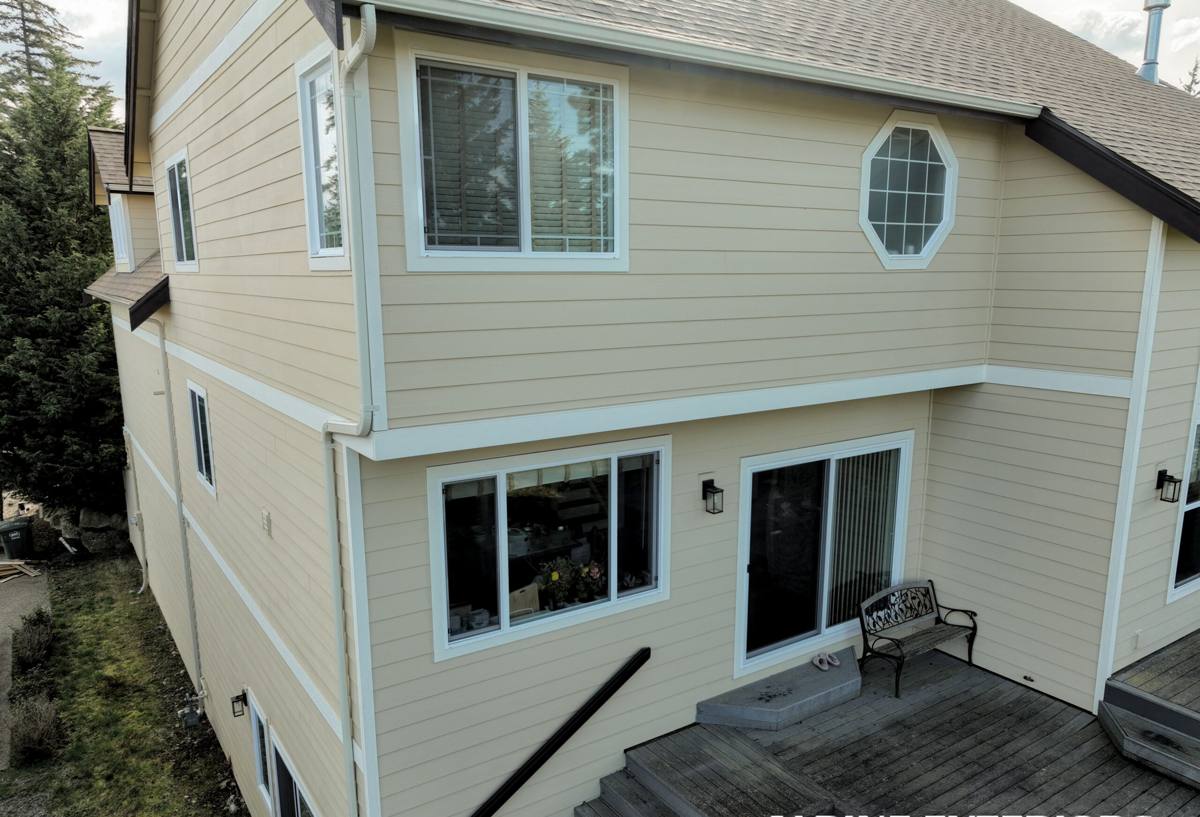
How the Climate Actually Damages a Deck
Salt Air and Metal Fasteners
Salt-laden air accelerates corrosion in nails, screws, joist hangers, and railing brackets. Corroded fasteners lose grip strength long before they look obviously rusted, which means a deck can feel solid underfoot while its structural connections are quietly weakening. This is one of the most common issues we find on older decks near the water in this area.
Driving Rain and Trapped Moisture
Rain that comes in at an angle, common with the weather patterns through the islands, gets pushed under railings, around post bases, and into any gap where boards meet framing. Once moisture gets past the surface of the wood, it doesn't dry out quickly in our climate. That's what leads to rot starting from the inside of a board or post rather than the outside.
Moss, Algae, and Surface Breakdown
A long moss season means more months where a deck surface stays damp and shaded. Moss holds water like a sponge, and its root structure works into the wood grain or into the texture of composite decking, gradually breaking down the surface and making the deck slick and unsafe to walk on.
Signs Your Deck Needs Repair
Most deck problems are visible or detectable well before they become a safety issue, if you know what to check. Walk your deck and look for these signs:
- Boards that feel spongy, bouncy, or soft when you step on them
- Visible cracking, splitting, or cupping in individual deck boards
- Rust staining around fasteners or streaking down from metal connectors
- Railings or posts that wobble or flex when pushed
- Green or black growth that doesn't scrub off easily, especially in shaded corners
- Gaps opening up where the deck meets the house (the ledger board connection)
- Stair stringers that feel uneven or steps that have started to sag
- A musty smell coming from underneath the deck
Any one of these on its own might be minor. Several at once, or anything involving the ledger board connection to the house, is worth having looked at before it's used again for gatherings or heavy furniture.
What a Proper Deck Repair Actually Involves
Deck repair isn't just swapping out the board that looks worst. A repair done right starts with understanding why that board failed, because the same cause is often affecting the boards and framing around it.
Inspecting the Structure First
Before replacing anything visible, we check the framing underneath: joists, beams, the ledger board attachment, and post footings. Surface boards can look fine while the structure supporting them has already lost integrity from years of moisture exposure. This is especially important on decks that were built before current fastener and flashing standards were common practice.
Addressing the Ledger Board Connection
The ledger board, where the deck attaches to the house, is the single most important structural point on most decks and the place most likely to trap water against the house framing if it's not flashed correctly. Repairs that ignore this connection and only patch visible surface damage are treating a symptom, not the cause.
Replacing Boards, Framing, and Hardware Correctly
Where wood has actually failed, it gets replaced with materials suited to our climate, and fasteners get upgraded to corrosion-resistant hardware rated for coastal and marine exposure. Reusing standard fasteners in a salt-air environment is a common shortcut that leads to the same failure returning within a few years.
Railings and Stairs
Railings take constant hand pressure and lateral force, and they're often the first thing to loosen as posts and connections weather. A repair isn't complete if the surface looks refinished but the railing system underneath is still marginal.
Repair or Replace? What Actually Drives That Decision
Homeowners often assume any visible damage means a full deck replacement. In our experience, most decks in Friday Harbor can be repaired if the framing is sound, even when the surface looks rough. The table below covers the factors that actually determine which direction makes sense.
| Factor | Favors Repair | Favors Replacement |
|---|---|---|
| Framing condition | Joists and beams are solid, damage is limited to surface boards | Widespread rot or soft spots in the structural framing |
| Age of the deck | Under 15-20 years, built to a reasonable standard | Older deck nearing the end of its practical service life |
| Ledger board condition | Properly flashed, no signs of moisture intrusion into the house | Poor or missing flashing with active water damage at the house |
| Extent of damage | Isolated boards, railings, or stair components | Damage spread across most of the deck surface and substructure |
| Cost | Generally a modest expense for isolated board or hardware replacement | Structural rebuilds or full resurfacing cost significantly more, but can extend deck life for decades |
An honest inspection is the only way to know which category a given deck actually falls into. We'll tell you plainly if repair is the right call, and just as plainly if it isn't worth putting more money into a structure that's past the point of patching.
Our Deck Repair Process
- On-site inspection — we check the surface, framing, ledger connection, posts, footings, and railings, and explain what we find in plain terms.
- Written scope and estimate — you get a clear breakdown of what needs repair, what's optional, and what it will cost, with no pressure to add extras you don't need.
- Structural repairs first — any framing, ledger, or footing issues get addressed before cosmetic work, since surface repairs on a compromised structure don't hold.
- Board, railing, and hardware replacement — damaged components are replaced with materials and fasteners suited to the marine climate here.
- Final check and cleanup — we walk the deck with you, confirm everything is solid, and leave the site clean.
Decking Materials We Work With
Wood Decking
Pressure-treated and naturally rot-resistant wood species remain a solid choice for repairs, particularly when matching existing decking or working within a homeowner's budget. Wood requires more regular maintenance in this climate, but it's straightforward to repair board by board without replacing an entire section.
Composite Decking
Composite materials resist moisture absorption and don't require staining, which appeals to homeowners who want less upkeep against the moss and algae that our wet season encourages. Composite repairs require matching the specific product profile and color, so we identify the existing material carefully before ordering replacement boards.
Railings and Fasteners
Regardless of decking material, we favor corrosion-resistant fastener systems and railing hardware built for coastal exposure. This is one area where cutting corners doesn't show up as a problem for a year or two, but it always shows up eventually in a salt-air environment.
Why Hiring a Crew That Already Works Friday Harbor Matters
Deck repair here isn't the same trade as deck repair in a dry inland climate, and it isn't identical to deck work in a wetter but less salt-exposed coastal area either. A crew that regularly works San Juan County has already seen how ledger boards fail here, which fastener grades actually hold up, and how much moss and algae buildup is normal wear versus a sign of a bigger moisture problem underneath. That local pattern recognition shortens the inspection, sharpens the estimate, and avoids repairs that look fine for a season and then fail again.
Scheduling and materials also work differently on the islands. Ferry-dependent logistics mean a contractor who plans deliveries and crew time around that reality gets your repair done in one efficient visit rather than a drawn-out back-and-forth.
Keeping a Repaired Deck in Good Shape
A repair holds longer with a small amount of seasonal attention:
- Sweep off standing debris and needles regularly, especially in shaded areas prone to moss
- Clean visible moss or algae promptly rather than letting it establish
- Check railings and stair connections for looseness once or twice a year
- Reseal or restain wood decking on the schedule appropriate to the product and exposure
- Keep gutters and downspouts clear so runoff isn't draining directly onto the deck
If you're noticing soft boards, loose railings, or persistent moss on a Friday Harbor deck, we're happy to take a look and give you a straightforward, no-pressure estimate on what it would take to fix it right. Use the form below to get in touch.