 Orcas Island Siding
 Building Decks That Hold Up on Orcas Island
Friday Harbor homeowners ask for a lot out of a deck: a place to watch the water, host family, and just sit outside without thinking about maintenance every other weekend. The problem is that San Juan County's marine climate is hard on outdoor structures. Salt-laden air off the water accelerates corrosion on fasteners and hardware. Driving rain during fall and winter storms gets under poorly flashed ledger boards and ages joists from the inside. And the long, damp moss season here means anything that traps moisture against wood or composite decking becomes a problem fast. A deck built the way it might be built inland doesn't last the way it should out here.
This page covers what a deck built for Friday Harbor actually needs, what a correct build involves from the ground up, and how we approach the work when we're on site.
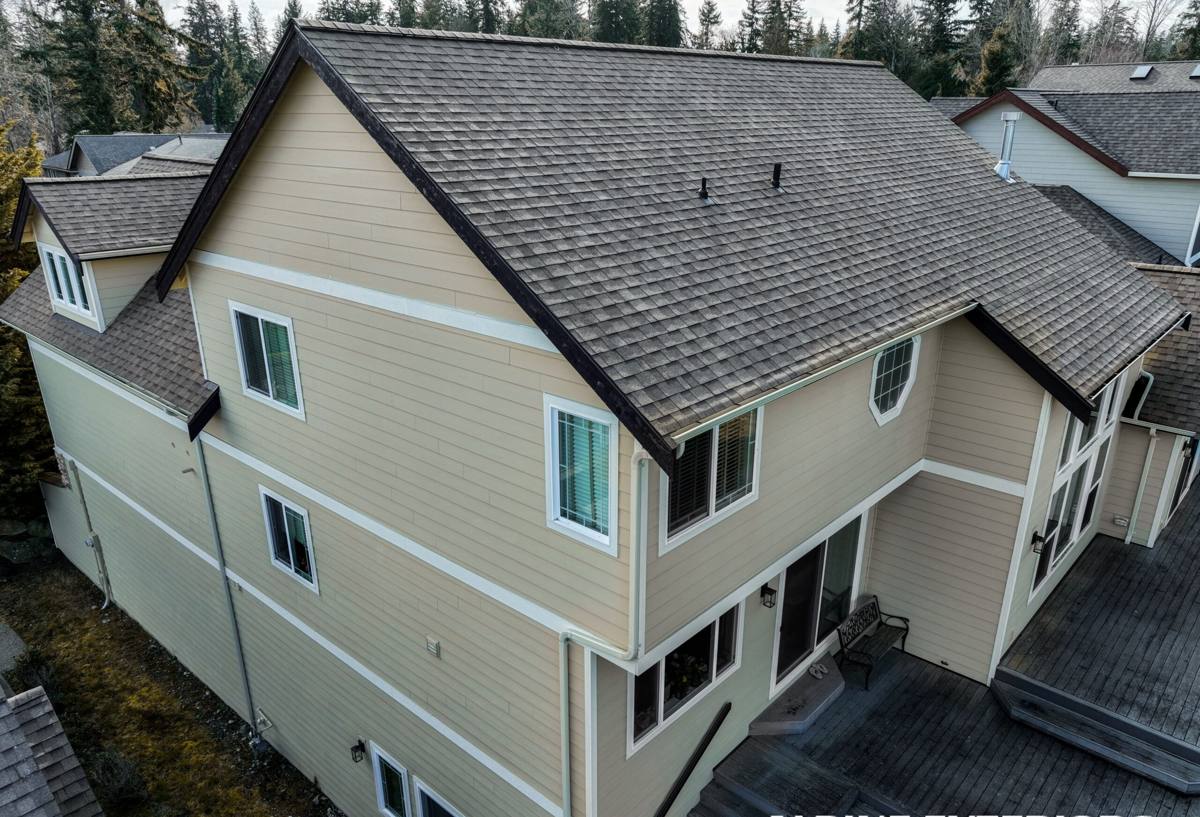
What Friday Harbor's Climate Does to a Deck
Salt Air and Metal Fatigue
Proximity to the water means airborne salt settles on every exposed surface, including fasteners, joist hangers, post bases, and railing hardware. Standard galvanized coatings can wear thin over years of this exposure, leading to rust streaks, weakened connections, and hardware that seizes up or fails well before the decking itself shows its age.
Driving Rain and Ledger Rot
Storms coming off the water don't fall straight down — wind-driven rain gets pushed sideways into ledger connections, stair stringers, and any spot where the deck meets the house. If flashing and water management weren't done correctly the first time, moisture works its way behind the ledger board and into the rim joist, which is one of the most expensive things to repair on a deck because it usually means partial demolition to fix.
Moss, Shade, and Trapped Moisture
Orcas Island's tree cover and long damp season mean moss and algae growth on decking is a near-constant maintenance issue, especially on the north side of a house or under heavy canopy. Moss doesn't just look bad — it holds moisture against the board surface, which shortens the life of wood decking and can void warranties on some composite products if buildup isn't cleared.
What a Correct Deck Build Involves
A deck is only as good as what's underneath it. Here's what we consider non-negotiable on every build, regardless of the decking material chosen on top:
- Proper ledger board flashing with a water-resistant barrier behind it, sealed at every fastener penetration
- Corrosion-resistant structural hardware rated for coastal or wet-service exposure, not standard interior-grade fasteners
- Joist spacing and beam sizing calculated for the actual load — furniture, hot tubs, and gathering space all change the math
- Footings set below frost depth and sized to the soil conditions on your lot
- Proper slope away from the house so water sheds instead of pooling near the ledger
- Ventilation underneath the deck so moisture doesn't sit trapped against joists
Skipping any one of these doesn't show up as a problem on day one. It shows up three, five, or ten years in, usually as soft framing, rust bleed, or a deck that feels less solid than it used to.
Choosing Decking Material for This Climate
There's no single "best" decking material — there's a best fit for how you use the space, how much upkeep you want to do, and your budget. Here's how the common options compare for a Friday Harbor property:
| Material | Moisture & Moss Behavior | Maintenance | Typical Lifespan |
|---|---|---|---|
| Pressure-treated wood | Absorbs moisture; needs sealing to resist moss and rot | Annual cleaning and re-sealing recommended | 10-15 years with upkeep |
| Cedar | Naturally rot-resistant but still needs periodic treatment in this climate | Moderate — cleaning and oil/stain every 1-2 years | 15-20 years with care |
| Composite decking | Sheds moisture well; can still grow surface moss in deep shade if not cleaned | Low — periodic washing, no sealing or staining | 25-30 years, often warrantied |
| PVC/capped polymer | Fully moisture-resistant surface, best moss resistance | Lowest — occasional washing only | 25-30+ years, often warrantied |
We'll talk through these trade-offs honestly during your estimate. If you want the lowest-maintenance option and don't mind the higher upfront cost, composite or capped polymer decking is generally the better long-term fit for a shaded, damp lot near the water. If you prefer the look and feel of real wood and are willing to keep up with sealing, cedar or pressure-treated lumber can still perform well as long as it's maintained.
Framing and Substructure: Where Longevity Actually Comes From
Most of what determines whether a deck lasts 10 years or 30 happens below the decking boards, where nobody looks after the project is done. We use corrosion-resistant connectors and fasteners rated for coastal exposure, not standard interior hardware, because the cost difference is small relative to what it costs to repair a rusted-out ledger connection or a failed post base years later. We also pay close attention to footing depth and post placement, since soil conditions on Orcas Island lots can vary from rocky and well-draining to heavier, moisture-retentive soil depending on where you are on the island.
Railings and Stairs
Railings and stair components see more direct weather exposure than the deck surface itself, since they're vertical and catch driving rain directly. We use the same corrosion-resistant hardware standard throughout, and we pay attention to baluster spacing and rail height for code compliance as well as everyday safety, especially on elevated decks with a view worth walking toward.
Permitting and Code in San Juan County
Deck construction in San Juan County typically requires a building permit, especially for any deck attached to the house or elevated more than a modest height off grade. Permit requirements can also touch on setback rules, which matter more on smaller island lots and anywhere near shoreline jurisdiction. We handle permitting as part of the project so you're not the one tracking down requirements or scheduling inspections — we know the process because we've been through it on other island projects.
Our Process for a Friday Harbor Deck Project
- On-site assessment — we look at your existing structure (if replacing a deck), your soil, drainage, sun exposure, and how you plan to use the space.
- Design and material selection — we walk through decking material options, layout, and railing choices based on your budget and maintenance preferences.
- Permitting — we prepare and submit what's needed for San Juan County approval before work begins.
- Demolition (if applicable) — old decking and framing removed, with an honest look at what condition the ledger and any existing footings are in.
- Framing and structural work — ledger flashing, joists, beams, and footings built to hold up in this climate, not just to pass minimum code.
- Decking, railing, and finish work — installation of your chosen material with attention to fastener spacing, expansion gaps, and drainage.
- Final walkthrough — we go over maintenance expectations specific to your material choice so you know what upkeep, if any, to expect.
Maintenance: What to Expect After the Build
Even a well-built deck needs some care in this climate. What that looks like depends heavily on the material:
- Wood decks benefit from a yearly wash and periodic re-sealing to resist moss and moisture intrusion
- Composite and PVC decks need far less upkeep but still benefit from periodic washing in shaded areas prone to algae or moss
- Gaps between boards should stay clear of debris so water and air can move underneath
- Railings and stair hardware are worth a visual check each year for corrosion, especially in more exposed, water-facing locations
- Overhanging branches or heavy shade cover should be trimmed back where practical to reduce moss buildup
Why It Matters to Hire a Crew That Already Works This Island
Building a deck on Orcas Island isn't the same as building one on the mainland, and it isn't the same as building one somewhere dry. A crew that hasn't worked in a marine climate can build something that looks fine on completion day and still make choices — the wrong fastener grade, inadequate flashing, decking installed without the right gap for wet-weather expansion — that cause real problems within a few years. We've done this work on Orcas Island and understand what the salt air, rain patterns, and moss season actually do to a structure over time, and we build accordingly from the framing up.
Local experience also matters for the practical side of a project: knowing San Juan County's permitting process, understanding ferry-dependent material and scheduling logistics, and being available if something needs a follow-up visit after the build is done.
Get a Straightforward Estimate
If you're planning a new deck or need to replace one that's past its prime, we're happy to come take a look, talk through material options honestly, and give you a clear estimate — no pressure, no upsell. Use the form below to get started.