 Orcas Island Siding
 Board & Batten Siding in Friday Harbor: Built for Island Weather
Board and batten has become one of the most requested siding profiles on the San Juan Islands, and it's easy to see why. The vertical lines suit the farmhouse, craftsman, and modern-cottage looks that dominate Friday Harbor's residential streets and the waterfront properties around it. But the look is only half the story. Out here, siding has to survive salt-laden air blowing off the water, long stretches of driving rain, and a moss season that can run from fall through spring. A board and batten install that isn't specified and detailed for this climate will show problems within a few years — cupping boards, soft battens, streaking, and moss creeping up from the bottom courses. This page covers what a correct board and batten job looks like for a Friday Harbor home, and why we install it in James Hardie fiber cement only.
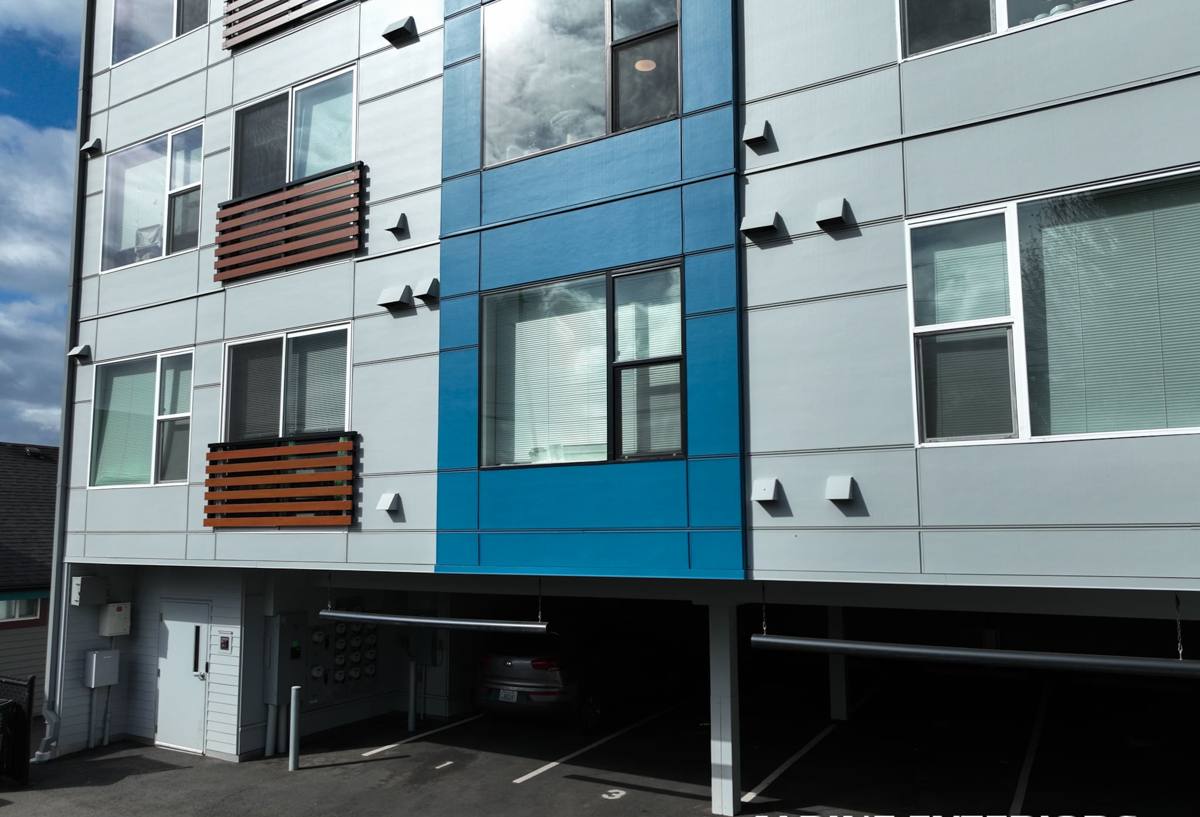
Why the Islands Are Tougher on Siding Than the Mainland
San Juan County sits in a marine environment, and Friday Harbor's exposure is a mix of factors that don't all show up together on the mainland side of Puget Sound.
Salt Air and Moisture Cycling
Homes near the water take on airborne salt that settles into every crevice of a siding system — including the narrow gaps between boards and battens where board and batten siding lives or dies. Salt holds moisture against the surface longer than plain rain does, which accelerates paint breakdown and, on wood-based products, accelerates rot at the exact seams where battens overlap the field boards.
Driving Rain
Wind off the water doesn't just drop rain straight down — it drives it sideways into wall assemblies, testing every seam, fastener, and joint. Board and batten's vertical battens create dozens of linear feet of seams per wall, and each one is a place where a poorly caulked or poorly flashed detail lets water in behind the cladding.
Moss and Shade
Tree cover and the region's damp, mild winters mean moss gets a long runway to establish itself, especially on north-facing walls and anywhere siding sits close to grade or landscaping. Moss holds water against the surface and its root structure can work into soft or degraded materials over time.
What a Correct Board & Batten Job Requires Here
Board and batten looks simple from the street — vertical boards, thin battens covering the seams — but the profile has more failure points than lap siding if it's not installed with island conditions in mind.
Material Choice
We install James Hardie fiber cement board and batten exclusively. Fiber cement doesn't absorb water the way wood-based products do, so it doesn't swell, cup, or rot at the seams the way primed spruce or engineered wood can when moisture gets trapped behind a batten. It's also non-combustible, which matters on islands where wildfire risk and insurance underwriting are both live concerns for homeowners.
Water Management Behind the Cladding
Every board and batten wall needs a drainage plane — a weather-resistant barrier and, ideally, a rainscreen gap — behind the siding so any moisture that does get past the battens has somewhere to go besides straight into the sheathing. This is not optional in a driving-rain climate, and it's one of the first things we check on any tear-off.
Fastening and Batten Spacing
Battens need to be fastened into framing, not just into sheathing, and spaced to allow the field boards room to move seasonally without stressing the caulk lines. Manufacturer nailing schedules exist for a reason — skipping them is one of the most common causes of early failure we see when we're asked to look at a struggling board and batten wall.
Caulking and Sealant Selection
Not every exterior caulk holds up to UV and salt exposure. We use sealants rated for the exposure and reapply at manufacturer-specified intervals as part of a maintenance plan, not as an afterthought.
Trim, Corners, and Bottom Clearance
The bottom of a board and batten wall is where moss and rot problems start. Proper clearance from grade, correct flashing at the base, and factory-finished trim at inside and outside corners all keep water from wicking up into the field boards.
Our Process for a Friday Harbor Board & Batten Project
- On-site assessment. We look at your home's orientation, tree cover, drainage, and existing wall condition — not just the siding you see, but what's likely happening behind it.
- Tear-off and sheathing inspection. Old siding comes off and we check the sheathing for rot or soft spots before anything new goes up. Problems found here get addressed, not covered over.
- Water-resistive barrier and drainage plane. We install a proper WRB and, where the wall assembly calls for it, a rainscreen gap so the wall can dry.
- James Hardie board and batten installation. Boards and battens go up to manufacturer specification — fastening pattern, spacing, and flashing details all follow the Hardie install guide for our climate zone.
- Trim, caulk, and finish detailing. Corners, window and door trim, and base details get finished with attention to the seams that take the most weather.
- Final walkthrough. We go over the finished work and what maintenance, if any, it'll need going forward.
Why We Only Install James Hardie
We get asked why we don't offer vinyl, LP SmartSide, primed spruce, or cedar board and batten alongside Hardie. The honest answer is that we've standardized on one product because it performs consistently in this exact climate, and we'd rather be excellent at one system than mediocre across five.
- Fiber cement doesn't swell or rot at seams the way wood-based and engineered-wood products can when moisture gets behind a batten.
- It's non-combustible, which matters for both peace of mind and insurance considerations on the islands.
- ColorPlus factory finish holds color and resists the fading that comes from years of sun and salt exposure, without the homeowner needing to repaint on the mainland's typical schedule.
- Hardie's HZ5 product line is engineered for the Pacific Northwest's moisture and freeze-thaw pattern, not a generic national spec.
- The warranty is transferable and backed by a manufacturer with decades of fiber cement manufacturing behind it — not a startup material with a short track record.
Wood-look products like primed spruce or cedar can look beautiful on day one, but they ask the homeowner to keep up with painting, caulking, and moisture inspection on a tighter schedule than most people realize when they buy. Vinyl board and batten is low-maintenance in a different way but can warp or fade with long UV exposure and doesn't offer the same fire performance. We're not saying these products are junk — they have real uses elsewhere. We're saying that for an island home taking on salt air and driving rain year after year, we don't think they're the right long-term bet, and we don't want to install something we'd have to caveat.
Cost Factors for Board & Batten in This Climate
Every home is different, but these are the factors that actually move the price on a Friday Harbor board and batten project. We'll give you real numbers after a walkthrough — broad ranges below are for planning purposes only.
| Factor | Why It Matters Here |
|---|---|
| Existing wall condition | Rot or moisture damage found under old siding adds sheathing repair before new cladding can go up |
| Drainage plane / rainscreen | Homes without one need it added, which is labor beyond just hanging new boards |
| Home height and access | Multi-story or steep-lot homes on the islands often need scaffolding or lift access, which affects labor time |
| Trim and detail complexity | Corners, window trim, and transitions between siding profiles add finish labor |
| Material delivery | Ferry-dependent delivery logistics can affect scheduling and, in some cases, material costs versus mainland jobs |
| Color and finish selection | ColorPlus factory-finished boards versus field-painted options affect both cost and long-term maintenance |
What to Check Before You Hire Anyone for This Work
- Do they carry current Washington contractor licensing and insurance, and will they show you proof without being asked twice?
- Have they installed board and batten specifically — not just lap siding — in a marine or high-rain environment?
- Do they talk about drainage planes and rainscreen gaps unprompted, or only when you ask?
- Are they James Hardie certified, and can they explain which HZ product line fits your home's exposure?
- Do they inspect and address sheathing condition during tear-off, or just cover over what's there?
- Can they explain their fastening schedule and batten spacing, not just show you a color sample?
- Do they have experience coordinating material delivery and scheduling around island ferry logistics?
Working the Islands Changes How You Build
A crew that only occasionally works San Juan County treats every project like a mainland job with a ferry ride tacked on. That shows up in small but real ways — underestimating how much moss pressure a north wall will see, not accounting for salt exposure in fastener or sealant choice, or scheduling material delivery without building in ferry buffer time. Crews who work Friday Harbor and the surrounding islands regularly build those realities into the plan from the start, which means fewer surprises mid-project and a wall assembly that's actually specified for where it sits, not for a generic climate zone.
If you're weighing board and batten for a home in the Friday Harbor area, we're happy to walk the property, look at what's there now, and give you a straight assessment of what it would take to do it right — no pressure, no obligation. Reach out below for a free estimate.