 Orcas Island Siding
 Windows Built for Lopez Village's Marine Climate
Lopez Village sits close enough to the water that salt air is part of daily life, not an occasional nuisance. Combine that with driving rain off the Strait and a long, damp moss season that can stretch from fall through spring, and you have one of the tougher environments in San Juan County for exterior building materials. Windows take the brunt of it — they're penetrations in the building envelope, they face weather directly, and on older homes in and around the village they're often the single biggest source of heat loss and moisture problems in the house.
This page is about one job done right: replacing or upgrading windows on Lopez Village homes with products and installation methods suited to this specific climate, not a generic mainland approach that happens to get shipped over on the ferry.
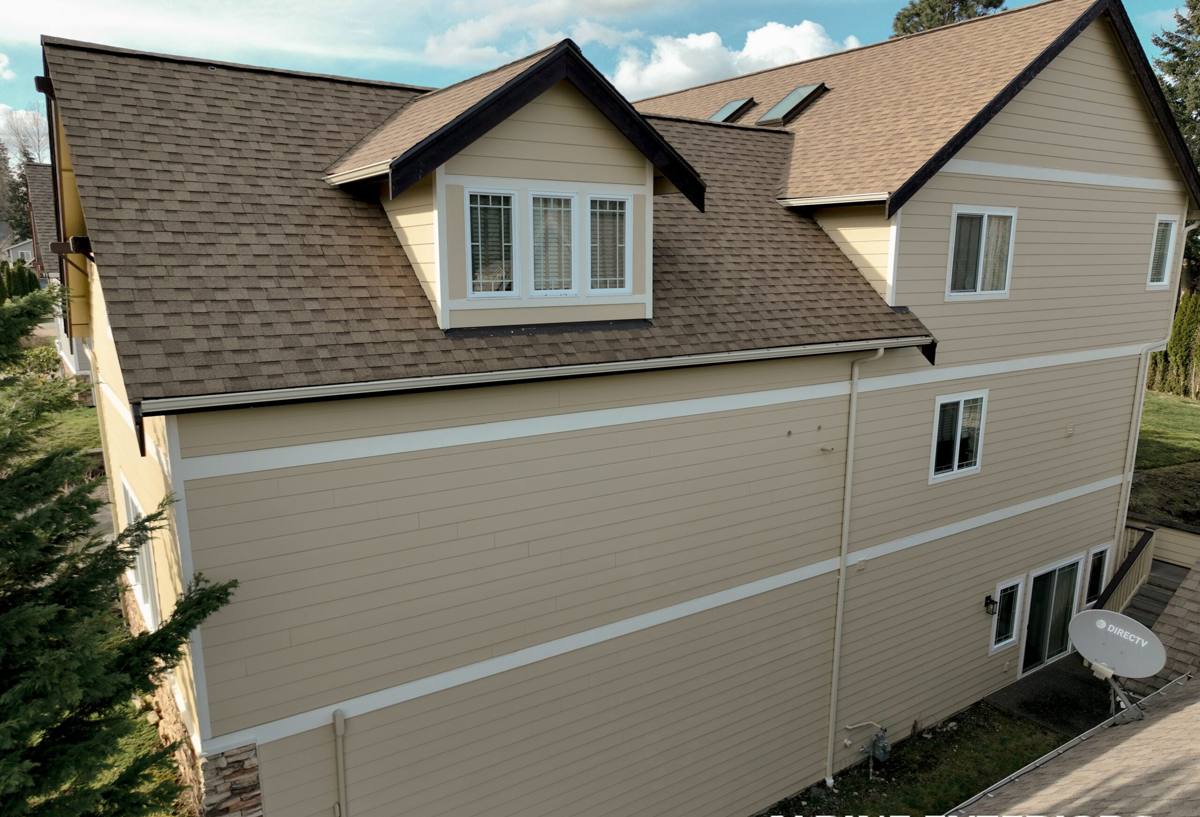
What Salt Air, Driving Rain, and Moss Season Actually Do
Each of these three conditions attacks windows in a different way, and understanding the mechanism matters when you're choosing what to install.
Salt Air
Airborne salt is corrosive to unprotected metal hardware — hinges, locks, balance mechanisms, and some aluminum components — and it accelerates the breakdown of certain finishes and sealants over time. It doesn't destroy a window overnight, but on a home a few blocks from the water, salt exposure shortens the working life of hardware and finishes that weren't specified for a marine environment.
Driving Rain
Wind-driven rain doesn't just fall on a window, it gets pushed sideways and upward into any gap in the flashing or trim. On Lopez, storms often come with real wind behind them, which means water testing and proper flashing detail around the window opening matter more here than they would on a calmer inland site. A window that's watertight in a still rain can still leak in a 30-mph gust.
Moss Season
The long wet season keeps north-facing and shaded walls damp for extended stretches, and moss and algae will colonize any surface that stays damp long enough — including window sills, trim, and the caulk lines around glazing. Trapped moisture behind trim or under failed caulking is what eventually leads to wood rot at the sill and jamb, which is one of the most common hidden problems we find when we pull old windows on the island.
What "Energy-Efficient" Should Mean in This Climate
Energy efficiency on Orcas Island isn't only about keeping heat in during winter — it's about the whole assembly resisting moisture intrusion, condensation, and air leakage year-round. A window can carry a good efficiency rating on paper and still perform poorly here if it's not suited to a wet, salt-exposed marine climate.
- U-factor — measures heat loss; lower is better for our cool, damp winters
- Condensation resistance — a real concern given the humidity swings between a heated interior and a cold, wet exterior
- Air infiltration rating — how much air leaks through the frame under wind pressure, which matters more on exposed lots
- Glazing (double vs. triple pane, low-E coatings) — affects both comfort and how much condensation forms on interior glass
- Frame and hardware corrosion resistance — often overlooked, but critical this close to salt water
Frame Material: What Holds Up Near the Water
We don't push one frame material as universally "best" — each has real trade-offs, and the right choice depends on the home, its exposure, and the owner's maintenance appetite. Here's an honest comparison for a Lopez Village setting.
| Frame Material | Salt Air / Moisture Performance | Maintenance | Notes |
|---|---|---|---|
| Vinyl | Good — won't corrode or rot | Low | Reliable, budget-friendly; quality varies a lot between manufacturers |
| Fiberglass | Very good — dimensionally stable, resists moisture and corrosion | Low | Higher upfront cost, holds up well under thermal and humidity swings |
| Wood-clad | Fair — clad exterior protects the wood, but any breach lets moisture in | Moderate | Best appearance for period homes; depends entirely on flawless installation and sealing |
| Aluminum | Fair to poor unless marine-grade — prone to corrosion and condensation | Moderate to high | We generally steer clients away from standard aluminum this close to salt water |
For most Lopez Village homes, we lean toward vinyl or fiberglass for the balance of moisture resistance and low upkeep, and reserve wood-clad for homes where matching a historic or architectural look outweighs the added maintenance commitment. That's a judgment call we make with the homeowner, not a one-size answer.
Signs Your Windows Are Losing the Fight
A lot of window problems on Lopez are gradual — you get used to a draft or a sticky sash and stop noticing it. Walk your home's exterior and interior with this list in mind:
- Soft or discolored wood at the sill or bottom corners of the frame
- Moss, algae, or persistent black staining on trim or sills
- Fogging or moisture trapped between panes (a sign the seal has failed)
- Noticeable draft near the frame on windy days
- Hardware that's stiff, corroded, or difficult to lock
- Paint or finish peeling specifically around the window opening, not the wider wall
- Condensation forming on interior glass regularly through the damp months
- Visible daylight or gaps around the frame from outside
Any one of these is worth a look. Several together usually mean the window and possibly the surrounding wood are past the point of caulk-and-paint fixes.
How We Approach the Installation
The window unit itself is only part of the job — how it's installed determines whether it actually performs in driving rain and salt air. Our process for Lopez Village homes includes:
- Assessment of the existing opening — checking for hidden rot, deteriorated flashing, or past water intrusion before anything is ordered
- Proper flashing and weather barrier detail — including head flashing designed to shed wind-driven rain, not just gravity-fed water
- Sill pan installation — creating a drainage path for any water that does get past the primary seal, which is standard practice we treat as non-negotiable in this climate
- Correct sealant selection — using sealants rated for marine/coastal exposure rather than a generic caulk that breaks down faster under salt and UV
- Hardware and fastener choice — corrosion-resistant fasteners and hardware appropriate for salt air exposure
- Final water testing where conditions allow — confirming the installation sheds water before we consider the job finished
Skipping any one of these steps is how a brand-new window ends up with rot behind the trim in three or four years. It's the installation detail, more than the window brand, that decides whether you get 20+ years out of a window on Lopez versus a callback in year five.
Why Local Experience on Orcas Island Matters
Working on the islands isn't the same as working on the mainland, and it shows up in ways that affect your project directly:
- Logistics — materials, custom window orders, and crews all move by ferry. Scheduling has to account for sailing times and occasional weather cancellations, which a mainland-based crew unfamiliar with the run can underestimate.
- Weather windows — timing a window replacement around Lopez's wet season takes local judgment; open wall cavities left exposed to a surprise squall cause real damage.
- Permitting — San Juan County has its own permitting process, and knowing what triggers a permit locally (versus mainland assumptions) avoids delays.
- Building stock familiarity — Lopez Village has a mix of older cottages, converted cabins, and newer construction, each with different framing quirks that affect how a replacement window is best fitted.
A crew that already works this island isn't guessing at any of the above — it's routine.
What Affects the Cost
Every home is different, but these are the main variables that move the price of a window project up or down:
| Factor | Why It Matters |
|---|---|
| Number and size of openings | Straightforward volume driver |
| Frame material chosen | Fiberglass and quality wood-clad cost more than standard vinyl |
| Extent of hidden rot or damage | Repairing rotted framing behind an old window adds labor beyond the window install itself |
| Access and site conditions | Upper stories, tight lots, or difficult staging areas add time |
| Custom sizes or shapes | Non-standard openings common in older homes require custom orders, which cost more and take longer to arrive |
| Full replacement vs. retrofit | A full frame replacement addresses rot and flashing properly; a retrofit insert is faster and cheaper but only appropriate when the existing frame is sound |
We give straight numbers once we've actually looked at the openings — broad estimates without an on-site look tend to be wrong in one direction or the other, and we'd rather be accurate than fast.
Living With Your Windows After Installation
Even a well-installed, well-chosen window benefits from a little seasonal attention in this climate. A quick rinse of salt residue off frames and glass a few times a year, keeping gutters and nearby foliage clear so water and debris don't sit against sills, and a periodic check of exterior caulk lines will meaningfully extend the life of the installation. None of this is heavy maintenance — it's the kind of five-minute check that catches a small problem before moss season turns it into a bigger one.
If your Lopez Village home's windows are drafty, fogged, showing soft wood, or you're planning ahead for a remodel, we're happy to take a look and talk through honest options for your specific home. Request a free, no-pressure estimate using the form below.