 Orcas Island Siding
 Why Doe Bay Homes Need a Different Approach to Windows
Doe Bay sits on the exposed eastern shoulder of Orcas Island, out where the wind comes straight off the water and the tree canopy thins near the shoreline. Homes here take a different kind of weather than a house tucked into a sheltered cove or up on higher ground closer to Eastsound. Salt-laden air corrodes hardware and finishes faster. Wind-driven rain doesn't just fall on glass — it gets pushed sideways into frame joints and sill gaps under pressure. And the long, damp San Juan County shoulder seasons keep everything from siding to window frames wet for weeks at a time, which is exactly the environment moss and mildew like best.
None of that is a reason to avoid big windows or water views. It's a reason to get the window itself, and the installation around it, right the first time. A window that's a great fit for a dry inland climate can underperform badly out here if the frame material, glazing package, and flashing detail weren't chosen with Doe Bay's specific exposure in mind.
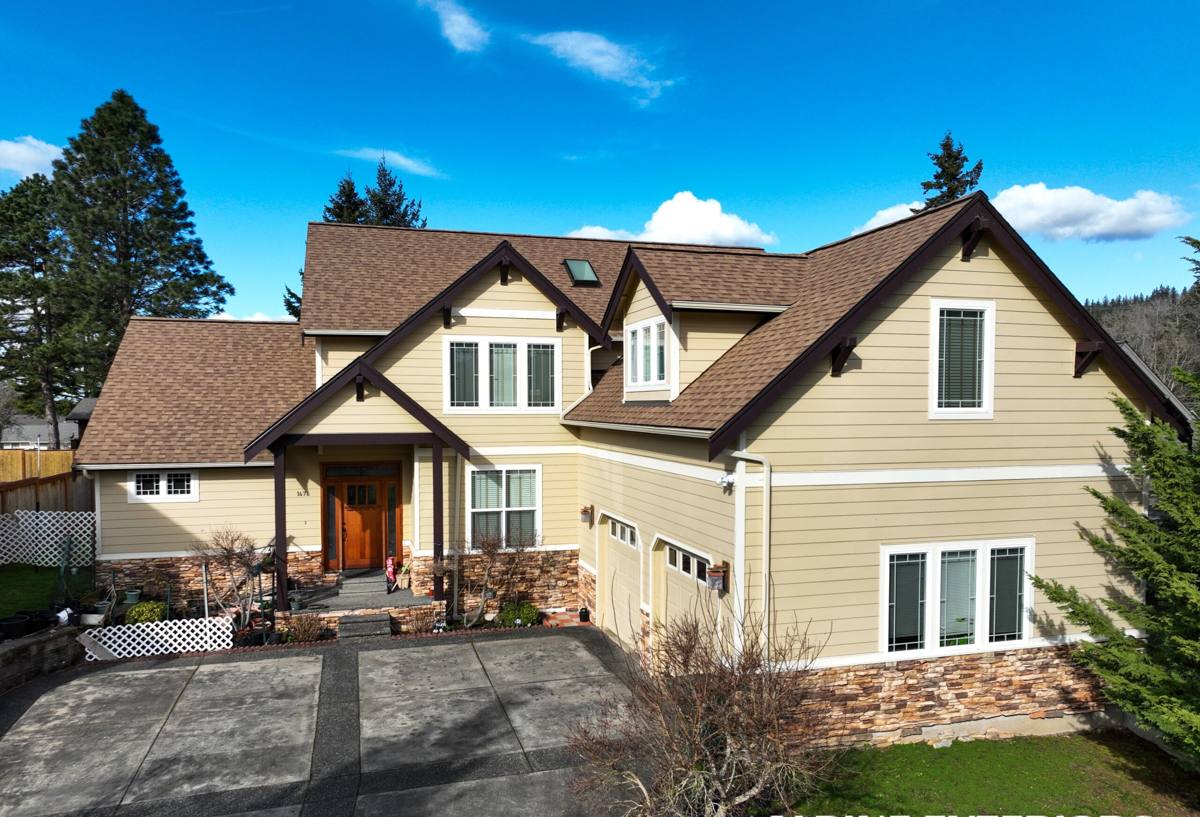
What "Energy-Efficient" Actually Means on Orcas Island
Energy efficiency for a window has two separate jobs, and both matter differently depending on where a house sits on the island.
Thermal Performance
This is the part most homeowners think of first — how well the window keeps conditioned air inside and outside air outside. On Orcas Island, winters are mild but wet and windy, and a lot of homes rely on heat pumps, wood stoves, or baseboard electric. A drafty or poorly sealed window forces that system to work harder, and you feel it as cold spots near the glass on windy nights. Low U-factor glass and a tight, well-air-sealed frame reduce that load year-round, not just in the coldest months.
Moisture and Weather Resistance
This is the part that gets overlooked, and it's arguably more important in Doe Bay than the R-value on the spec sheet. A window's ability to shed wind-driven rain, resist salt corrosion on hardware, and let any moisture that does get in drain back out is what determines whether it's still performing well in ten years. A window with excellent lab-tested efficiency numbers but a weak drainage design or poor flashing integration can still lead to rot, mold, or failed seals in a high-exposure spot like Doe Bay. We treat both halves — thermal and moisture — as equally non-negotiable.
Frame Materials: What Holds Up Near Salt Air
Frame material choice matters more here than in most inland parts of the county. Here's how the common options actually behave under Doe Bay conditions, in plain terms:
| Material | How it handles salt air & moisture | Maintenance | Typical fit for Doe Bay |
|---|---|---|---|
| Vinyl | Resists corrosion well; won't rust or pit | Low — occasional cleaning | Strong all-around choice for value-focused efficiency upgrades |
| Fiberglass | Excellent — very stable, doesn't expand/contract much with temperature swings | Low | Best long-term performer for exposed, wind-driven-rain locations |
| Aluminum-clad wood | Good exterior protection, but interior wood core still needs the exterior seal to stay intact | Moderate — watch for seal failure at joints | Good where a wood interior look is wanted, with disciplined maintenance |
| Bare wood | Poor near salt air without constant upkeep — finish breaks down, moisture gets in at joints | High | Generally not our first recommendation this close to the water |
| Uncoated aluminum | Prone to pitting and corrosion in salt air over time | Moderate to high | We steer clients away from this in direct shoreline exposure |
We're not against wood-look windows — plenty of Doe Bay homes want that aesthetic, and aluminum-clad options can deliver it. The point is going in with eyes open about what upkeep it demands versus a fiberglass or vinyl frame that shrugs off salt air with far less attention.
Glazing: Getting the Right Package for This Exposure
Double-pane, low-E glass with an argon or krypton gas fill is the baseline we work from for most Orcas Island homes. From there, a few things are worth deciding deliberately rather than defaulting:
- Low-E coating orientation — matters for how much solar heat gain you want; a west- or south-facing water view window in Doe Bay can gain a lot of unwanted heat and glare in summer if this isn't tuned correctly.
- Triple-pane vs. double-pane — triple-pane adds thermal performance and sound dampening (useful near wind-exposed sites) but adds weight and cost; we'll tell you honestly whether it's worth it for a specific opening or if a well-installed double-pane unit gets you 90% of the benefit.
- Impact-resistant or laminated glass — worth discussing for the most wind-exposed elevations, where storm-driven debris is a real if infrequent risk.
- Warm-edge spacers — the material separating the glass panes affects both efficiency and long-term seal life; in a damp climate, spacer failure shows up as fogging between panes years earlier than it should.
Installation Is Where Most Window Problems Actually Start
We say this to every Doe Bay homeowner because it's true across the trade, not just our opinion: the window unit itself is rarely why a window fails early. It's the installation — specifically the flashing, sealing, and integration with the surrounding wall and siding — that determines whether wind-driven rain stays out or finds its way into the wall cavity.
What a Correct Installation Includes
- Removing the old window and inspecting the rough opening and sheathing underneath for hidden rot or moisture damage before anything new goes in.
- Installing a properly lapped weather-resistive barrier and sill pan flashing so any water that reaches the opening drains outward, not into the wall.
- Setting the window plumb, level, and square, with shims that don't restrict the frame's designed drainage paths.
- Sealing with the correct sequence of flashing tape and sealant — house wrap over the top flange, never under it, so water sheds downward and outward like shingles.
- Insulating the gap between frame and rough opening without overpacking it, which can bow the frame and cause the sash to bind or seal poorly.
- Integrating the window trim and siding tie-in cleanly so there's no exposed gap for wind-driven rain to exploit at the edges.
Skip or rush any one of these steps and you can end up with a window that looks fine and tests fine on install day, but starts leaking or fogging within a few wet seasons — which in Doe Bay can mean within the first winter.
Moss, Mildew, and the Long Wet Season
San Juan County's extended damp shoulder seasons — the weeks of low sun, high humidity, and minimal drying wind that stretch from fall into spring — are exactly the conditions moss and mildew need. Windows themselves don't grow moss, but the trim, sills, and surrounding siding do if drainage details are wrong or if debris is allowed to sit in corners and tracks. A well-installed window sheds water away from these areas by design. Poor detailing traps it, and that trapped moisture is what eventually invites moss growth on adjacent wood trim and accelerates rot at the sill.
Part of doing this job right in Doe Bay means thinking about the window as one piece of the building envelope, not an isolated product — how it ties into the siding, trim, and drainage plane around it matters as much as the unit itself.
Our Process for a Doe Bay Window Project
- On-site assessment — we look at exposure direction, existing frame condition, and any signs of past moisture intrusion before recommending anything.
- Honest product recommendation — frame material and glazing package matched to that specific opening's exposure, not a one-size answer for the whole house.
- Clear scope and timeline — including how weather windows on the island affect scheduling; we don't start exterior sealing work if a rain system is about to roll through.
- Removal and inspection — checking the rough opening for hidden damage before it's covered up again.
- Proper flashing and sealing — done to the sequence above, every time, not shortcut to save an hour.
- Final walkthrough — operation, sealing, and trim checked with you before we consider the job done.
What to Ask Any Contractor Before Hiring for This Job
- Will you inspect the rough opening for hidden rot before installing the new window?
- What flashing sequence do you use, and does it shed water outward at every layer?
- Do you have experience with this specific exposure — direct wind, salt air, driving rain?
- What frame material do you recommend for this elevation, and why?
- What's covered under warranty, and is it the manufacturer's warranty, your labor warranty, or both?
Cost Factors Worth Understanding Upfront
We won't quote a number without seeing the actual openings, but the factors that move price on a Doe Bay window project are worth knowing ahead of time so estimates make sense when they arrive:
| Factor | Why it affects cost |
|---|---|
| Frame material | Vinyl is typically the most budget-friendly; fiberglass and clad-wood cost more upfront but often cost less over time in a high-exposure spot |
| Number and size of openings | Larger view windows and multi-window projects carry different labor and material needs than a single standard replacement |
| Condition of the existing opening | Hidden rot or moisture damage found during removal adds repair scope before the new window can go in correctly |
| Access and site conditions | Doe Bay's terrain and ferry-dependent logistics can affect scheduling and material delivery timing |
| Glazing upgrades | Triple-pane, impact-resistant, or specialty coatings add cost but may be worth it on the most exposed elevations |
Why Local Experience on This Island Matters
A crew that already works around Orcas Island understands things a mainland or general contractor might not think to ask about: how ferry scheduling affects material delivery and project timing, how quickly a wet system can roll in off the water and change the plan for the day, and which elevations on a Doe Bay property are going to take the harshest weather over the life of the window. That local knowledge shows up in small decisions — sequencing the work around the weather window, choosing a frame material suited to the specific exposure, detailing the flashing for driving rain rather than just vertical rainfall — that add up to a window installation that's still performing well ten and twenty years out, not just on the day it's installed.
If you're planning a window upgrade for a Doe Bay home, we're happy to take a look and walk you through what your specific openings need. Reach out for a free, no-pressure estimate — there's a form below to get started.