 Orcas Island Siding
 Storm Damage Roof Repair in Eastsound: What Local Roofs Are Up Against
When a Pacific storm rolls through San Juan County, Eastsound roofs take it from every direction at once. Wind funnels across the water and up through the harbor, driving rain sideways under flashing that would stay dry in a calmer climate. Add in the salt air that never really leaves an island property and a moss season that can run eight or nine months out of the year, and you have a roof that ages differently than one fifty miles inland. Storm damage here is rarely just "a few missing shingles." It's usually a combination of wind, saturated moss, and years of slow granule loss finally catching up with the roof at the worst possible moment.
This page covers what storm damage repair actually looks like for homes in and around Eastsound — what to look for, how a proper repair is done, and why it matters to work with a crew that's already familiar with the island's roofs instead of a mainland outfit passing through.
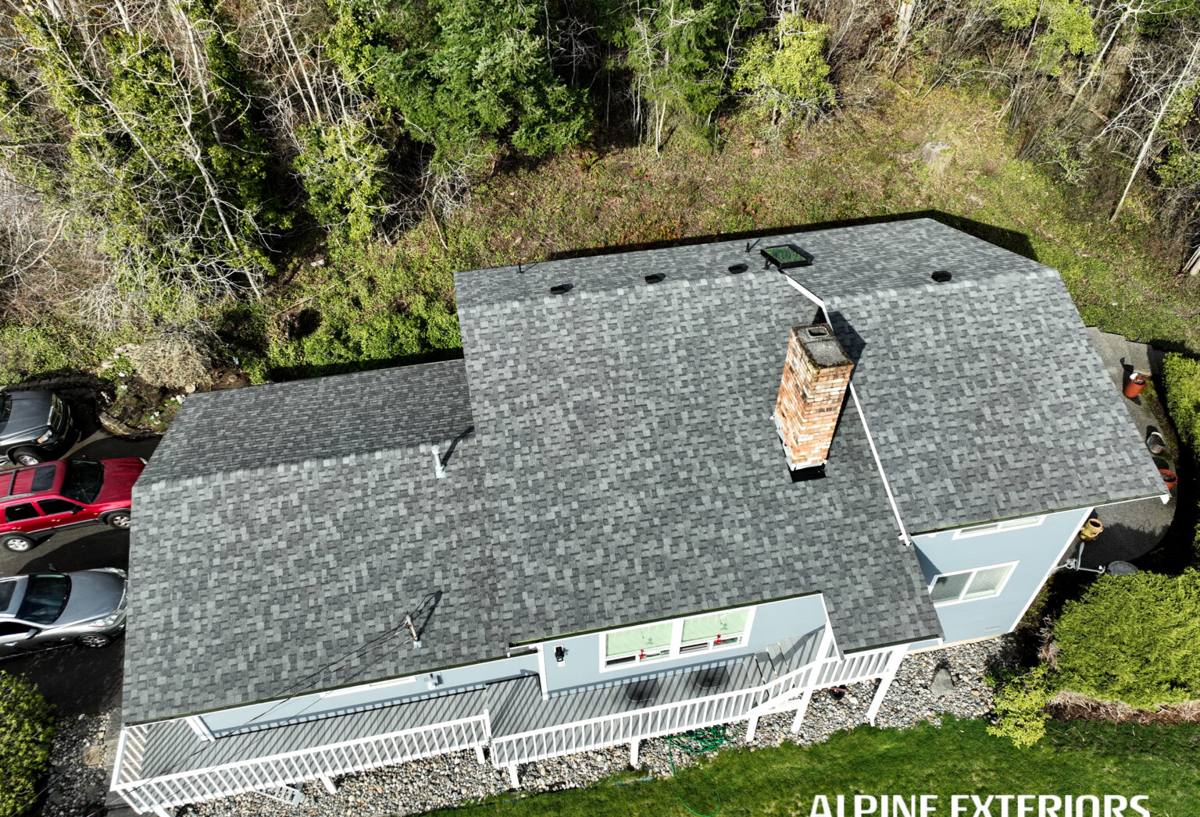
What Counts as Storm Damage on an Orcas Island Roof
Not all storm-related damage is obvious from the ground. Here's what we typically find after a wind and rain event in the Eastsound area.
Wind-Lifted or Torn Shingles
Shingles that were already brittle from sun and salt exposure crack or tear loose in gusts that a newer roof would shrug off. Once a shingle's seal is broken, it doesn't always blow away — sometimes it just lifts slightly and lets water track underneath on every rain after that, which is how a storm from months ago shows up as a leak today.
Moss and Debris Damming
Storms knock branches, needles, and loosened moss mats down onto the roof plane, and wind-driven rain pushes that debris toward valleys and eaves where it dams up. Water backs up under the shingle courses instead of running off, which is one of the most common causes of a leak that seems to appear "out of nowhere" after a storm.
Impact Damage
Fir and cedar limbs are common around Eastsound properties, and a storm-snapped branch can crack shingles, dent metal roofing, or puncture underlayment even without leaving an obvious hole. Impact damage is one of the easier things to miss without getting up on the roof.
Flashing and Penetration Failures
Chimneys, skylights, and vent boots take the brunt of wind uplift because they interrupt the roof plane. Flashing that was marginal before the storm often fails completely during it, and this is the single most common source of an interior leak that follows a big blow.
Why Salt Air and a Long Moss Season Make It Worse Here
A storm doesn't create damage out of nothing — it exposes and accelerates weaknesses that were already building. On Orcas Island, salt-laden air corrodes exposed fasteners, flashing edges, and metal roofing seams faster than it would on the mainland, so components that are supposed to flex and seal under wind load are often already compromised. Meanwhile, the region's damp, shaded microclimates keep moss and moisture-loving growth active for most of the year. Moss holds water against the shingle surface long after a storm has passed, which softens the mat, breaks down granules, and works its way under tab edges. A roof that's been fighting moss all year has far less resilience left when a real storm hits, which is why we see disproportionate damage on roofs that were overdue for moss treatment or a tune-up before the weather turned.
How We Assess Storm Damage Before Any Repair
A good storm repair starts with an honest inspection, not a quote written from the driveway. That means getting on the roof (weather permitting) and checking:
- Every slope and valley for lifted, cracked, or missing shingles or panels
- Flashing around chimneys, skylights, and vent penetrations for gaps or separation
- Attic and ceiling areas for water staining, damp insulation, or daylight where there shouldn't be any
- Gutters and downspouts for debris blockages that are still holding water against the roof edge
- The general condition of the roofing material itself, so you know whether this is a targeted repair or a sign the roof is near the end of its service life
We document what we find with photos before we touch anything. That record matters for two reasons: it lets you make an informed decision about repair versus replacement, and it gives you something concrete to hand your insurance adjuster if you're filing a claim.
Temporary Stabilization vs a Permanent Fix
Right after a storm, the priority is stopping active water intrusion — not necessarily doing the final repair the same day. Here's how the two stages typically compare:
| Situation | Emergency Tarp / Stabilization | Permanent Repair |
|---|---|---|
| Purpose | Stop water intrusion immediately | Restore the roof to a durable, code-compliant condition |
| Typical timeline | Same day to next day, weather allowing | Scheduled once materials and access are confirmed |
| Materials used | Reinforced tarp, sealant, temporary fasteners | Matched shingles/panels, new underlayment and flashing as needed |
| When it's the right call | Storm is still passing, or materials need to be ordered | Once damage is fully assessed and conditions allow a proper install |
Skipping straight to a "quick patch" without stabilizing first, or leaving a tarp on longer than necessary, both create problems — the first invites repeat leaks, the second traps moisture and invites the moss and rot issues that are already common on island roofs.
Our Storm Damage Repair Process in Eastsound
- Inspection and documentation. We identify every point of damage, not just the one causing the visible leak, and photograph it for your records and any insurance claim.
- Stabilization if needed. If the roof is still actively leaking or another system is forecast, we tarp and seal vulnerable areas first.
- Scope and estimate. You get a clear, written explanation of what's damaged, what needs to be repaired versus what can be left alone, and an honest cost range.
- Material matching. We source shingles, panels, or flashing that match your existing roof as closely as possible, ordered with island delivery timelines in mind.
- Repair. Damaged sections are removed down to sound decking, underlayment and flashing are replaced where compromised, and new material is installed to manufacturer spec — not just laid over the old problem.
- Final check. We inspect the completed repair and the surrounding roof area, including gutters and valleys, to make sure water is shedding the way it should.
Working with Your Insurance Company on a San Juan County Storm Claim
Most homeowners' policies cover sudden storm damage — wind, falling limbs, impact — differently than they cover gradual wear like moss deterioration or an aging roof that finally gave out. That distinction matters to an adjuster, which is why the documentation step isn't optional. We give you a clear before-and-after photo record and a written scope of the storm-related damage so you're not stuck estimating your own loss or guessing at what's covered. We're happy to walk an adjuster through what we found, but the claim itself and the coverage decision are always between you and your insurer.
Why a Crew That Already Works Eastsound Matters
Storm repair on Orcas Island runs on a different logistics clock than it does on the mainland. Materials, extra crew, and equipment all have to come over on a schedule that depends on the ferry, and a contractor who isn't set up for that can leave you waiting on a tarp for a week while they figure out logistics they've never had to deal with before. A crew that already works San Juan County has materials staged, knows which ferry runs to plan around, and isn't learning the island's supply chain on your roof.
There's also a knowledge gap that shows up in the work itself. A roofer who mostly works inland climates may not think twice about corrosion-prone fasteners near salt air, or may underestimate how much moss buildup is contributing to a leak that looks storm-related but has been building for a year. Local experience means the repair addresses the actual cause, not just the visible symptom.
What to Do Right After a Storm
If you suspect storm damage to your Eastsound home's roof, here's a practical checklist before a crew arrives:
- Check ceilings and attic spaces for new staining, damp spots, or musty smells
- Look at the ground and gutters for shingle granules, torn shingle pieces, or metal fragments
- Note any fallen limbs or debris resting on the roof, but don't climb up to remove it yourself
- Photograph anything visible from the ground or a safe vantage point, with a timestamp
- Place buckets or towels for any active interior leak and move valuables away from the area
- Call for an inspection promptly — a small, contained leak today can become a moss-fed, rot-damaged repair by next season if it sits
Roof work in windy or wet conditions is genuinely dangerous — leave the roof itself to a crew with the right harnessing and experience working island weather windows.
If a recent storm has left you with a leak, missing shingles, or just an uneasy feeling about your roof, we're glad to take a look. Reach out for a free, no-pressure estimate — we'll tell you honestly what we find and what it would take to fix it right.