 Orcas Island Siding
 Roofing on Orcas Island Is a Different Job Than Roofing on the Mainland
Eastsound sits at the head of Orcas Island, wrapped in the marine air of San Juan County. That location gives homeowners here a lot to love and a roof a lot to deal with. Salt-laden air moves in off the water and accelerates corrosion on fasteners, flashing, and exposed metal. Driving rain off Puget Sound doesn't fall straight down — it comes in sideways during winter storms, testing every lap, seam, and penetration on a roof. And the deep shade from the island's fir and cedar cover keeps north-facing slopes damp for weeks at a time, which is exactly the environment moss and moisture need to take hold.
A new roof installation in Eastsound isn't just about picking a shingle color and nailing it down. It's about choosing materials and installation details that are proven to hold up under this specific combination of salt exposure, wind-driven rain, and shade-driven moss growth. That's the lens we bring to every roof we install here.
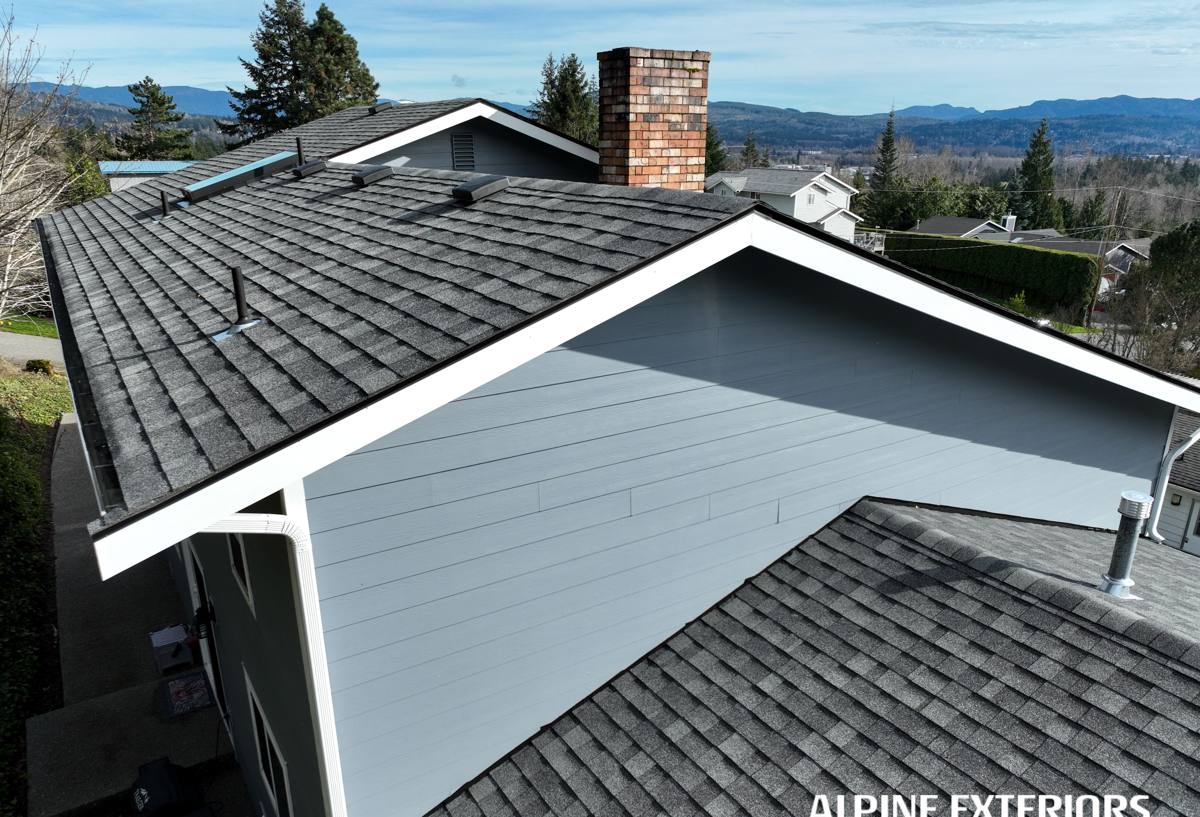
How to Tell an Eastsound Roof Actually Needs Replacing
Not every aging roof needs full replacement, but on Orcas Island the signs tend to show up earlier than homeowners expect, especially on shaded or north-facing sections.
Common signs we look for
- Granule loss on asphalt shingles, visible as bare, shiny patches or granules collecting in gutters
- Moss and lichen growth that's lifted shingle edges rather than just staining the surface
- Soft or spongy decking felt underfoot, usually near valleys or old penetrations
- Rust streaking or pitting on flashing, vents, or exposed fasteners
- Curling, cupping, or cracked shingles, especially on the roof's south and west exposures
- Daylight or water staining visible in the attic around chimneys, skylights, or vent boots
If a roof is showing two or more of these at once, patch repairs usually buy a season or two at best. A full replacement is the more honest recommendation, and we'll tell you that directly rather than stack repairs on a roof that's past the point of them being worthwhile.
What a Correct New Roof Installation Actually Involves
A roof is only as good as the layers homeowners never see. On Orcas Island, where wind-driven rain and moss pressure are constant, skipping or shortcutting these steps is where roofs fail early.
Tear-off and deck inspection
We remove the old roofing down to the deck rather than layering over it. That's the only way to actually see the condition of the sheathing underneath — soft, delaminated, or water-stained decking gets replaced before anything new goes down. Installing new roofing over a compromised deck just hides a problem that will resurface as a leak.
Underlayment built for wind-driven rain
Given how often storms here push rain sideways under standard lap conditions, we use synthetic or self-adhered underlayment sized to the exposure of each roof, with extra protection at eaves, valleys, and low-slope transitions where wind-driven water is most likely to find a way in.
Flashing that accounts for salt air
Flashing around chimneys, skylights, dormers, and sidewalls is where most roof leaks start, and it's also where salt air does the most damage over time. We use corrosion-resistant flashing materials and fasteners suited to a coastal environment, not standard-grade hardware that starts pitting within a few seasons.
Ventilation that fights moss and moisture
Balanced intake and exhaust ventilation keeps the underside of the roof deck dry and reduces the damp, stagnant conditions moss thrives in. On shaded lots — common around Eastsound — ventilation is one of the biggest factors in how fast moss comes back after a new roof goes on.
Material Options for Eastsound Homes
There's no single "best" roofing material for every home — it depends on the home's exposure, roof pitch, budget, and how much shade the roof sits under. Here's how the common options compare for this climate.
| Material | Performance in Salt Air & Rain | Moss Resistance | Typical Lifespan |
|---|---|---|---|
| Architectural asphalt shingles | Good with proper flashing and fasteners; mid-grade corrosion resistance | Moderate — benefits from algae-resistant granules and good ventilation | 25–30 years |
| Standing seam metal | Excellent when using coastal-rated fasteners and coatings | High — smooth surface sheds moss more easily | 40–50+ years |
| Cedar shake | Traditional island look; requires diligent maintenance in wet, shaded areas | Low without regular treatment and cleaning | 20–30 years with upkeep |
| Synthetic composite shingles | Good; engineered for moisture and UV resistance | Moderate to high depending on product | 30–50 years |
We'll walk through which option fits a given home's roof pitch, sun exposure, and budget rather than defaulting to one product for every job. On heavily shaded lots, we're often steering homeowners toward materials and ventilation details that reduce moss maintenance long-term, since that's usually the bigger headache than the initial install.
Our Installation Process, Start to Finish
1. On-site assessment
We inspect the existing roof, attic ventilation, and any problem areas in person before recommending a scope of work. No estimate goes out based on guesswork.
2. Written scope and material selection
We provide a clear, itemized proposal covering materials, underlayment, flashing details, and ventilation changes, so there are no surprises once work begins.
3. Tear-off and deck repair
Old roofing comes off, the deck is inspected, and any damaged sheathing is replaced before new materials go down.
4. Underlayment, flashing, and roofing installation
Each layer goes down in the order and overlap it's designed for — this is where storm performance is actually decided, not just in the choice of shingle.
5. Ventilation check and cleanup
We confirm intake and exhaust ventilation is balanced, then do a full site cleanup, including a magnetic sweep for stray fasteners.
6. Final walkthrough
We walk the finished roof and the details with the homeowner before calling the job done.
Why a Crew That Already Works Eastsound and Orcas Island Matters
Roofing on an island isn't the same logistics as roofing on the mainland, and it shows up in ways homeowners don't always think about until it affects their project.
Material planning around the ferry schedule
Every roll of underlayment, bundle of shingles, and piece of flashing has to make it onto the island before work can start. A crew that regularly works Orcas Island plans material orders and ferry logistics in advance, so a job doesn't stall out mid-tear-off waiting on a delivery.
Familiarity with San Juan County permitting
Roof replacements typically require permitting through San Juan County, and requirements can vary by structure and scope. A crew that's pulled these permits before knows what documentation is expected and how to keep a project moving through approval.
Knowing which details actually matter here
A contractor who only occasionally works this area may default to standard mainland practices. A crew that works Eastsound regularly already knows which flashing grades, fastener types, and ventilation setups hold up against this specific mix of salt air and rain — because they've seen what fails here and what doesn't.
What Drives the Cost of a New Roof in Eastsound
Every roof is priced individually after an on-site assessment, but the same handful of factors move the price up or down on most Orcas Island homes.
| Factor | Why It Affects Cost |
|---|---|
| Roof size and pitch | Steeper or larger roofs take more material, labor, and safety setup |
| Deck condition | Rotted or soft sheathing found during tear-off adds repair costs beyond the base roofing job |
| Material choice | Metal and premium synthetics cost more upfront than standard asphalt but last significantly longer |
| Number of penetrations | Chimneys, skylights, and vents each require additional flashing labor |
| Access and site conditions | Steep sites, tree cover, or limited staging area can add setup and safety time |
| Material delivery logistics | Island delivery timing can affect scheduling, though we account for this in planning |
We provide a firm, itemized number after seeing the roof in person — not a rough phone estimate that changes once we're up there.
Protecting a New Roof Once It's Installed
A well-installed roof still benefits from basic upkeep, especially given how much moss pressure this area sees.
- Have gutters cleared at least twice a year, more often under heavy tree cover
- Schedule a moss inspection before peak growth season if the roof sits in shade
- Watch for granule buildup in downspouts as an early sign of shingle wear
- Keep overhanging branches trimmed back to reduce shade and debris buildup
- Have flashing and roof penetrations checked after major storms
None of this requires a large annual budget, but skipping it is how a well-installed roof loses years off its lifespan in a climate like this one.
If your Eastsound home's roof is showing its age or you're planning ahead for a replacement, we're happy to take a look and give you a straight, no-pressure estimate. Use the form below to get started.