 Orcas Island Siding
 Eastsound's Climate Is Rougher on Siding Than It Looks
Eastsound sits where the marine layer off the Salish Sea meets thick evergreen cover, and that combination is tougher on exterior siding than most homeowners realize until they've lived here a few winters. Salt-laden air moves in off the water and settles on north- and west-facing walls. Driving rain during fall and winter storms pushes moisture sideways into seams, laps, and trim joints rather than just running straight down. And because so much of Orcas Island sits under a dense tree canopy, homes here get long stretches of shade and dampness that never fully dry out — the perfect setup for moss, algae, and mildew to take hold on siding, roofs, and decks alike.
Any siding product will eventually show wear in this environment. The question is how it wears, and whether it's built to shed moisture and resist organic growth instead of trapping water against the wall sheathing. That's the lens we use on every Eastsound job, and it's why we install James Hardie fiber cement siding exclusively.
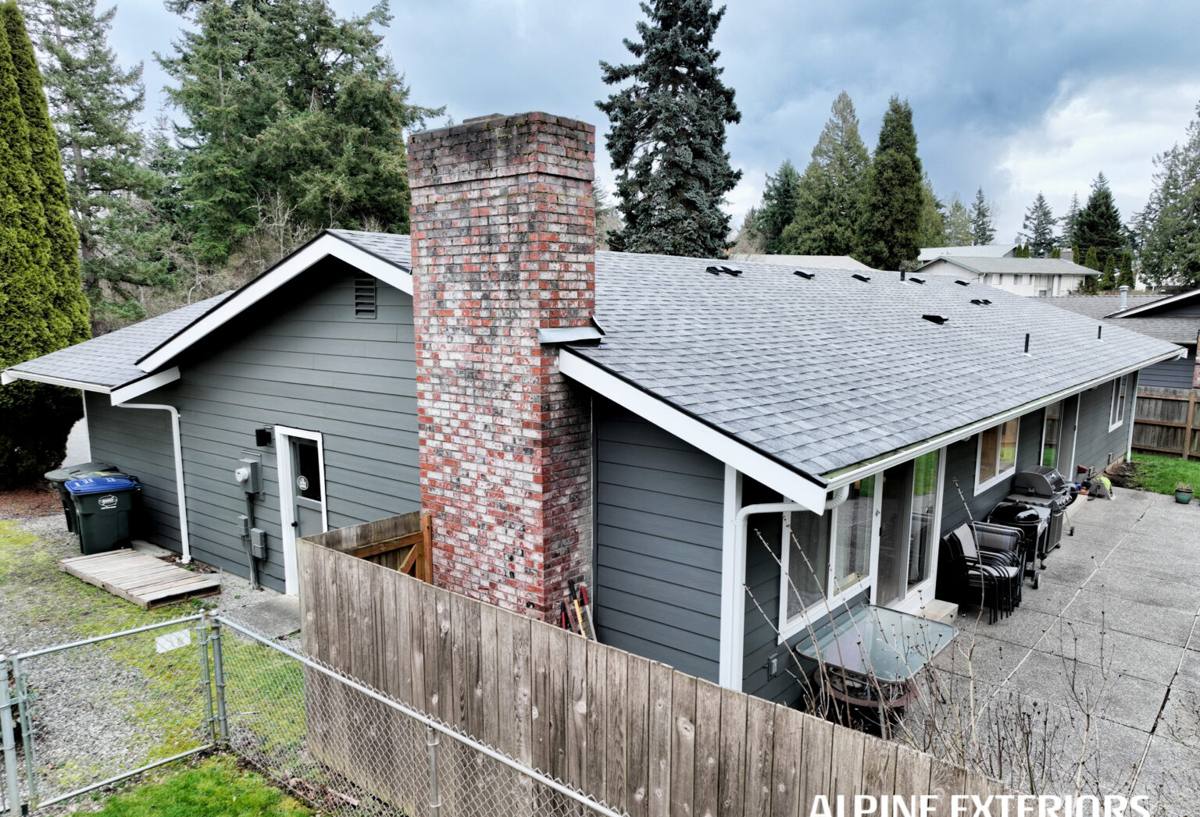
Why We Only Install James Hardie in This Area
James Hardie fiber cement is a cement, sand, and cellulose fiber composite, engineered specifically to resist moisture absorption, freeze-thaw cycling, and pest damage — all relevant to a marine, moss-prone climate like Orcas Island's. A few specific properties matter for Eastsound homes:
Moisture Behavior
Fiber cement doesn't swell, warp, or delaminate the way wood-based products can when they take on repeated moisture. In a location where driving rain and long damp shade are routine, that dimensional stability matters more than it does in a drier inland climate.
Non-Combustible Core
James Hardie siding is non-combustible. San Juan County properties surrounded by trees and brush carry wildfire exposure like the rest of the Pacific Northwest, and a non-combustible exterior is one meaningful layer of protection that vinyl and wood products simply can't offer.
Factory-Applied ColorPlus Finish
Hardie's ColorPlus finish is baked on in a controlled factory environment, with a finish formulated to resist fading and hold up to UV exposure and coastal moisture better than most field-applied paint jobs. That matters here — repainting siding on a home tucked into tree cover, with limited access and frequent rain windows, is expensive and disruptive. A factory finish with a long service life reduces how often you have to deal with that.
Climate-Engineered Product Lines
James Hardie makes region-specific HZ product formulations engineered for different climate zones, including wetter, harsher-weather regions. Installed correctly, this gives Eastsound homes a siding system actually designed for the moisture load it will face, rather than a one-size-fits-all product asked to perform in a climate it wasn't built for.
What Correct Installation Actually Involves
James Hardie siding performs the way it's rated to perform only when it's installed to the manufacturer's specifications. Most of the siding failures we get called out to inspect on Orcas Island trace back to installation shortcuts, not the product itself. On a proper Eastsound installation, we're paying close attention to:
- Correct starter strip placement and consistent bottom clearance off grade, decks, and roof lines so water can't wick up into the board
- Proper flashing and water-resistive barrier integration behind every window, door, and penetration — this is where most hidden moisture damage originates
- Manufacturer-specified fastener type, spacing, and penetration depth, since under- or over-driven fasteners compromise the board's rated performance
- Correct gapping at butt joints and trim, then sealing with a caulk rated for the movement and moisture exposure this climate produces
- Adequate clearance and drainage behind the siding so the wall assembly can dry between rain events instead of holding water against the sheathing
- Field-cut edge sealing wherever a factory-primed edge gets cut on site, since exposed cut edges are a common entry point for moisture
Skipping any one of these steps doesn't usually cause an obvious problem in year one. It shows up two, five, or ten years later as moisture intrusion, premature caulk failure, or moss and algae staining that keeps coming back no matter how often it's cleaned. Getting the details right the first time is cheaper than fixing them later.
Moss, Algae, and Salt: What Correct Detailing Prevents
Moss itself doesn't damage fiber cement the way it can damage wood or asphalt, but where moss and algae take hold, they hold moisture against the surface longer, which increases the odds that any weak point in flashing, caulking, or fastening will eventually leak. On north-facing walls, under eaves, and near tree lines — all common conditions on Orcas Island — we pay extra attention to drainage detailing and joint sealing for exactly this reason.
How We Approach a Siding Job in Eastsound
Our process doesn't change dramatically house to house, but a few things are consistent because we already know this area:
Site Assessment
We look at sun exposure, tree cover, prevailing wind and rain direction, and existing moisture damage before we ever talk product selection or price. A shaded, north-facing wall near mature trees gets treated differently in the detailing than a wall that gets full afternoon sun.
Product and Line Selection
We walk through Hardie's plank, shingle, and panel options and the ColorPlus palette, and help you land on a look and profile that fits the home and the neighborhood character around Eastsound — without steering you toward a product we wouldn't be comfortable standing behind in this climate.
Tear-Off and Sheathing Check
Old siding comes off, and we inspect the sheathing and water-resistive barrier underneath before anything new goes up. This is often where hidden moisture damage from a prior installation gets found — and it needs to be addressed before new siding goes over it, not buried under it.
Installation to Spec
Flashing, fastening, gapping, and sealing are done to James Hardie's published installation requirements, not shortcuts. This is also what keeps the manufacturer's warranty intact if it's ever needed.
Final Walkthrough
We go over the finished job with you, including basic care guidance for this climate specifically — what to expect from the ColorPlus finish over time, and simple maintenance that keeps moss and grime from building up.
James Hardie vs. Other Siding Options for This Climate
| Factor | James Hardie Fiber Cement | Vinyl Siding | Untreated Wood / Cedar |
|---|---|---|---|
| Moisture resistance | Engineered for wet climates; dimensionally stable when wet | Sheds water on the surface but can trap moisture behind panels | Absorbs moisture; prone to rot without diligent maintenance |
| Fire performance | Non-combustible core | Can soften or melt under heat exposure | Combustible |
| Finish longevity | Factory-baked ColorPlus finish, long fade resistance | Color molded through material but can chalk and fade over time | Requires repainting or restaining on a recurring cycle |
| Moss/algae resistance | Surface doesn't feed organic growth; correct detailing sheds water | Can host algae and mildew in shaded, damp areas | Prone to moss and rot in prolonged damp shade |
| Typical service life when installed to spec | Multiple decades | Variable; seams and fasteners often fail first | Shorter without consistent upkeep |
Cost Factors to Expect
We don't quote pricing without seeing the home, but a few things reliably move the cost of a Hardie siding project up or down on Orcas Island:
| Factor | Why It Matters |
|---|---|
| Home access and site conditions | Tree cover, driveway access, and staging space on Eastsound lots affect labor time and material delivery logistics |
| Existing wall condition | Rot or moisture damage found during tear-off adds sheathing repair before new siding can go on |
| Siding profile and trim complexity | Lap, shingle, and panel systems, plus detailed trim work, take different amounts of labor |
| Number of stories and roof lines | Multi-story walls and complex rooflines add flashing detail and staging requirements |
| Color and finish selection | Standard ColorPlus colors versus custom finishes can shift material cost |
Why Hiring a Crew That Already Works Eastsound Matters
Siding is a straightforward product installed in a specific place, and the "specific place" part is where local experience pays off. A crew that regularly works San Juan County knows what driving rain does to a west-facing wall on a bluff lot, understands how much shade a given tree line throws across a home through the seasons, and has already worked through the practical logistics of getting materials and equipment onto island properties efficiently. That translates into fewer surprises mid-project and detailing choices that account for conditions specific to this island rather than a generic install plan.
It also matters for accountability. A local crew is easy to reach if a question comes up after the job is done, and has a reputation in the community worth protecting — which is a real incentive to do the flashing and fastening right the first time, not just the parts that are visible from the curb.
Signs Your Current Siding May Already Be Struggling
A few things worth watching for on an Eastsound home, especially on shaded or north-facing walls:
- Persistent moss or algae staining that returns quickly after cleaning
- Soft spots, bubbling, or visible warping, particularly near ground level or under windows
- Cracked or missing caulk at trim joints and butt seams
- Paint that's peeling or alligatoring rather than just fading evenly
- Any musty smell or visible staining on interior walls that back up to exterior siding
None of these automatically mean a full re-side is needed, but they're worth a professional look before they become a bigger repair.
Ready to Talk About Your Home
If you're planning a siding project in Eastsound or elsewhere on Orcas Island, we're happy to come take a look, walk you through what correct James Hardie installation looks like for your specific home, and give you a straightforward, no-pressure estimate. There's a form below to get that conversation started.