 Orcas Island Siding
 Why Doe Bay Homes Are Hard on Windows
Doe Bay sits on the exposed east side of Orcas Island, where weather rolls in off the water with little to break it up. Homes here deal with a combination that inland San Juan County properties simply don't see as often: salt-laden air, wind-driven rain that hits windows at an angle instead of falling straight down, and long stretches of damp, shaded conditions that keep moss and algae established on roofs, trim, and siding for much of the year. Individually, none of these are unusual for the Pacific Northwest. Together, and applied to a window opening year after year, they expose every shortcut in a window installation faster than they would almost anywhere else in Washington.
Salt air is corrosive to unprotected metal fasteners, hardware, and some window frame components. Driving rain finds any gap in flashing or sealant and pushes water sideways and even slightly upward under pressure, which is why a window that would be fine in a calm rain event can leak in a Doe Bay storm. And the moss and organic growth that thrive in this climate hold moisture against wood trim and sills long after a storm has passed, which accelerates rot wherever water has already gotten a foothold. A window installation built for a drier or more sheltered part of the county won't hold up the same way out here.
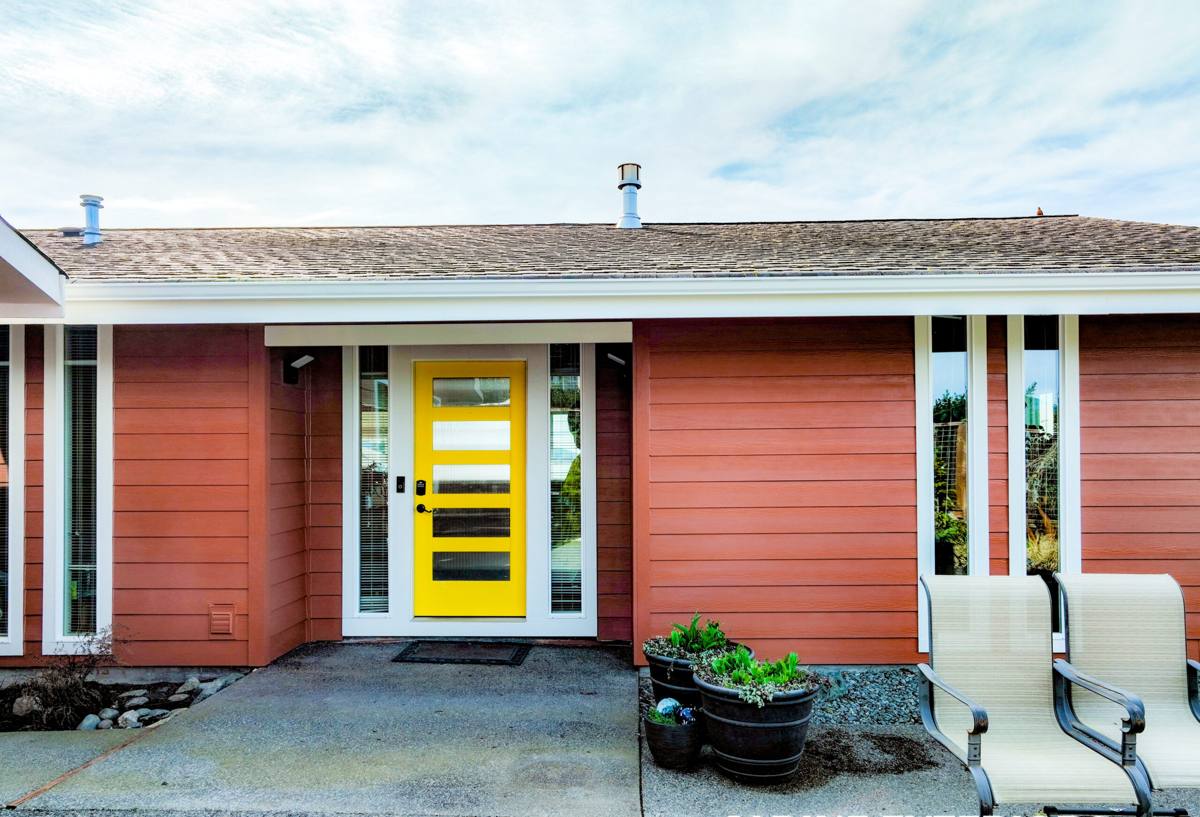
What a Correct Window Installation Actually Involves
A window looks the same whether it's installed correctly or not — the difference shows up two, five, or ten years later, usually as a soft spot in the sill, a stain on the interior wall below the window, or a drafty room in winter. The installation work that prevents those problems happens in layers most homeowners never see once the trim goes back on.
The Layers That Matter
- Rough opening prep: The framing gets checked for square, level, and soundness before a new window ever goes in. Rot or damage found here gets addressed, not covered up.
- Weather-resistive barrier integration: The house wrap or building paper is cut, lapped, and taped so water is directed out and down, not into the wall cavity.
- Flashing, in the right order: Sill pan flashing goes in first to catch any water that gets past the window, then side flashing, then head flashing — each layer lapping over the one below it, shingle-style, so gravity and wind-driven rain both drain outward.
- Sealant at the right points, not everywhere: Sealant belongs at specific joints, not smeared across the whole perimeter. Over-sealing can trap water inside a wall assembly instead of letting it drain — a mistake that causes hidden rot.
- Shimming and fastening: The window is shimmed square and plumb, then fastened per the manufacturer's schedule so the frame isn't stressed and the seal isn't compromised.
- Insulation and interior air sealing: The gap between the window frame and rough opening gets filled with a low-expansion foam or backer rod and sealant — not stuffed with fiberglass, which does little to stop air movement.
Skip or rush any one of these steps and the window will likely still function and look fine for a while. In a driving-rain, salt-air environment like Doe Bay, "a while" tends to be shorter than homeowners expect.
Choosing Materials That Hold Up on This Side of the Island
Frame material and hardware finish matter more here than in a sheltered inland yard. Salt air will find weak points in metal hardware and poorly protected frame components over time, and constant dampness is unforgiving of any wood that isn't well-protected or properly detailed.
| Frame Material | How It Handles Salt Air & Moisture | Maintenance Reality |
|---|---|---|
| Vinyl | Doesn't corrode or rot; performs consistently in coastal exposure | Low — occasional cleaning to keep moss and grime off tracks and weep holes |
| Fiberglass | Very stable in wet, salty conditions; holds paint well if a custom color is wanted | Low to moderate |
| Aluminum-clad wood | Good exterior protection if cladding and seams are intact; wood core still vulnerable if water gets behind the cladding | Moderate — depends on install quality and long-term seal integrity |
| Solid wood (unclad) | Most vulnerable to driving rain and constant moss-season dampness without diligent upkeep | High — regular painting/sealing, not something we recommend for direct weather exposure out here |
We don't push one brand or material on every homeowner — the right choice depends on the home's exposure, its architectural style, and budget. What we do insist on is being honest about the trade-offs: an unclad wood window on a wall that takes direct driving rain is going to demand more upkeep than most people want to sign up for, no matter how good it looks on day one. Hardware and fasteners we spec are chosen for coastal-grade corrosion resistance, not the cheapest option in the catalog.
Our Process for Doe Bay Window Installation Projects
- On-site assessment: We look at each opening's actual exposure — which walls take direct wind-driven rain, which are more sheltered, and what condition the existing framing and siding are in.
- Product selection: Based on that exposure, we recommend frame materials and glass packages suited to the specific wall, not a one-size-fits-all spec for the whole house.
- Removal and inspection: When we pull the old window, we check the rough opening and surrounding framing for hidden rot or moisture damage before anything new goes in. This is often where problems from a prior installation surface.
- Flashing and weatherproofing: Sill pan, side, and head flashing are integrated with the home's weather-resistive barrier in the correct shingle-lap order.
- Installation and sealing: The window is set, shimmed, fastened, insulated, and sealed at the specific joints that need it.
- Interior and exterior finish work: Trim, casing, and paint or stain are completed to match the home.
- Final walkthrough: We check operation, seal, and finish with the homeowner before calling the job done.
Signs an Existing Window Was Installed Poorly
Doe Bay's weather has a way of exposing bad work over time. If you're seeing any of the following, it's worth having the installation — not just the window — evaluated:
- Staining or a soft, spongy feel on the interior wall or sill below a window
- Visible daylight or a draft around the frame when the window is closed and latched
- Paint or finish bubbling or peeling on exterior trim near the window
- Moss or dark streaking concentrated around one window but not others on the same wall
- Difficulty opening, closing, or latching a window that used to operate smoothly
- A musty smell in the room during or after wet weather
What Window Installation Typically Costs
Every project is different, but the main cost drivers are consistent. Getting a clear answer on where your project falls on each of these helps you compare quotes on an apples-to-apples basis rather than by bottom-line number alone.
| Factor | Why It Moves the Price |
|---|---|
| New construction vs. replacement | Replacement work into an existing opening with intact framing is usually simpler than a full frame-out with new flashing and siding tie-in |
| Hidden rot or framing damage | Discovered once the old window is out; repair adds labor and material before the new window can go in correctly |
| Frame material and glass package | Vinyl, fiberglass, and clad-wood options carry different material costs; upgraded glass (impact, higher-performance low-E) adds cost |
| Number and size of openings | Larger or custom-sized windows and multi-window projects affect both material and labor pricing |
| Site access and exposure | Doe Bay's more exposed lots can mean tighter weather windows for the crew to work in, which affects scheduling more than price directly |
We'll always give you a written estimate that breaks these factors out rather than a single number with no explanation behind it.
Why a Crew That Already Works Doe Bay Matters
Anyone can install a window on a calm, dry day. The test is how that window performs during the next winter storm that pushes rain sideways off the water. A crew that regularly works this part of San Juan County has already seen which flashing details hold up here and which ones fail, which frame materials age well against salt air and which don't, and how moss and organic growth behave on this specific stretch of coastline. That experience shows up in the small decisions made on-site — where an extra course of flashing tape goes, how a sill pan is detailed, which weep holes need extra attention — decisions that don't show up on an estimate but matter enormously five years down the road.
It also matters for scheduling and logistics. Working on Orcas Island means planning around ferry schedules, weather windows, and material delivery timing. A crew based here and used to the rhythm of island work plans projects accordingly, instead of treating your job like an afterthought squeezed between mainland work.
Questions to Ask Before Hiring for Your Doe Bay Project
- Will you inspect the rough opening and framing before installing, and what happens if you find hidden damage?
- What flashing sequence do you use, and how is it integrated with my home's existing weather barrier?
- Are you licensed and insured to work in Washington, and can you provide proof?
- What warranty covers the installation labor itself, separate from the manufacturer's product warranty?
- How do you handle scheduling around weather and ferry logistics for island projects?
- Can you walk me through why you're recommending this specific frame material for this specific wall?
Keeping New Windows Performing Through Moss Season
A correctly installed window still benefits from basic upkeep in this climate. Clearing debris and moss from tracks, sills, and weep holes a couple of times a year keeps water draining the way it's designed to instead of pooling. Checking exterior caulk lines annually and touching up any cracked or missing sealant before the wet season sets in prevents small gaps from becoming bigger problems. And keeping nearby vegetation trimmed back reduces the amount of standing moisture and shade against the wall, which slows moss growth around the window opening in the first place.
If you're weighing new windows, replacements for ones that are underperforming, or just want a second opinion on a home you're about to buy in Doe Bay, we're happy to take a look and give you a straightforward, no-pressure estimate. Fill out the form below and we'll get back to you.