 Orcas Island Siding
 Doe Bay Roofs Take a Different Kind of Beating
Doe Bay sits on the exposed east side of Orcas Island, where weather off the water meets a shoreline of firs, madrones, and steep, shaded lots. That combination is hard on roofs in ways that inland San Juan County homes don't deal with as much. Salt-laden air corrodes metal faster. Wind-driven rain off the strait finds its way into gaps that would stay dry in a calmer location. And the shade from the tree canopy keeps roof surfaces damp long after a storm has passed, which is exactly what moss needs to take hold. A roof repair out here has to account for all three at once, not just patch the visible problem.
We've been doing exterior work across Orcas Island long enough to know that a repair that looks fine from the ground can still be failing underneath. This page is about what actually goes wrong with Doe Bay roofs, what a correct repair looks like, and why local experience matters more here than it does in a lot of other places.
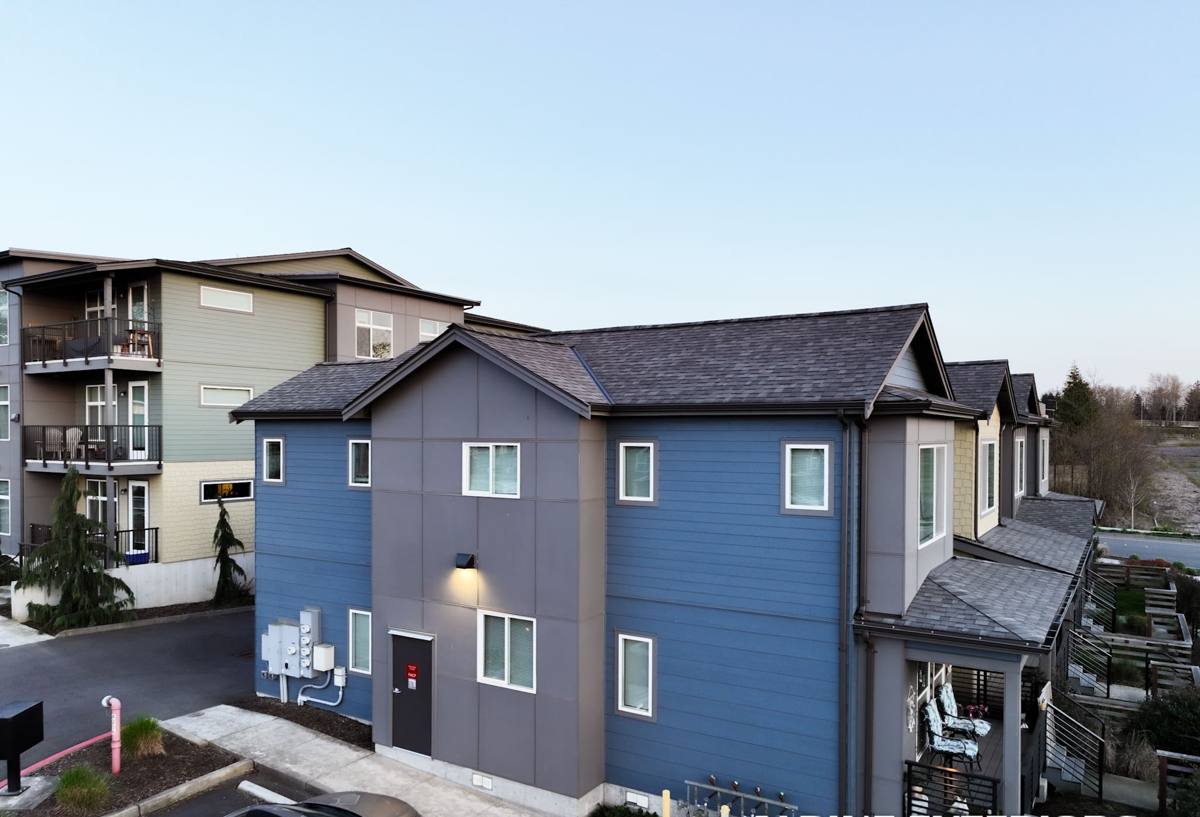
What Salt Air, Driving Rain, and Moss Actually Do to a Roof
Salt air and corrosion
Marine air carries fine salt particles that settle on every exposed surface, including roof flashing, fasteners, and gutter hardware. Over years, that salt accelerates corrosion on standard steel fasteners and lower-grade flashing metal. The failure usually isn't dramatic — it's a slow weakening at nail heads and seams that eventually lets water in during the next hard rain. By the time a stain shows up on a ceiling inside, the underlying metal has often been degrading for a while.
Driving rain and wind exposure
Doe Bay's exposure means rain doesn't just fall straight down — it gets pushed sideways and upward under eaves, around chimneys, and into valleys. Roofing systems are built to shed water moving downhill, not water being forced sideways or up under a shingle edge. That's why leaks here so often show up at penetrations (vent pipes, chimneys, skylights) and valleys rather than in the middle of an open roof field. A repair that doesn't address wind-driven intrusion at these points will fail again in the next storm, even if the original leak point looks fixed.
Moss, shade, and organic growth
The tree cover that makes Doe Bay properties beautiful also keeps roofs shaded and slow to dry. Moss and moisture-loving growth root into shingle surfaces, lift edges, and hold water against the roof deck far longer than an open, sun-exposed roof would experience. Left alone, that moisture retention accelerates shingle wear and can work its way into fastener holes and seams. Moss removal done incorrectly — scraping or pressure-washing without care — can do more damage than the moss itself, which is a mistake we see on roofs that have had prior "quick fix" attention.
Common Roof Repair Calls We See in Doe Bay
- Valley leaks — water concentrates in roof valleys, and worn or improperly lapped valley flashing is one of the most common leak sources in this area.
- Flashing failure around chimneys and skylights — corroded or improperly sealed flashing at these penetrations lets wind-driven rain in.
- Moss-damaged shingle sections — shaded, north-facing slopes often need targeted shingle repair or replacement where moss has lifted or degraded the surface.
- Fastener and nail-pop corrosion — salt exposure speeds up corrosion on lower-grade or older fasteners, causing shingles to loosen.
- Gutter and drainage backups — needles, moss debris, and heavy rain volume overwhelm gutters that aren't cleared or sized properly, pushing water back under roof edges.
- Ridge cap and vent repairs — ridge caps take direct wind exposure and are often the first component to loosen or crack.
What a Correct Roof Repair Actually Involves
A proper repair starts with figuring out where water is actually entering, which is not always where it shows up inside. Roof water can travel along the underlayment or decking for several feet before it drips through a ceiling, so an honest repair begins with tracing the path, not just patching the drip point.
Our repair checklist
- Inspect the full roof plane, not just the reported leak area, including valleys, penetrations, and shaded sections prone to moss.
- Identify whether the cause is flashing failure, shingle damage, fastener corrosion, underlayment failure, or a combination.
- Check the roof deck itself for soft spots or rot where water has been sitting under damaged material.
- Remove moss and organic growth carefully, without stripping granules or damaging shingle mat.
- Replace flashing, fasteners, and shingles with materials suited to marine, high-moisture exposure — not the cheapest available option.
- Confirm proper water-shedding laps and seals at every penetration and valley before closing the repair.
- Check gutters and downspouts for clear drainage so repaired areas aren't immediately re-exposed to standing water.
Skipping any of these steps is how a "repaired" roof ends up leaking again within a season or two — usually at the same spot, sometimes a few feet away where the water found a new path.
Repair or Replace? What Actually Drives That Decision
Not every roof problem on Doe Bay calls for a full replacement, and we don't push one when a targeted repair will hold up. The honest answer depends on a handful of factors that matter more here than roof age alone.
| Factor | Favors Repair | Favors Replacement |
|---|---|---|
| Extent of damage | Isolated to one section, valley, or penetration | Widespread across multiple roof planes |
| Roof deck condition | Solid, no soft spots or rot | Rot or moisture damage found under shingles |
| Remaining shingle life | Shingles elsewhere still in good shape | Shingles nearing end of expected service life overall |
| History of repeat leaks | First leak at this location | Same area has been patched more than once |
| Moss/organic damage pattern | Surface-level, recently developed | Long-term growth with granule loss and deck exposure |
We'll walk the roof, explain what we find in plain terms, and give a straight recommendation — including telling you when a repair is genuinely the right call and a replacement would be spending money you don't need to spend yet.
How We Approach a Roof Repair Job
1. On-site assessment
We inspect the roof in person rather than quoting off a photo or a phone description. Doe Bay's tree cover and terrain mean two roofs a few hundred feet apart can have very different exposure and moss patterns, so we look at the actual conditions on your property.
2. Clear explanation before any work starts
You'll know what's causing the leak, what the repair involves, and roughly what it will cost before we start — no surprise add-ons once the roof is opened up, unless we find something like deck rot that genuinely wasn't visible until the shingles came off, in which case we stop and talk to you first.
3. Repair with materials suited to the exposure
We use flashing, fasteners, and underlayment rated for coastal and high-moisture conditions rather than defaulting to standard-grade materials that corrode faster in salt air. That's a small cost difference up front that matters a lot over the following years.
4. Cleanup and a final check
We clear debris, check that gutters and drainage paths are working correctly after the repair, and confirm the fix from both the roof surface and, where accessible, the interior area that was affected.
Product and Material Choices for This Climate
For repair work in salt-exposed, high-moisture areas like Doe Bay, we favor corrosion-resistant flashing and fastener hardware over standard-grade options, even when it costs a bit more. Standard fasteners can start showing corrosion issues years sooner in marine air, which turns a small repair job into a repeat visit. Algae- and moss-resistant shingle products are also worth considering for sections being replaced on shaded, north-facing slopes — they won't eliminate moss entirely in a heavily shaded spot, but they slow regrowth compared to standard shingles.
We don't push a specific brand as the only acceptable option. What matters more is matching the material to the specific exposure on your roof — a sunny south slope and a shaded north valley on the same house can reasonably use different specifications.
Why It Matters to Hire a Crew That Already Works Doe Bay
Roof repair on Orcas Island comes with logistics that don't apply on the mainland. Materials, equipment, and scheduling all have to account for ferry timing, and a contractor unfamiliar with island logistics can turn a one-day repair into a multi-week wait for the right parts to arrive. A crew that regularly works San Juan County plans around that instead of discovering it mid-job.
Local experience also means recognizing patterns — knowing that a particular type of valley detail tends to fail on wind-exposed Doe Bay lots, or that a shaded, moss-prone roof needs a different maintenance conversation than an open, sun-exposed one across the island. That's the kind of judgment that comes from doing this work here repeatedly, not from a general roofing background applied to an island property for the first time.
Maintenance That Extends the Life of a Repair
A well-done repair can still fail early if the roof isn't maintained afterward. A few habits make a real difference in this climate:
- Clear moss and debris from shaded roof sections at least once a year, more often on heavily shaded lots.
- Keep gutters and downspouts clear so water isn't backing up under roof edges during heavy rain.
- Have flashing and penetrations checked periodically, since these are the first points to fail from wind-driven rain and salt exposure.
- Address small leaks early — a minor drip investigated promptly is a repair; ignored for a season, it can become deck rot.
Get a Straight Answer on Your Roof
If you're dealing with a leak, moss buildup, or damaged flashing on a Doe Bay roof, we're happy to take a look and give you an honest read on what it needs — repair or otherwise. Reach out for a free, no-pressure estimate using the form below, and we'll walk you through what we find and what it would take to fix it right.