 Orcas Island Siding
 Building Decks for a Small Community With a Big Weather Problem
Doe Bay sits on the exposed east side of Orcas Island, close enough to open water that homes here take a different kind of weather than properties tucked into the island's interior. Salt-laden air moves through constantly, rain arrives driven sideways by wind off the water more often than it falls straight down, and a long, damp shoulder season keeps moss and mildew active for much of the year. A deck built in this setting isn't just an outdoor living space — it's a structure that sits directly in the path of everything San Juan County's marine climate can throw at it, and it needs to be designed and built accordingly.
We build custom decks for homes in Doe Bay and the surrounding stretch of Orcas Island, and we think about them differently than we would a deck project in a drier, more sheltered part of the state. The framing, fastener choices, footing design, and decking material all get selected with this specific coastline in mind, not off a generic materials list. This page walks through what that actually means in practice — what the climate does to a deck over time, what a correctly built one requires, and how our process works from first visit to finished project.
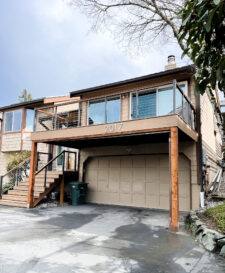
What Doe Bay's Climate Does to a Deck Over Time
Salt Air and Slow Corrosion
Being close to open saltwater means a steady, low-grade exposure to salt-laden moisture in the air, even on days that feel calm and dry. That exposure doesn't announce itself the way a storm does — it works quietly on fasteners, connectors, and any metal hardware that isn't rated for it. A deck built with standard interior-grade screws or uncoated brackets will show corrosion years before the wood or decking itself is a problem, and once fasteners start failing, the whole structure's integrity is in question.
Wind-Driven Rain
Rain on this side of Orcas Island frequently comes in at an angle, pushed by wind off the water rather than falling straight down. For a deck, that matters most where it meets the house: ledger board connections, any attached stairs or landings, and skirting details all need flashing and water management that accounts for rain hitting from the side, not just from above. A ledger that's improperly flashed is one of the most common ways water gets into a structure it shouldn't, and it's often invisible from the surface until rot has already set in behind it.
A Long Moss and Mildew Season
Shaded decking, north-facing structures, and anything under tree cover on Orcas Island can stay damp for a large part of the year. That moisture supports moss and mildew growth on decking boards, especially in board gaps and around fasteners, which creates a slip hazard and accelerates surface wear on materials that aren't designed to shed water and dry out quickly. A deck design that ignores airflow and drainage is signing up for a moss problem from day one.
Temperature Swings and Material Movement
Island weather isn't extreme in terms of raw temperature, but the combination of damp cold and salt exposure puts real stress on how wood and composite materials expand, contract, and age. Materials and fastening methods that don't account for this movement loosen over time, which shows up as squeaking, board cupping, or hardware that backs out.
What a Correctly Built Deck for This Area Requires
A deck that holds up in Doe Bay isn't built differently because of any one dramatic requirement — it's built differently because of a series of smaller decisions, each aimed at the same goal: keep water moving off and away from the structure, and keep every component rated for the environment it's actually sitting in. That includes:
- Ledger board flashing that sheds water away from the house rim joist, installed before decking goes down, not patched in afterward
- Stainless or coated fasteners and structural connectors rated for coastal/marine exposure, not standard galvanized hardware
- Joist tape or butyl flashing on the top of every joist to stop water from wicking into end grain and causing rot from the inside out
- Decking gaps and framing spacing sized for real airflow, not just visual spacing, so boards can actually dry between rain events
- Footings sized and set for Orcas Island's often rocky, uneven soil conditions, not a standard mainland soil assumption
- Railing and guard systems selected with wind exposure in mind, since open water sites see more sustained wind load than sheltered lots
Decking Material Comparison for a Marine Climate
Material choice is one of the biggest decisions on a Doe Bay deck project, and it's worth comparing options honestly rather than defaulting to whatever's cheapest up front. Here's how the common choices stack up specifically against salt air, driving rain, and moss exposure:
| Material | Moisture & Moss Behavior | Maintenance | Typical Lifespan Here |
|---|---|---|---|
| Pressure-treated wood | Absorbs water at cut ends and fastener holes; prone to moss in shaded/damp spots without regular cleaning | Annual cleaning, periodic sealing | 10-15 years before major boards need replacing |
| Cedar | Naturally rot-resistant but still needs sealing to resist moisture staining and moss in this climate | Sealing every 1-3 years, regular cleaning | 15-20 years with upkeep |
| Composite decking | Doesn't absorb water like wood; still needs cleaning where moss can grow on the surface film | Periodic washing, no sealing required | 25-30+ years, manufacturer-dependent |
| PVC/capped composite | Best resistance to moisture intrusion; surface sheds water and resists staining well | Occasional washing | 25-30+ years, manufacturer-dependent |
We don't push one material on every project. A cedar deck with proper sealing and upkeep can look and perform beautifully in Doe Bay for years — the trade-off is that it asks more of the homeowner over time. Composite and capped composite materials cost more up front but ask less ongoing maintenance from a household that may not be on the island year-round to keep up with sealing schedules. We walk through this trade-off honestly with every homeowner rather than assuming one answer fits every property.
What's Underneath Matters More Than What You See
Framing and Fastener Choices
The structural frame of a deck rarely gets a second look once the decking boards are down, which is exactly why it needs to be right the first time. We use fasteners and structural connectors rated for coastal exposure throughout the frame, not just on visible surfaces, and we tape joist tops to keep standing moisture out of end grain, which is one of the most common places rot starts in older decks we've inspected on the island.
Footings for Orcas Island's Ground Conditions
Soil on Orcas Island varies significantly from lot to lot — some sites have workable soil depth, others hit rock or ledge close to the surface. Footing approach needs to match the actual site rather than a standard assumption:
| Footing Type | Best For | Consideration |
|---|---|---|
| Poured concrete footings | Sites with workable soil depth and reasonable excavation access | Requires digging below frost depth; more disruptive on tight or rocky lots |
| Helical piers | Sites with limited excavation access or shallow rock/ledge | Faster install, less soil disturbance, good option on tricky terrain common to the island |
| Surface-mounted piers/blocks | Low, ground-level decks only | Not appropriate for elevated structures or anywhere frost heave is a concern |
Getting the footing type wrong isn't a cosmetic mistake — it's the difference between a deck that stays level and stable for decades and one that starts shifting within a few years.
Railings and Guards for a Wind-Exposed Site
Homes near open water on Orcas Island see more sustained wind than sheltered inland lots, and railing systems need to be selected and installed with that in mind. Cable railing looks clean and preserves a view, but every post and cable tension point needs to be installed correctly to hold up under real wind load over time — a poorly tensioned cable system loosens and looks worse every year rather than better. Wood railings need the same fastener and moisture considerations as the rest of the structure. Glass panel systems can work well for view lots but need a frame and mounting system genuinely rated for the wind exposure of the specific site, not just a standard residential rating. We spec railing hardware to the site, not to whatever's easiest to source.
Moss, Mildew, and Keeping a Deck Looking Good Long-Term
Even a well-built deck needs some ongoing attention in this climate — the goal of good design is to reduce that burden, not eliminate it entirely. A few things make the biggest difference:
- Keep gutters and downspouts near the deck clear so runoff isn't dumping extra water onto or under the structure
- Sweep debris out of decking gaps regularly — trapped leaves and needles hold moisture against the boards and feed moss growth
- Wash the deck surface at least once or twice a year, more often in heavily shaded spots
- Trim back overhanging branches where possible to let more sun and airflow reach the deck surface
- Check railing posts, stair stringers, and ledger flashing yearly for any signs of movement, staining, or soft wood
- Reseal wood decking on the schedule the material actually requires — skipping a cycle compounds quickly in this climate
Permitting and Building in San Juan County
Deck projects on Orcas Island typically go through San Juan County's permitting process, and the requirements depend on the deck's size, height, and attachment to the home. We handle that process as part of the project rather than leaving it to the homeowner to navigate — pulling the right permit, meeting setback and height requirements, and making sure the structural design matches what the county expects to see on an elevated or attached structure. Skipping this step, or having it done poorly by an unfamiliar contractor, is one of the more common headaches we see homeowners inherit when they try to sell or refinance a property with unpermitted work attached to it.
Our Process for a Doe Bay Deck Project
- On-site visit: We walk the actual site with the homeowner, looking at sun/shade exposure, wind direction, existing drainage, and soil or ledge conditions before recommending anything.
- Design and material discussion: We go through decking material trade-offs, footing approach, and railing options honestly, matching the design to how the homeowner actually plans to use and maintain the space.
- Permitting: We prepare and submit what San Juan County requires for the project's size and scope, and handle any follow-up the county needs.
- Framing and structural work: Footings, framing, fastener selection, and moisture management details go in first — the parts that matter most and get covered up soonest.
- Decking, railing, and finish work: Surface materials and railings go in last, with attention to gap spacing, drainage, and a clean finished look.
- Walkthrough and maintenance guidance: We go over what upkeep the specific materials chosen will need going forward, so there are no surprises a year or two in.
Why Working With a Crew That Already Builds on Orcas Island Matters
Building on an island adds logistics that don't exist on the mainland — materials, equipment, and crews all have to get here by ferry, and schedules need to account for that rather than assume same-day flexibility. A contractor who already works regularly in Doe Bay and the rest of Orcas Island has that logistics figured out, has already sourced marine-rated hardware and materials that perform here, and has a working relationship with San Juan County's permitting process. That experience shows up in fewer delays, fewer surprises, and a deck that's actually designed for the specific stretch of coastline it sits on rather than adapted from a mainland template after the fact.
If you're planning a new deck or replacing one that's showing its age in Doe Bay, we're happy to come take a look and talk through what makes sense for your specific site. The estimate is free, there's no pressure attached to it, and you can reach us through the form below.