 Orcas Island Siding
 Doe Bay's Climate Is Not Kind to an Outdoor Deck
Doe Bay sits on the exposed east side of Orcas Island, where weather off the water meets thick evergreen cover and steep, often shaded lots. That combination is tough on any deck: salt-laden air moves in off the strait, driving rain comes sideways more often than most homeowners expect, and the tree canopy keeps a lot of surfaces damp long after the rain has stopped. Add in a moss season that can stretch from fall through spring, and you have conditions that will find every weak point in a deck build within a few years, not a few decades.
Composite decking was designed to handle a lot of this better than wood, but "composite" is not one product, and not every installation approach holds up the same way here. What actually matters in Doe Bay is what's underneath the boards, what's holding them down, and how the whole system sheds water and dries out between storms.
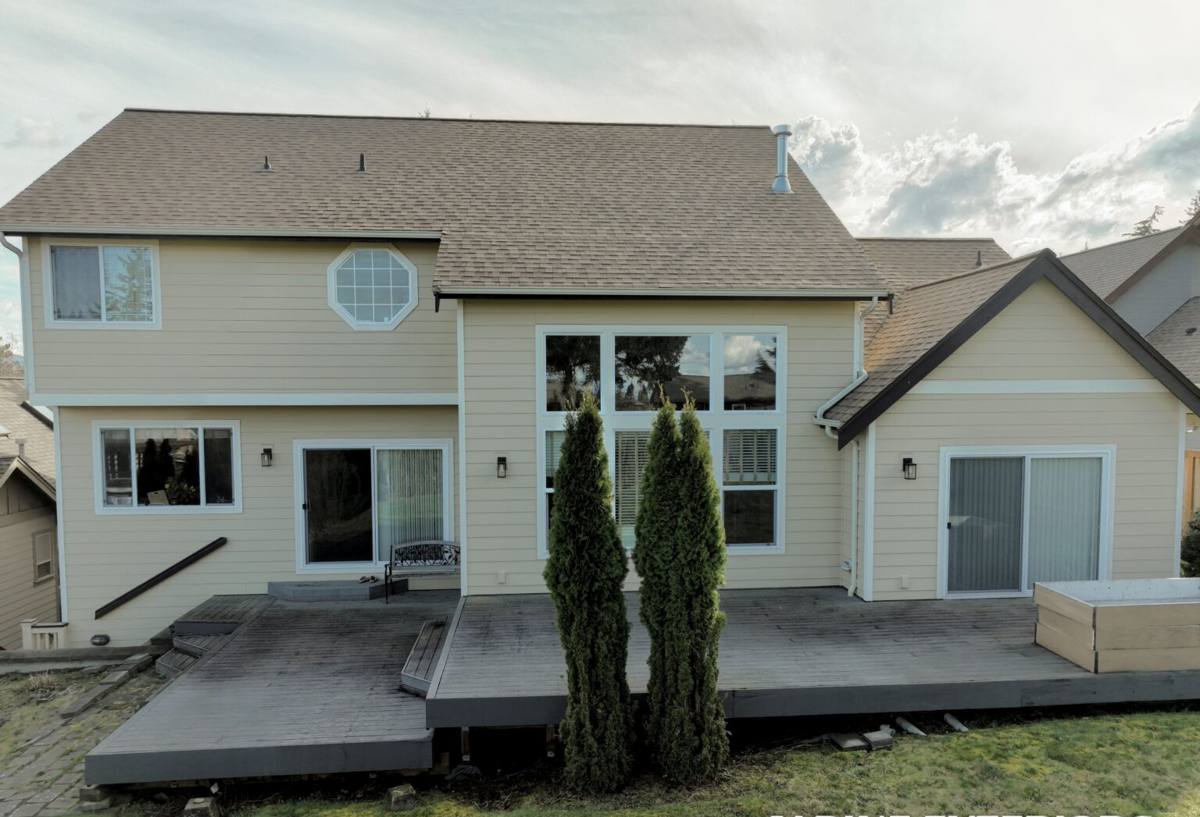
What Local Homes Actually Need From a Deck
Moisture that never fully goes away
On a lot with afternoon sun and open exposure, a deck dries out between rain events. On many Doe Bay properties, tree cover and hillside shade mean the underside of a deck and the ground beneath it stay damp for days. That changes how we frame the substructure, how much airflow we build in, and how we detail the ledger board where the deck meets the house.
Salt air and hardware
Proximity to the water means airborne salt settles on every exposed metal surface — fasteners, brackets, flashing, railing hardware. Standard coated screws and generic joist hangers corrode faster here than they would twenty miles inland. This is one of the most common shortcuts we see on decks that were built by out-of-area crews unfamiliar with San Juan County's marine exposure.
Moss, algae, and shaded boards
Composite decking doesn't rot, but it can still grow moss and algae on its surface, especially in shaded, low-airflow spots that never fully dry. The board's surface texture and the amount of ventilation underneath both affect how much of a problem this becomes.
Choosing the Right Composite Product
Not all composite boards perform the same way in a wet, shaded, salt-air environment. The biggest divide is between older uncapped composite and modern capped composite, but there are other factors worth weighing too.
| Factor | Uncapped Composite | Capped Composite |
|---|---|---|
| Moisture absorption | Higher — core can take on water over time | Low — protective shell resists moisture |
| Moss/algae resistance | More prone to surface growth in shade | Better, especially with textured caps, but not immune |
| Fading in marine light | Noticeable over several seasons | Slower, more even fade |
| Long-term maintenance | Periodic cleaning and sealing helps | Occasional washing, no sealing needed |
| Upfront cost | Lower | Higher |
We install capped composite on almost every Doe Bay deck for this reason — the moisture behavior alone makes a real difference in a climate where boards rarely get a long, dry stretch to shed absorbed water. That's a professional standard we hold to, not a knock on every uncapped product on the market; it's simply a trade-off we think isn't worth making in this specific environment.
What a Correct Composite Deck Build Involves
The substructure comes first
Composite boards are only as good as what they're screwed into. On a damp, shaded lot, we treat the frame and joists as the part of the job that determines whether the deck is still solid in fifteen years. That means joist tape or a comparable moisture barrier on top of every joist, proper joist spacing for the specific board profile, and a ledger connection that's flashed to keep water from tracking behind the siding and into the house framing — a detail that matters even more on older homes where the original ledger flashing may never have been done right.
Airflow underneath
A deck built tight to the ground, or boxed in without vents, traps moisture underneath and speeds up moss growth on the boards above. We build in ventilation and keep a real gap between the structure and grade wherever the site allows it.
Fasteners and hardware
Stainless steel or marine-rated hardware for structural connections, and hidden fastener systems matched to the specific board profile, so screws aren't sitting in a puddle of trapped water on the board's surface.
Drainage and slope
A very slight slope away from the house, consistent across every board, so water moves off the deck instead of pooling at low spots — pooling is exactly where algae and moss get started first.
Our Process, Start to Finish
- On-site walkthrough of the existing deck or build area, checking grade, shade patterns, and ledger condition
- Substructure inspection or full rebuild recommendation if the frame doesn't meet current standards
- Material selection based on sun/shade exposure, foot traffic, and your maintenance preferences
- Permitting through San Juan County where the scope requires it
- Framing and moisture barrier installation, including ledger flashing repair if needed
- Board installation with hidden fasteners and manufacturer-specified spacing for expansion
- Railing, stair, and trim work to match
- Final walkthrough covering care and what to watch for through the wet season
Keeping a Composite Deck Clean Through Moss Season
Composite decking is low-maintenance, not no-maintenance. In a climate like this, a little seasonal attention goes a long way toward keeping boards looking and draining the way they should.
- Sweep debris (needles, leaves, moss spores) off the deck regularly through fall and winter
- Rinse or lightly scrub shaded areas where moss tends to establish first
- Keep gutters and downspouts clear so runoff isn't dumping directly onto or under the deck
- Trim back overhanging branches to let more light and air reach shaded sections
- Check railing and stair hardware yearly for early signs of corrosion
- Clear leaf litter from between boards and around posts before it holds moisture against the frame
What Affects the Cost of a Doe Bay Composite Deck
| Factor | Why It Matters Here |
|---|---|
| Site access | Some Doe Bay lots have limited access for material delivery, which affects labor time |
| Substructure condition | Rebuilding a damp, deteriorated frame costs more than decking over a sound one |
| Board tier | Capped composite costs more upfront than uncapped, but needs less upkeep |
| Deck size and layout | Stairs, multiple levels, and railing add labor beyond simple square footage |
| Ledger and flashing work | Correcting old or missing flashing at the house connection adds time but prevents bigger repairs later |
We give straightforward, itemized estimates rather than a single lump number, so you can see exactly what you're paying for and where there's room to adjust scope if needed.
Why It Matters That We Already Work Doe Bay
Every material and every crew that works on Orcas Island has to come over by ferry, and Doe Bay's location on the east side adds its own travel time on top of that. A contractor who already has a standing routine here — knowing ferry schedules, coordinating material deliveries efficiently, and not treating every trip as a one-off — keeps a job moving instead of stretched out over weeks waiting on the next available crossing.
Just as important is site familiarity. We've seen how shade, slope, and salt exposure play out differently from one Doe Bay property to the next, and that shapes real decisions: how much ventilation a given deck needs, whether the ledger flashing on an older home needs attention, which board finish will actually hold up on a north-facing section that barely sees sun. That's the kind of judgment that comes from working this specific stretch of San Juan County repeatedly, not from a general decking crew passing through once.
We also handle San Juan County permitting as a normal part of the process, so there's no separate scramble to figure out what's required before work can start.
Signs an Existing Deck Needs Attention
- Soft or spongy spots in the frame, even if the composite boards themselves look fine
- Moss building back quickly in the same spot within weeks of cleaning
- Rust staining around fasteners or brackets
- Gaps opening up at the ledger board or visible water staining on the siding above it
- Boards that feel loose or have started to bow between joists
Any of these usually points to a substructure or moisture problem, not a defect in the composite boards themselves — and it's worth having someone look at the frame before just replacing the surface decking.
If you're planning a new composite deck in Doe Bay or want an honest read on whether your existing deck's frame is still sound, we're happy to come take a look. The estimate is free, there's no pressure, and you can reach us through the form below.