 Orcas Island Siding
 Deer Harbor's Roofs Work Harder Than Most
Deer Harbor sits on the western side of Orcas Island, tucked against the water in San Juan County, and that location shapes everything about how a roof ages here. Salt-laden air moves off the harbor and settles on shingles, flashing, and fasteners year-round. Driving rain off Puget Sound doesn't just fall straight down — it gets pushed sideways into valleys, under shingle tabs, and around chimney flashing during winter storms. And the tree cover that makes this part of the island so shaded and quiet also means roofs stay damp longer after every rain, which is exactly what moss needs to take hold.
None of that means a roof here is doomed. It means repairs have to account for conditions that a roofer working inland never has to think about. A patch that would hold up fine in a drier climate can fail within a season on Orcas Island if it doesn't account for wind-driven moisture and prolonged dampness.
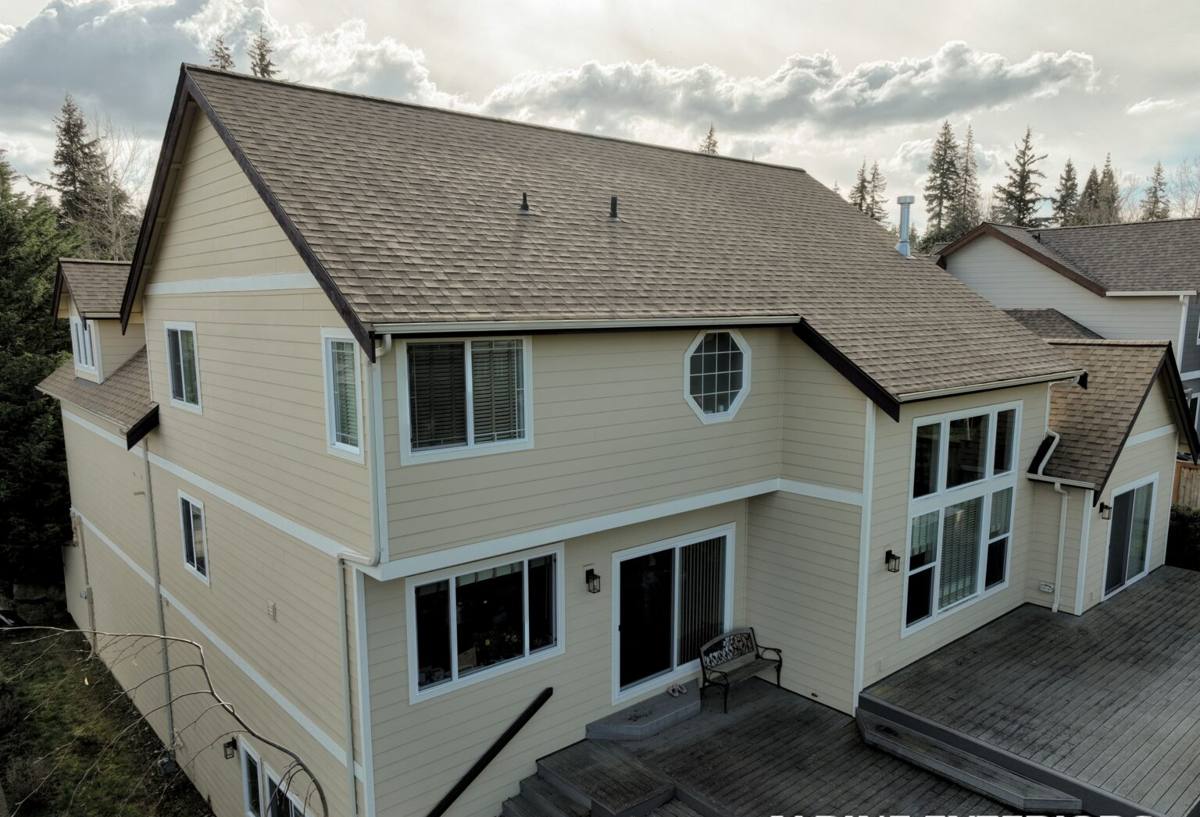
Signs a Deer Harbor Roof Needs Repair, Not Replacement
Most roofs don't fail all at once — they show warning signs first, and catching them early is usually the difference between a repair bill and a replacement bill. Look for:
- Dark streaking or thick moss growth concentrated on north-facing slopes or shaded sections near tree lines
- Shingle granules collecting in gutters or at downspout outlets
- Curling, cupping, or lifted shingle edges, especially on slopes that catch the prevailing wind
- Rust staining or gaps around chimney, skylight, or vent pipe flashing
- Soft or discolored ceiling drywall, especially after a hard rain event
- Sagging in a valley or along a ridge line
- Daylight visible through the roof deck from inside an attic space
If what you're seeing is isolated — one bad valley, one section of failed flashing, a patch of moss that's started lifting shingles — that's a repair. Widespread granule loss, multiple leak points, or a roof deck that's soft in more than one spot usually means the roofing has reached the end of its service life and repair would just be a temporary fix.
The Repair Issues We See Most Often in Deer Harbor
Moss and Organic Growth
Long wet seasons and heavy shade mean moss isn't a cosmetic issue here — it's a mechanical one. Moss holds water against the roofing material, and as it grows it can physically lift shingle tabs, breaking the seal that keeps wind-driven rain out. Left alone long enough, moss roots work into the shingle mat itself.
Flashing Failure
Flashing around chimneys, skylights, and roof-to-wall transitions takes the brunt of thermal movement and wind stress. On a harbor-adjacent property, salt air accelerates corrosion on lower-grade flashing metal, and once flashing starts to separate or rust through, water finds its way in even if the shingles around it look fine.
Valley and Wind-Driven Rain Damage
Valleys concentrate more water than any other part of a roof, and during a storm blowing off the water, rain can be driven up under shingle edges instead of just running down. Repairs in this area need underlayment and shingle overlap that account for wind-driven moisture, not just gravity drainage.
Debris and Impact Damage
Overhanging trees are part of the character of this area, but they also mean falling limbs, needles, and cones accumulate on roofs and in gutters. Clogged drainage backs water up under shingles, and falling debris can crack or dislodge individual shingles that then need spot repair.
What a Correct Roof Repair Actually Involves
A repair that's done right starts with figuring out the actual path water is taking, not just patching where the stain shows up on the ceiling. Water frequently travels along rafters or sheathing before it shows itself, so the visible damage and the source can be several feet apart. A proper repair process includes:
- Locating the true entry point, not just the visible symptom
- Removing and replacing damaged shingles, felt, or underlayment back to sound material
- Checking the roof deck underneath for soft spots or rot before re-covering it
- Replacing flashing rather than caulking over it, wherever flashing is the source of the leak
- Re-securing or replacing any lifted or cracked shingles in the surrounding area, not just the failure point
- Clearing moss and treating the area to slow regrowth, when moss contributed to the failure
- Confirming gutters and downspouts in the affected area are clear and draining properly
Caulk and roof cement have their place, but they're not a substitute for replacing failed flashing or saturated underlayment. A repair that only seals the surface without addressing what let water in tends to resurface as the same leak, often in a slightly different spot, within a year or two.
Roofing Materials: How They Hold Up to Repair in This Climate
The material on your roof changes both how it fails and what a correct repair looks like. Here's how the common options compare for repair work in a marine, high-moss-pressure environment like Deer Harbor:
| Material | Common Failure Points | Repair Considerations |
|---|---|---|
| Asphalt composition shingle | Granule loss, curling, moss lift, nail pop | Individual shingles can be replaced in place; matching color/age on visible slopes is a factor |
| Metal (standing seam or panel) | Fastener backout, seam sealant failure, panel scratches exposing bare metal | Repairs require matching profile and finish; rust prevention at cut edges and fasteners is critical near salt air |
| Cedar shake | Splitting, moss and moisture retention, granule-free surface holds water longer | Requires shake-specific replacement technique; higher ongoing maintenance to manage moss in shaded, damp settings |
We'll repair any of these when that's the right call, but we're upfront about trade-offs. Cedar shake, for example, looks great and is a traditional choice on the islands, but it holds moisture longer than composition or metal roofing in a shaded, damp lot — which means more frequent moss treatment and inspection to keep it performing. That's not a knock on the material, just an honest maintenance reality worth knowing before you commit to it or continue maintaining it.
Our Roof Repair Process
- Inspection. We get on the roof (not just a ground-level look) to trace the actual leak path, check flashing, valleys, and the deck underneath.
- Honest assessment. We tell you plainly whether this is a repair or whether the roof is past the point where repair makes sense, and why.
- Written scope and estimate. You get a clear description of what will be repaired and what it costs before any work starts — no surprise add-ons.
- The repair itself. Damaged material out, sound decking confirmed, correct flashing and underlayment in, matching shingles or panels installed.
- Cleanup and check. Gutters cleared, debris removed, and the repair area reviewed with you before we call it done.
Repair vs. Replacement: What Drives the Decision
Homeowners often want a straight answer on repair versus replacement, and the honest answer depends on a handful of factors that interact with each other:
| Factor | Favors Repair | Favors Replacement |
|---|---|---|
| Roof age | Well within expected service life | At or past the material's typical lifespan |
| Number of problem areas | One isolated leak or damaged section | Multiple unrelated leak points |
| Deck condition | Sound sheathing under the damaged area | Soft, rotted, or delaminated decking |
| Granule/material loss | Localized to one slope or section | Widespread across most or all slopes |
| Moss history | First occurrence, caught early | Repeated regrowth despite treatment |
Cost is obviously part of every homeowner's decision, but we won't quote a repair on a roof that's genuinely at the end of its life just to make a smaller number — that repair won't hold, and you'd be paying twice. Likewise, we won't push a full replacement on a roof that has years of good life left in it just because one section needs attention.
Why It Matters That We Already Work Deer Harbor
Roof repair on Orcas Island comes with logistics that don't exist for a mainland crew. Materials, equipment, and crews all have to move by ferry, and a contractor without an established island presence has to build that scheduling and freight cost into every job — or worse, cut corners to avoid it. A crew that already works Deer Harbor and the surrounding parts of Orcas Island has ferry timing worked out, knows which suppliers can get the right shingle color or flashing profile out here without a multi-week wait, and isn't guessing at how the local climate behaves on a given slope orientation.
There's also a practical trust factor on an island this size. Word travels fast in a small community, and a contractor who's done right by one Deer Harbor homeowner tends to get referred to the next. That's a different accountability structure than a crew passing through for a single job.
Simple Maintenance That Extends the Life of a Repair
Once a repair is done correctly, a little regular attention keeps it — and the rest of the roof — from developing new problems:
- Clear gutters and downspouts at least twice a year, more often if you're under heavy tree cover
- Have moss treated or removed before it establishes thick growth, not after shingles are already lifting
- Trim back branches that overhang the roofline to reduce debris and shade-driven moisture retention
- After any major windstorm, do a visual check (or have one done) for lifted or missing shingles
- Address small leaks immediately — a small, contained repair now is almost always cheaper than the water damage that comes from waiting
If you're dealing with a leak, visible moss buildup, or just want an honest read on where your roof stands, we're glad to take a look. Fill out the form below for a free, no-pressure estimate on roof repair for your Deer Harbor property.