 Orcas Island Siding
 Deer Harbor Windows Live a Harder Life Than People Expect
Deer Harbor sits close enough to open water that salt-laden air, wind-driven rain, and long stretches of shade and moisture are just part of owning a home here. Windows take the brunt of that. A window that would last decades in a dry inland climate can start failing in half that time on a waterfront or near-waterfront lot in San Juan County if it wasn't installed with this specific environment in mind. Custom windows for Deer Harbor aren't about fancy shapes or oversized glass — they're about picking the right frame material, glazing, and flashing detail for a place where the weather doesn't let up for months at a time.
This page is about that one job done right: sizing, ordering, and installing custom windows for homes in and around Deer Harbor, with an eye toward what actually holds up out here.
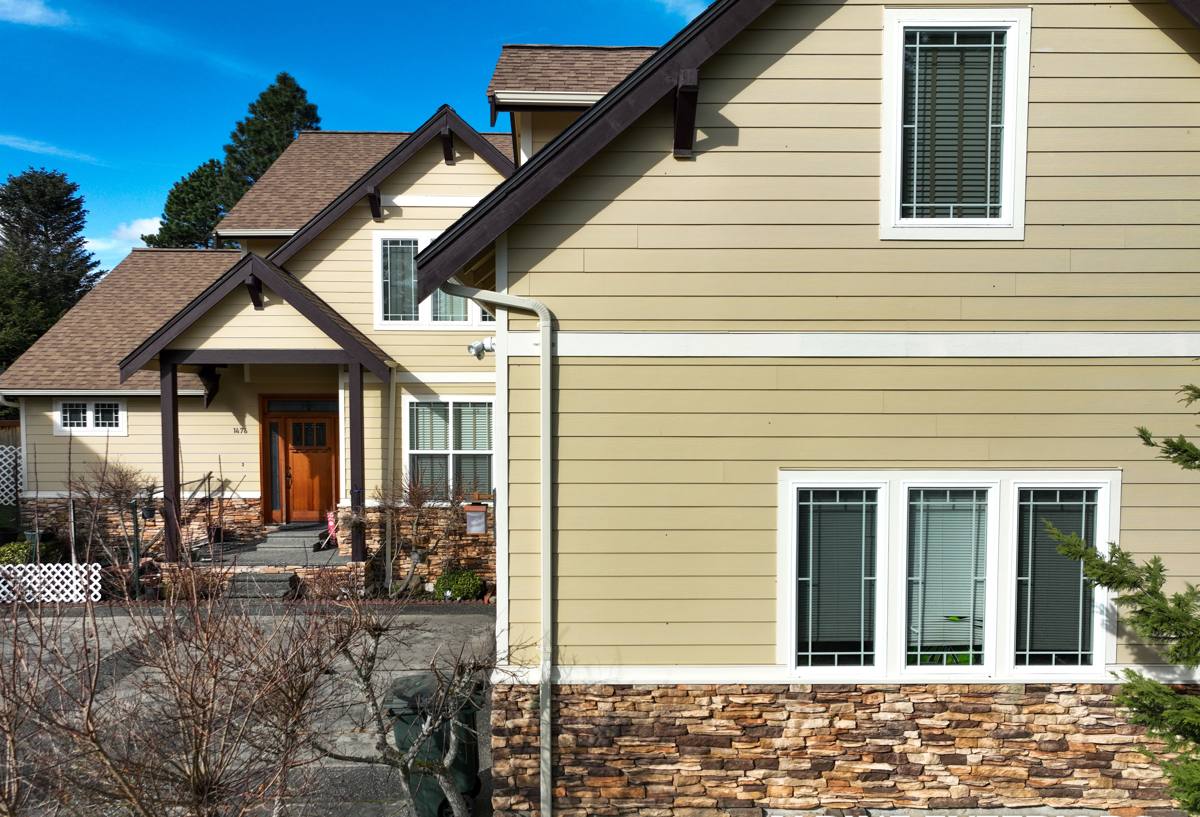
What "Custom" Actually Means for a Window Order
Custom doesn't automatically mean expensive or unusual-looking. Most of the time it means the window opening on your house isn't a stock size, or the house has settled slightly over the years, or you're changing the shape or operation type (swapping a slider for a casement, for example) to get better airflow or sealing performance. On older Orcas Island homes — cabins, additions, and remodels done in stages over decades — very few window openings are still perfectly square or a catalog size. Ordering custom means the window is built to the actual opening, not the other way around.
Custom sizing also matters when you're trying to solve a specific problem: a room that never gets cross-breeze, a wall that takes the worst of the weather off the water, or a view you want framed a certain way. We measure the actual opening, talk through what the room needs, and order glass and frames sized and specified for that opening — not a generic in-stock unit forced to fit.
When Custom Is the Only Real Option
- Older homes with irregular, settled, or non-standard rough openings
- Replacing a single odd-shaped or oversized window without touching the rest of the wall
- Matching sightlines and trim on additions built years apart
- Upgrading operation type (double-hung to casement, etc.) for better weather sealing
- Waterfront or high-exposure walls where standard glazing packages aren't enough
What Salt Air, Rain, and Moss Actually Do to a Window
Each of these has a distinct failure pattern, and knowing which one is at work tells you what to fix.
Salt Air
Airborne salt is corrosive to hardware — hinges, cranks, locks, and screws — long before it touches the glass or frame. On homes closer to the water, we see corroded window hardware well before the frame or glass shows any wear. This is one reason hardware material and finish matter as much as the frame material itself.
Driving Rain
Wind-driven rain doesn't fall straight down — it hits window walls at an angle and gets pushed up under trim and into any gap in the flashing. A window that's watertight in a light, vertical rain can still leak in a sideways storm if the flashing wasn't lapped correctly. This is almost always an installation issue, not a product defect.
Long Moss Season
Shaded, damp conditions for months at a time mean moss and algae get a foothold on horizontal surfaces — sills, trim ledges, and anywhere water sits instead of draining. Beyond looks, sustained moisture against wood trim or sill material is what eventually leads to rot around a window opening, even when the window unit itself is fine.
Frame Material Comparison for This Climate
There's no single "best" window material — the right call depends on exposure, budget, and how much upkeep you're willing to do. Here's how the common options actually perform in a coastal, high-moisture setting like Deer Harbor.
| Frame Material | Salt Air Resistance | Moisture Behavior | Upkeep |
|---|---|---|---|
| Vinyl | Good — doesn't corrode | Won't rot; can discolor over years in strong sun/salt exposure | Low |
| Fiberglass | Very good — dimensionally stable, resists corrosion | Excellent moisture resistance, minimal expansion/contraction | Low |
| Aluminum-clad Wood | Good on the exterior face; hardware still needs quality fasteners | Wood core needs correct sealing at every joint or moisture can reach it | Moderate |
| Wood (unclad) | Weakest — needs consistent maintenance near salt air | Prone to moisture damage if paint/finish isn't kept up | High |
We don't push one material on every job. A sheltered inland lot on Orcas Island can get good, long life out of a well-finished wood window. A wall that faces open water directly usually does better in vinyl or fiberglass, simply because there's less ongoing maintenance standing between you and a problem.
Why Installation Matters More Than the Window Itself
A high-end window installed with sloppy flashing will leak. A mid-range window installed correctly will not. This is the part of the job that doesn't show up in a brochure but decides whether you're dealing with a rot problem in five years.
What a Correct Install Actually Involves
- Checking the rough opening for square, level, and any hidden water damage before the new window ever goes in
- Installing weather-resistant barrier and flashing tape in the correct shingle-lap order — bottom, sides, then top — so water is always directed outward and down
- Sealing the nailing flange fully, not just tacking corners
- Using backer rod and the right exterior sealant at the trim joint, not just caulk over a gap
- Confirming drainage at the sill so any water that does get behind the trim has somewhere to go
- Insulating the gap between frame and rough opening properly — not overpacked, not left hollow
Skipping any one of these doesn't usually cause an obvious problem on day one. It shows up two or three winters later as a soft spot in the trim or a stain on the interior sill, right about the time it's a bigger repair than it would have been to do right the first time.
How the Job Runs, Start to Finish
- On-site assessment. We look at the actual opening, the exposure the wall gets, and the condition of the surrounding trim and sheathing — not just the window itself.
- Material and glazing selection. Based on that exposure, we talk through frame material and glass package options and give you a straight recommendation, not just the priciest option.
- Precise measurement and custom order. Openings are measured to the actual dimensions, including any out-of-square adjustment, before the order is placed.
- Removal and opening prep. Old window comes out, and we check the sheathing and framing underneath for hidden moisture damage before anything new goes in.
- Install with full flashing detail. Flashing, sealant, and insulation are done in the correct order — this is the step that determines whether the window performs in a real storm.
- Trim and finish. Interior and exterior trim work matched to the rest of the house.
- Walkthrough. We show you how the window operates, what maintenance it needs, and answer questions before we leave.
Signs a Deer Harbor Home's Windows Need Attention
- Fogging or a hazy film between panes — the seal on the insulated glass unit has failed
- Drafts you can feel around the frame even when the window is latched
- Hardware that's stiff, corroded, or won't lock fully
- Soft or discolored trim or sill wood, especially on exterior-facing sides
- Visible moss or algae buildup on horizontal sills or trim ledges
- Water staining on the interior wall or sill after a heavy rain
- Windows that are noticeably harder to open and close than they used to be
Any one of these on its own might just need a repair or a re-seal. Several at once, especially on an older window, usually means it's time to talk about replacement before the damage spreads into the wall framing.
Maintenance That Actually Extends Window Life Here
Whatever material you choose, a few habits go a long way in this climate. Rinse salt residue off frames and glass periodically, especially on water-facing walls — plain water is enough, no special cleaners needed. Keep sills and horizontal trim clear of moss and organic debris so water doesn't pool and sit against the surface. Check and touch up exterior caulking at the trim joint every year or two, since sealant is the first thing to break down under constant UV and moisture cycling. And test hardware operation each season — a lock or crank that's starting to stick is much cheaper to service now than to replace once it seizes.
Why a Crew That Already Works Deer Harbor Matters
Window installation isn't identical everywhere. A crew that mostly works dry, inland climates will default to standard flashing details and standard glazing packages because that's what normally works where they're from. Out here, standard isn't always enough. We work on Orcas Island and around San Juan County regularly, which means we've already seen how salt exposure, driving rain, and moss buildup affect windows on homes with a similar setting to yours — and we spec and install accordingly instead of learning that lesson on your house.
It also means logistics are simpler. Materials, custom orders, and scheduling around ferry timing and weather windows are just part of how we plan a job here, rather than a surprise that adds delay and cost partway through.
If you're weighing repair versus replacement, or just want a straight opinion on what a Deer Harbor exposure calls for, we're glad to take a look. Reach out for a free, no-pressure estimate using the form below.