 Orcas Island Siding
 Custom Decks Built for Deer Harbor's Waterfront Homes
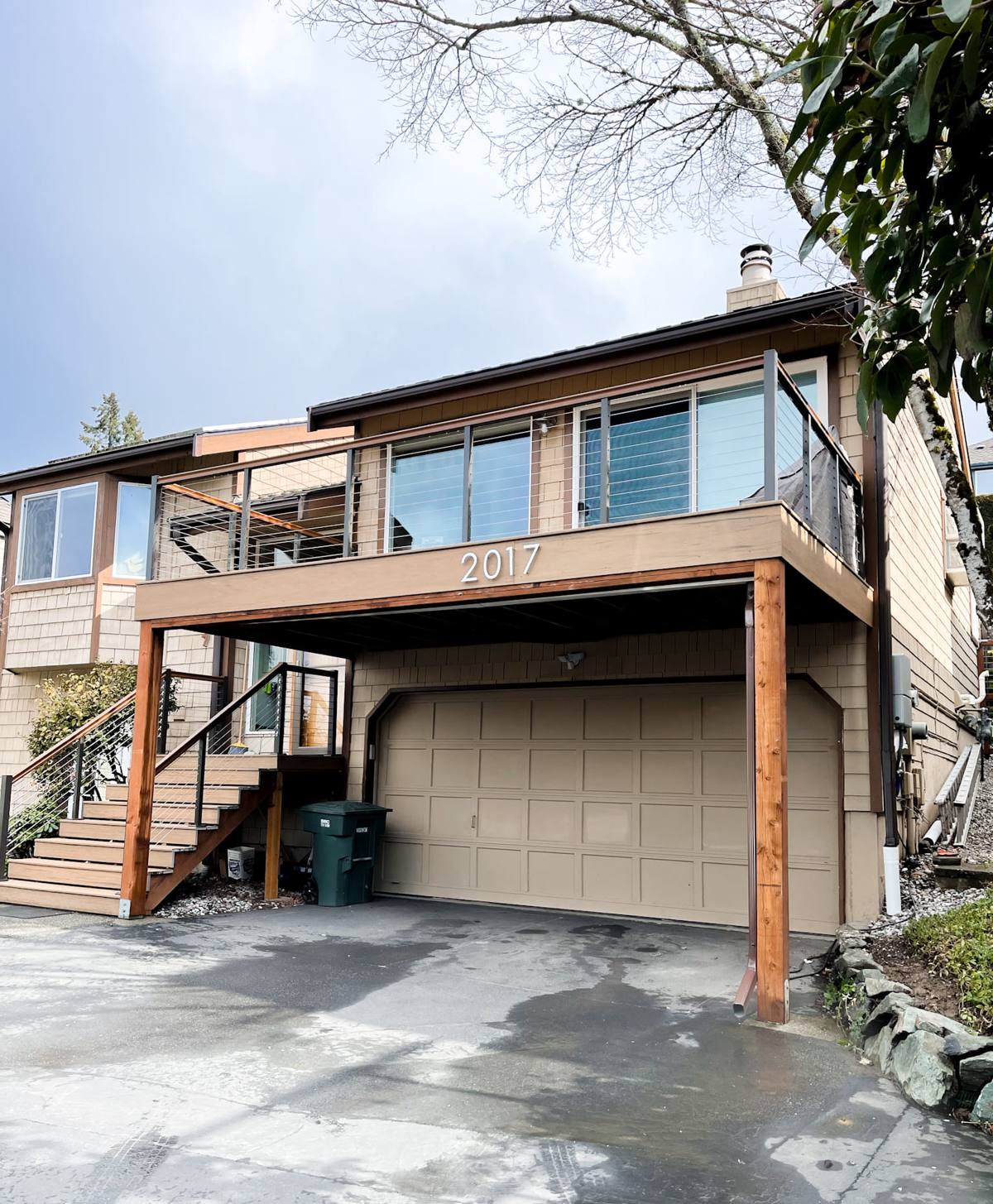
Deer Harbor sits on the west side of Orcas Island, a small, quiet waterfront community built around its marina and the water views that draw people to this part of San Juan County in the first place. A lot of the decks we see here are exactly what you'd expect from that setting: built to look out over the water, often elevated or stepped down a slope, and exposed to weather coming straight off the harbor with very little to break it up. That's a different set of demands than a deck tucked into a sheltered inland yard, and it's worth designing and building for those demands specifically rather than treating a Deer Harbor deck like any other backyard project.
We build custom decks for homes across Orcas Island, and Deer Harbor's combination of salt air, driving rain, and a moss season that runs most of the year is a big part of how we approach every one of those projects out here. This page walks through what that climate actually does to a deck, what a correctly built one involves, and how our process works from first site visit to finished project.
What This Climate Actually Does to a Deck in Deer Harbor
A deck is the most exposed structure on most properties. It has no roof overhead, it sits low to grade or out over a slope, and every board, fastener, and joint is directly in the weather year-round. In Deer Harbor specifically, that weather comes with a few characteristics that matter a lot for how a deck should be built.
Salt Air and Fastener Corrosion
Waterfront and near-waterfront properties in Deer Harbor sit in a steady flow of salt-laden air coming off the water, and that air is hard on anything metal. Standard fasteners, hangers, and hardware corrode faster here than they would even a mile or two further inland, and once a fastener starts to weaken, it's usually invisible until a board loosens or a railing connection fails. This is one of the most common corners cut on lower-cost deck builds, because corrosion-resistant hardware costs more and the difference doesn't show up for a few years.
Driving Rain and Moisture at the Ledger
Storms off the water rarely fall straight down. Wind drives rain sideways into the house-side ledger board where a deck attaches, into railing posts, and into any horizontal surface that isn't sloped to shed water. The ledger connection is the single point where a deck failure is most likely to also become a house failure, since water working behind an improperly flashed ledger board doesn't just rot the deck, it gets into the wall framing behind it.
Moss on Shaded, Waterfront Decking
Many Deer Harbor lots slope toward the water and carry tree cover that shades part or all of a deck through the day. Combined with San Juan County's long wet season, that shade keeps decking damp far longer after a storm than an open, sun-exposed deck would stay, and that's exactly the condition moss needs to take hold. Beyond the maintenance nuisance, moss on a walking surface is a real slip hazard, especially on stairs and near the water where footing already matters.
Decking Material Options for a Deer Harbor Deck
There's no single right decking material for every home, and budget, maintenance tolerance, and how the deck will be used all factor into the decision. What matters is understanding how each option actually behaves under sustained salt air, rain, and shade before you commit to one.
| Material | Moisture & Salt-Air Behavior | Maintenance | Realistic Lifespan Here |
|---|---|---|---|
| Cedar | Naturally decay-resistant when finished; graying and checking without upkeep | Re-staining every 2-3 years, more often on exposed sides | 15-25 years, maintenance-dependent |
| Pressure-treated pine | Resists rot when properly sealed; prone to warping and checking in wet-dry cycles | Sealing every 1-2 years | 10-20 years |
| Composite (wood-plastic blend) | Won't rot; some older formulations can absorb moisture at cut ends without capping | Occasional cleaning, no staining or sealing | 25-30 years |
| Capped composite / PVC | Fully sealed surface; excellent resistance to moisture, salt, and moss growth | Low; periodic washing | 25-30+ years |
On waterfront and salt-exposed lots in Deer Harbor, we generally steer homeowners toward capped composite or PVC decking specifically because it doesn't give moss or moisture a foothold the way an organic surface can, and it holds its finish without a recurring stain schedule that's harder to keep up with on an island. That said, plenty of homeowners want the look and feel of real wood, and cedar or pressure-treated decking can absolutely work here if you go in with a realistic maintenance plan and understand the trade-off you're making.
What's Underneath Matters More Than What's on Top
The decking boards are the part everyone sees, but the framing, footings, and ledger connection underneath are what actually determine whether a deck lasts. This is where we see the most corner-cutting on older or lower-bid deck builds, because it's the part that's invisible once the project is finished.
Ledger board flashing is the detail that matters most. The ledger is where a deck bolts to the house, and if it isn't flashed correctly with proper waterproof membrane and metal flashing directing water out and away from the house, driving rain works its way behind the board over time and rots both the ledger and the wall framing behind it. On sloped Deer Harbor lots, footings also need to be sized and set for the actual soil and slope conditions on that specific property rather than a generic minimum, since a footing that shifts on a slope will telegraph movement up through the whole structure. Joist tape over the framing, corrosion-resistant joist hangers, and proper spacing between boards for drainage and airflow all matter just as much as the visible decking above them.
Railings, Fasteners, and Hardware Built for Salt Air
Railings and hardware take the same salt-air punishment as everything else on a waterfront deck, and they're also the components most directly tied to safety. We spec stainless steel or otherwise corrosion-resistant fasteners and connectors on every Deer Harbor project rather than standard galvanized hardware, because standard coatings break down faster in this air than most homeowners expect. Railing posts need to be through-bolted into the framing with blocking behind them, not just screwed to the rim joist, since a loose railing post is one of the more common deck safety issues we find on older builds. Cable and glass railing systems are popular for the water views Deer Harbor properties are built around, and both can work well here, but cable systems in particular need corrosion-resistant hardware and correct tensioning to hold up long-term in salt air.
How We Build a Custom Deck: Our Process
Site Visit and Design
Every project starts with a walk of the property so we can see the actual sun exposure, wind direction, slope, and tree cover on your specific lot rather than assuming it matches the property next door. We'll talk through how you plan to use the deck, materials and railing style, and how the design should work with the water views and terrain that make Deer Harbor lots what they are.
Permitting on Orcas Island
Deck projects in San Juan County typically require a building permit, and waterfront or near-shoreline properties can involve additional shoreline setback review depending on the lot. We handle that process as part of the project rather than leaving it to the homeowner to sort out, and we'll give you a realistic timeline up front since permitting can add lead time on island projects.
Construction
We build the substructure first, ledger flashing, footings, framing, and joist protection, and get that inspected before decking, railings, and any finishing details go on top. Materials and equipment access on Orcas Island takes more planning than a mainland job, since everything has to come over by ferry, and we build that logistics timeline into the schedule from the start rather than discovering delays mid-project.
Walkthrough and Care Guidance
When the deck is finished, we walk it with you, and if you've chosen a material that needs periodic maintenance, we'll give you a specific, honest schedule for this climate rather than a generic care sheet that assumes a drier, less salt-exposed environment.
Signs a Deer Harbor Deck Needs Attention
- Soft, spongy, or springy decking, especially near the ledger or at stair landings
- Rust staining around fasteners or visibly corroded hardware
- A railing post or section that flexes or moves when pushed
- Persistent moss or algae buildup that returns quickly after cleaning
- Gaps opening up between the house and the ledger board, or staining on the siding above the ledger
- Boards that have cupped, split, or pulled away from fasteners
- Visible movement or settling at a support post or footing
Any one of these is worth a professional look before it gets worse through another wet season. Caught early, most are a repair. Left alone, several of them point to structural work rather than a simple board swap.
Cost Factors for a Custom Deck in Deer Harbor
| Factor | What Drives Cost | Deer Harbor-Specific Consideration |
|---|---|---|
| Size and footprint | Square footage, number of levels, stairs | Sloped waterfront lots often need multi-level designs and taller footings |
| Decking material | Cedar, pressure-treated, composite, or PVC | Salt-exposed sides often justify capped composite despite higher upfront cost |
| Framing and footings | Depth and number of footings, joist material | Slope and soil conditions on individual lots affect footing design |
| Railings and hardware | Style, material, corrosion resistance | Cable and glass systems for water views need marine-grade hardware |
| Permitting | Standard building permit vs. shoreline setback review | Waterfront lots may need additional San Juan County review |
| Access and logistics | Site access, material delivery | Ferry scheduling and island delivery windows affect project timeline |
Every one of those factors plays out differently on a sloped waterfront lot than it would on a flat inland one, which is why we walk every property in person before giving a number rather than quoting off a general size estimate.
Why Hiring a Crew That Already Works Deer Harbor Matters
A contractor who builds decks across Orcas Island regularly, rather than occasionally, has already seen how salt air, driving rain, and moss actually behave on real decks here over years, not just on a spec sheet. That shows up in practical choices: which side of a Deer Harbor lot takes the worst of the weather off the water, how much footing depth a given slope actually needs, and which hardware is worth the extra cost because standard-grade fasteners simply don't last in this air. It also means understanding the realities of island logistics, materials, equipment, and scheduling all have to move by ferry, and a crew that already works out here builds that into the timeline instead of treating it as a surprise delay. A contractor unfamiliar with Deer Harbor and San Juan County's permitting process is more likely to apply generic assumptions that don't hold up on this specific stretch of coastline.
If you're planning a new custom deck or need an honest look at an aging one on your Deer Harbor property, we're glad to come take a look and talk through what actually makes sense for your lot, your budget, and how you want to use the space. Reach out using the form below to schedule a free, no-pressure estimate.