 Orcas Island Siding
 Why West Sound Decks Wear Out Faster Than You'd Expect
Homes around West Sound sit close to the water, and that proximity is exactly what makes deck maintenance here different from almost anywhere inland. Salt-laden air corrodes fasteners and hardware from the inside out, long before the wood itself shows obvious damage. Add San Juan County's wet fall-through-spring stretch, where driving rain gets pushed sideways by wind off the sound, and you have moisture finding its way into every seam, joint, and screw hole a deck has. Then there's moss season — stretching longer here than in drier parts of Washington — which holds moisture against decking boards and framing for weeks at a time, accelerating rot in spots that never fully dry out.
None of this means a deck on Orcas Island is doomed. It means a deck built or replaced without accounting for these conditions will fail years before it should. We've replaced decks that were barely a decade old, structurally compromised not because the homeowner neglected them, but because the original build didn't account for what a West Sound winter actually does to a structure.
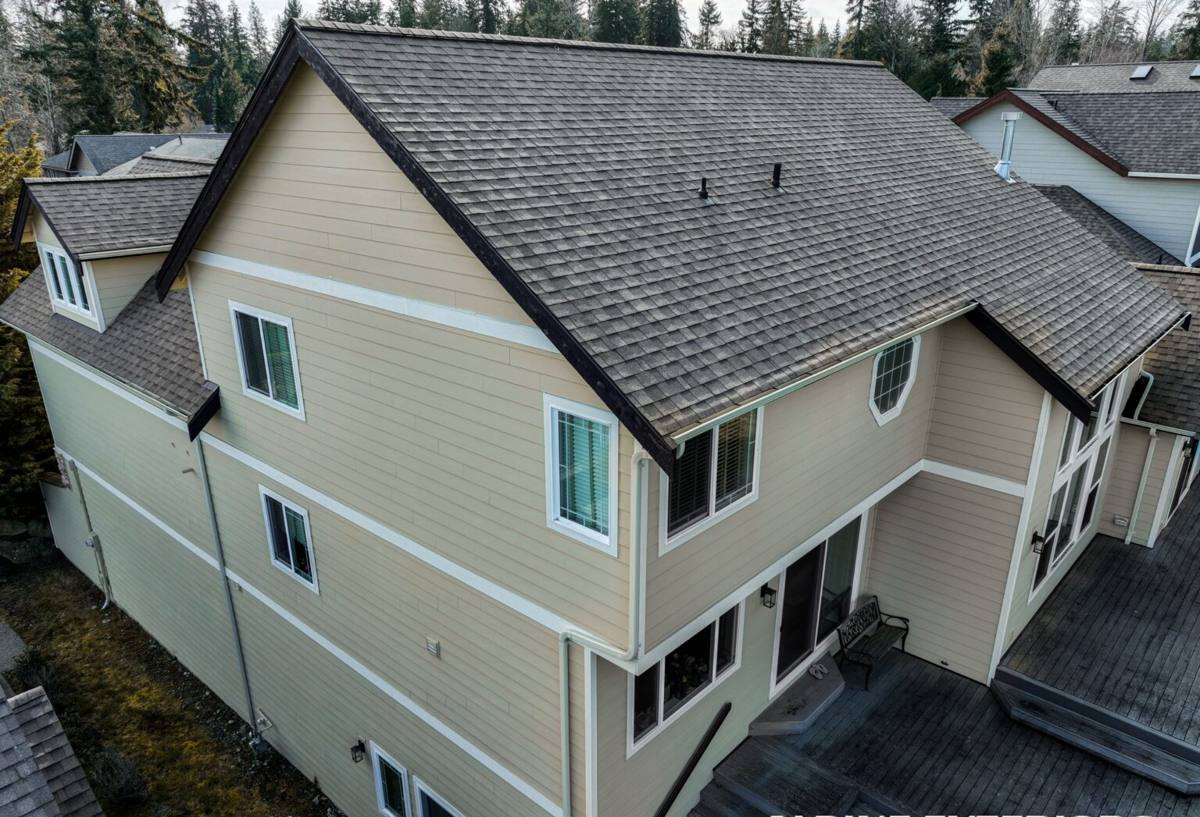
Repair or Replace: How to Tell the Difference
Not every tired-looking deck needs a full replacement, but a lot of decks that "just need a few boards" actually need much more once you look underneath. The surface is often the last thing to show real trouble — by the time boards are visibly cupping or splintering, the framing underneath has usually been dealing with moisture intrusion for a while.
A repair makes sense when the framing, ledger board, and footings are sound and the damage is limited to surface boards, railings, or fasteners. Replacement is the right call when the structural members themselves are compromised, when the ledger connection to the house shows rot or improper flashing, or when the deck was built without the moisture management a marine climate requires in the first place.
Signs You're Looking at a Replacement, Not a Patch
- Soft, spongy, or bouncy spots when you walk across the deck
- Visible gaps, staining, or soft wood where the deck meets the house (the ledger connection)
- Rust streaking or corrosion around fastener heads and hardware
- Posts or footings that have shifted, settled, or show rot near ground contact
- Persistent moss or algae growth that returns within weeks of cleaning
- A deck built more than 15-20 years ago with galvanized (not stainless or coated) fasteners
- Railings that flex or feel loose when pushed
Choosing a Decking Material for a Marine Climate
Material choice matters more here than in drier inland climates, because the margin for error with moisture is smaller. There's no single "best" material for every homeowner — it comes down to how much upkeep you want to do, your budget, and how the deck will be used.
| Material | How It Handles Salt Air & Moisture | Maintenance | Typical Lifespan Here |
|---|---|---|---|
| Pressure-treated lumber | Resists rot with proper sealing; fasteners are the weak point if not corrosion-rated | Annual cleaning, resealing every 1-2 years | 15-20 years with upkeep |
| Cedar | Naturally rot-resistant, but softens over time without consistent sealing | Regular sealing/staining, moss removal | 15-25 years with upkeep |
| Composite decking | Doesn't absorb moisture the way wood does; performs well against moss and salt spray | Periodic washing, no sealing/staining | 25-30+ years |
| PVC decking | Fully moisture-resistant surface; best for constant exposure spots | Low — occasional washing | 25-30+ years |
We'll walk you through the honest trade-offs for your specific deck rather than pushing one product. Composite and PVC cost more upfront but ask far less of you over time in a climate that punishes low-maintenance habits. Wood costs less initially but only holds up if someone stays on top of sealing and cleaning every year — something that's easy to fall behind on with an island home, especially if it's not your primary residence.
What a Correct Deck Replacement Actually Involves
A deck is only as good as what you can't see once it's finished. Most of the failures we get called out to inspect trace back to shortcuts in the parts that get covered up.
Ledger Board & Flashing
The ledger — where the deck attaches to the house — is the single most common failure point in this climate. It needs proper flashing that sheds water away from the house band board, not caulk alone, which fails over time and lets water track behind it. This is the connection we inspect most carefully on every replacement.
Framing & Footings
Joists, beams, and posts need to be sized correctly for the deck's actual load and set on footings that go below frost depth and bear on stable soil. On sloped or wooded lots common around West Sound, this sometimes means adjusting footing placement to work with the terrain rather than fighting it.
Fasteners & Hardware
This is where salt air does the most damage, and it's the detail most likely to get skipped on a budget build. Standard galvanized fasteners corrode faster near the water. We use stainless steel or coated fasteners rated for coastal exposure, along with structural hardware — joist hangers, post bases, hurricane ties — matched to the same corrosion resistance standard.
Drainage & Airflow
Decks that trap moisture underneath rot from the bottom up. Proper spacing between boards, ventilation under low decks, and grading that moves water away from posts and footings all matter more here than in a dry climate, where a design flaw like poor airflow might take decades to show up instead of years.
Our Process for West Sound Deck Replacements
- On-site assessment — We inspect the existing deck, ledger connection, framing, and footings to determine what's actually driving the deterioration.
- Honest scope and estimate — You get a clear breakdown of what needs replacing, what materials make sense for your home and budget, and what it will cost — no vague allowances.
- Permitting — We handle the San Juan County permit application for you, including any details specific to your parcel or shoreline setback if applicable.
- Demolition and disposal — Old decking, framing, and hardware removed and hauled off, including proper disposal of any treated lumber.
- Rebuild — Framing, flashing, footings, decking, and railings installed to a standard built for this climate, not a generic spec.
- Final walkthrough — We go over the finished deck with you, including basic maintenance guidance specific to the material you chose.
Permitting and Logistics on Orcas Island
Building on an island adds a layer of planning that mainland contractors often don't account for. Material deliveries depend on ferry schedules, so timelines need to build in that reality rather than assuming next-day availability. San Juan County permitting requirements apply to most deck replacements, particularly for decks above a certain height or those near shoreline setback zones — we handle that process as part of the job rather than leaving it for the homeowner to sort out. A crew that regularly works on Orcas Island has already worked these logistics into how they schedule and sequence a project, which keeps things moving instead of stalling on a delivery that missed a boat.
What Drives the Cost of a Deck Replacement
| Cost Factor | Why It Matters |
|---|---|
| Deck size and layout | Square footage and complexity (multiple levels, angles, built-in features) directly affect labor and material |
| Material choice | Composite and PVC cost more upfront than wood but reduce long-term maintenance spending |
| Framing condition | If footings or framing need full replacement rather than reuse, that adds labor and material |
| Site access | Sloped lots, limited driveway access, or waterfront setback zones can affect equipment access and timeline |
| Railing and stair systems | Custom railings, cable systems, or multiple stair sets add cost beyond a simple flat deck |
| Permitting requirements | Decks requiring engineering review or shoreline permitting take longer and involve additional fees |
We won't quote a number without seeing the site — the variables above shift the total too much for a fair estimate over the phone. What we can promise is a written estimate that breaks down materials and labor clearly, so you know what you're paying for before work starts.
Why Hiring a Crew That Already Works West Sound Matters
A deck built to a generic spec sheet, without adjustment for salt exposure, rain patterns, and moss growth specific to the San Juan Islands, tends to show its age early — usually in the fasteners and framing first, well before the visible decking looks bad. A crew that regularly works this part of Orcas Island has already seen which details fail first in this climate and builds around them from the start: the right hardware grade, the right flashing detail, footings sized for what the ground here actually does through a wet winter. That experience shows up less in what a deck looks like on day one and more in how it holds up ten years in.
If your deck is showing signs of wear, or you're just not sure whether it needs a repair or a full replacement, we're happy to take a look and give you a straight answer. Reach out for a free, no-pressure estimate using the form below.