 Orcas Island Siding
 Decks in Obstruction Pass Take a Different Kind of Beating
Obstruction Pass sits on the exposed southeast shoulder of Orcas Island, where the water funnels between the island and Blakely Island. Homes out here get a steady diet of salt-laden wind, driving rain off the Sound, and long stretches of shade under fir and madrone canopy that never quite let a deck dry out. That combination ages a deck faster than almost anywhere else in San Juan County. We've replaced decks all over the island, and the ones in this stretch consistently show the same failure pattern: fasteners corroding from the inside out, ledger boards holding hidden rot, and a moss layer on the decking that's been quietly trapping moisture against the wood for years.
If your deck is cupping, springy underfoot, or growing green film faster than you can pressure-wash it off, that's not just cosmetic. It's usually a sign the structure underneath needs a real look, not another coat of sealer.
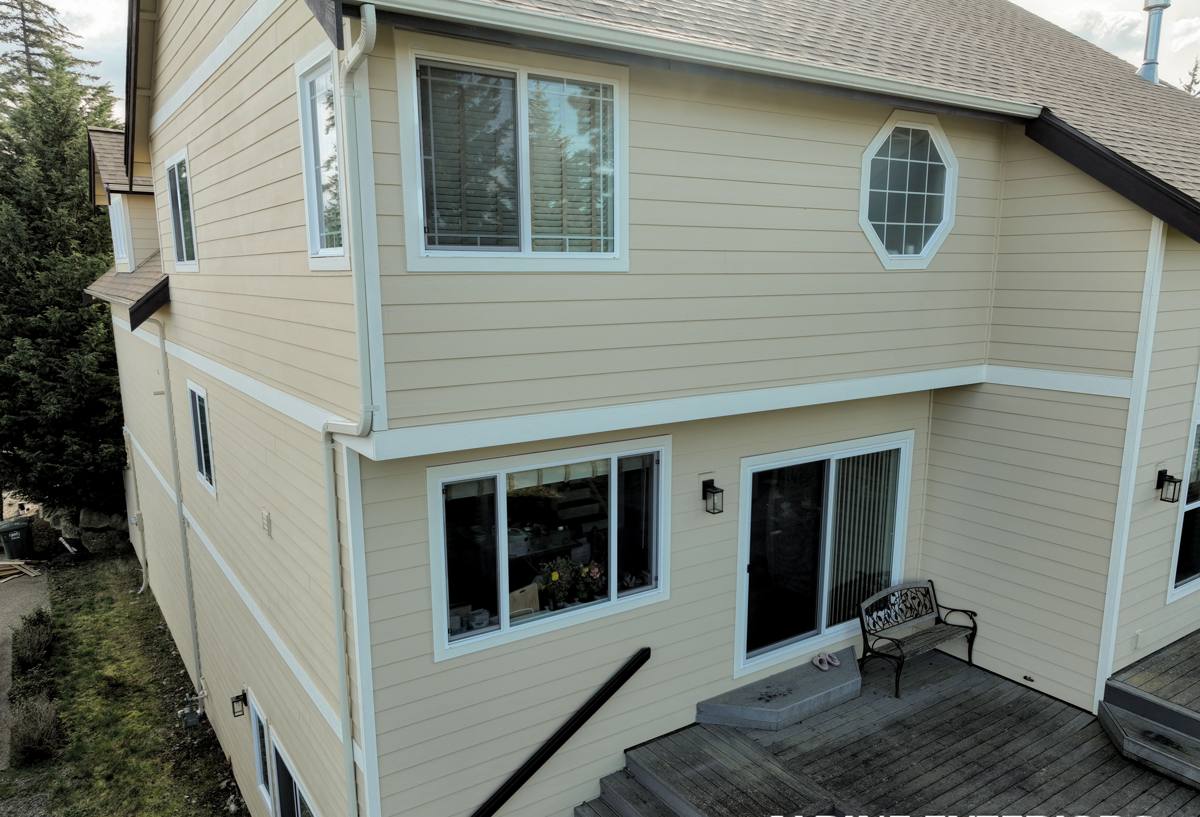
What Salt Air and Moss Actually Do to a Deck
Salt Air and Corrosion
Airborne salt accelerates corrosion on any metal fastener, bracket, or hanger that isn't rated for it. Standard galvanized hardware can start breaking down within a handful of seasons this close to the water. Once fasteners fail, the connections holding your deck to the house — and the deck to itself — weaken long before the wood looks bad on the surface.
Driving Rain and Water Intrusion
Wind-driven rain doesn't just fall on a deck, it gets pushed sideways into seams, under flashing, and behind ledger boards. On a lot of older Orcas Island decks, the ledger connection to the house was never properly flashed to begin with, which means water has been finding its way into the rim joist for years without anyone knowing.
Moss and Sustained Moisture
San Juan County's long wet season, combined with tree cover common around Obstruction Pass, means moss and algae get a long runway to establish themselves. Moss holds moisture directly against wood fibers and fastener heads. It also makes boards slick and dangerous underfoot well before the wood itself is structurally compromised — often the first visible warning sign homeowners notice.
Signs Your Deck Is Due for Replacement, Not Just Repair
- Soft or spongy spots when you walk across the decking, especially near the house or stair landings
- Rust streaking below fastener heads or around post bases
- Gaps opening up between boards, or boards cupping so water pools instead of shedding
- Persistent moss or black algae that comes back within weeks of cleaning
- A ledger board area that feels damp or shows discoloration where the deck meets the house
- Railings or stair stringers that flex more than they used to
- Visible daylight or gaps where flashing should be sealing the deck-to-house connection
Any one of these on its own might be a repair. Two or three together, especially structural ones, usually mean the deck has reached the point where patching costs more over time than a proper rebuild.
What a Correct Deck Replacement Involves Here
A deck replacement done right for this part of Orcas Island isn't just swapping old boards for new ones. It starts with the structure and works outward.
1. Full Structural Inspection
Before we price anything, we get under the deck and check the ledger connection, joists, posts, and footings. This is where most of the hidden damage lives, and it's the part a surface-level repair never touches.
2. Ledger and Flashing Correction
If the ledger board isn't properly flashed against the house — which is common on older builds around the island — we fix that as part of the rebuild. This single detail matters more to long-term deck life here than almost any decking material choice.
3. Corrosion-Resistant Fasteners and Hardware
Given the salt exposure, we use fasteners and structural connectors rated for coastal or marine-grade environments rather than standard galvanized hardware. It costs a bit more up front and saves you from the exact corrosion failures we see on older decks in this area.
4. Framing and Ventilation
Where moss and moisture have been an issue, we look at whether the framing allows enough airflow underneath. Poor ventilation under a deck built low to the ground or shaded by trees is a major reason moss and rot come back even after a rebuild, so we address grading and airflow, not just the boards on top.
5. Decking Material Installation
Boards get installed with proper spacing for drainage and movement, and fastened using a method appropriate to the material — hidden fasteners for composite, coated screws for wood, spaced correctly so the deck can dry between rain events instead of holding water.
Choosing a Decking Material for This Climate
There's no single "best" decking material for every Orcas Island home — it depends on budget, how much upkeep you want to do, and how exposed the deck is. Here's how the common options actually perform under salt air, rain, and moss pressure:
| Material | Moisture & Salt Behavior | Moss Resistance | Maintenance |
|---|---|---|---|
| Pressure-treated wood | Good if properly sealed and fastened with corrosion-resistant hardware; end grain is a weak point | Needs regular cleaning to prevent moss buildup | Annual cleaning and periodic re-sealing |
| Cedar | Naturally rot-resistant, holds up well to moisture but can gray and soften faster in constant shade/damp | Still susceptible in heavy shade without upkeep | Regular cleaning, occasional oiling |
| Composite decking | Excellent — doesn't absorb water or corrode, unaffected by salt air | Can still grow surface algae/moss film but doesn't rot | Occasional washing, no sealing needed |
| PVC decking | Excellent — fully synthetic, no rot or corrosion risk | Same surface-growth consideration as composite | Lowest maintenance of the options |
We're honest with clients about the trade-offs: composite and PVC cost more up front but remove wood-rot risk almost entirely, which matters a lot given how much moisture this area sees. Wood costs less initially but only performs well if the homeowner keeps up with cleaning and sealing on a real schedule — something that's easy to let slide once summer ends and the rain sets back in.
What Drives the Cost of a Deck Replacement
| Factor | Why It Matters Here |
|---|---|
| Deck size and layout | More square footage and multiple levels or stairs increase material and labor |
| Substructure condition | Rotted joists, posts, or footings found during demo add repair scope |
| Ledger/flashing repair | Correcting improper flashing at the house connection is common on older builds here and adds time but prevents repeat failure |
| Material choice | Composite/PVC costs more upfront than wood but reduces long-term maintenance and replacement risk |
| Site access | Waterfront and wooded lots around Obstruction Pass can mean harder material staging and access |
| Railing and stair complexity | Code-compliant railings and stairs on sloped lots add labor |
We don't quote a number until we've actually been under the deck. Broad ranges without seeing the structure aren't honest, and on Orcas Island in particular, the condition of what's hidden usually matters more to the final price than the square footage on top.
Why Barge and Ferry Logistics Matter for This Job
Getting materials to Orcas Island isn't like a mainland job. Lumber, composite decking, and hardware all have to come over by ferry or barge, and timing matters — a crew that plans deliveries around the schedule doesn't leave your project sitting half-finished waiting on a material run. We plan material orders in advance specifically because of this, so once demo starts, the rebuild moves without a multi-day gap waiting on a ferry slot.
Our Process for an Obstruction Pass Deck Replacement
- On-site assessment — we inspect the ledger, framing, posts, and footings, not just the decking surface
- Honest scope and estimate — you get a clear picture of what's structural versus cosmetic before we commit to a price
- Material selection — we walk through wood, composite, and PVC trade-offs based on your budget and how the deck is used
- Scheduled demo and rebuild — materials are staged and ordered ahead of time to avoid delivery gaps
- Structural correction — ledger flashing, framing, and hardware upgrades happen before a single new board goes down
- Final walkthrough — we check drainage, fastening, and railing safety with you before calling it done
Why Hiring a Crew That Already Works This Area Matters
A contractor who's never worked San Juan County will price and build a deck the way they would anywhere else — standard hardware, standard flashing details, no particular attention to moss or salt exposure. That's how decks around Obstruction Pass end up needing early replacement in the first place. Working this shoreline regularly means we already know where builders typically cut corners on older homes, what hardware actually holds up out here, and how to sequence a job around ferry logistics without stalling your project. That local familiarity is the difference between a deck that needs redoing in eight years and one that holds up for decades.
If your deck is showing rust, rot, moss, or just doesn't feel solid anymore, we're happy to take a look. We offer free, no-pressure estimates for Obstruction Pass homeowners — just fill out the form below and we'll set up a time to come out and inspect it in person.