 Orcas Island Siding
 Why Lopez Island Decks Wear Out Faster Than Inland Decks
A deck on Lopez Island lives a harder life than the same deck built forty miles inland. The San Juan Islands sit in a marine environment where salt-laden air moves through every joint and fastener, driving rain drives moisture up under boards and around railing posts, and a long, damp moss season keeps wood and composite surfaces wet for months at a time. None of that is dramatic on its own — it's slow, steady exposure — but it adds up. A deck that would last 20+ years in a dry inland climate can show structural trouble in half that time out here if it wasn't built with the right flashing, fasteners, and drainage details from the start.
We see the same failure patterns repeat on Lopez Island decks: rot starting at the ledger board where it meets the house, corroded fasteners bleeding rust streaks into the decking, joists gone soft where moss and debris trapped moisture against the wood, and railing posts loosening because the original installer didn't account for how much water actually moves through this climate. Deck replacement here isn't just swapping old boards for new ones — it's correcting the details that let a deck survive salt air, driving rain, and a moss season that can run from October into May.
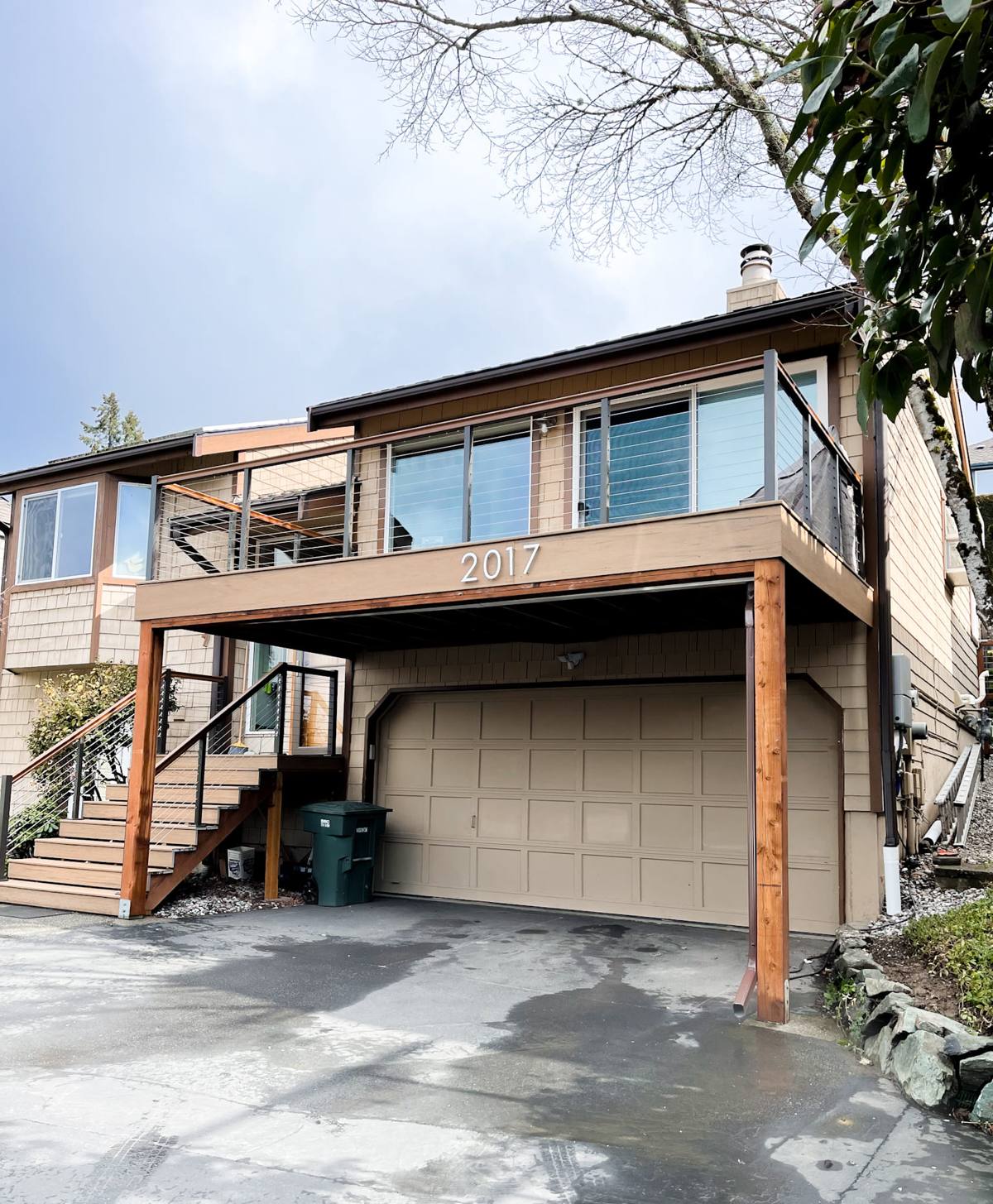
Signs Your Deck Needs Replacement, Not Just Repair
Not every tired-looking deck needs to be torn off. But there's a point where patching individual boards is just delaying a bigger problem — or hiding one. Here's how we tell the difference during an inspection:
- Soft, spongy spots when you walk the deck, especially near the house or around post bases
- Visible gaps, cracking, or cupping in more than a handful of boards
- Rust streaking from fasteners, or fasteners that back out or spin freely
- Moss or dark staining that keeps returning within weeks of cleaning
- Any movement or bounce in the railing when leaned on
- Ledger board separation, gaps, or staining where the deck meets the siding or rim joist
- Joists or beams you can probe with a screwdriver and feel give
If it's one or two of these on an otherwise sound structure, targeted repair can make sense. If it's several, or if the framing itself is compromised, replacement is the honest recommendation — patching a rotten frame just moves the failure point somewhere you can't see it.
What a Correct Deck Replacement Actually Involves
Starting With the Framing, Not the Boards
The decking surface is the part everyone notices, but the framing underneath is what determines whether the deck lasts. On a proper replacement, we assess and typically replace the ledger board, joists, beams, and posts as needed — not just the visible decking. In a climate that pushes this much moisture through a structure, cutting corners on the frame is the single biggest reason decks fail early a second time.
Ledger Flashing Is Not Optional
The ledger board — where the deck attaches to the house — is the single most common failure point we find on older Lopez Island decks. Water gets behind the ledger, and because it's tight against the house framing, that rot spreads into the structure itself, not just the deck. A correct replacement uses proper flashing (metal flashing plus a water-resistant membrane) between the ledger and the house sheathing, with the flashing detailed to shed water outward rather than trap it. This is a five-minute detail that determines whether your next deck lasts 10 years or 25.
Drainage and Airflow Under the Deck
Standing moisture under a deck — from poor grading, tight-to-the-ground framing, or debris buildup — is exactly what feeds the moss and rot cycle in this climate. We grade for drainage away from the house, keep framing off wet soil where possible, and leave enough clearance for airflow underneath. A deck that can dry out between rain events lasts far longer than one that stays damp continuously.
Coastal-Grade Fasteners and Hardware
Standard galvanized fasteners corrode faster in salt air than most homeowners expect, and once a fastener starts rusting, it weakens the connection it's holding and stains the surrounding wood or composite. On Lopez Island builds we use stainless steel or heavy hot-dip galvanized fasteners and structural hardware rated for coastal exposure — it costs more upfront than standard hardware, but replacing a deck twice because the fasteners failed first costs far more.
Choosing the Right Decking Material for This Climate
There's no universally "best" decking material — there's the right material for your budget, maintenance appetite, and how much sun versus shade and moss exposure your specific site gets. Here's how the common options actually perform on the islands:
| Material | Moisture Behavior | Maintenance | Best For |
|---|---|---|---|
| Pressure-treated wood | Absorbs and releases moisture; prone to cupping and checking if not sealed regularly | Annual cleaning and re-staining/sealing recommended | Lower upfront cost, homeowners willing to maintain it |
| Cedar | Naturally rot-resistant but still needs sealing in this climate to hold color and resist moss | Regular cleaning and periodic sealing | Homeowners who want a natural wood look and don't mind upkeep |
| Capped composite | Doesn't absorb water into the core; surface sheds moisture well | Periodic washing to prevent surface moss/algae buildup, no sealing or staining | Homeowners who want low maintenance long-term |
| PVC decking | Fully moisture-resistant, doesn't support wood rot | Occasional washing | Maximum moisture protection near water or heavy shade |
A note on composite and PVC: even "low maintenance" products get slick with moss and algae in a wet, shaded climate like this one if never cleaned. Low maintenance doesn't mean no maintenance — it means less of it. We'll walk you through what your specific site and sun exposure actually calls for rather than defaulting to whatever's easiest to sell.
Railings and Guardrails
Railings take abuse from the same salt air and moisture as the decking, but they're also a safety component, so we don't cut corners here. Post bases are a common weak point — if a post isn't properly flashed and anchored, water works into the base and the whole railing can loosen over a few seasons. We build railings to current code requirements for height and baluster spacing, with corrosion-resistant hardware at every connection point, whether the railing material is wood, composite, cable, or metal.
Our Deck Replacement Process
- On-site assessment. We inspect the existing deck's framing, ledger connection, and posts to determine what's actually salvageable versus what needs to go — this is also when we talk through material options for your site's sun and moss exposure.
- Permit check. Depending on scope, height, and footprint, San Juan County may require a permit for deck work. We'll tell you upfront whether your project needs one and handle that step rather than leaving you to figure it out.
- Tear-off and disposal. Old decking, railing, and any compromised framing are removed and hauled off — factoring in that everything on Lopez Island moves by ferry, we plan material and disposal logistics ahead of time so the project doesn't stall waiting on a ferry schedule.
- Framing repair or replacement. Ledger reflashing, joist and beam work, and post replacement happen before a single new board goes down.
- Decking installation. Boards are installed per manufacturer spacing and fastening specs — this matters more in a wet climate, since gaps that are too tight trap moisture and gaps that are too wide feel unfinished and catch debris.
- Railings and final hardware. Railings go in last, checked for level, secure post connections, and code-compliant spacing.
- Final walkthrough. We walk the finished deck with you, point out any maintenance recommendations specific to your material choice, and answer questions before we call it done.
Why Ferry Logistics Actually Matter to Your Timeline
Building on Lopez Island isn't the same as building in a mainland subdivision, and any contractor who hasn't worked the islands regularly will underestimate this. Material orders, dumpster or debris hauling, and even day-to-day crew scheduling all have to work around ferry sailings. A crew that already works Lopez Island and the surrounding San Juan Islands has that logistics figured out — materials staged ahead of time, realistic timelines that account for sailing schedules, and no surprise delays because someone missed a boat. That experience translates directly into a smoother project and a more accurate timeline for you.
Cost Factors in a Deck Replacement
Every deck is different, so exact pricing depends on your specific project, but the main cost drivers are consistent. We give straightforward, itemized estimates rather than vague lump sums, so you can see exactly what you're paying for.
| Factor | Why It Affects Cost |
|---|---|
| Deck size and shape | Larger and more complex footprints (multiple levels, angles, stairs) take more material and labor |
| Decking material | Pressure-treated wood is generally the lowest upfront cost; composite and PVC cost more upfront but less in long-term maintenance |
| Framing condition | If joists, beams, or the ledger connection need replacement, that's structural work beyond surface decking |
| Railing type | Cable, glass, or metal railings cost more than standard wood or composite balusters |
| Site access | Difficult access or elevation changes add labor time, and material delivery logistics on the islands can affect scheduling |
| Permitting | Permit fees and any required inspections add to project timeline and cost where applicable |
Maintenance After Installation
Whatever material you choose, a little seasonal maintenance goes a long way in this climate:
- Sweep debris off the deck regularly, especially in fall when leaves and needles accumulate and trap moisture
- Wash the surface at least once or twice a year to prevent moss and algae from taking hold, more often in shaded areas
- Check and clear any debris from under the deck that could block drainage or airflow
- Inspect railing post connections annually for any looseness
- For wood decking, reseal or re-stain on the schedule recommended for your specific product — waiting too long lets moisture back into the wood
Get a Straightforward Estimate
If your Lopez Island deck is showing soft spots, rust stains, moss that won't quit, or railing that's gotten loose, it's worth having someone who works this climate regularly take a look before you decide between repair and replacement. We'll give you a clear, honest read on what your deck actually needs — no upsell, no guesswork. Request a free, no-pressure estimate using the form below and we'll get back to you to schedule a look at your property.