 Orcas Island Siding
 West Beach Decks Face a Different Set of Problems
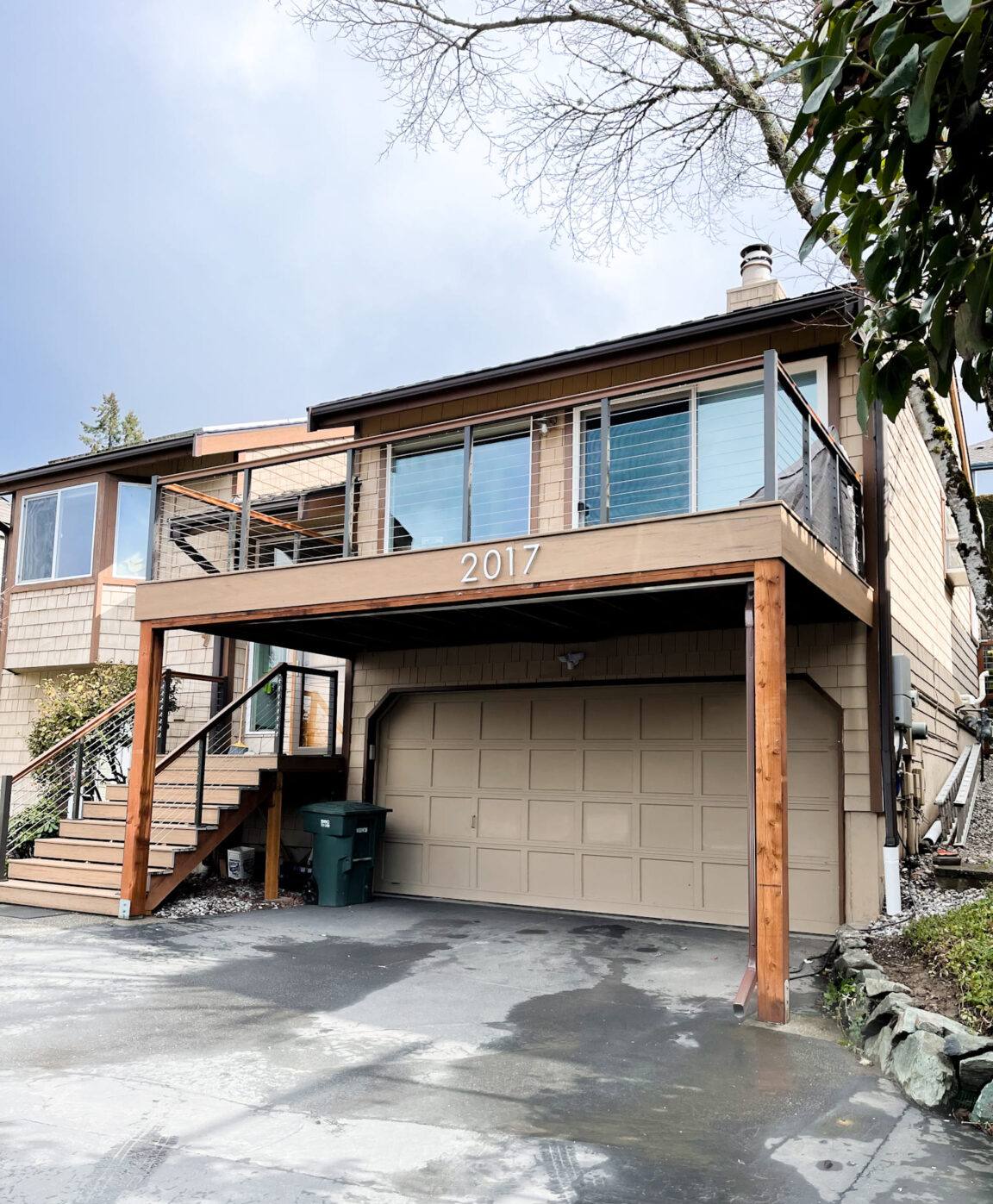
Decks on the west side of Orcas Island take on weather that inland San Juan County homes rarely see. West Beach sits exposed to marine wind, salt-laden air off the water, and long stretches of wind-driven rain that push moisture into places a dry-climate deck would never have to deal with. Add in a moss season that can run from fall through spring, and you have a deck assembly that's under constant low-grade attack even when nothing looks obviously wrong.
Most deck problems we see in this area don't start as dramatic failures. They start small — a soft spot near a post base, a railing that's developed a little play, a board that's cupping slightly at the edges. By the time a homeowner notices, the damage is usually well past the surface.
Why the Climate Here Is Hard on Decking
Salt Air and Metal Fasteners
Salt-laden air accelerates corrosion on anything metal — nails, screws, joist hangers, bolts. Standard galvanized fasteners that hold up fine 20 miles inland can start showing rust streaks and pitting within a few years this close to the water. Once a fastener corrodes, it loses holding strength long before it looks obviously bad, which is part of why loose railings and squeaky boards show up gradually rather than all at once.
Driving Rain and Water Intrusion
Rain here doesn't just fall straight down — wind pushes it sideways, up under flashing, and into any gap where two materials meet. The ledger board connection (where the deck attaches to the house), post bases, and stair stringers are the spots most likely to trap water that can't dry out between storms.
Moss, Algae, and Surface Decay
A long moss season means organic growth gets a real foothold on horizontal surfaces — deck boards, stair treads, the tops of railings. Moss holds moisture against wood far longer than open air would, which speeds up rot underneath a surface that might still look mostly fine from a few feet away. Algae adds a slip hazard on top of the decay problem.
The Deck Problems We See Most Often
Ledger Board and Flashing Failure
This is the connection point where the deck meets the house, and it's the single most important structural detail on the whole deck. If flashing was installed poorly or has failed, water gets behind the ledger and starts rotting both the ledger and the house's rim joist. This is a structural issue, not cosmetic, and it's the first thing we check on any older deck.
Fastener and Hardware Corrosion
Rusted nails, corroded joist hangers, and failing carriage bolts are common on decks more than 10-12 years old that weren't built with marine-grade hardware. This shows up as loose railings, boards that have started to lift, or visible rust bleeding onto the wood surface.
Board Cupping, Splitting, and Soft Spots
Repeated wet-dry cycling causes wood decking to cup (edges higher than the center) or split along the grain. Soft, spongy spots under foot are a sign that rot has already set in below the surface, usually where moisture has been sitting the longest.
Post Base and Footing Issues
Posts that sit in standing water or direct soil contact rot from the bottom up. This is often hidden by skirting or landscaping and only gets caught during a hands-on inspection.
Stair and Railing Movement
Stringers and railing posts take repeated stress and are often under-built to code on older decks. Combined with fastener corrosion, this is where we most often find a genuine safety issue rather than just a cosmetic one.
Repair vs. Replace: How We Make the Call
Not every deck problem means starting over. We look at how much of the structure is still sound and how localized the damage is before recommending a full rebuild.
| Condition | Usually Repairable | Usually Needs Replacement |
|---|---|---|
| Ledger/flashing | Flashing failed but rim joist is sound | Rim joist itself has rotted |
| Decking boards | A handful of boards cupped or split | Most boards showing soft spots or rot |
| Framing (joists, beams) | Isolated soft spots, framework otherwise solid | Widespread rot in joists or beams |
| Posts/footings | Hardware corroded but post wood is sound | Post base rotted through |
| Railings/stairs | Loose but structurally intact | Undersized, code-noncompliant, or failing |
We'll always tell you honestly when a repair makes sense and when it doesn't. Sinking money into patching a deck whose framing is compromised isn't a favor to anyone.
What a Proper Repair Involves
- A hands-on inspection — not just a visual walk-around, but checking for soft spots with a probe, examining the ledger connection, and looking at post bases and hardware up close.
- Identifying the actual water source, not just the visible damage. A rotted board is a symptom; the failed flashing or missing gap that let water in is the cause.
- Removing and replacing only what's actually compromised, matching structural repairs to code requirements rather than just cosmetic patching.
- Replacing corroded fasteners and hardware with materials rated for coastal exposure, not standard interior-grade hardware.
- Re-checking the drainage and flashing details so the same failure doesn't happen again in the same spot.
Our Process for West Beach Deck Repairs
Because we already work regularly on this side of the island, we're familiar with the access, ferry scheduling, and material logistics that come with West Beach jobs — it's not our first trip out here, and that saves time on both estimating and scheduling.
- Initial walkthrough and honest assessment — what's cosmetic, what's structural, what can wait
- Written scope covering exactly what will be repaired or replaced
- Material and hardware selection matched to marine exposure, not generic stock
- Repair work with attention to the water-management details that caused the damage in the first place
- Final walkthrough so you know what was done and what to keep an eye on going forward
Materials and Hardware: What We Recommend and Why
| Material | Strengths | Trade-offs in This Climate |
|---|---|---|
| Pressure-treated lumber | Lower upfront cost, easy to source and match to existing framing | Needs consistent maintenance; more prone to cupping near the water |
| Cedar | Natural rot resistance, ages well visually | Softer surface, requires refinishing to hold up long-term |
| Composite decking | Low maintenance, resists moisture and moss staining well | Higher upfront cost; substructure still needs to be wood or treated framing |
| Stainless steel fasteners | Best corrosion resistance for coastal exposure | Higher cost than standard hardware, but far fewer callbacks |
| Hot-dip galvanized fasteners | Solid mid-range option, widely used | Can still corrode faster than stainless this close to salt air |
For structural hardware — joist hangers, ledger bolts, post connectors — we lean toward stainless or heavy hot-dip galvanized rated for coastal use rather than standard-grade fasteners. It costs more up front, but replacing corroded hardware every few years costs more in the long run.
Maintenance Checklist for West Beach Conditions
A well-repaired deck still needs seasonal attention in this climate. This is what we tell homeowners to stay on top of between inspections:
- Clear moss and debris from board surfaces and between boards before it holds moisture through winter
- Check the ledger board area and flashing for staining or soft wood at least once a year
- Look at railing posts and stair connections for movement or looseness
- Keep gutters and downspouts clear so roof runoff isn't draining directly onto the deck
- Reseal or refinish wood decking on the manufacturer's recommended schedule, not just when it looks worn
- Watch for rust streaking around fasteners — an early sign of hardware corrosion
- Keep vegetation and landscaping from holding moisture against posts and skirting
Why a Local Crew Matters for This Kind of Job
A deck built or repaired without accounting for West Beach's exposure to wind, salt, and rain tends to show the same problems again within a few years. Crews unfamiliar with San Juan County's marine conditions sometimes default to standard mainland practices — fastener grades, board spacing, flashing details — that don't hold up the same way out here. Knowing which details actually matter in this environment, and having already worked through the logistics of getting materials and crews to this side of Orcas Island, means fewer surprises and a repair that's built for the conditions it actually has to survive.
If your deck has soft spots, loose railings, or just isn't holding up the way it used to, we're happy to take a look and give you a straightforward, no-pressure estimate — use the form below to get started.